2025 Holiday Shopping and Spending

Article Image

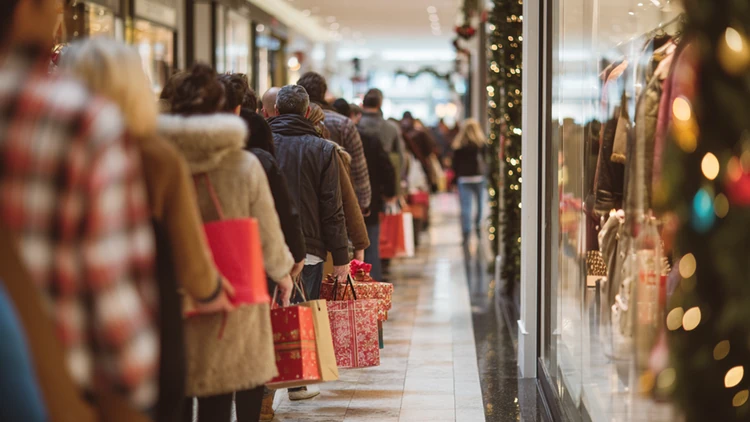
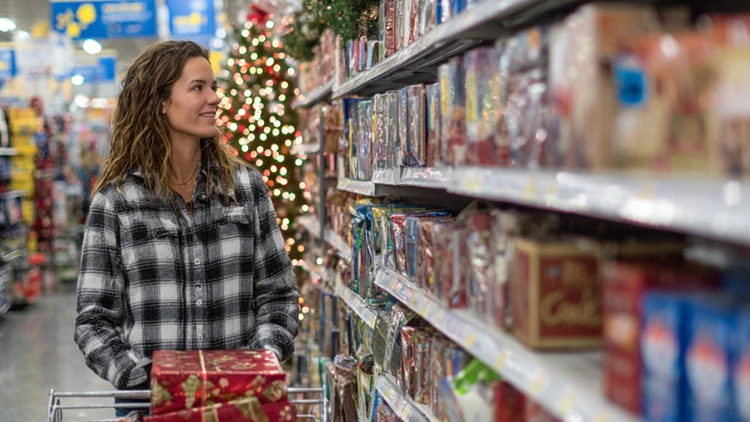
Holiday shoppers are starting early — and buying less

  • 39% of shoppers already started buying to spread out costs and beat possible tariff-related price jumps

  • Most are tightening up: 61% say higher prices mean fewer gifts, more sale items, and more practical stuff

  • Gift cards and big online/big-box retailers are winning because they make spending predictable and price-comparison easy


A new holiday survey from InMarket says 39% of Americans have already started shopping because tariffs and higher prices are making them nervous about what things will cost later.

At the same time, 61% say higher prices are already changing their plans, and most of those shoppers say the fix is simple: buy fewer gifts and buy what’s on sale. Here’s what that means if you’re still building your list.

What shoppers are doing differently

Buying earlier. Four in 10 shoppers are getting a head start to spread out costs and grab deals before prices creep up.

Buying fewer gifts. 59% say they’ll trim the number of presents to stay on budget.

Shifting to “useful” gifts. Only 27% are buying the same types of gifts they usually do. Everyone else is moving to practical stuff, discounted items, or cheaper brands.

Buying gift cards. Gift cards are at the top of the list this year (58%), even ahead of clothing at 52%. That’s a big tell that people want predictable spending.

Shopping the biggest sites and stores. Online-only retailers (62%) and big-box stores (58%) are where shoppers plan to go first. This makes sense as shoppers can compare prices quickly and often find the lowest price.

Why it’s happening

Shoppers are getting squeezed by both inflation (toys, home items, furniture), and continued tariffs. This has made many believe that some things will cost more later in the season.

That uncertainty pushes people into the “buy it now if the price is right” mindset.

Price is the main factor this year as 32% said it matters the most. But other factors like quality, what friends and family ask for, and overall value still show up right behind it. The retailers that can effectively show “this is on sale and it’s good quality” will win those early dollars.

What consumers should do right now

1. Make gift cards work harder

If gift cards are your default, buy them at a retailer that offers bonus cards or store rewards during the holidays. That turns a “safe” gift into an even better-value gift. Or better yet, buy them at Costco or Sam’s Club at a discounted price. At Costco for example, you can typically get four $25 gift cards for only $79.99.

2. Lock in sale-priced “practical” gifts now

Because so many shoppers are switching to on-sale and useful items, those categories can potentially sellout first. So, if you see a price you like on small appliances, winter clothing, beauty gift sets, or toys, buy it now rather than waiting for mid-December.

3. Compare across big-box and online on the same day

Since most shoppers are heading to the same places (Amazon and big-box stores) you should too. When shopping online, open two tabs and compare prices, especially on toys, electronics, and décor. Holiday pricing is moving around a lot right now.

4. Set a hard gift count

Because 59% of people said they’ll buy fewer gifts, copy that strategy. Decide on a number of people or a dollar limit per person and don’t let late-season price bumps push you over it.

Article Image

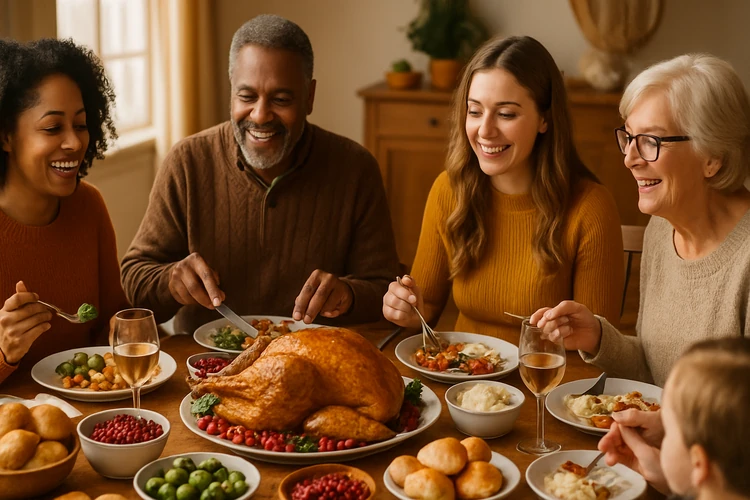
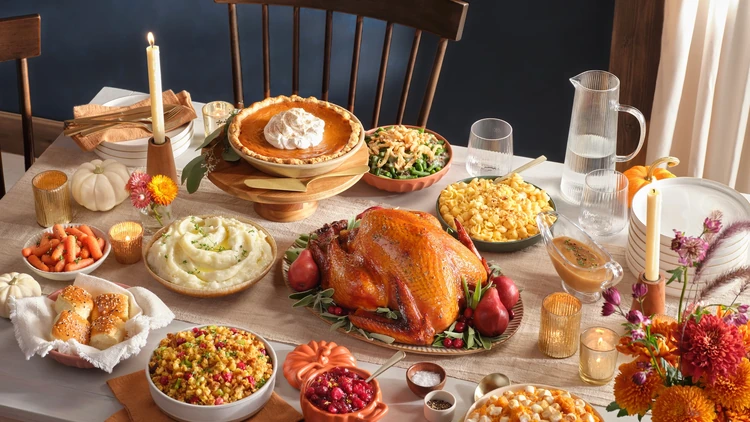
Aldi is offering a Thanksgiving dinner for 10 people for $40

  • Aldi officially announced its Thanksgiving meal bundle for 10 people for $40. 

  • The discounted prices are running from October 15 through December 24. 

  • Shoppers will be able to get everything they need for Thanksgiving dinner at these low prices. 


While Thanksgiving is still over a month away, it’s never too early for retailers to start preparing. 

Aldi announced that it will be offering a full Thanksgiving dinner for 10 people for $40, making each plate cost under $5. 

“The ALDI commitment to low prices is unwavering and I am thrilled that we are able to offer an even more affordable holiday meal than last year,” Atty McGrath, CEO, ALDI U.S., said in a news release  “Saving our shoppers money is our mission every day— but is especially important during the holidays when they need it most.”

What’s included? 

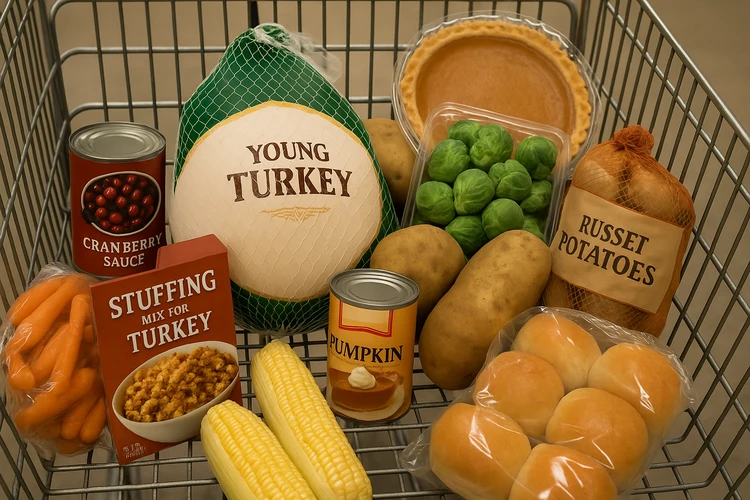
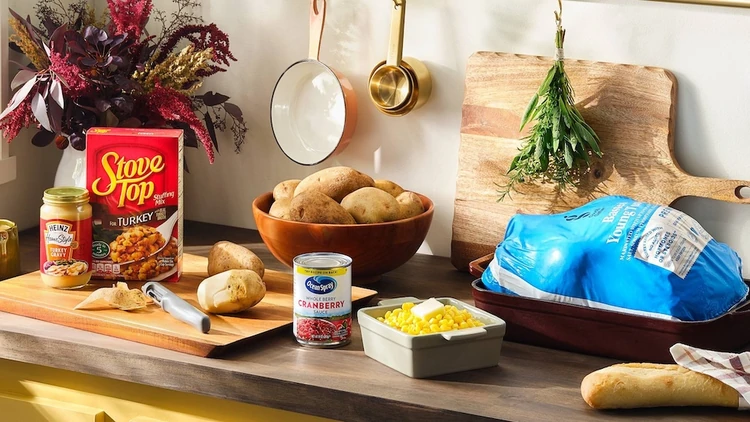
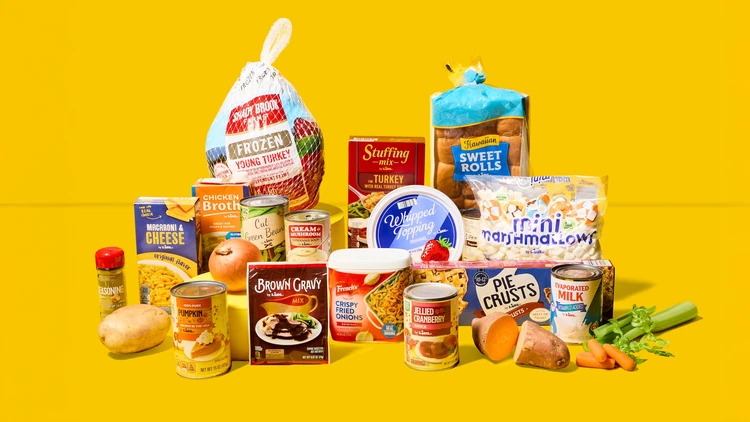
The full meal bundle includes over 20 items, giving shoppers everything they need for turkey, sides, desserts, and more. 

Here’s what Aldi is including in the meal pack: 

  • Whole turkey (14 lbs.)

  • Chicken broth

  • Condensed cream of mushroom soup

  • Evaporated milk

  • Hawaiian sweet rolls

  • Mini marshmallows

  • Cut green beans 

  • 100% pure canned pumpkin

  • Shells & cheese

  • Brown gravy mix

  • Poultry spices & herbs

  • French fried onions

  • Pie crust

  • Chicken or cornbread stuffing

  • Whipped dairy topping

  • Yellow onions

  • Baby peeled carrots

  • Celery

  • Cranberries

  • Sweet potatoes (3 lbs.)

  • Russet potatoes (10 lbs.)

Shoppers will have to add each item to their carts individually, and each eligible item will be flagged as part of the Thanksgiving sale. The discounted prices will be effective from October 15 through December 24, and no additional coupons or membership will be necessary to get these prices. 

Aldi will be offering Thanksgiving dinner at these prices in any way consumers want to shop – in store, online for pickup, or on a grocery delivery app. 

“Thanksgiving is the biggest food holiday of the year, and ALDI is proud to lead the industry once again on price,” Scott Patton CCO, ALDI U.S., said in the release. 

“Price leadership is part of our DNA, and the holidays are when our commitment to value really shines. We believe families shouldn’t have to make trade-offs to feed everyone, especially at Thanksgiving.”

Article Image

Don't let porch pirates ruin your Prime Day

  • Package thefts spike during busy delivery periods like Prime Day—porch pirates are getting more strategic.

  • Use delivery settings, smart lighting, and secure pickup options to help keep your packages safe.

  • If a package is stolen, check with the retailer first—insurance may help, but deductibles and coverage limits apply.


Amazon’s Prime Day is coming up from July 8-11, and with all of the sales, consumers are likely to be making more online orders than usual. 

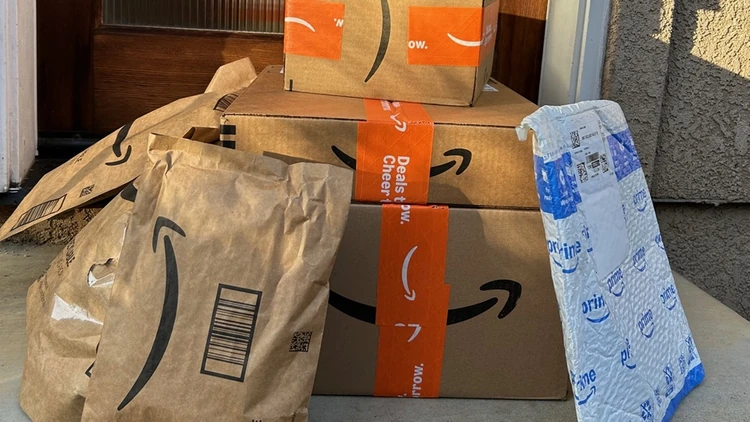
While there’s excitement of new items being delivered, there’s also the threat of porch pirates – people who steal packages off residents’ doorsteps. 

To help consumers stay safe from porch pirates this Prime Day, Jen Wilbert, assistant vice president, Property Portfolio at Travelers Insurance, shared her best insights with ConsumerAffairs. 

“Porch pirates are getting more creative in their tactics,” Wilbert told ConsumerAffairs. “Thieves can follow delivery trucks, watching for prime targets and commonly strike during working hours as many homes are empty at that time.” 

How to keep your packages safe this year

Wilbert shared her top tips for consumers to protect their Prime Day packages: 

  • Reroute deliveries to safe spots: Many retailers let you ship directly to local stores, secure lockers, or designated pickup hubs to avoid doorstep drop-offs altogether.

  • Use your delivery settings wisely: Only opt-in to “no signature required” settings if you’re confident someone will be there, otherwise, request a hold for pickup.

  • Keep your home looking active: Porch pirates often target homes that look empty. Smart lights on timers or motion-activated lighting can help create the illusion that someone’s home.

  • Limit delivery windows: Take advantage of Prime’s ability to group items into fewer deliveries—fewer drop-offs mean fewer chances for theft.

What to do if you’re victim to a porch pirate

While no one wants to lose their package to a crafty thief, it happens more often than we may realize. If you find yourself the victim of a porch pirate, Wilbert has some advice: 

  • If a package is stolen, start by checking with the retailer or delivery service. Some companies will replace or refund stolen items as part of their customer service policies.

  • If that’s not an option, your next step is to look at your homeowners or renters insurance policy. Most standard policies cover stolen personal property, including packages taken from your porch. 

  • How much you’re reimbursed depends on the type of coverage you selected. If you have actual cost value coverage, you’ll be paid based on the item’s current depreciated value. If you opted for replacement cost coverage, you’ll be reimbursed for what it would cost to replace the item today. In either case, keep in mind you’ll still have to pay your deductible, which could be more than the value of the item. 

  • For high-value purchases like electronics or jewelry, it’s worth checking if additional coverage is needed to be fully protected. 

High-risk areas

While no one is safe from the threat of porch pirates, Wilbert has identified some areas that are more susceptible to this type of crime than others. 

“High-density neighborhoods, such as urban or suburban areas with tightly packed homes or apartment complexes, tend to see more package theft because there are more deliveries and easier opportunities for thieves to strike without being noticed,” she explained. 

Other hot spots: 

  • Neighborhoods near major roadways or highways 

  • Homes without visible security, doorbell cameras, or motion lights 

  • Homes with clear sight lines to the street 

“Always err on the side of caution!” Wilbert encouraged. “Delivery is convenient, but if you are purchasing an item of extremely high value, it may be worth buying in store, or considering in-store pick-up options, to mitigate the risk of a porch pirate.” 

Article Image

Want to save money on Valentine's Day? So do most couples, survey says

Most Americans plan to save money on Valentine's Day celebrations this year, a new survey finds.

Only 20% of American couples said they will spend more money on Valentine's Day in 2025, compared with most saying they are spending less because of reasons including inflation, savings, unaffordability and the future of the economy, according to a survey of 1,115 Americans between Jan. 28 and 29 by reviews-service Trustpilot.

Some 42% of survey respondents said they will celebrate the holiday by going out for dinner, a cheaper option compared with only 28% saying they will exchange gifts.

And 52% said they expect their significant other to spend less than $50 on Valentine's Day.

Still, 73% of survey respondents said they plan to celebrate the holiday, but 77% said they'd rather spend the money on a financial goal.

"Most people still want to celebrate Valentine’s Day, but they’re thinking twice before splurging," said Dana Bodine, U.S. vice president of marketing at Trustpilot.

"Financial concerns are top of mind, but traditions persist, so that means we're seeing adjustments to how people celebrate," she added. "Hard-earned money needs to go further — meaning consumers need to stretch their dollars with sure bets."

Email Dieter Holger at dholger@consumeraffairs.com.