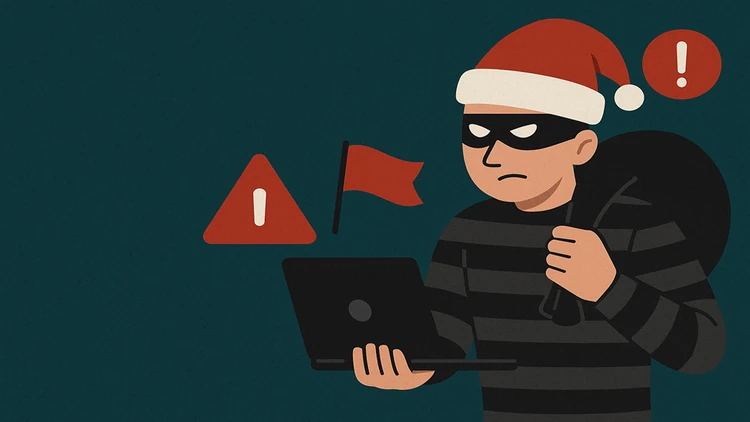

Scammers ramp up during holiday shopping because people are rushed and distracted, so a trade group is pushing a “slow down before you pay” habit
Their three rules: pause if there’s pressure, only send money to people you know, and verify any delivery/bank/message inside the official app or website
Biggest red flags right now: anyone asking for gift cards, fake shipping/order texts, and fake charity or “send me money” messages that don’t come through the company’s app or website
Holiday shopping is officially underway, and so are the people trying to separate you from your money. That’s why the Financial Technology Association (FTA) is rolling out a new “Smarter than Scams” campaign aimed at teaching shoppers the one habit that stops most fraud cold: slowing down.
What scammers are doing this year
Miranda Margowsky, head of communications for the FTA said the tactics aren’t brand new, but scammers are getting more aggressive because they know people are shopping, distracted, and willing to pay fast.
“I think we've all gotten the text messages, the calls, the social media messages… that can really translate to a scammer trying to get you to send them money, get you to send your personal information,” she said. “Especially around the holidays, we’re seeing a lot of things. We’re seeing gift card scams… trying to get you to pay for something with a gift card, which is really a telltale sign of a scam.”
That’s a big red flag: anyone who insists on being paid with a gift card is almost certainly a scammer. Retailers, delivery companies, government agencies, and payment apps do not take gift cards as a form of payment.
The FTA’s three core rules
The campaign boils everything down to a simple sequence:
1. Pause before you pay
Scammers love when shoppers are in a hurry. “They want you to feel like you have to act now,” Margowsky said. Maybe it’s “your package can’t be delivered,” “your account will be locked,” or “this price is only good for the next 10 minutes.” That pressure is intentional and taking 30 seconds to stop and verify kills most scams in their tracks.
2. Only send money to people you know and trust
The FTA represents companies like Cash App, PayPal, and Venmo, and Margowsky was clear on this point: those platforms won’t contact you out of the blue to ask for your bank info or to send money.
“They’re not going to contact you proactively to ask for your bank account information, to ask you to click on a link, to ask you to send your information,” she said.
3. Verify the source through an official channel
If you get a text or email about a missed delivery, don’t click the link. Instead, open the retailer’s app or go straight to the delivery service’s website. Same thing if someone claims to be from your payment app or bank, always go to the app yourself and check messages there.
Two protections shoppers often overlook
Many consumers routinely skip two basic security steps that would make holiday scams a lot harder to pull off:
Use trusted contact methods
If you need to reach a company, go directly through the app, bookmarked website, or the number on your statement. Never click on a link from a text, email, or social post. Fake lookalike sites ramp up during November and December because scammers know people are searching for deals.
Turn on two-factor authentication (2FA) and use strong passwords
A lot of holiday fraud isn’t someone tricking you into paying, instead it’s someone getting into your account and paying themselves. 2FA happens when a code is sent to your phone or generated in an app that you have to enter to prove who you are. Always turn this feature on as it makes life much tougher for the scammers.
Holiday-specific scams to watch
Here are the ones that tend to spike right now:
Gift card payment scams: “Pay this fee with a gift card.” Real companies don’t do that.
Fake order/shipping texts: “Your package is on hold, click here to update.” Go to the retailer’s app or website instead and check on the order status.
Charity scams: The end-of-year always brings out fake charities looking to exploit on people’s generosity. I always recommend looking up the group on Charity Navigator before donating.
“Friend/family in need” messages on payment apps: Always call or text the person separately to confirm that they actually need help before sending any money or help.