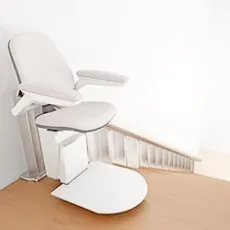
Best overall

- Starting cost
- $4,700, including installation
- Types of lifts
- Straight, curved, outdoor
- Weight limit
- 298 pounds
- Brands sold
- Stannah
How ConsumerAffairs uses cookies
This website utilizes technologies such as cookies to enable essential site functionality, as well as for analytics, personalization, and targeted advertising. To learn more, view the following link:





Choosing a stair lift can make a big difference in staying safe and independent at home, especially for older adults or anyone with mobility challenges. To find the best options, we focused heavily on recent feedback from verified customers, along with factors like installation, warranties and overall service.
Reviewers also point out a few things to keep in mind. Curved stair lifts can take longer to install — up to three months more, according to Denise in Massachusetts — and some users report a small increase in electricity use after installation.
Key takeaways:
- Stannah Stairlifts is our top overall pick based on its strong customer satisfaction and pricing.
- Review how much a stair lift costs and what to know before buying a stair lift to make a confident decision.
The ConsumerAffairs Research Team evaluated stair lift companies across three core areas: customer experience, product features and value, and company engagement. We combined verified customer feedback with objective data like lift options, pricing, warranties and rental availability to reflect real-world accessibility needs.
Our picks may be Authorized Partners that compensate us, but this does not affect our recommendations or evaluations. See our full methodology below for details on how we scored and selected our top picks.
| Company | Customer rating | Our pick for | Starting price* | Warranty | Financing available | Free in-home consultation | In-house installers | |
|---|---|---|---|---|---|---|---|---|
 Stannah Stairlifts | Get a Quote | 4.8
2,009 reviews
2,009 reviews
| Best overall | $4,700 | Lifetime motor/gearbox coverage; 2-year parts warranty |  | | |
 Bruno Independent Living Aids | Get a Quote | 4.8
2,635 reviews
2,635 reviews
| Best value | $3,800 | Limited lifetime on major components | | | |
 Lifeway Mobility | Learn More | 4.8
470 reviews
470 reviews
| Best warranty | $2,900 | Varies | | | |
 Arrow Lift | Get a Quote | 4.7
249 reviews
249 reviews
| Best customer service | $3,500 | Varies | | | |




Jump into our guides and start learning
If you have had a recent health concern or surgery, or you’re just getting older, you may find yourself with a balance or mobility issue that limits your ability to get up and down your stairs. Stair lifts can help you continue to live independently in your home.
In this guide, learn about how stair lifts work, their features and how to choose the best stair lift for your needs.
Stair lifts come in different types and sizes, with add-on features available.
Jump to insightConsult with a trained stair lift technician who has installation experience to ensure that the system is installed correctly and all safety features are operating properly.
Jump to insightStair lifts may seem expensive, but compared with the costs of moving to a more accessibility-friendly home or remodeling, installing one is the least pricey option.
Jump to insightA stair lift is a motorized device that rides along a staircase to help you go up and down the stairs securely. If you have mobility concerns, a stair lift can help you navigate your home safely and avoid dangerous falls. A stair lift contains a seat, armrests and footrests, and some models let you fold these away when they’re not in use.
A stair lift is usually controlled by a joystick or buttons and is installed on a track with one or two rails. Some models include a hinged track that folds away for narrow staircases.
Older adults who experience difficulty with their balance could benefit from stair lifts.
“Anyone whose balance might be compromised by neurological, physical or even psychological reasons could benefit from a stair lift,” said Jerilyn Callen, program director of the entry-level occupational therapy doctorate program at the University of Oklahoma. According to Callen, stair lifts can help people with certain health conditions that impact the ability to balance while walking on stairs, including:
There are several pros and cons of stair lifts and other considerations to keep in mind when purchasing, Callen said. If you live alone and use a mobility device like a wheelchair, walker or cane, you’ll need to think about your setup at the top or bottom of the stairs.
“Once you’re up the lift, what’s the setup?” she asked. “Is there a wheelchair at the top of the stairs you may need ready? Are there long hallways to get down?”
As an occupational therapist, Callen has seen people get stuck on stair lifts during power outages. Having a backup battery helps prevent this from happening, but it may add to the stair lift’s cost. Batteries also have to be charged regularly to ensure they can be used during a power outage.
Stair lift batteries will take on average eight to 12 hours to fully charge from no battery charge. But this depends on how often you use it, how long the track is, and the weight being placed on the lift. Stair lifts can charge themselves when plugged in and stationary at the top or bottom of a staircase.
» RELATED: Aging-in-place home modifications for seniors
Pros
Cons
Stair lifts can cost anywhere between $3,000 and $22,000. That doesn’t include the modifications you may need to make to your home in order to accommodate a stair lift. Some general ranges:
| Type | Cost |
|---|---|
| Straight indoor stair lifts | $3,000 to $7,000 |
| Curved indoor stair lifts | $10,000 to $20,000 |
| Straight outdoor stair lifts | $4,000 to $8,000 |
| Curved outdoor stair lifts | $12,000 to $22,000 |
Outdoor stair lifts are typically more expensive than indoor stair lifts because of the additional components required for weather-proofing, says Pete Newstrom, vice president at Arrow Lift.
Keep in mind, there are some additional features of stair lifts that can increase their price, including:
Renting a stair lift can cost between $80 and $600 a month, depending on the lift’s features and the nature of your staircase. This doesn’t include the cost of installation and removal, which can cost from several hundred to several thousand dollars.
Typically, stair lifts aren’t covered by insurance. Likewise, Medicare doesn't offer coverage as it considers stair lifts to be home modifications and not durable medical equipment. Medicaid may cover a stair lift installation in some circumstances; rules vary by state.
Most people pay for a stair lift using a mix of savings, financing or grants, since insurance and Medicare rarely cover the cost.
A Medicare Advantage plan might cover some of the cost of a stair lift if you have a prescription from your health care provider stating that one is medically necessary. However, Callen cautioned that as an occupational therapist, she has written many letters of necessity and has had little success in getting coverage for stair lifts.
If you are a veteran, you may be able to receive assistance from the Department of Veterans Affairs (VA) for a stair lift.
While researching companies, ask each about any available discounts. Callen also recommended reaching out to community programs — your health care team can help facilitate this. Some stair lift companies offer financing options to help you pay for one. Ask the stair lift company about these options when you get a quote.
Your stair lift and its maintenance might be tax deductible as a medical expense. See the IRS website for more information.
» RELATED: Medicare vs. Medicaid
Community grant programs can make stair lift installation feasible. One of the largest resources is HUD's Older Adult Home Modification Program, which serves homeowners or renters aged 62 and older. Although the typical budget is $5,000 per home, occupational therapists directing the work can approve higher-cost structural upgrades—such as licensed stair-lift installations—when they are critical for preventing falls and supporting aging in place.
Because funds are awarded locally, start with your Area Agency on Aging or county housing office to learn when applications open and what documentation (income verification, proof of residence, OT assessment) you'll need.
Approved projects cover the cost of licensed contractors, required environmental reviews and even temporary relocation if safety demands it, with a follow-up inspection scheduled within a month to confirm the stair lift's safe operation. If your locality is not participating, ask trusted nonprofits, VA service officers and rehab hospitals about smaller home-modification grants that mirror HUD guidelines.
Charitable programs such as StairLift For Vets and Rebuilding Together can also help with resources for getting a stair lift.
Veterans may be eligible for a VA Home Improvement grant. Disabled veterans can apply for either a Specially Adapted Housing (SAH) grant, or Special Housing Adaptation (SHA) grant. SAH grants have a higher maximum amount, but are reserved for more severe disabilities.
Home Improvement and Structural Alterations (HISA) grants through the U.S. Department of Veterans Affairs (VA) can provide veterans with either a $2,000 or $6,800 grant to modify their home because of a disability.
Stair lifts come in multiple styles and configurations to match your staircase and mobility needs. Most stair lifts have a maximum weight of between 300 to 600 pounds, but manufacturers also offer heavy-duty models with wider seats and reinforced rails for users who need higher capacities. Here are some of the more common home stair lift variations.
Straight stair lifts are typically the least expensive, while stair lifts for curved or spiral staircases tend to cost more.
Straight stair lifts are designed for traditional straight flights of stairs and can be installed on either side of your staircase. They usually contain an adjustable seat with a back and footrest. You press a button or move the joystick to raise or lower yourself up or down the stairs. This type of stair lift tends to be the least expensive and easiest to install.
Here are some steps to get started choosing the right stair lift for your needs.
Stair lifts do not require a significant amount of power, are battery-powered, can typically be plugged into an outlet to charge and work in the event of a power outage.
According to Callen, the clinical associate professor, space is the biggest obstacle preventing a person from installing a stair lift in their home. Callen recommends first looking at your space because you may not realize how narrow your stairs really are.
Nevertheless, if you can safely walk on the stairs, they're safe enough to install a stair lift on, according to Pete Newstrom, vice president at Arrow Lift. A stair lift system doesn't weigh much (between 100 and 200 pounds), and multiple supports spread the system's weight out across multiple steps.
Most stair lifts can be installed on stair widths of 28 to 33 inches at a minimum.
A steep stairway is another concern you might have. It’s a good idea to have a home survey done, so a consultant can measure the space, as well as the incline. In general, stair lifts can accommodate a range of staircase inclines, ranging from about 27 to 48 degrees, but some can fit a greater incline for steep staircases.
Contact different companies to get estimates on the best stair lifts and compare those prices to find the best deal. There are multiple stair lift manufacturers in the market, and most offer an array of options and features.
Check reviews, compare specifications and get quotes to evaluate which stair lift is right for you, including weight requirements. Some companies have showrooms where you can test out different models.
Many of the major stair lift companies come to your home to measure the stairwell and give you options. It might be tempting to do the measurements or install the device yourself to save money, but Callen recommended letting the company representative come out to get the most accurate measurement. This also helps avoid accidents or faulty installation. This evaluation is typically done at no cost, and purchase usually includes the warranty and installation. On average, installation fees can range from $500 to $2,000.
In terms of timeline, the process for straight stair lifts is usually quick — after the in-home assessment, installation can often be completed in a single visit and typically takes two to four hours. Curved stair lifts take longer because they are custom-built to fit your staircase. After measurements, manufacturing can take a few weeks, and installation may take several hours to a full day depending on complexity.
With the high price point of purchasing a new stair lift, you might be trying to decide if it’s worth the investment or if renting is the way to go. If you’ve been told you’re unlikely to regain full mobility and want to stay at home long-term, a new stair or refurbished stair lift might be the way to go. If the stair lift is needed for only a short period, renting may be more convenient and cost-efficient than purchasing.
When deciding between buying vs renting, consider:
There are pros and cons of each.
The benefits of owning your own stair lift include:
The drawbacks of purchasing a new stair lift include:
If you decide to go with a refurbished model, it’s best to buy a stair lift from a legitimate company, and not from another stair lift model. If there’s an issue, you will unfortunately not have a warranty. The benefits of buying a stair lift secondhand include:
Keep in mind that most stair lift companies won’t rent to you if you rent your home because of liability issues, according to Callen. Some other drawbacks include:
The pros of renting a stair lift include:
The downsides of renting include:
When you start comparing quotes, you’ll generally see two ways stair lifts are sold and installed: national stair lift companies and local mobility dealers. The right choice depends less on the brand name and more on who will measure, customize, install and service the lift in your area.
| National stair lift company | A single company markets the lift, sends a rep to measure and coordinates installation. In some regions, the installer is a company employee. In others, it’s a contracted local crew. |
| Local dealer | A local dealer sells one or more brands, performs the home assessment, handles installation and provides ongoing service. |
Consider a national company if you want a one-stop quote process, need financing or prefer a larger organization’s customer support structure. Consider a local dealer if you prioritize hands-on installation quality, want a clear service relationship or have a tricky staircase that may require more customization.
No matter which route you choose, ask who will physically install the lift (employee vs. subcontractor), what training they have, how service calls are handled locally and what the typical repair response time is in your area.
Pros
Cons
Pros
Cons
Most stair lifts are equipped with a variety of safety and comfort features to protect you against falls or injuries. Some of the important safety features of stair lifts include:
The stair lift you choose should contain as many safety features as possible. Make sure your stair lift is installed properly and that your staircase is sturdy and large enough to fit the stair lift you desire.
» EXPLORE: Best wheelchair lifts for cars
Some stair lift companies offer lifetime warranties on the stair lift motor and gearbox. Other companies offer a warranty for a few years on certain parts and labor. Your warranty typically doesn’t cover accidental damage, such as a failure caused by using cleaning products on the electric system.
Make sure you understand what maintenance you need to do on the stair lift in order to keep the warranty valid. Some companies will void your warranty if you don’t have the stair lift installed by an authorized dealer.
For many people, stair lifts are out of financial reach, so you may need to consider other options. If you’re only expecting to have limited mobility for a short, finite term, a temporary solution is to create living space on the first floor of your home if it isn’t there already. Many people will have recovered enough to manage trips upstairs by the time a rental stair lift is installed, Callen said.
If you have long-term mobility issues and can’t afford a stair lift, downsizing into a one-level home may be a better option, Callen said. It may not be ideal, but it is a way to remain independent in your home.
For long-term homeowners with less financial concern, installing a home elevator may be a better solution than stair lifts.
» LEARN MORE: The costs of aging in place remodeling
No, Medicare doesn’t cover stair lifts because they’re not classified as durable medical equipment. Some of the cost might be covered under your Medicare Advantage plan if you have a prescription of medical necessity from your health care provider, but these instances are rare.
Most private health insurers do not cover stair lifts, but if you are a veteran you may be able to seek help from the VA or community programs to help offset the cost of a stair lift.
Yes. Some companies offer stair lift rentals for about $80 to $600 a month. The price doesn’t include the cost of installation and removing the stair lift and track. It also doesn’t include the cost of any home modifications you may need to install the stair lift.
Stair lifts are safe as long as they've been installed correctly by a licensed representative. It’s important to have a trained stair lift technician handle the installation. They can ensure that safety devices work properly, like the system that detects if something is caught between the lift and the stairs, and automatically shuts off if there is.
» RELATED: How to protect your aging parents at home
Platform stair lifts work the same as regular stair lifts but instead of a seat they have a platform to accommodate wheelchairs or those that prefer to stand. Companies may refer to platform stair lifts as wheelchair stair lifts or standing stair lifts.
With proper maintenance, your stair lift should last a decade or longer. Once you have a stair lift installed, schedule an annual appointment for a technician to inspect and service it. Be sure to read your stair lift manual for specific maintenance requirements.
Note that routine service visits typically cost between $100 and $300, depending on your location and provider. Some companies offer maintenance plans or service contracts that bundle inspections and repairs for a monthly or annual fee. Replacement parts, such as batteries, usually cost around $200 to $300 and may need to be replaced every one to three years.
In day-to-day use, your stair lift can be wiped down with a dry cloth to remove any dust or debris, but be cautious of using harsh cleaners or wet cloths because these can damage the motor or gears.
Many stair lifts come equipped with a backup battery that allows them to operate during a power outage. This ensures that you can safely get up and down the stairs even if the main power supply is disrupted. It is important to regularly check and charge the battery to ensure it functions when needed.
In many cases, installation can be completed in a single day. Straight stair lifts often take two to four hours to install, while curved stair lifts can take longer because they are custom-built and require more precise fitting. Installation timelines may also vary depending on staircase complexity and local technician availability.
Yes, stair lifts can usually be removed. Relocating a stair lift to another home or staircase may be possible with straight stair lifts, but it depends on the new staircase’s dimensions and configuration. Curved stair lifts are custom-made for a specific staircase and generally cannot be reused elsewhere. Removal and relocation fees typically apply.
Some stair lift warranties are transferable to a new homeowner, but many are not. Transferability depends on the manufacturer and whether the lift was purchased new, refurbished or secondhand. Even when warranties are transferable, there may be conditions, such as notifying the company or having the lift inspected by an authorized technician. Always ask for warranty details in writing before purchasing.
With proper maintenance, most stair lifts last 10 to 15 years or longer. The lifespan depends on factors such as frequency of use, weight capacity, build quality and how well the unit is maintained. Key components like batteries may need to be replaced every one to three years, while motors and rails can last much longer with routine servicing.
Stair lifts can be installed on most staircases, including straight, curved and outdoor setups. However, there are some limitations. Your staircase typically needs to be at least 28 to 33 inches wide, structurally sound and free of obstructions. Very narrow staircases, unusual layouts or steep inclines may require custom solutions or may not be suitable for standard models. A professional in-home assessment is the best way to determine if your staircase can accommodate a stair lift.
Information in this guide is general in nature and is intended for informational purposes only; it is not legal, health, investment or tax advice. ConsumerAffairs.com makes no representation as to the accuracy of the information provided and assumes no liability for any damages or loss arising from its use.
The ConsumerAffairs Research Team evaluated stair lift providers using a structured scoring model. We assessed several metrics across three core areas: customer experience, product features and value, and company engagement.
Review data reflects verified feedback submitted to ConsumerAffairs between April 1, 2023, and March 31, 2026. We measured satisfaction with:
We evaluated the range of stair lift options and features that impact safety, comfort and usability, including:
We also considered the types of lifts offered, features, starting price and the availability of financing.
We evaluated how actively companies engage with customers and maintain a recent track record, including:
Companies earned a zero to 10 score for every metric:
This standardized system allows us to compare both subjective data (customer satisfaction from verified reviews) and objective data (product features, pricing and company policies) on the same scale.
All companies were evaluated using the same set of metrics, but award categories apply different weightings depending on what the designation highlights.
For example, “Best customer service” places the most weight on customer service, staff satisfaction and installation experience, while “best value” prioritizes pricing satisfaction.
The company with the highest weighted score in each category earned the corresponding “Our pick for” designation. If a company ranked first in multiple categories, we awarded the designation to the next-highest scoring company in that category to highlight a broader group of top performers.
Thanks for subscribing.
You have successfully subscribed to our newsletter! Enjoy reading our tips and recommendations.
| Company | Customer rating | About | Learn More |
|---|---|---|---|
|
Stannah Stairlifts
| 4.8
2,009 reviews
| Offers both straight and curved stair lifts. Custom-made products available. Some products hold up to 350 pounds. Over 150 years in business. Straight stair lifts start at $3,200. Curved stair lifts start at $8,500. | Get a Quote |
|
Bruno Independent Living Aids
| 4.8
2,635 reviews
| Manufactures stair lifts for both indoor and outdoor spaces. Most products can hold up to 400 pounds. Provides a limited lifetime warranty on select components. Products are made in the U.S. Pricing available through vendors. | Get a Quote |
|
Arrow Lift
| 4.7
249 reviews
| Works with businesses and individuals. Has free in-home consultation. Professional installation is included with every lift. Can install curved stair lifts. Outdoor stair lifts are available. | Get a Quote |
|
Lifeway Mobility
| 4.8
470 reviews
| Offers a variety of stair lifts and other accessibility solutions, including wheelchair ramps and lifts. Provides professional installation and service after install. Free in-home and remote consultations. | Read reviews |
 Acorn Stairlifts
| 4.8
591 reviews
| Offers several stair lift models to match different homes and needs. FastTrack installation is quick and minimally invasive. Stair lifts attach to the stairs, not the wall. Warranty coverage is comprehensive. | Learn More |
 Mobility123
| 4.9
171 reviews
| Independent living solution seller and installer. Offers construction and remodeling services from in-house experts. Products include stair lifts, wheelchair lifts and other accessibility products. | Get a Quote |
 Ascent Stairlifts
| 4.8
95 reviews
| Acquired by Lifeway Mobility. | Read reviews |
 Look Stairlifts
| 4.9
29 reviews
| Offers specialized mobility products. Sells models from various stair lift manufacturers. Provides free in-home estimates. Prices include installation and sales tax. Services all of Southern California. | Read reviews |
 USA Medical Supply
| 4.9
14 reviews
| Sells Access BDD, Hamar and Bruno Independent Living Aids stair lifts in Western Massachusetts and Northern Connecticut. Staffs an in-house service and installation team. Free assessments available for all customers. | Read reviews |
 AmeriGlide
| 4.6
125 reviews
| Wide range of mobility products, including straight and curved stair lifts, walk-in tubs, scooters and more. Nationwide shipping and professional installation. Financing available. | Learn More |
 Harmar Mobility
| 4.5
64 reviews
| Offers a variety of product options including stair lifts, platform lifts, vehicle lifts and ramps. Provides measuring tools for product matching. Prices start at $2,000. Includes warranties with most products. | Read reviews |
 Handicare
| 4.3
103 reviews
| Offers multiple stair lift options. Weight capacities up to 440 pounds. Provides a limited lifetime warranty on select components. Straight stair lifts start at $2,500. Curved stair lifts start at $8,000. | Read reviews |
 HomeAdvisor (Powered by Angi)
| 2.5
22,721 reviews
| Connects homeowners and renters with home improvement specialists for free. Average home improvement job costs between $120 and $6,000. Includes damage protection guarantee up to $500,000. Online booking available. | Get a Quote |
 National Seating & Mobility
| 2.0
12 reviews
| Offers a wide variety of mobility devices and medical supplies. Available across the U.S. and Canada. In-person and phone ordering. Takes insurance. In-house financing available. | Read reviews |
 101 Mobility
| 1.2
28 reviews
| Free in-home consultations available. Provides professional installation and repair services. Also offers rentals and products from third-party businesses. Operates in over 25 states through local franchises. | Learn More |
 Safe Step Stairlifts
| No reviews | Offers American-made indoor and outdoor stair lifts. Limited lifetime warranties available on select models. One-day installations on most models. Cargo lifts available for heavy loads. | |
 Access BDD
| No reviews | Manufactures stair lifts, home lifts and platform lifts for residential and commercial use. Equipment sold through authorized dealers. U.K.-based manufacturer with North American operations. | |
 Butler-Hawle
| No reviews | Indoor and outdoor curved stair lifts. Custom-built and made in the U.S. Lifetime warranty on drive train and motor. Works with authorized dealers for installations. Five-week turnaround time. | |
 Savaria
| No reviews | Offers straight, curved or outdoor stair lifts. Most lifts can hold up to 350 pounds. Free in-home consultations available. Includes a 36-month limited warranty on parts. Works with a dealer network for sales and installations. | |
 Accessible Construction
| No reviews | Sells and installs stair lifts and a wide variety of other mobility aids, such as ramps and walkers. Pre-owned products sometimes available. Provides services throughout the Greater Southern California area. | |
 Country Home Elevator
| No reviews | Offers a variety of mobility products, including curved and straight stair lifts. Free quotes available. $200 discount for measuring your own staircase. Provides services throughout Arkansas, Kansas, Missouri and Oklahoma. | |
 Silver Cross
| No reviews | Sells a variety of mobility products, including straight and curved stair lifts. Brand-new and previously used products available. Customers can turn in old products for upgrades. Over 200,000 customers served. |