Best overall

- Hearing aid types
- BTE, CIC, IIC, ITC, ITE, RIC
- Starting cost
- $1,999 per device
- Trial period
- 45 days
- Warranty
- Limited
How ConsumerAffairs uses cookies
This website utilizes technologies such as cookies to enable essential site functionality, as well as for analytics, personalization, and targeted advertising. To learn more, view the following link:





Roughly 1 in 8 people in the U.S. ages 12 or older has hearing loss in both ears, and about 15% of U.S. adults over 18 report some level of hearing trouble, according to the National Institute on Deafness and Other Communication Disorders.
If you’re looking for hearing aids for mild to profound hearing loss, our top overall pick for the best hearing aids is Starkey, which we picked for its advanced technology, wide range of styles and strong professional support. We also selected Audicus for its long trial period, hear.com for its customer support and Beltone for its device selection.
Why trust ConsumerAffairs?
Our editors, fact-checkers and moderators work to uphold standards for accuracy, transparency and trust.
Our editorial standards
Our review standards
We compared verified customer reviews, pricing, device options, trial periods and support. Some of our picks are Authorized Partners that compensate us, but this does not affect our rankings or recommendations. Read our full methodology for more about how we selected the best hearing aids of 2026.
Compare our picks for the best hearing aid brands in the table below:
| Company | Customer rating | Our pick for | Starting cost (per pair) | Types of hearing loss | Financing available | Trial period | Warranty | |
|---|---|---|---|---|---|---|---|---|
 Starkey Hearing Aids | Learn More | 4.2
506 reviews
506 reviews
| Best overall | $1,999 per device | Mild to profound |  | 45 days | Limited |
 Audicus | Get Pricing | 4.4
570 reviews
570 reviews
| Best trial period | $1,498 | Moderate to severe | | 100 days | 2 years |
 hear.com | Learn More | 4.6
889 reviews
889 reviews
| Best customer support | $1,599 per pair | Mild to profound | | 45 days | 1 to 3 years |
 Beltone Hearing Aids | Learn More | 3.4
738 reviews
738 reviews
| Best device selection | $2,000 per pair | Mild to profound | | 30 days | 1 year |



Jump into our guides and start learning
Hearing aids are more accessible and affordable than in the past, with options now available both over the counter (OTC) and by prescription. Adults with mild to moderate hearing loss can generally purchase certain devices over the counter, while those with more complex needs can work with an audiologist to get a prescription for a customized solution.
However, fewer than 30% of adults ages 70 or older who could benefit from hearing aids actually use them, and this drops to 16% for adults ages 20 to 69, according to the National Institute on Deafness and Other Communication Disorders. For people who are diagnosed with hearing loss, they wait about nine years on average before getting hearing aids, according to Ear and Hearing, a journal published by the American Auditory Society.
But waiting to get hearing aids doesn’t need to be the case. Read on to see what you need to know about these devices, and what types of options are available.
The right type of device for you depends on how the hearing aid fits in your ear, how it works, your level of hearing loss and the device’s appearance.
Jump to insightPrescription hearing aids cost $1,000 to $4,000 per ear; OTC hearing aids often cost just $600 to $1,000 per pair.
Jump to insightSome models offer Bluetooth capability or a telecoil (T-coil) to selectively amplify a speaker’s voice while shutting out background noise.
Jump to insightWhen choosing a hearing aid, one of your most important considerations is the type of device you want, also referred to as its style.
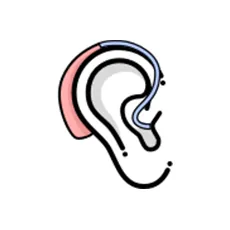
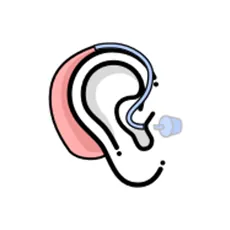
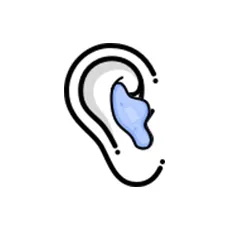
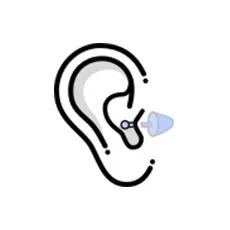
Hearing aids with AI technology
Some newer hearing aids use artificial intelligence (AI) to analyze sounds and automatically adjust how they process speech, background noise and other sounds without requiring you to manually change settings.
For users, this can mean fewer manual adjustments and a more personalized listening experience as they move between environments, such as a quiet room, busy restaurant or outdoor setting. Some AI-enabled hearing aids also offer features such as fall detection, health tracking or voice assistants.
The main difference between analog and digital hearing aids comes down to how they process audio:
Prescription hearing aids and OTC hearing aids differ in terms of who they’re for, how to get them and the perks they come with, among other factors. Prescription hearing aids usually come with an extended trial period, a multiyear warranty period and regular services from the audiologists who prescribed them, such as cleaning and adjustments.
With OTC hearing aids, you have to fit the device to your ear yourself, and setup and support are usually limited to email, online chat or phone calls. OTC trial periods can be short (often 30 to 45 days), and the warranties aren’t as long. Also, if you lose an OTC hearing aid, there’s often no replacement guarantee.
| Over-the-counter hearing aids | Prescription hearing aids | |
|---|---|---|
| Who it’s for | People with mild to moderate hearing loss | People with mild to profound or complex hearing loss |
| How to get it | Online or in stores; no medical exam required | Prescription from an audiologist or hearing specialist |
| Trial period | Typically 30 to 45 days | Often longer than OTC options |
| Warranty | Limited | Usually multiyear |
| Benefits | Limited remote or phone support | Usually in-person adjustments, cleanings and ongoing care |
Over-the-counter hearing aids became available in 2022 after the U.S. Food and Drug Administration (FDA) put a long-awaited rule in place to increase access to hearing aids and potentially lower prices.
Anyone ages 18 or older with perceived mild to moderate hearing loss can buy OTC hearing aids, according to the FDA. For people with perceived severe or profound hearing loss, it recommends consulting with a licensed health care professional.
Compare the pros and cons of OTC hearing aids before purchasing:
More affordable
Easier to purchase
More user-friendly
Suitable for mild to moderate hearing loss
Fewer features
Aren’t as adaptable to different hearing environments
Limited follow-up care and support
Not suitable for severe to profound hearing loss
Prescription hearing aids cost around $1,000 to $4,000 per ear on average, but OTC hearing aids typically cost around $600 to $1,000 per pair, according to our research.
Hearing aids can be a significant expense, so it’s important to define your budget and figure out how much you can pay for them. For example, Sue, a reviewer from Washington said they spent more than $9,100 on hearing aids.
Is it safe to buy hearing aids online?
While it’s generally safe to buy OTC hearing aids online, it can be helpful to visit an audiologist in person if you have significant hearing loss. Just be aware that some retailers try to pass off personal sound amplification products (PSAPs) as real OTC hearing aids, but they are not the same product.
You might not need or want all of these features, but it’s helpful to know what is available so that you don’t miss out on what your new hearing aid could offer.
Some models are designed to block out noise. This can happen in a few different ways:
Directional microphones: These specialized microphones are designed to enhance the wearer's ability to focus on sounds coming from a specific direction, usually in front of them, while reducing background noise from other directions.
Binaural processing: Binaural processing lets your hearing aids communicate with each other. This cross-ear coordination helps eliminate distracting noises and provides a better listening experience.
Wind noise management: Wind is a common problem for hearing aids, since it blows on the microphone and creates an unpleasant and distracting sound. Hearing aids with wind noise management identify this noise and reduce or eliminate it.
Feedback suppression technologies: You’ve probably heard a microphone let out a high-pitched whine when it encounters interference. Feedback suppression technology helps prevent this from happening. Hearing aid feedback suppression or reduction is a standard feature in most hearing aids.
Digital noise reduction: Digital hearing aids can be programmed to recognize distracting ambient noise and reduce it, making it easier to hear speech and improving overall voice clarity.
Traditional hearing aids have disposable batteries that last just a few days. However, some people find that hearing aids with rechargeable batteries are more convenient and easier to use. Wearers charge the batteries when they’re not using them, typically right before bed, so the batteries can charge overnight.
Hearing aids with Bluetooth can wirelessly connect to other Bluetooth-compatible devices, such as cellphones and computers, and stream directly from the audio source. You can also stream music or receive mobile notifications directly to your hearing aid.
» COMPARE: Best Bluetooth hearing aids
Electronic interference from telephone conversations can cause problems for hearing aids, which is why many hearing aid users avoid talking on the phone. However, adding a telecoil (T-coil) reduces feedback and increases audio clarity.
A telecoil works by transmitting sound from the telephone via a magnetic signal rather than an acoustic signal. The magnetic signal helps avoid interference and makes taking phone calls a more pleasant experience.
Telecoils can also connect with public sound systems, such as those in church services and theaters. Newer models of hearing aids, such as ITE and ITC, have these features already in place.
Many hearing aids come with preprogrammed settings. These might be used for different environments or for safety purposes, such as preventing a child from turning up their hearing aid too loud.
Tinnitus is when you hear sounds that no one else hears, such as ringing, buzzing or clicking sounds. You can download tinnitus relief apps to help decrease symptoms. They work by customizing the programming to block out the problematic frequencies.
Other apps pair with hearing aids to provide distracting sounds or relaxing tones. The American Tinnitus Association recommends that people consult with an audiologist or a doctor to determine the best course of action for managing tinnitus.
» COMPARE: Best hearing aids for tinnitus
Regular cleaning and maintenance of your hearing aids will help them last longer and lower your chances of infection. Read the manufacturer's instructions for how to clean your specific hearing aids so you don’t void your warranty and accidentally damage them.
How you clean your hearing aids depends on which type you have. You will want to use a hearing aid cleaning brush to remove any wax or debris from the tubing, wires, speaker and microphone. Some hearing aids will have parts that need to detach, such as the tubing, to be cleaned.
Generally, you should use a microfiber cloth to remove any leftover debris, and put back any parts you had to take apart during cleaning. Check that the batteries don’t need to be changed, and store your hearing aids in their case or dehumidifier to prevent moisture and damage.
To know if you need hearing aids, it’s best to take a hearing test, or an audiogram, which is usually performed in a closed environment, such as a soundproof booth, and is available at audiologists’ offices and certain stores. Alternatively, you can try to diagnose your range of hearing loss on your own by using an app that tests your hearing and helps determine whether you are a better candidate for an OTC hearing aid, a prescription hearing aid or a cochlear implant.
Some types of insurance may cover hearing aids, such as private insurers like Aetna, Blue Cross Blue Shield, Cigna, Humana and United Healthcare, though benefits vary depending on the medical condition and your state of residence. Only five states — Arkansas, Connecticut, Illinois, New Hampshire and Rhode Island — mandate insurance coverage for hearing aids for adults.
Traditional Medicare (parts A and B) doesn’t cover hearing aids, though it does cover diagnostic hearing and balance exams if ordered by a doctor. Some Medicare Advantage (Part C) plans offer hearing benefits, but coverage varies by plan.
How long hearing aids last depend on their batteries and how well they’re maintained, but hearing aids typically last about three to eight years. Hearing aid batteries typically last anywhere from three days to up to 20 days. Some hearing aids use rechargeable batteries, which allows people to charge them at night after removing them.
Whether you need one hearing aid or two depends on your level of hearing loss in each ear and your budget, but many people benefit from wearing two hearing aids, even if one ear seems worse than the other. Using two devices can improve sound localization, balance and overall speech clarity, especially in noisy environments. An audiologist can help determine whether one or two devices would be best.
Some cheaper alternatives to hearing aids include personal sound amplification products, assistive listening devices (ALDs), hearing apps, devices from online discount retailers and hearing aid assistance programs.
Personal sound amplification products: These devices amplify sounds but are not regulated as hearing aids. They can be a more affordable option for those with mild hearing loss.
Assistive listening devices: These are used in specific situations, like watching TV or attending a lecture, and can help enhance sound clarity.
Hearing apps: Several smartphone apps offer hearing assistance by amplifying sound and filtering out background noise.
Devices from online discount retailers: Some retailers sell hearing aids at reduced prices, though consumers should research thoroughly before purchasing.
Hearing aid assistance programs: Some nonprofit organizations and state programs offer financial assistance or free hearing aids to those who qualify.
How long it takes to adjust to new hearing aids varies from person to person, but most people can adjust to new hearing aids within a few weeks. At first, everyday sounds may seem louder or sharper than you remember. Gradually increasing wear time each day and attending follow-up appointments for adjustments can help make the transition smoother.
Yes, hearing aids are worth it for most people with hearing loss since the benefits generally outweigh the cost or discomfort of wearing them. Hearing aids can make conversations easier and help maintain stronger social connections, which is especially important as people age.
Information in this guide is general in nature and is intended for informational purposes only; it is not legal, health, investment or tax advice. ConsumerAffairs.com makes no representation as to the accuracy of the information provided and assumes no liability for any damages or loss arising from its use.
The ConsumerAffairs Research Team evaluated hearing aid companies using a structured scoring model focused on customer experience, device selection, pricing and company policies.
To qualify, companies needed at least a 3.5-star ConsumerAffairs rating and verified customer reviews submitted between Oct. 1, 2023, and Sept. 30, 2026.
We evaluated companies across four areas:
We scored each company from zero to 10 on each metric, with the highest performer receiving a 10 and other companies scored relative to it.
We then weighted the metrics differently for each award. For example, customer service ratings carried more weight for our customer support pick, while product lines and hearing aid styles mattered more for device selection.
ConsumerAffairs writers primarily rely on government data, industry experts and original research from reputable publications to inform their work. Specific sources for this article include:
National Institute on Deafness and Other Communication Disorders, “Hearing Aids.” Accessed Oct. 22, 2026.
National Institute on Deafness and Other Communication Disorders, “Quick Statistics About Hearing, Balance, & Dizziness.” Accessed Oct. 22, 2026.
Ear and Hearing, “Time From Hearing Aid Candidacy to Hearing Aid Adoption: A Longitudinal Cohort Study.” Accessed Oct. 22, 2026.
Mayo Clinic, “Hearing aids: How to choose the right one.” Accessed Oct. 22, 2026.
U.S. Food and Drug Administration, “Hearing Aids and Personal Sound Amplification Products: What to Know.” Accessed Oct. 22, 2026.
U.S. Food and Drug Administration, “OTC Hearing Aids: What You Should Know.” Accessed Oct. 22, 2026.
Johns Hopkins Medicine, “Types of Hearing Loss.” Accessed Oct. 22, 2026.
Thanks for subscribing.
You have successfully subscribed to our newsletter! Enjoy reading our tips and recommendations.
| Company | Customer rating | About | Learn More |
|---|---|---|---|
|
Starkey Hearing Aids
| 4.2
506 reviews
| Offers five hearing aid styles. Features include feedback cancellation, rechargeable batteries, Bluetooth capabilities and smartphone app control. Covers mild to severe hearing loss. Prices start at $1,799 per hearing aid. | Read Reviews |
|
Audicus
| 4.4
570 reviews
| Sells its hearing aids directly to consumers. Provides customized products at a variety of price points. Offers a 100-day money-back trial. Claims savings of up to 70% over retail. Website includes a free hearing test. | Get Pricing |
|
hear.com
| 4.6
889 reviews
| Offers hearing aids from eight manufacturers. Features include enhanced speech clarity, Bluetooth capabilities and rechargeability. Prices start at $499 per pair, with affordable financing options and a 45-day no-risk trial. | Read Reviews |
 Beltone Hearing Aids | 3.4
738 reviews
| Offers four main hearing aid models, with various other versions available. Includes Tinnitus Breaker technology on some models. Serves mild to profound hearing loss. Starting price for one hearing aid is $2,500. | Read Reviews |
 Embrace Hearing | 4.7
432 reviews
| Offers custom-programmed Bluetooth and rechargeable hearing aids with three-year warranties and 45-day free trials. Prices start at $899 per ear for the X-Series or C-Series. | Read Reviews |
 Century Hearing Aids | 4.1
52 reviews
| Veteran-owned hearing aid company offering three hearing devices. Doesn’t require a medical exam. Provides a one-year warranty and free shipping on purchases and returns. Prices start at $399 per ear. | Read Reviews |
 Earlens | 4.1
7 reviews
| Offers hearing aids that vibrate users’ eardrums instead of using speakers. Devices are rechargeable and compatible with iPhones. Promises no acoustic feedback. Customizable programs available for different listening situations. | Read Reviews |
 Yes Hearing | 3.6
37 reviews
| Hearing aid retailer offering at-home and over-the-phone service. Provides free hearing consultations and recommendations from licensed specialists. Home testing and fitting available. 45-day money-back guarantee. | Read Reviews |
 Costco Hearing Aid Center | 3.1
137 reviews
| Offers six styles of hearing aids. Features include wireless charging, remote control and Bluetooth capabilities. Offers free demonstrations, hearing tests and cleanings. Hearing aids start at $1,499 per pair. | Read Reviews |
 Unitron | 3.2
28 reviews
| Sells five hearing aid models. Provides feedback reduction and switch controls. Offers optional remote control and rechargeable batteries. Prices start at $1,400 per hearing aid. | Read Reviews |
 Miracle-Ear Hearing Aids | 2.5
3,159 reviews
| Offers seven models. Stocks devices with rechargeable batteries, Bluetooth capabilities, speech isolation and remote control. Includes a 30-day trial and three-year limited warranty. Charges $1,000 to $4,000 per hearing aid. | Read Reviews |
 MDHearing | 2.2
184 reviews
| Provides a fully online shopping experience, including 100% free hearing evaluation. Four styles available, starting at $199.99 per ear. Prices include a 45-day trial, a 90-day warranty and free shipping. | Read Reviews |
 Signia | 1.9
45 reviews
| Offers several lines of hearing aids with dozens of models available. Devices can directly stream phone calls, music and TV. Free trials available. Special services for active-duty military and veterans. | Read Reviews |
 Phonak Hearing Aids | 1.5
174 reviews
| Offers 20 hearing aid models. Features include noise cancellation, rechargeable batteries and Bluetooth capabilities. Provides options for single-sided hearing and a compatible app. One hearing aid starts at $1,199. | Read Reviews |
 Sam's Club Hearing Aids | 1.6
44 reviews
| Free hearing test. Located in more than 450 Sam’s Club stores. State-licensed hearing professionals on staff. Annual follow-up testing. Online scheduling available. Hearing aid pairs start at $199. | Read Reviews |
 Rexton Hearing Aids | 1.7
25 reviews
| Sells nine models. Features include tinnitus relief, music enhancement and Voice Ranger technology (for separating voices from background noise). Resists moisture, dirt and wax. Optional remote control and smartphone app. | Read Reviews |
 Widex Hearing Aids | 1.7
199 reviews
| Sells behind-the-ear and in-the-ear hearing aids. Smart technology updates user preferences. Covers mild to profound hearing loss. Available at select dealers. Devices cost $1,200 to $1,799 per ear. | Read Reviews |
 ReSound Hearing Aids | 1.6
237 reviews
| Sells three models. Includes rechargeable options, Bluetooth capability and a companion app. Covers mild to profound hearing loss. Available through select dealers. Prices for one hearing aid start at $1,149. | Read Reviews |
 Oticon Hearing Aids | 1.4
140 reviews
| Sells 12 lines of hearing aids, including eight that can help with severe-to-profound hearing loss. Features include tinnitus relief, rechargeable batteries and Bluetooth connectivity. Prices start at $1,800 per ear. | Read Reviews |
 Audien Hearing | 1.2
32 reviews
| Online hearing aid company. Offers behind-the-ear and in-the-ear hearing aid options. No doctor’s approval needed. Eligible for HSA and FSA purchasing. 45-day guarantee. One-year manufacturer warranty. Lifetime protection plan. | Read Reviews |
 Jabra Enhance | No reviews | Sells rechargeable and nonrechargeable hearing aids in multiple color options. Provides remote hearing tests with no in-person tests or fittings required. Offers three years of support and a 100-day trial period. | |
 HearUSA | No reviews | Free hearing screenings and evaluations. 60-day risk-free hearing aid trials. Same-day fittings at more than 380 centers nationwide. Prescription hearing aids from leading manufacturers. Tinnitus evaluation and testing services. | |
 LIZN | No reviews | Offers a Danish-made, nonmedical listening device for anyone who would like to hear human speech better in noisy environments. Available in three colors for $149 a pair. Preorders available. Shipping begins February or March 2023. | |
 Sonova Consumer Hearing | No reviews | Develops headphones, earbuds and soundbars under the Sennheiser brand. Products sold through third-party retailers. Focuses on nonmedical audio devices for everyday listening and communication. | |
 Eargo | 2.7
607 reviews
| OTC hearing aids for mild to moderate high-frequency hearing loss. Discreet in-ear design. Rechargeable models with up to two weeks of portable charging. Remote support via phone, chat and app. Pricing from $1,699 per pair. | Read Reviews |
 Lucid Hearing | 2.9
486 reviews
| Provides free hearing exams from licensed hearing specialists. Offers behind-the-ear and in-ear hearing aids. Lets you control your hearing aid with a smartphone app. Sam’s Club membership required for in-person purchases. | Read Reviews |