Best overall
- Pricing
- Upfront pricing before work starts
- Service guarantee
- Materials, labor and workmanship guaranteed for up to 2 years
- Year founded
- 2002
- Availability
- 37 states
How ConsumerAffairs uses cookies
This website utilizes technologies such as cookies to enable essential site functionality, as well as for analytics, personalization, and targeted advertising. To learn more, view the following link:



When your heating or AC stops working, you want fast, reliable service at a fair price. But HVAC companies can vary a lot in cost, warranties and availability.
We compared major providers based on services, guarantees, availability and customer reviews. One Hour Heating & Air Conditioning is our best overall pick, while ARS/Rescue Rooter stands out for emergency service.
Keep reading to compare HVAC systems, costs and companies, plus learn what to look for when choosing a provider.
Our picks may be Authorized Partners that compensate us, but this does not affect our recommendations or evaluations. Read our methodology below to see how we ranked the best heating, ventilating and air conditioning (HVAC) companies.
| Company | Customer rating | Our pick for | Emergency service | Warranty | Online booking | Financing available | |
|---|---|---|---|---|---|---|---|
One Hour Heating & Air Conditioning | Learn More | 2.9
157 reviews
157 reviews
| Best overall |  | Up to 2 years from date of service | | |
 ARS/Rescue Rooter | Learn More | 3.8
278 reviews
278 reviews
| Best for emergency services | | 1 year | | |
Partner Licensing
The following licenses are held by or on behalf of American Residential Services: CA – ARS and affiliates (765155, 800846, 791820, 798615, 765074, 795540, 795556, 811085,795545, 742039, 757544, 808247, 79580, 808247, 1023478); CO (MP00187709, PC- 1432, 232122); DC (DRM901912, PC40000035, RC40000044); DE (Licensed HVACR HM-0011318, Licensed Plumber PL-0013010, Lic. Elec. T1-0016891); FL (CMC1249753, CMC1250399, CMC1250555, CMC1250743,CAC1813963, CAC1820538,CFC1428283, CFC1429592,CFC1429580, CFC1430664, CFC1429580 EC13002942, EC13008557, EC13008558, EC13008654, EC13002942); GA (GA REG CR109660, MP208443); IL (055-034045, TGC007603); IN (H0020094, C050600004); KS (2025-11121); KY (HM06774); MA (RC 148311, PL 17678-M, 4542-PL-C, 23584-A, 2938-M): MD (MD HVAC .01-10647, MD HVAC .01-17840, MD HVAC .01-117642, MD HVAC .01-111910, MD Licensed Plumber #21097, MD Licensed Plumber/Gasfitter #8045, MD Licensed Plumber/Gasfitter #118001, MD Electrical #8286, MD Electrical #14694, WSSC Licensed Master Plumber/Gasfitter PFG-41104, WSSC Licensed Master Plumber/Gasfitter #PFG-01130, WSSC Licensed Master Plumber/Gasfitter PFG-82948); MI (7113540); NC (L.16701, L.29482, L.19913, L.21495, L. 23731, L. 23731-01, L. 23731-02, L. 23731-03, L.31248, I.33708, I.33708-01, L.34925, L.36493, L.23731-04); NE (1601136, 21110, 1601549, 3883); NJ (Anton Cunningham Master HVACR Contractor Lic. #19HC00378400, Thomas Kober Plumbing Lic. #36BI01029400, NJHIC# 13VH1169330, Michael J. Bondurant Master HVACR Contractor Lic. #19HC00123400, Christopher Donato, Plumbing Lic# 36BI01209000, NJHIC# 13VH11795300; NV (71246, 71233, 87052, 87053, 87261, 87262, 87263); OH (45655, 46417, 26306, 47543, 44564, 48751, SW00506); OR (CCB #127325); PA (HV-2024-005402, PA007796, PA127936, PA170770); SC (M2842); TN (21520, 64210); TX (MPL40979 Richard L. Youngblood, MPL36605 Joe Dan Parson, MPL41408 Shaun Neidig, MPL37063 Jimmy Dunn, MPL40536 Charles Teeters, MPL41024 James Ferguson, MPL40287 Melvin Perryman Jr., TACLA018810E, TACLB043711E, TACLB97192E, TACLB047674E, TACLB20528E, TACLB26717E, TACLB36898E, TECL19006, TECL28671, TECL35534); UT (353474-5501; VA (2705 059347A, 2705 142947A); WA (RESCUR*007Q7, RESCUR*783BO, JACKHHP931N4, BLUEFFH825RM, BLUEFFH827RK); WV (WV034354);

Jump into our guides and start learning
When you’re in the market for a new HVAC system, it’s always wise to start with an understanding of the different types of systems and know how to find a reputable installer. Choosing the right system type and a reliable contractor to install it can save you time, money and frustration.
The average cost of a typical split HVAC system ranges from $8,000 to $15,000.
Jump to insightA reputable HVAC installer will hold proper licensing and insurance, have positive online reviews and have five or more years of experience in the industry.
Jump to insightHVAC repairs can range from $125 to $3,000 or more, and routine maintenance can cost $20 to $200 per year.
Jump to insightThere are five primary types of HVAC systems to choose from, each with varying efficiency levels, output capabilities, installation costs and maintenance needs. The climate in your area will determine which systems are ideal for your home, but you should always consult with a local HVAC expert to get the right fit.
According to Jordan Benjamin, owner and president of Done Rite Services, an HVAC, plumbing and electrical contractor based in Tucson, Arizona, a traditional split system costs between $8,000 and $15,000.
You can use the information in the table below to estimate costs based on your system type.
“Actual prices can vary quite a bit based on the size of the system, the size of your home, efficiency ratings, where you live, installation complexity, the company you choose, the condition of your ductwork, and so on,” said Benjamin.
| Upfront cost | Maintenance needs | Average lifespan (years) | |
|---|---|---|---|
| Traditional split system | $8,000 to $15,000 | Moderate | 15 to 20 for boiler/furnace, 12 to 20 for AC |
| Hybrid split system | $10,000 to $18,000 | Moderate | 10 to 20 |
| Heat pump | $8,000 to $16,000 | Low | 10 to 20 |
| Mini-splits | $3,000 to $10,000 per zone | Low | 15 to 20 |
| Geothermal heat pump | $20,000 to $40,000+ | Low | 20 to 25 for main components, 50+ for ground loop |
Average cost: $8,000 to $15,000
Best for: Climates that see extremes on both ends
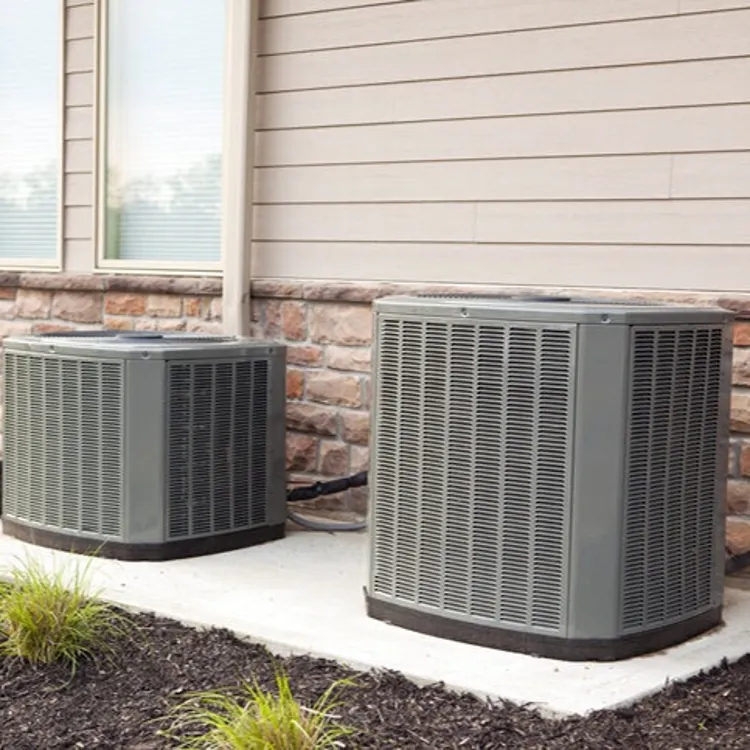
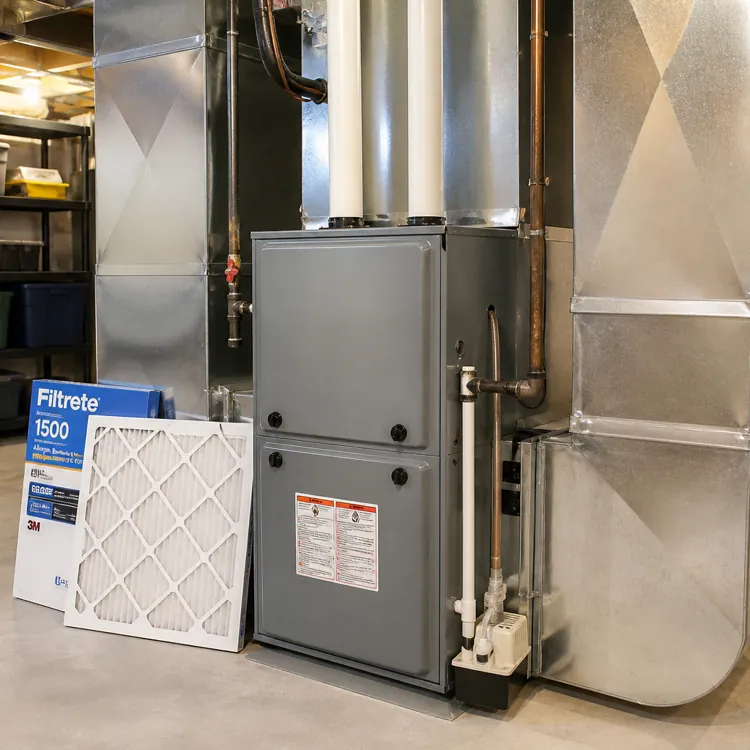
A split HVAC system technically means one that has an outdoor unit, like a central AC condenser, and an indoor unit, like an air handler that serves the entire home. However, it usually refers to a traditional setup that includes cooling in the form of a central AC system and heating in the form of a furnace, which uses the same air handler to spread heated air.
Traditional split systems have some of the best heating and cooling output, but they’re also one of the most expensive setups because you have two standalone systems. They also require ductwork, which means retroactively installing a split system in your home can be invasive and even more costly.
Split systems are most popular in areas that see both cold winters and hot summers.
Average cost: $10,000 to $18,000
Best for: Cold climates
A hybrid split system, sometimes called a dual-fuel system, works just like a traditional split system, but it uses a two-way heat pump rather than a central AC system. A heat pump can handle heating and cooling, so it functions as an AC but can also provide heating. However, these systems also include a gas- or oil-fired heating source as a backup.
These are increasingly popular options because heat pumps are extremely efficient and can reduce utility costs, but they still include a traditional boiler or furnace for sufficient heat in extreme cold.
As a result, these are prevalent in cold climates that see moderate summers.
Average cost: $8,000 to $16,000
Best for: Moderate climates
This HVAC system uses just an electric heat pump for both heating and cooling. They include an indoor unit and an outdoor unit, just like with a traditional split system, but instead of using an AC for cooling and a boiler or furnace for heating, the heat pump just handles both.
Heat pumps are extremely efficient and operate quietly, but they don’t have the same level of output as gas- or oil-fired heating units. As such, they’re most popular in moderate climates that don’t see below-freezing temperatures.
Average cost: $3,000 to $10,000 per zone
Best for: High efficiency and temperature control
Mini-splits, sometimes called ductless units, are small heat pumps that serve just portions of your home. They require outdoor units, which are smaller than the condensers you’d have with a central AC system, but they also need small air handlers. These are usually wall-mounted units that are visible in your home, and some homeowners don’t like the look of them.
As small heat pumps, mini-splits are highly efficient, and they give you added flexibility when it comes to heating and cooling your home. Most homeowners have at least one mini-split in their main living area and then one in each additional room. Each added mini-split effectively gives you an additional zone, meaning you can optimize comfort and efficiency.
Average cost: $20,000 to $40,000+
Best for: Low operating costs and reliability in cold climates
Geothermal heat pumps work just like traditional heat pumps (which are air-source heat pumps), but they use underground coils to transfer heat to and from the ground rather than the air around your home.
This setup is highly efficient because it relies on soil that is at a constant temperature, rather than air temperature that varies. However, it also means large-scale excavation, which makes this one of the most expensive types of HVAC systems. They’re also not always viable, depending on the size and layout of your lot.
Geothermal heat pumps can provide sufficient heating and cooling in any climate, but since they outperform air-source heat pumps in lower temperatures, they’re most popular in colder climates.
The HVAC company you choose for your installation is just as important as the type of HVAC system you choose, if not more important. The right professional will help you choose which type is ideal for your home, size your system properly and reduce the risk of future breakdowns by installing everything properly.
There are a few things to look for that can help you choose the best contractor for your project.
One of the first things you should do when choosing an HVAC company is confirm that it’s licensed. Most states require specific HVAC technician licenses, and those that don’t still require that techs hold a general contractor’s license. Ask any provider you’re considering for license information and verify on your state’s website that the license is active.
You should also ask each contractor you get an estimate from for proof of insurance, and they should be able to provide a copy of their general liability policy.
It’s a good idea to read through some online reviews for HVAC companies in your area to see how they’ve served customers in the past. Make sure to read reviews rather than just relying on the overall rating to get a sense of what potential shortcomings you need to be aware of.
It’s best to have your HVAC system installed by a professional with at least five years of experience and with specific experience installing your preferred type of system. Choosing an experienced pro comes with three important benefits:
Companies that offer emergency services can be helpful if you need a fast installation to keep your home at a safe temperature, but they can also perform emergency repairs and maintenance if your system ever goes down in the future.
HVAC equipment prices will be similar regardless of which company installs your system, but some providers upcharge materials and have higher labor costs. Most HVAC companies offer free estimates, so compare quotes from at least three providers to find the best value within your budget.
Finally, you should consider what kind of warranty an HVAC installer offers. Provided your pro is licensed, you’ll get the manufacturer’s warranty for your equipment, but many experienced installers also provide a labor warranty, which usually suggests a higher level of experience.
» MORE: How to choose an HVAC contractor
The upfront cost of an HVAC system is usually what homeowners focus on, but ongoing costs should also be a consideration. Make sure you understand average costs for preventative maintenance, service calls and breakdowns for your system to avoid surprises down the road.
Preventative maintenance is one of the best ways to maximize the efficiency of your HVAC equipment, reduce the risk of breakdowns and extend the equipment’s lifespan. Consider the following pricing when estimating routine maintenance costs.
“An average tune up can range from $20 to $200+, but there is a specific reason for this,” added Benjamin. “Many companies use tune ups as a loss leader, so they’ll actually lose money on the tune up hoping to either find more costly issues to sell services, or at least acquire a customer for future projects that are profitable. Rather than make $80 profit on a tune up, they’ll eat a small loss to acquire a future customer. A non loss leader tune up accounting for labor would normally be $150 to $200, depending on the area.”
Even if you keep up with routine HVAC maintenance, you’ll undoubtedly need repairs at some point, so it’s best to budget ahead of time. HVAC repair costs average around $350, but they can vary based on the type of system you have, the size of your home and the severity of the issue.
Here’s a breakdown of HVAC repair costs based on system type:
Your location can also influence repair costs, as hourly rates often scale with the local cost of living. Average labor rates range from $75 to $250 per hour.
An HVAC service call usually costs between $75 and $150 as a flat fee, and it only includes a diagnostic test to figure out what’s wrong. Some contractors will subtract that fee from the total repair cost if they can fix the problem on-site, but check with your HVAC tech for clarification before having them inspect your unit.
A new HVAC system is almost certainly worth it if your existing equipment is nearing the end of its useful life, or if you’ve had ongoing problems with your system. A new system is expensive, but it gives you peace of mind and ensures you and your family will be safe and comfortable, and that you’re not at risk of frozen pipes and resulting water damage.
HVAC technology has also advanced over the years, so the likelihood is that a new system will be significantly more efficient than your old one. You could see lower heating and cooling bills, and you may see a bump in home value due to the increased efficiency and the lower risk of future breakdowns.
Local companies can provide the assistance you need quickly. We compared HVAC companies across the U.S. to help you find trusted HVAC contractors in your city.
» MORE: HVAC industry statistics
HVAC stands for “heating, ventilation and air conditioning,” and it refers to any system in your home that handles heating and cooling. That can include furnaces, boilers, central AC systems, heat pumps, ductless mini-splits, geothermal heat pumps and other systems, as well as ventilation systems and ductwork.
On average, a new HVAC system costs between $8,000 and $15,000, which is accurate for a traditional split system that has a furnace and a central AC system or a boiler and a central AC system. New HVAC system prices can vary widely based on the type of equipment you want, the efficiency level you need, the size of your home and more. Contact a local HVAC professional for an accurate quote for your project.
Different HVAC systems work in different ways. Furnaces and boilers burn gas, oil or propane to heat air or water to warm your home’s interior. Central AC systems use refrigerant running through evaporators and condensers to transfer heat out of your home. Heat pumps and mini-splits work similarly but can move heat into your home as well. Centralized systems deliver air through ductwork, boilers move heated water through baseboards, and mini-splits use wall-mounted units to distribute air.
The lifespan of your HVAC equipment depends on the type of system. Furnaces and boilers last for 15 to 20 years; central AC systems last for 12 to 20 years; hybrid split systems and heat pumps last for 10 to 20 years; mini-splits last for 15 to 20 years; and geothermal systems last for 20 to 25 years, but the ground loop portion can last for 50 or more years. The climate in your area and the size of your system compared to your demands both affect system lifespan.
Information in this guide is general in nature and is intended for informational purposes only; it is not legal, health, investment or tax advice. ConsumerAffairs.com makes no representation as to the accuracy of the information provided and assumes no liability for any damages or loss arising from its use.
The ConsumerAffairs Research Team compared HVAC companies using verified customer reviews and company features.
We looked at customer satisfaction with:
We also compared:
ConsumerAffairs writers primarily rely on government data, industry experts and original research from other reputable publications to inform their work. Specific sources for this guide include:
Thanks for subscribing.
You have successfully subscribed to our newsletter! Enjoy reading our tips and recommendations.
| Company | Customer rating | About | Learn More |
|---|---|---|---|
|
One Hour Heating & Air Conditioning
| 2.9
157 reviews
| 24/7 HVAC repairs and installations. Upfront pricing with no hidden fees. Two-year satisfaction guarantee. On-time arrival promise. Nationwide franchise network. | Read Reviews |
|
ARS/Rescue Rooter
| 3.8
278 reviews
| Repair and maintenance for residential plumbing, HVAC, electrical and sewer systems. Emergency services available seven days a week, 365 days a year. One-year labor warranty on most services. Over fifty years of experience. | Read Reviews |
 Hamilton Plumbing, Heating, A/C & Rooter
| 4.4
44 reviews
| Offers HVAC, plumbing and electrical services to the Kansas City metro area. Can handle a wide variety of services, including installation and repair projects. Uses a per-job pricing model. Offers a 100% satisfaction guarantee. | Read Reviews |
 McCarthy Services
| 4.3
36 reviews
| Repair and maintenance for AC, heating, heat pumps, gas lines and water heaters. 24/7 emergency service and same-day repairs when possible. Indoor air quality solutions, including duct cleaning, humidifiers and UV lights. | Read Reviews |
 A.J. Perri
| 4.1
48 reviews
| Provides HVAC, plumbing, air quality and smart home services in New Jersey. Offers emergency support, licensed technicians, service plans and financing. Customer service available by phone, chat and text. | Read Reviews |
 All Year Cooling
| 2.6
824 reviews
| All Year Cooling is a residential air conditioning repair company located in Fort Lauderdale, Florida. It offers air conditioning installation and repair, duct cleaning and restoration and attic insulation. | Read Reviews |
 Lindstrom Air Conditioning & Plumbing
| 2.3
63 reviews
| With an A+ certification from the Better Business Bureau, Lindstrom Air Conditioning & Plumbing has a history of excellent customer service. It offers a 10 percent discount for service calls that are scheduled online. | Read Reviews |
 Peterman Brothers
| 1.8
View profile
| Family-owned HVAC, plumbing and electrical company. Large service area in Indiana, Kentucky and Ohio. Offers comprehensive installation, repair and maintenance services. Excellent reputation. Transparent pricing policy. | Read Reviews |
 GE Air Conditioners
| 1.7
93 reviews
| GE is a global industry leader that has been providing advanced technology in homes and businesses for over a century. They sell wall and window air conditioners for homeowners in addition to commercial air conditioners. | Read Reviews |
 Samsung Air Conditioners
| 1.3
57 reviews
| Samsung is a world leader in consumer electronics and appliances. It offers a wide range of products, including home and commercial HVAC systems and air conditioners. Its products are efficient and technologically advanced. | Read Reviews |
 Goodman Manufacturing
| 1.3
477 reviews
| Goodman Manufacturing has been building heating and air conditioning equipment since 1982, including ductless and central air conditioning for homeowners. Their units are sold by independent contractors across the country. | Read Reviews |
 Lennox
| 1.3
829 reviews
| Lennox got its start in 1895 as a furnace manufacturer and introduced air conditioners to its customers in 1952. It is headquartered in Texas and offers homeowners energy efficient, money saving options on air conditioners. | Read Reviews |
 Whirlpool Air Conditioners
| 1.3
35 reviews
| Whirlpool is an industry leader in home appliances. Whirlpool manufactures window unit air conditioners for home and business use. These are available to purchase at select retailers and from certified installers nationwide. | Read Reviews |
 Frigidaire Air Conditioners
| 1.2
147 reviews
| Frigidaire has been a major innovator of home technology since it was bought by General Motors in 1918. Their focus on energy-efficiency and smart technology promotes sustainability and helps homeowners save money. | Read Reviews |
 Trane
Trane
| 1.2
803 reviews
| Trane has been innovating in heating and cooling technology since 1910. They specialize in home air solutions and continuously work to improve and advance their heating and cooling systems for homeowners. | Read Reviews |
 Haier Air Conditioner
| 1.2
202 reviews
| Haier is an international company that sells wall, ductless, PTAC and portable air conditioners to homeowners around the world. As a company, they have a commitment to sustainability and community. | Read Reviews |
 LG Air Conditioners
| 1.2
179 reviews
| LG sells portable, window and wall air conditioners to homeowners. They also sell accessories such as remote controls and 24-hour timers to improve your air conditioner’s accessibility and performance. | Read Reviews |
 Honeywell Heaters
| 1.1
69 reviews
| Honeywell is a Fortune 100 company and leader in home technology. It offers a selection of heaters for homes, including tower, fan forced, digital, radiator and energy-smart cool touch options, sold at retailers nationwide. | Read Reviews |
 Carrier Heating & Cooling
| 1.1
696 reviews
| Carrier’s innovation in heating and cooling technology dates back to 1881. They offer homeowners smart technology with professional installation along with energy audits to help them stay cool and save money. | Read Reviews |
 Nortek Global HVAC
| 1.0
202 reviews
| Nortek Global HVAC, formerly Nordyne, has been a heating and cooling manufacturer for over 95 years. Headquartered in Rhode Island, Nortek manufactures several major brands of HVAC systems for contractors and distributors. | Read Reviews |
 Hitachi Air Conditioner
| 1.0
197 reviews
| Hitachi is a large Japanese multinational company specializing in technological innovations in many sectors. Among its many offerings, Hitachi manufacturers air conditioning units available in some countries, especially India. | Read Reviews |
 Bruni & Campisi
| No reviews | Emergency services available 24/7. Upfront, clear pricing with no hidden fees helps avoid surprises. Financing available for larger projects. Membership perks include discounts on repairs and free HVAC tuneups. | |
 Heritage Home Service
| No reviews | HVAC installs get a 5-year no-lemon pledge. Plumbing, electrical and generator installs include free quotes and a 3-year workmanship warranty. Authorized Generac dealer. $500 credit for missed installation dates. | |
 Snyder Air Conditioning, Plumbing & Electric
| No reviews | Offers a 12-month money-back guarantee and a no-lemon guarantee on HVAC compressors. Provides HVAC, plumbing, electrical and generator installation, repair and maintenance. Fully licensed and insured. | |
 A#1 Air
| No reviews | Provides 100% satisfaction and comfort guarantees. Emergency services available. Estimates provided within 24 hours. Membership perks like free tuneups are offered. Flat-rate pricing with no hidden fees or surprise costs. | |
 Apple Air Heating, Cooling, Plumbing & Electrical
| No reviews | Offers 100% customer satisfaction and comfort guarantees. Handles permit and rebate applications for all HVAC installations. Emergency services available. Flat-rate pricing with no surprise charges or hidden fees. | |
 Call The Bee
| No reviews | Emergency service available 24/7. 100% customer satisfaction guarantee. Near-perfect customer review ratings online. Flat-fee pricing with no hidden costs. Membership available for added perks, like free tuneups. | |
 Dilling Heating, Cooling, Plumbing & Electrical
| No reviews | Offers 24/7 support throughout North and South Carolina. Covers all types of home maintenance, including heating, cooling, electrical, drains and sewage. Provides free home consultations and estimates. | |
 F.H. Furr Plumbing, Heating, Air Conditioning & Electrical
| No reviews | Provides a range of home system services. Handles installation, repair and maintenance. Lifetime workmanship guarantee. 24/7 emergency availability. Serves the northern Virginia, Washington, D.C., Maryland and Delaware areas. | |
 First Choice Plumbing, Heating, Air Conditioning & Electrical
| No reviews | Comprehensive services for HVAC, electrical and plumbing. Handles installation, maintenance, troubleshooting and repair. Technicians are available 24/7. Serves a large majority of the New Jersey Area. | |
 Frank Gay Services
| No reviews | Serves over 250 cities across central Florida. Offers 24/7 emergency service. Employs specialized technicians for HVAC, electric and plumbing. Handles all aspects of service — installation, repair and maintenance. | |
 Freedom Power HVAC
| No reviews | Offers HVAC installation, repairs and maintenance in Central Texas seven days a week. Emergency services available 24/7. Financing starts at 3.99% with approved credit. 10-year warranty on duct sealing. | |
 Home Upgrade Specialist
| No reviews | Tesla-certified installer for solar roofs, Powerwall batteries and HVAC systems. Licensed contractor serving Southern California since 2005. Heat pumps, solar panels, roofing and energy upgrades. Financing available. | |
 Kellam Home Services Cooling, Heating, Plumbing & Electrical
| No reviews | Offers HVAC, plumbing, electrical and generator services to several cities in coastal Virginia. Performs installations, repairs and maintenance. Offers comprehensive maintenance plans. Techs are thoroughly trained and vetted. | |
 Legacy Heating, Cooling, Plumbing & Electrical
| No reviews | Offers installation, maintenance and repair services for HVAC, plumbing, electrical and generators. Serves Las Vegas, Reno and surrounding areas in Nevada. Provides an array of guarantees on service and workmanship. | |
 Reimer Home Services
| No reviews | Offers HVAC, plumbing, electrical and generator services in numerous cities across New York. All techs are licensed and insured. Offers several satisfaction guarantees. Features a comprehensive home maintenance program. | |
 Right Now Heating and Air Conditioning
| No reviews | Offers HVAC, plumbing, electrical and generator services across Idaho and parts of Oregon and Washington. Techs are licensed and highly trained. Offers 100% satisfaction guarantee. Flexible financing options are available. | |
 Whipple Cooling, Heating, Plumbing & Electrical
| No reviews | Champions Club membership from $19.95/month for HVAC, plumbing and electrical. No Lemons Guarantee. Installs and repairs Generac standby generators. |