2025 Nutrition

Article Image

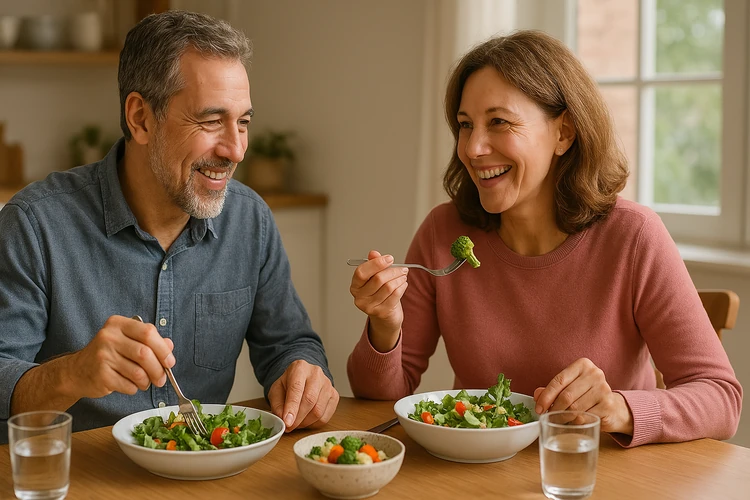
How the Green-Mediterranean diet might slow brain aging

  • In an 18-month randomized trial, people who followed a “green-Mediterranean” diet saw less of a protein signature associated with aging in the brain than those on a standard healthy diet.

  • The green-Mediterranean diet in this study included green tea and the aquatic plant Mankai, in addition to typical Mediterranean diet components.

  • The study tracked changes in blood proteins tied to brain aging, suggesting diet-linked biological changes may happen before cognitive symptoms appear.


As we get older, our brains don’t always feel as sharp as they used to, and researchers are exploring ways diet might slow or even reverse aspects of that process. 

A new study from Harvard T.H. Chan School of Public Health, Ben-Gurion University, and colleagues suggest that a version of the Mediterranean diet with extra “green” additions — specifically green tea and Mankai (an aquatic plant) — might help slow brain aging.

The study

The study is part of something called the DIRECT-PLUS trial. Roughly 300 participants were followed for 18 months and randomly assigned to one of three diet groups:

  1. A standard healthy diet

  2. A traditional calorie-restricted Mediterranean diet (lots of vegetables, less red meat, more fish and poultry, low in simple carbs)

  3. The “green-Mediterranean” diet, which is like the Mediterranean diet but with added green tea and Mankai.

The researchers collected blood samples and measured levels of certain proteins that are believed to correlate with brain aging — that is, how “old” your brain seems compared to your actual age. 

Higher levels of some of these proteins are associated with accelerated brain aging. The idea was to see whether dietary changes could shift those protein levels.

What did they find?

Over the 18 months, people in the green-Mediterranean group showed reductions in certain proteins in their blood that are thought to reflect faster brain aging. In contrast, those reductions were not as pronounced in the other diet groups. 

In short, adding green tea and Mankai appeared to help slow down markers of brain aging more than a standard healthy or even traditional Mediterranean diet.

The key point: these changes were biological — they happened in protein markers in the blood — before any obvious cognitive decline. This suggests that the green-Mediterranean diet could influence early, underlying processes of brain aging rather than just reacting to symptoms once they appear.

“Studying the circulating proteins in blood allows us to observe, in a real-life setting, how the brain’s aging processes are influenced by lifestyle and dietary changes,” researcher Anat Meir, said in a news release. 

“This approach gives us a dynamic window into brain health, helping to reveal biological changes long before symptoms may appear. By mapping these protein signatures, we gain powerful new insight into how interventions, such as diet, may help preserve cognitive function as we age.”

How to try a green-Mediterranean approach

You don’t need to overhaul your life overnight to start adopting elements of this eating pattern. Here are a few approachable ways to begin:

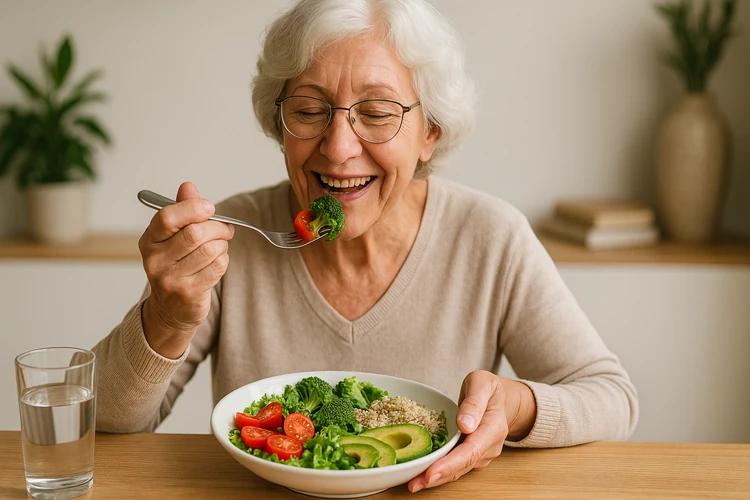
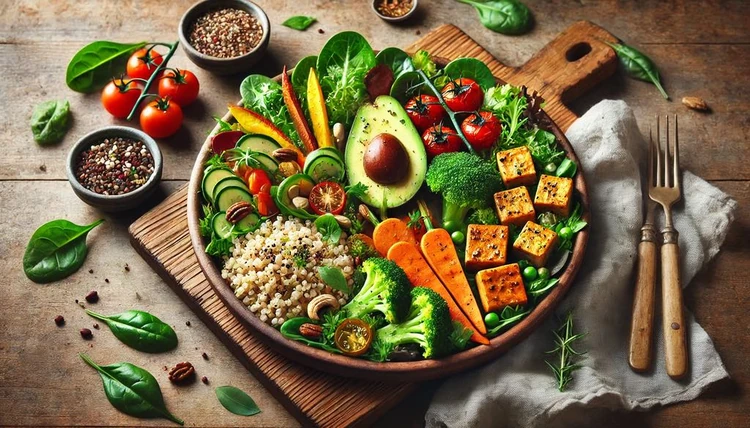
  • Build a Mediterranean base. Focus on vegetables, fruits, legumes, nuts, whole grains, and lean proteins like fish or chicken. Use olive oil as your main fat.

  • Go greener. Add a couple of cups of unsweetened green tea each day. It’s calorie-free and rich in plant compounds studied for their antioxidant benefits.

  • Experiment with greens like Mankai. While Mankai (also known as duckweed) isn’t widely available everywhere, some markets and supplements carry it. If you can’t find it, think about incorporating other nutrient-dense greens like spinach, kale, or watercress as a practical stand-in.

  • Keep it sustainable. The study participants followed their diets for 18 months — so small, steady changes are more realistic than quick fixes.

Article Image

How eating dessert can actually help you lose weight

  • Researchers from a recent study found that when participants ate small portions of foods they were craving, while also eating balanced meals, they lost nearly 8% of their body weight.

  • Regularly eating preferred treats lowered both the frequency and intensity of cravings over a full year.

  • As long as weight loss was maintained, cravings stayed low, challenging the idea that fat cells drive hunger.


Struggling to resist sweets and snacks is a major roadblock for many people trying to lose weight. 

However, a recent study from the University of Illinois Urbana-Champaign flips that script. 

Instead of cutting out all treats, researchers explored what would happen if people included small amounts of the foods they crave in their daily meals. The result? Less constant hunger pangs, more weight loss, and easier long-term maintenance.

“If you are eating and snacking randomly, it’s very hard to control,” researcher Manabu T. Nakamura said in a news release. 

“Some dietary programs exclude certain foods. Our plan used an ‘inclusion strategy,’ in which people incorporated small portions of craved foods within a well-balanced meal.”

The study

This clinical trial followed 30 adults aged 18 to 75 who were obese and had health concerns like hypertension or diabetes. Over two years, participants went through a 12-month weight-loss phase and a 12-month maintenance phase using an online program called EMPOWER, adapted from a well‑established in‑person plan.

They received 22 nutrition education sessions that taught them to balance protein, fiber, and calories using a visual tool. Crucially, the plan encouraged an “inclusion strategy” — adding small portions of beloved foods, like desserts or fries, into otherwise nutritious meals.

Details of the study setup included:

  • Craving surveys every six months covering sweets, high-fat foods, fast food, and carbs. Researchers rated frequency and intensity using a 1–6 scale across 15 statements.

  • Daily Wi‑Fi scale weigh-ins to track every bit of progress.

About 24 participants completed the first year and 20 finished the full two years.

The Results

In year one, the 24 participants who stayed in the program lost an average of 7.9% of their body weight. During year two, 20 of them maintained most of that loss, winning a total average reduction of 6.7%.

Participants who lost more than 5% of their body weight saw big drops in both how often and how strongly they craved foods like sweets and carbs. These reduced cravings continued throughout the maintenance year — so long as weight didn't bounce back.

This shows that cravings are more tied to having less body fat — not just limiting calories — undermining the idea that “hungry fat cells” drive constant cravings.

More than half of the participants used the inclusion approach — some even one to three times daily. Those who did, tended to lose more weight and saw sharper drops in cravings for sweets and high-fat items.

What This Means for You

If you’re tired of feeling deprived, this study suggests there’s another way: enjoy the foods you love, but in tiny portions and within overall healthy meals. The consistent routine — not sheer willpower — helped participants curb cravings and stay on track.

While this study was relatively small and involved online coaching, its findings are promising. Including treats, rather than banning them, could offer a more sustainable — and satisfaction-filled — route to lasting weight loss.

So next time you're craving dessert, maybe go ahead and have a bite — with the right balance, you might just be one step closer to your goals!

“The popular myth is you have to have a very strong will to fend off temptation, but that is not the case,” Nakamura said. “Fluctuations in eating patterns, meal times, and amounts trigger cravings, too. You have to be consistent.”

Article Image

Dairy might be disturbing your dreams, study finds

  • A survey of over 1,000 students reveals a clear link between lactose intolerance, digestive upset, and more frequent nightmares.

  • Only around 5.5% believe food affects their dreams, but sweets and dairy are the top perceived triggers.

  • Feeling gassy or in stomach discomfort at night seems to mess with sleep quality and increase the chances of disturbing dreams.


If you’ve ever blamed late-night pizza or cheese for a weird dream, you’re not alone. 

Researchers at Université de Montréal and MacEwan University dug into whether food — especially dairy — can really affect sleep and dreams. 

They surveyed 1,082 students, asking about their eating habits, overall health, sleep patterns, dream recall, and any food intolerances or allergies to determine if there's a genuine link between dairy and bad dreams.

“Nightmare severity is robustly associated with lactose intolerance and other food allergies,” researcher Dr. Tore Nielsen said in a news release. 

“These new findings imply that changing eating habits for people with some food sensitivities could alleviate nightmares. They could also explain why people so often blame dairy for bad dreams!” 

The study

Participants, mainly undergrads around age 20, completed an online questionnaire between January and April 2023. It covered:

  • Personal info (age, gender, health conditions)

  • Diet habits (evening eating, snacks, food choices)

  • Any intolerances (lactose, gluten) or allergies

  • Sleep quality (using the Pittsburgh Sleep Quality Index)

  • Nightmare frequency and severity (using a trimmed-down Nightmare Disorder Index) 

They also asked if students thought certain foods or late meals affected their sleep or dreams. Statistical analyses looked for connections between food, physical symptoms, sleep quality, and dream experiences.

The results

Here’s a look at what the researchers found: 

  • Many feel food affects their sleep. About 40% believed that eating late or certain foods influenced their sleep; 25% thought it made sleep worse. But only 5.5% said food affected their dreams directly.

  • Dairy and sweets get the blame. Among those few, most blamed desserts/sweets (31%) and dairy (22%) for weird dreams or nightmares.

  • Lactose intolerance stands out. The strongest link emerged for students with lactose intolerance: they reported more GI symptoms (like gas or stomach pain), poorer sleep quality, and more frequent or intense nightmares. Statistical models showed GI discomfort acted as a bridge between lactose intolerance and nightmares — meaning the digestive issues likely trigger sleep disturbances and, in turn, bad dreams. Other food issues — like general food allergies or gluten intolerance — also connected to dream concerns, but the link was strongest for lactose intolerance.
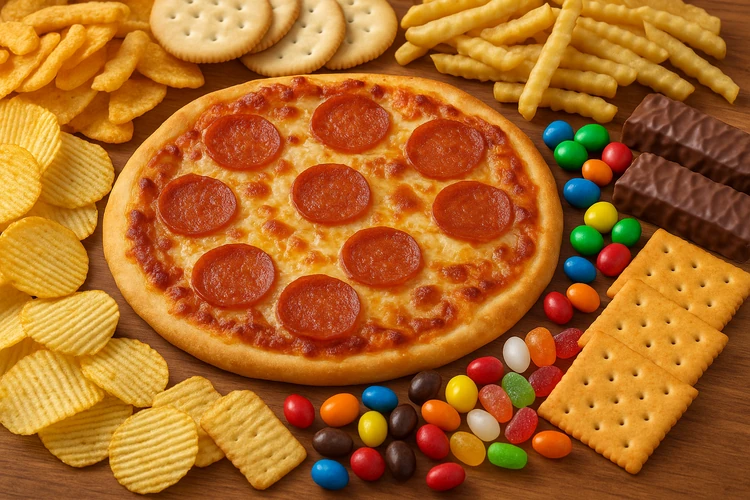
  • Overall eating habits matter. Healthier eating patterns — like less evening snacking and using hunger cues — were tied to better dream recall. Less healthy habits — late meals, disregarding hunger signals, and experiencing GI symptoms — were linked to more nightmares and negative dream content. 

“Nightmares are worse for lactose intolerant people who suffer severe gastrointestinal symptoms and whose sleep is disrupted,” said Nielsen. “This makes sense, because we know that other bodily sensations can affect dreaming. 

"Nightmares can be very disruptive, especially if they occur often, because they tend to awaken people from sleep in a dysphoric state. They might also produce sleep avoidance behaviors. Both symptoms can rob you of restful sleep.” 

What this means

If you suffer from lactose intolerance and find yourself waking up stressed after a disturbing dream, dairy late at night could be a culprit — and not because of superstition, but because night-time stomach discomfort interferes with restful sleep. 

For some, simply adjusting evening meals — like avoiding dairy before bed — might lead to calmer sleep and fewer nightmares.

“We need to study more people of different ages, from different walks of life, and with different dietary habits to determine if our results are truly generalizable to the larger population,” said Nielsen. 

“Experimental studies are also needed to determine if people can truly detect the effects of specific foods on dreams. We would like to run a study in which we ask people to ingest cheese products versus some control food before sleep to see if this alters their sleep or dreams.” 

Article Image

Does your favorite snack bar contain toxic metals?

  • A test on 165 of the best-selling snack and nutrition bars found that 100% of the biggest brands contain heavy metals. 

  • Products marked as organic, non-GMO, or vegan are often some of the biggest offenders in this area. 

  • Consumers should be looking at how products are made, as well as what’s in them, to determine overall safety. 


The Clean Label Project, a nonprofit organization that tests consumer products for industrial and environmental contaminants, recently conducted a study on one of the most popular – and lucrative – parts of the food industry: snack and nutrition bars. 

After testing 165 of the most popular snack bars, none of the items tested passed the Clean Label Project’s testing, and all of them contained heavy metals. 

Jaclyn Bowen, Executive Director of Clean Label Project, shared insights with ConsumerAffairs to help break down the findings and what this means for consumers.  

“It's important to understand that not all contaminants are the result of negligence,” Bowen explained. “Heavy metals like arsenic, lead, and cadmium can occur naturally in soil and water. But what makes the situation worse is how human activity – like industrial pollution, mining, and even agricultural practices – has intensified the presence of these substances in our food system.

“This means contamination is often less about a single bad actor and more about a broader, systemic issue. That’s why we need smarter sourcing, better testing, and stronger accountability throughout the supply chain. Brands that are proactively looking for these risks, and addressing them, are the ones setting the new standard for safety. Consumers deserve products that are not just marketed as healthy, but truly proven to be safer.” 

Putting snacks to the test

To get a clear picture of what’s really in popular snack and nutrition bars, the Clean Label Project bought 165 best-selling products — including top picks from Amazon, Nielsen, SPINS, and the natural and organic aisles. 

Working with a specialized lab, they tested for a wide range of industrial and environmental contaminants. In total, the team gathered over 20,000 data points across 50 brands to see how these snacks really stack up.

Here’s what they found

While the full report is available here for review, here’s a look at some of the biggest findings from the study: 

  • 100% of products tested had detectable levels of heavy metals

  • 22% of products exceed California’s Prop 65 limits for lead and 6% for cadmium 

  • Organic comes with concerns: Certified-organic bars, on average, had 28% more heavy metals, and 6% of organic certified bars tested high in pesticides banned from organic products.

  • Watch the labels: Products marketed as “Gluten-Free,” “Non-GMO,” “Vegan,” “Soy-Free,” and “Dairy-Free,” on average, consistently tested higher in heavy metals.

  • Bars labeled “Kids,” on average, had significantly lower levels of heavy metals, pesticides, and phthalates than their adult counterparts.

What does this mean for consumers?

“One of the biggest takeaways is that popular snack and nutrition bars, especially those marketed as organic, vegan, or non-GMO, aren’t immune to contamination,” Bowen told ConsumerAffairs. While these labels may reflect certain ingredient standards, they don’t necessarily mean the final product is free from harmful substances like heavy metals, acrylamide, or plasticizers. 

“The report also highlights that contamination doesn’t just come from the food itself – it can happen during processing or through packaging materials. That’s why we’re urging more transparency and better testing practices industry-wide. Consumers deserve to know not just what they’re eating, but how it was made.” 

Choosing better snacks starts with education

According to Bowen, when it comes to making better choices in the snack aisle, consumers should start with asking questions. 

“Ultimately, being an informed consumer is about more than just reading the front of the label – it’s about understanding how your food is made and holding brands accountable to higher standards,” she said.

“Don’t be afraid to reach out to brands – especially the ones you and your family rely on – and ask what they’re doing to test for contaminants like heavy metals and plasticizers. Transparency should be the norm, not the exception.” 

On top of that, Bowen wouldn’t recommend consumers start immediately cleaning out their pantries. Instead, this can start with being more mindful when you’re in the grocery store. 

“There’s no need to panic or start tossing everything out — but this report is a good reminder to take a closer look at what’s in your pantry,” she explained. “It’s less about one snack bar or product, and more about long-term patterns of exposure. 

“This is also a great time to check labels and consider choosing brands that are transparent about their testing and ingredient sourcing.” 

Article Image

RFK Jr. claims to have an 'understanding' about dyes with food manufacturers

Key takeaways:

  • Robert F. Kennedy Jr. calls sugar "poison" and vows sweeping food industry reform by 2026
  • Claims "understanding" with food makers to remove petroleum-based dyes, though none have confirmed
  • Critics warn his agency staff cuts may undermine enforcement and food safety oversight

Health and Human Services Secretary Robert F. Kennedy Jr. dramatically intensified his campaign against the processed food industry on Tuesday, proclaiming that “sugar is poison” and unveiling an ambitious plan to eliminate artificial dyes from many grocery products by 2026.

Speaking in the grand hall of the HHS building before an audience of supporters and agency leaders, Kennedy declared war on ultra-processed foods, accusing the industry of fueling a public health crisis through the marketing of sugar-laden and chemically enhanced products.

No industry sign-on 

While Kennedy claimed to have an “understanding” with major food manufacturers to remove petroleum-based food colorings, no companies publicly confirmed such an agreement. Notably, no food industry representatives were present at the press conference, the New York Times noted.

The only public pledge thus far comes from the International Dairy Foods Association, which has promised to eliminate artificial colors from milk, cheese, and yogurt served in federal school meal programs by the 2026 school year.

Consumer and public health groups were underwhelmed by the announcement. Dr. Peter Lurie, president of the Center for Science in the Public Interest (CSPI) called the press conference "disappointing" and noted that the agency issued "no rulemaking of any sort" to remove commonly used synthetic dyes from the food supply. 

"We are told that the administration has an unspecified 'understanding' with some unspecified fraction of the food industry to eliminate dyes," said Lurie. "We wish Kennedy and Makary well getting these unnecessary and harmful dyes out of the food supply and hope they succeed. ... But history tells us that relying on voluntary food industry compliance has all-too-often proven to be a fool’s errand."

Kennedy said food companies and some fast-food chains had reached out to the agency seeking “guidance” on reforming their products. “Four years from now, we are going to have most of these products off the market,” he said.

"Phase-out" of some dyes planned

On April 22, the day before Kennedy's news conference, the FDA announced plans to "phase out" from the food system six petroleum-based synthetic dyes: Blue 1, Blue 2, Green 3, Red 40, Yellow 5, and Yellow 6, by the end of 2026.  

Other, lesser-used dyes, namely Orange B and Citrus Red 2, will be phased out “in the coming weeks,” said FDA Commissioner Martin Makary.

The agency also said that it will request that the food and beverage industry remove Red 3 sooner than the previously announced compliance deadline of 2027 for foods.

However, the agency is not issuing a ban; instead, the FDA has asked food manufacturers to comply with the agency's request to remove these food dyes voluntarily. Because using synthetic food dyes has always been voluntary, there is no incentive from today's announcement for manufacturers to switch to natural food colors, CSPI's Lurie said.

Criticism over cuts 

While Kennedy’s crusade has drawn praise from health reform advocates, others warn that his own cuts to scientific research budgets and staff reductions at key federal agencies could sabotage enforcement. Critics argue that his slashing of personnel at the Food and Drug Administration and the National Institutes of Health has weakened the very institutions tasked with regulating the food industry.

Kevin Hall, the NIH’s leading nutrition scientist, recently resigned, citing censorship and diminished scientific rigor. Jim Jones, who headed the FDA’s food division, stepped down last month, warning that “indiscriminate” layoffs would render the agency ineffective.


Article Image

How do you keep food safe during an emergency?

Wildfires, winter storms, hurricanes and other natural disasters can jeopardize the safety of your food supply. Everybody knows that, but the question of what to do in a given situation can be hard to answer.

Meat, poultry, fish, and eggs should always be refrigerated at or below 40 °F and frozen food at or below 0 °F but this may be difficult when the power is out.
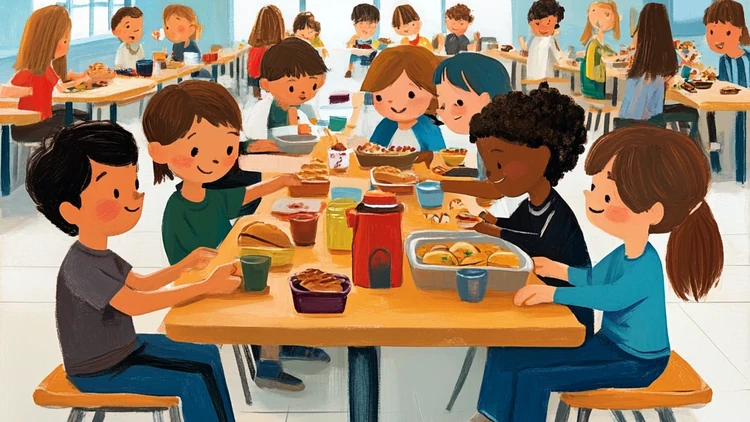
A few basic steps include keeping the refrigerator and freezer doors closed as much as possible to maintain the cold temperature, the U.S. Department of Agriculture advises.

The refrigerator will keep food safely cold for about 4 hours if it is unopened. A full freezer will hold the temperature for approximately 48 hours (24 hours if it is half full) if the door remains closed.

Obtain dry or block ice to keep your refrigerator as cold as possible if you know or fear that the power is going to be out for a prolonged period of time. Fifty pounds of dry ice should hold an 18-cubic foot full freezer for 2 days. Plan ahead and know where dry ice and block ice can be purchased.

Be prepared for an emergency...

The USDA advises that you keep items on hand that don't require refrigeration and can be eaten cold or heated on the outdoor grill. Shelf-stable food, boxed or canned milk, water, and canned goods should be part of a planned emergency food supply.

Make sure you have ready-to-use baby formula for infants as well as plenty of pet food. Remember to use these items and replace them from time to time. Be sure to keep a hand-held can opener for an emergency.

Consider what you can do ahead of time to store your food safely in an emergency. If you live in a location that could be affected by a flood, plan your food storage on shelves that will be safely out of the way of contaminated water.

Coolers are a great help for keeping food cold if the power will be out for more than 4 hours—have a couple on hand along with frozen gel packs. When your freezer is not full, keep items close together—this helps the food stay cold longer.

Digital, dial, or instant-read food thermometers and appliance thermometers will help you know if the food is at safe temperatures. Keep appliance thermometers in the refrigerator and freezer at all times.

When the power is out, an appliance thermometer will always indicate the temperature in the refrigerator and freezer no matter how long the power has been out. The refrigerator temperature should be 40 °F or below; the freezer, 0 °F or lower. If you're not sure a particular food is cold enough, take its temperature with a food thermometer.
Don't store food outside

If there's a blizzard and your power goes out, resist the temptation to put your food outside in the snow.

Frozen food can thaw if it is exposed to the sun's rays even when the temperature is very cold. Refrigerated food may become too warm and foodborne bacteria could grow. The outside temperature could vary hour by hour and the temperature outside will not protect refrigerated and frozen food.

Additionally, perishable items could be exposed to unsanitary conditions or to animals. Animals may harbor bacteria or disease; never consume food that has come in contact with an animal.

Rather than putting the food outside, consider taking advantage of the cold temperatures by making ice. Fill buckets, empty milk cartons or cans with water and leave them outside to freeze. Then put the homemade ice in your refrigerator, freezer, or coolers.

What about rethawing food after an outage?

You will have to evaluate each item separately. If an appliance thermometer was kept in the freezer, read the temperature when the power comes back on.

If the appliance thermometer stored in the freezer reads 40 °F or below, the food is safe and may be refrozen. If a thermometer has not been kept in the freezer, check each package of food to determine the safety. Remember you can't rely on appearance or odor. If the food still contains ice crystals or is 40 °F or below, it is safe to refreeze.

Refrigerated food should be safe as long as power is out no more than 4 hours. Keep the door closed as much as possible. Discard any perishable food (such as meat, poultry, fish, eggs, and leftovers) that have been above 40 °F for 2 hours.

Article Image

Grocery stress higher among low-income households

It's hardly surprising that lower-income households would be feeling stress over the price of groceries but a report from Purdue University confirms that it's indeed the case. 

The average grocery price stress level rating came in at 5.1 on a scale ranging from no stress at all (0) to extreme stress (10).

“Low- and middle-income households are more likely to report higher stress levels on this scale, with those earning less than $75,000 annually reporting an average rating of close to 6, whereas high-income earners reported an average rating around 4,” said the report’s lead author, Joseph Balagtas, professor of agricultural economics at Purdue.  and director of CFDAS.

New questions in the latest Purdue survey included a section that gauged consumer understanding of tariffs, like those President Trump is implementing. This included what they see as the costs and benefits of such policy and how they think tariffs affect food prices.

Most consumers — 80% — are at least somewhat familiar with the tariffs concept.

The survey presented consumers with an open response format rather than a list of potential benefits and costs of tariffs. “Around one-third of respondents say there are no benefits to tariffs while 20% are unsure,” Balagtas said. “Helping or protecting domestic industries was the most commonly cited benefit, followed by government revenue and trade fairness, leverage and regulation.”

A greater share of self-identified Democrats say there is no benefit to tariffs (42%) relative to independent (31%) and Republican consumers (21%).

Many of the open responses mentioned cost of living and price increases. This was by far the most common theme, particularly in responses from Democratic consumers (63%). Fewer consumers believe there are no costs to tariffs (14%) and around 21% are unsure.

Most consumers (72%) think that tariffs raise prices to some degree. “How severe the increase also varies by political affiliation,” Balagtas said. “More than half of Democrats say they increase prices a lot relative to 35% of independents and 22% of Republicans.”

Diet quality

The researchers also put aside economics for a moment and took a look at what consumers are actually eating. They set up a nine-question diet assessment known as the Mini-EAT Tool.

The questions asked consumers to report on how often they are a variety of food groups such as fruits, vegetables, whole grains and sweets. Using these responses, CDFAS economists estimated diet quality.

“We estimate an average Mini-EAT score of 61.9 in January,” said Elijah Bryant, a survey research analyst at CFDAS and a co-author of the report. “This has remained relatively stable over time and translates to a diet quality classification of ‘intermediate.’ The threshold for an ‘unhealthy’ diet is scores less than 61, showing there’s plenty of room for improvement in terms of what we eat.”

Overall diet well-being remains stable, with two-thirds of American adults rating their diet as 7-10 (thriving) when asked where their diet fits on a scale from 0 (worst possible diet) to 10 (best possible diet).

Consumers in households on the Supplemental Nutrition Assistance Program (SNAP) rate their diet well-being comparably to those in non-SNAP households, Bryant said. However, a larger share of SNAP consumers put themselves in the “suffering” category (0-4 out of 10) on the diet well-being index.

“Food insecurity is higher among SNAP households compared to non-SNAP households. The gap is striking since SNAP benefits help alleviate food insecurity for low-income households,” Bryant said.

Eating right isn't a snap

On a scale from never (1) to always (5), consumers in SNAP households choose generic over name-brand food items more often (3.6) than non-SNAP consumers (3.2) when shopping for food. They also report checking labels more often.

“Since most of those receiving SNAP benefits are in low-income households, finding affordable food options such as generic and store brands can be crucial in ensuring that they get the proper amount of foods they need,” Bryant said.

Article Image

359,000 children could lose automatic food funding after budget cuts, report says

Hundreds of thousands of children could lose money for food if plans to cut government spending go through.

At least 359,000 infants and children could lose their automatic eligibility for a government program funding groceries and other nutrition among pregnant women if leaked budget cuts happen, according to a policy brief by the National WIC Association, a nonprofit advocating for the nutritional health of women, infants and children.

Speaker of the House Mike Johnson has suggested that $2.5 trillion of budget cuts are possible.

A "menu" for cuts acquired by POLITICO showed they could indirectly harm the Special Supplemental Nutrition Program for Women, Infants and Children (WIC), which had a more than $7 billion budget in 2024, the National WIC Association said.

The program provides healthy foods, breastfeeding support, nutrition education and referrals to other services, according to the U.S. Department of Agriculture.

The cuts would happen through a mechanism called "adjunct eligibility," which allows families to qualify for WIC by providing proof of participation in other government welfare programs, the National WIC Association said.

Email Dieter Holger at dholger@consumeraffairs.com.

Article Image

Red Dye No. 3 banned in food after years of delay

The Food and Drug Administration (FDA) has banned the food dye Red 3 from use in foods, beverages, oral drugs, and dietary supplements, addressing a decades-long controversy.

Red 3 has been banned from use in topical drugs and cosmetics since 1990, when the FDA itself determined that the dye causes cancer when eaten by animals. But it continued to be allowed in foods, supplements, and oral drugs until today, more than 34 years later.

The ban is in response to a color additive petition filed by the Center for Science in the Public Interest (CSPI) in 2022. The organization called today's action "a win for public health" and said it was long overdue.

Where would you find it?

Products  containing this carcinogenic additive will still be on shelves. until Jan. 16, 2027, when the ban takes effect. This is where you might find Red 3, according to a list compiled by CSPI:

Seasonal candies. Many candies, particularly those available during Halloween and Valentine's Day, often contain Red 3. Common products include conversation hearts, cherry cordials, candy corn, PEZ, original Dubble Bubble gum, and some flavors of Ringpop.

Maraschino cherries. The cherry industry is the largest purveyor of Red 3-dyed products in the US and in Europe. Though some brands have switched to Red 40, check product ingredient lists, where Red 3 is required to be listed by name, to avoid Red 3. 

Fruit cocktails. Common brands of canned or packaged fruit medleys. This once included Dole but the company says it removed Red 3 from its fruit bowls in March 2023.

"The dye was replaced with carmine. The updated products are on store shelves throughout the U.S., featuring refreshed packaging with the updated ingredient lists," a Dole spokesperson told ConsumerAffairs. 

Red 3 and cancer 

Animal studies completed in the 1980s revealed that Red 3 causes thyroid cancer in rats. When studies reveal that an additive causes cancer in humans or animals, the Delaney Clause—a provision of the Federal Food, Drug, and Cosmetic Act—obligates the FDA to deem it unsafe and prohibit it from use in food, drugs, and cosmetics.

FDA relied on the Delaney Clause to ban Red 3 from topical products in the US in 1990, and it did so again today in banning the dye from food products. 

Why did it take so long?

“It cannot be coincidence that all of a sudden, days before the FDA gets new oversight, it manages to ban a substance that doctors, nutritionists and parents have been asking be banned for years," said Los Angeles environmental attorney Vineet Dubey

FDA ignored CSPI's petition for years but in 2024,  California introduced, passed, and signed into law the California Food Safety Act, banning Red 3 and three other unsafe additives statewide, and other states subsequently introduced similar legislation—leaving the federal government to play catch-up.

“All Americans deserve foods free from harmful food additives,” said CSPI’s Principal Scientist for Additives and Supplements Thomas Galligan. “Removing Red 3 and other unsafe, unnecessary food chemicals from our food supply is a critical step for protecting consumers. We hope to see FDA and Congress act soon to reform the broken federal regulatory systems that have allowed unsafe chemicals to enter and stay in our food supply for so long.”

CSPI noted that President-elect Trump’s nominee for secretary of the Department of Health and Human Services, RFK, Jr., made color additives a national issue during this year's elections and as he takes aim at the food system. The Trump Administration could take steps to protect consumers from each of these chemicals and support the FDA’s broader post-market assessment efforts.

Attorney Dubey noted that, as is often the case, California legislators had already banned Red Dye No. 3 and that ban was set to go into effect in 2027.

"But California also banned a number of other unnecessary, hazardous additives which might now get serious consideration from the federal food regulators. These include chemicals like titanium dioxide, another food coloring linked to its ability to damage DNA; and other additives linked to hormone disruption, cancers and impact on the human nervous system."

Article Image

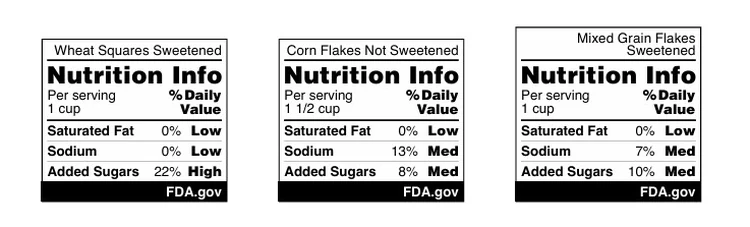
Front-of-package nutrition labels proposed by FDA

Food in the U.S. may soon show simpler nutrition labels in the front of packaging in an effort to get Americans to eat healthier food and tackle chronic disease.

The label focuses on three nutrients linked to poor health—saturated fat, sodium and added sugars—that would be immediately visible to shoppers and say if they are in "high, "medium" or "low" amounts, the U.S. Food and Drug Administration said Tuesday.

The label, which the FDA is calling a "Nutrition Info Box," is essentially a downsized version of the nutrition information found at the back of packaging, known as the "Nutrition Facts label."

"While many consumers use and benefit from the Nutrition Facts label, regular use of the label is lower among some segments of the population," the FDA said.

An example of a front-of-package nutrition label. Image via FDA.

The FDA said it aims for the label to encourage Americans to make healthier eating choices.

It would follow 16 countries, including Germany, France and Spain, that already have front-of-package nutrition labeling.

"Diet-related chronic diseases in the United States are the leading causes of death and disability," the FDA said."Healthy eating patterns, which are, among other things, lower in saturated fat, sodium, and added sugars, are associated with improved health, such as reduced risk of cardiovascular disease, type 2 diabetes, and certain types of cancers."

The label would require companies to have the label within three years after the final rule's effective date, which hasn't been proposed, for businesses with $10 million or more in yearly food sales and four years for companies with less than $10 million in annual sales.

The FDA is now accepting comments on the proposal, which can be sent electronically through http://www.regulations.gov/ by May 16, 2025.

The label is an "an important step to make nutrition information clearer and more accessible," said Nancy Brown, chief executive of the American Heart Association.

"For decades, the Nutrition Facts label has been an essential tool to educate people across the country about the nutritional content of their food and drinks, but high rates of diet-related illnesses continue to show that additional actions are needed to address the confusion and barriers consumers face in evaluating and identifying better options," she said.

Article Image

Alcohol must have cancer warnings, surgeon general says

Alcoholic beverages should have warnings that they cause cancer in an updated label, the U.S. Surgeon General said Friday.

Alcohol is the third-leading causing of cancer after tobacco and obesity and increases the risk of seven types of cancer, including cancer of the breast, throat and liver, the surgeon general said.

Still, awareness among the public about alcohol causing cancer falls behind tobacco and obesity.

“Alcohol is a well-established, preventable cause of cancer responsible for about 100,000 cases of cancer and 20,000 cancer deaths annually in the United States—greater than the 13,500 alcohol-associated traffic crash fatalities per year in the U.S.—yet the majority of Americans are unaware of this risk,” Surgeon General Vivek Murthy said.

The risks of alcohol causing cancer are even higher among women. 

Less than one drink a week increases a women's cancer risk by nearly 17%, compared with 10% for men, according to a new report from the surgeon general.

Breast cancer from drinking alcohol is of particular concern to women: The risk of women developing breast cancer increases around 15% from two drinks a day, or 14 drinks a week.

Currently, the surgeon general's warning on alcohol states it "may cause health problems," which health advocates say grossly understates the risks.

"The science is clear: alcohol causes cancer," said Eva Greenthal, senior policy scientist at nonprofit Center for Science in the Public Interest. "Yet, too many Americans remain in the dark about the significant link between alcohol and cancer."

For the label to change, Greenthal said the Treasury Department’s Alcohol and Tobacco Tax and Trade Bureau and the surgeon general must report to Congress on the need for an update.

"We urge [the Treasury] and Congress to act swiftly to promote a more informed public and prevent the 20,000 annual cancer deaths attributable to alcohol," she said.