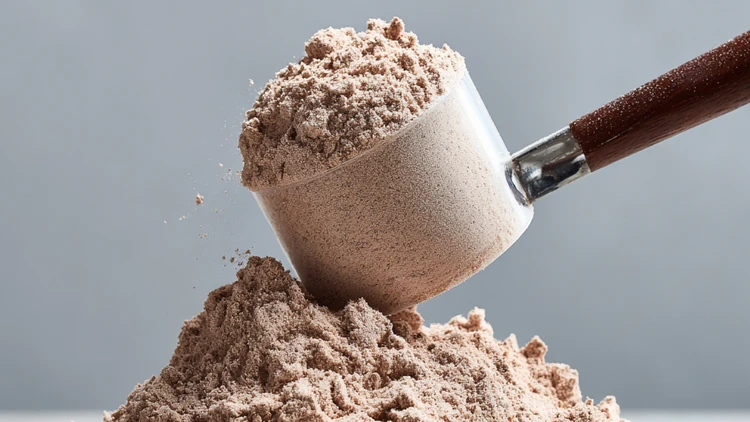

- Report finds two-thirds of tested powders exceed safety limits
- Plant-based, organic, and chocolate-flavored products top the risk list
- Experts say contamination comes from soil, manufacturing, and flavoring agents
A new round of independent testing has found that many protein powders still contain measurable—and sometimes alarming—amounts of lead and other heavy metals. Despite years of warnings, researchers say contamination remains a widespread problem in the booming $8 billion supplement market.
In its latest analysis of 23 popular powders and ready-to-drink shakes, Consumer Reports said that more than two-thirds contained more lead per serving than its recommended daily safety benchmark. Several exceeded that limit tenfold. Elevated levels of cadmium and inorganic arsenic were also detected in some samples.
Plant-based powders made from peas, rice, or hemp were consistently the worst offenders. Dairy-based and collagen products generally fared better, but none were completely free of heavy metals.
Clean Label Project finds similar results
A separate investigation by the Clean Label Project earlier this year reached nearly identical conclusions. Testing 160 powders from 70 brands—representing roughly 80% of the market—it found that 47% exceeded California’s Proposition 65 limits for at least one toxic metal. Organic and chocolate-flavored formulas were most likely to test high.
California’s Prop 65 threshold for lead—0.5 micrograms per day—is far stricter than federal guidance. The FDA’s Interim Reference Level allows 8.8 micrograms per day for women of childbearing age and 2.2 micrograms for children. Industry groups argue that the state’s standards are unrealistically low, but consumer advocates counter that no amount of lead is truly safe.
Heavy metals occur naturally in soil and water, but experts say contamination can also happen during manufacturing or from added ingredients like cocoa powder. Pea and rice proteins are especially vulnerable because the plants readily absorb metals from the soil.
What consumers can do
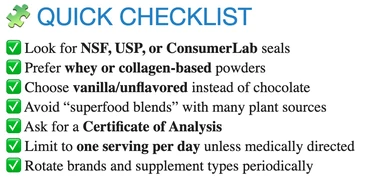
Nutritionists recommend buying powders that carry third-party certifications, such as NSF Certified for Sport, USP Verified, or ConsumerLab.com approval. Those seals indicate that a product has been independently tested for contaminants.
Other steps:
Favor whey or collagen-based powders over plant-based varieties.
Choose vanilla or unflavored options instead of chocolate.
Treat powders as a supplement—not a substitute—for food-based protein.
If you’ve bought one of these protein powders
Check the label.
Look for the product’s lot number and manufacturer. Cross-reference it with the latest lists from Consumer Reports or Clean Label Project. If your brand was included in recent testing, see whether it exceeded safety limits.
Ask for a Certificate of Analysis (COA).
Reputable supplement makers will provide a COA from a third-party lab verifying heavy metal levels. If the company refuses or provides only vague assurances, treat that as a red flag.
Stop using suspect products immediately.
Lead and cadmium accumulate over time. If you’ve been consuming a powder daily, discontinue use and switch to a certified low-contaminant brand.
Report it.
File a complaint with the FDA’s MedWatch program or the California Attorney General’s Office if the product makes misleading “clean” or “heavy metal–free” claims.
Consider medical testing.
If you’ve used large quantities for months—especially if pregnant, breastfeeding, or giving it to children—consult your doctor about a blood lead test.
💡 PREVENTION TIPS
Don’t chase “natural” labels. Organic certification doesn’t guarantee purity—metals come from soil, not pesticides.
Mind the serving size. Even “safe” products can exceed exposure limits if you double-scoop.
Blend whole foods instead. Greek yogurt, eggs, tofu, or nuts provide comparable protein without the contamination risk.
Avoid powders marketed for kids. Children are more susceptible to lead’s neurological effects.