

- Coalition Urges Stronger FDA Front-of-Package Labels on Sugars, Sodium, Fats
28 consumer and health groups plus 12 researchers back mandatory nutrition labels
Advocate simpler “High In” warnings and sweetener disclosures
Industry expected to push back in favor of voluntary labeling
A broad coalition of 28 leading consumer, public health, and nutrition organizations, alongside 12 academic researchers, has called on the U.S. Food and Drug Administration (FDA) to adopt a strong and simplified front-of-package nutrition labeling system that clearly alerts consumers when foods are high in added sugars, sodium, or saturated fat.
The joint comments, submitted this week, respond to the FDA’s January 2025 proposed rule requiring prominent front-of-package labels to classify packaged foods as “high,” “medium,” or “low” in key nutrients of concern.
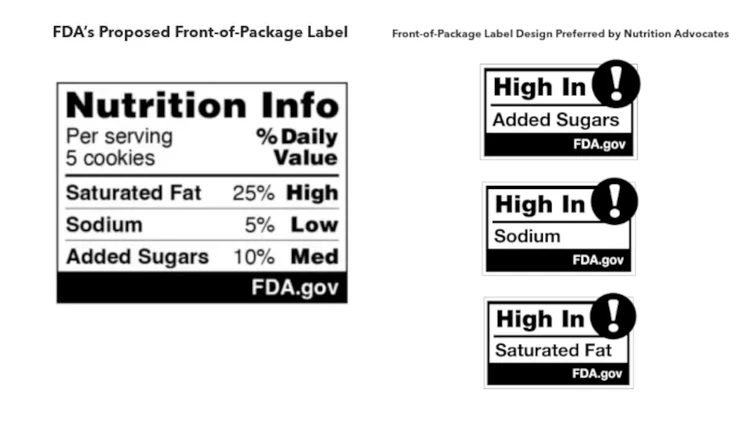
The rule would apply to products marketed to adults and children aged four years and older and was advanced under the Biden administration. It now awaits potential finalization under the Trump administration, which has not yet released its regulatory agenda but has signaled that nutrition labeling remains a priority.
While endorsing the FDA’s push for mandatory, interpretive labels, the coalition—including the Center for Science in the Public Interest (CSPI)—urged regulators to go further. They recommended using simpler, attention-grabbing icons, such as an exclamation mark, to quickly communicate health risks posed by excessive added sugars, sodium, or saturated fats.
"It's time to act"
“Front-of-package labeling is one of the most impactful approaches we have to address overconsumption of harmful ultra-processed foods and improve our nation’s health,” said CSPI senior policy scientist Eva Greenthal. “It’s time to act on evidence-based solutions.”
The groups also pressed the FDA to require front-of-package disclosures for products containing non-nutritive sweeteners, especially since these calorie-free additives are not recommended for children. Such disclosures, they argued, would help deter manufacturers from reformulating products with these ingredients as a workaround to avoid “high in” labels. The original Biden-era proposal did not address this issue.
Additional recommendations included extending front-of-package labeling requirements to foods intended for infants and toddlers and pairing the new rules with robust public education to ensure consumers understand and use the labels effectively.
Despite the coalition’s support, the FDA’s proposal faces likely resistance from the food and beverage industry, which has long favored a voluntary “Facts Up Front” labeling system. Studies show the voluntary labels fail to help consumers quickly identify foods high in unhealthy nutrients, while “High In”-style warnings have been proven to influence healthier purchasing decisions, encourage product reformulation, and reduce deaths linked to diet-related diseases.
CSPI also submitted separate comments detailing further steps the agency could take to maximize the rule’s impact on public health.
FDA officials have not yet set a timeline for issuing a final rule.