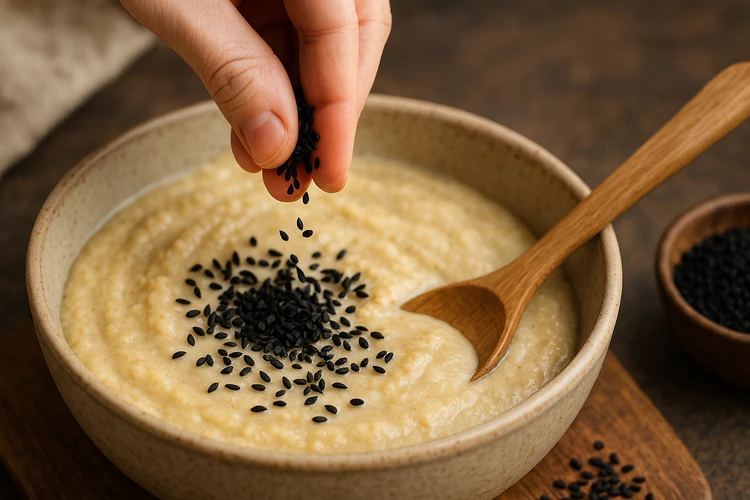

New human trials tested whether daily intake of black cumin seed powder could affect fat and cholesterol levels.
The research combined lab studies (cells) with an eight-week human trial to assess both fat-cell behavior and blood lipid changes.
Participants who consumed black cumin seeds saw reductions in bad fats (triglycerides and LDL) and increases in good cholesterol (HDL), without major side effects.
If you’ve ever cooked curry or tried Middle Eastern or Indian dishes, you might recognize tiny seeds from Nigella sativa — black cumin.
Long valued in traditional medicine for its antioxidant and anti-inflammatory properties, black cumin is now catching scientific interest not just for flavor, but for health.
A team at Osaka Metropolitan University recently embarked on a study to see whether black cumin might do more than enhance your cooking — could it actually influence fat metabolism and support healthier cholesterol levels?
The study
To understand whether black cumin seeds truly influence fat and cholesterol, the researchers used a two-part approach: lab testing and a small human study.
In the lab: Scientists looked at how black cumin extract affected developing fat cells. Normally, these cells grow, fill with fat droplets, and mature into cells that store fat. By adding black cumin extract during this process, the team watched to see whether the cells grew the same way or whether the extract slowed things down.
In people: The researchers then moved beyond the petri dish. They asked volunteers to take five grams of black cumin seed powder every day for eight weeks — basically a spoonful of ground seeds added to food or drinks. Before and after the study, they measured participants’ cholesterol and triglyceride levels to see if anything shifted over time.
The results
In the lab portion of the study, the researchers found that the extract seemed to interrupt the normal “fattening” process of fat cells. The cells didn’t accumulate as many fat droplets, and their overall development into fat-storing cells was reduced.
After eight weeks of the in-person study, participants showed measurable changes in their blood lipids:
Triglycerides went down
LDL (“bad”) cholesterol went down
Total cholesterol went down
HDL (“good”) cholesterol went up
“This study strongly suggests that black cumin seeds are useful as a functional food for preventing obesity and lifestyle-related diseases,” Professor Kojima-Yuasa said in a news release. “It was so gratifying to see black cumin comprehensively demonstrate actual, demonstrable blood lipid-lowering effects in a human trial.”
What this means for you
While this is an early study and not a magic fix, it does point to something promising: a common, easy-to-find spice may offer some gentle support for healthier cholesterol levels and fat metabolism.
If you’re someone who likes natural food-based options — or you already enjoy spices with strong flavor — adding a teaspoon to a tablespoon of ground black cumin to meals could be a simple way to experiment. It can be mixed into yogurt, sprinkled on savory dishes, or blended into smoothies.
Of course, this isn’t a substitute for medication or professional medical advice, and larger studies are needed. But as far as functional foods go, black cumin seeds may be a small, affordable ingredient with big potential.