
Key insights
The average solar panel installation costs $2.12 per watt in Florida.
Jump to insightThe federal solar tax credit expired at the end of 2025, but you might still be eligible for other solar incentives.
Jump to insightAssuming an upfront purchase, it takes about 9 years to break even (when your savings with solar panels make up for the cost).
Jump to insightHow much do solar panels cost in Florida?
Most installers price systems according to their wattage. “Cost per watt” is similar to the price per square foot when you buy a house. It helps you compare the value of solar energy systems in different sizes. The average solar panel installation costs $2.12 per watt in Florida.
Average solar panel costs by system size in Florida
| 5 kW | 6 kW | 7 kW | 8 kW | 9 kW | 10 kW | |
|---|---|---|---|---|---|---|
| Statewide | $10,600 | $12,720 | $14,840 | $16,960 | $19,080 | $21,200 |
| Orlando | $10,400 | $12,480 | $14,560 | $16,640 | $18,720 | $20,800 |
| Miami | $11,500 | $13,800 | $16,100 | $18,400 | $20,700 | $23,000 |
| Sarasota | $10,750 | $12,900 | $15,050 | $17,200 | $19,350 | $21,500 |
| Tallahassee | $10,550 | $12,660 | $14,770 | $16,880 | $18,990 | $21,100 |
| West Palm Beach | $11,250 | $13,500 | $15,750 | $18,000 | $20,250 | $22,500 |
| Jacksonville | $10,800 | $12,960 | $15,120 | $17,280 | $19,440 | $21,600 |
| Fort Lauderdale | $11,250 | $13,500 | $15,750 | $18,000 | $20,250 | $22,500 |
Solar panel installation cost factors in Florida
The equipment is typically the largest portion of your overall total costs. Labor, which includes planning, preparing and connecting your system to the grid, accounts for 10% to 30%. Local permits and fees are a small part of your overall costs.
Solar equipment
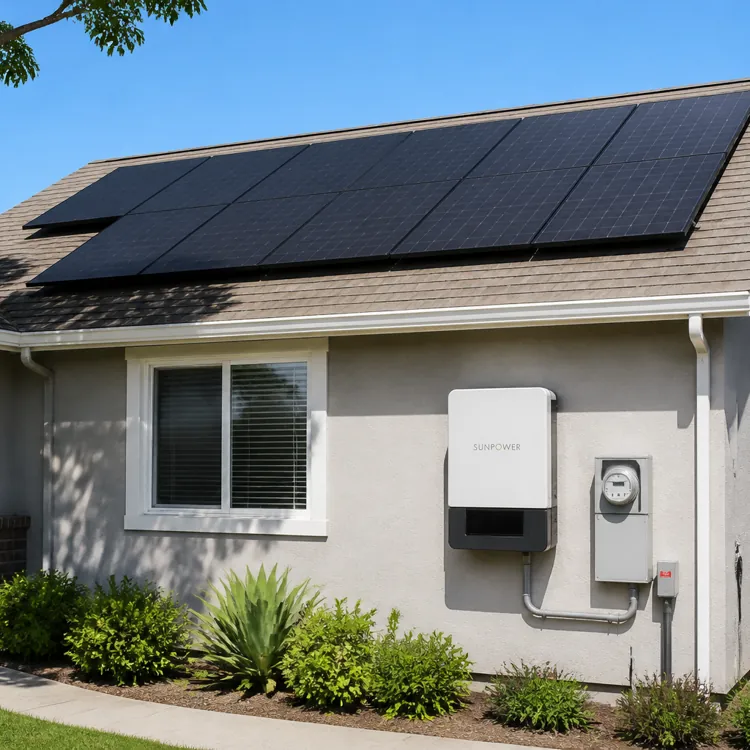
Solar arrays contain solar panels, inverters, mounting hardware and other electrical accessories.
Solar panels: Monocrystalline solar panels are considered the best bang for your buck. Cheaper solar panels are typically polycrystalline. The difference comes down to efficiency and materials: Monocrystalline panels are made from pure, single silicon crystals; various silicon fragments melted together are used to make polycrystalline panels.
Solar inverter: Inverters convert the electricity generated by your solar panels from direct current (DC) to alternating current (AC). Inverter costs range from $1,000 to $3,000.
Solar batteries: Adding a battery costs an extra $7,000 to $18,000, though some cost $30,000 or more. Solar batteries are a must if you want real energy independence and to go off-grid.
Monitoring system: Some companies include a solar monitoring system to track how much energy your system produces and if there are any problems. If not, you can buy a stand-alone monitoring system for $80 to $400.
Size of your system
The size of your solar panel system is another big factor in your overall solar costs. The average size of solar systems in Florida is 14.53 kW (kilowatts). Depending on your household energy usage, you might need a smaller or larger system.
Higher-efficiency panels produce more electricity per square foot. They cost more upfront but can be crucial for homes with limited roof space.
How many solar panels you need is determined by how much electricity your household uses. The average monthly energy consumption is 1,096 kWh in Florida, according to the Energy Information Administration. Depending on efficiency, it takes around 20 to 30 solar panels to generate approximately 1,000 kWh per month.
Condition of your roof
Quality solar panels should last 25 to 30 years, and your roof needs to last just as long. If you want to ensure a seamless installation, get your roof inspected, fixed or replaced before you go solar.
ConsumerAffairs often hears from disgruntled solar customers who felt blindsided by expensive roof repairs needed after their solar panel installation was complete. This is a frustrating and expensive process you should avoid if you can.
For example, Marie in Port St. Lucie had an issue with a company installing solar panels on an old roof and then having to fix it. The company wanted to charge Marie “$150 per panel to take them down so I can get a new roof and put them back up.”
Other cost factors
If you live in an area prone to hurricanes, adhering to local building codes can get expensive, according to Andrew Lokenauth, a Tampa-based finance expert with years of experience studying the solar market.
Another “hidden cost” not taken into consideration is that many insurance carriers will not cover properties with solar panels. This is because of risk factors like roof leaks and additional costs to replace a damaged roof with solar panels, according to Menachem Mendel Lipszyc, an insurance claim adjuster in Florida.
Local utilities: You might run into fees depending on where you live. For example, Duke Energy and FPL both charge minimum usage fees, even if you aren’t pulling in any electricity from the grid.
Hurricane requirements: Special mounting equipment and additional engineering certifications to make sure solar panel systems can withstand hurricanes added $2,000 to $3,000 to his system cost. Many installers won’t mention this upfront.
Home insurance: Some people are surprised that their homeowners insurance goes up after they install solar panels. One resident, Trevor in New Port Richey, said his general liability policy is at least $700 with solar panels.
Are solar panels worth it in Florida?
Based on feedback from hundreds of residents, solar energy investments are worth it for many Florida homeowners. “I will be ecstatic when there’s a power outage and I still have power. I’m very satisfied with Freedom Power Solar.” Dwyane in Eustis said.
Homeowners with solar panels typically save $20,000 to $90,000 over 25 years.
Steve in Venice told us his system cost $34,000 overall. He made an $8,800 down payment and now pays $123 per month on the loan (his interest rate is only 1.5%). He expects his monthly bills to stabilize around $150, which is lower than what he was paying before going solar (his bills were up to $350). “I’m not a big tree-hugger guy,” Steve said, “but you can see the writing on the wall.”
But there are potential downsides. The humidity and heat in Florida create some unique challenges, according to Lokenauth. Panels have to be cleaned semi-often. “Plus, you've got to think about how the panels will affect your roof's heat load. I made sure to get the higher efficiency panels (even though they cost more) because they perform better in our brutal summer heat,” he told us.
I’m not a big tree-hugger guy, but you can see the writing on the wall.”
Solar incentives, tax credits and rebates in Florida
Florida doesn’t offer a big rebate or tax credit to replace the federal incentive, but its tax breaks can still make solar a little more affordable. Solar equipment is exempt from sales tax, solar’s added home value is exempt from property taxes, and net metering can reduce ongoing electricity costs.
» EXPLORE: Solar incentives in Florida
How to save money on solar panels in Florida
“Most people think summer installation makes sense, but I've found October through February installations often get you better deals,” Lokenauth said. “The installers are less busy, and you're set up perfectly to maximize production during our peak summer months.” Here are more tips to maximize your savings on solar panels in Florida:
- Compare quotes: Get quotes from at least three or four different solar companies in Florida. This lets you compare different proposed equipment, pricing, financing terms and estimated energy production to find the best overall value.
- Lower your electrical load: For example, replacing an old refrigerator with a more eco-friendly one reduces your electric load. This means you’ll need fewer solar panels, making the whole system cheaper.
Compare solar installation companies in Florida
We compared ratings and reviews, equipment options, warranties, availability and other factors to pick the top solar companies in Florida.
| Company | Customer rating | Pro install | Payment options | Year founded | |
|---|---|---|---|---|---|
 Blue Raven Solar | Learn More | 3.0 |  | Cash, loan, lease, PPA | 2014 |
 Freedom Power Solar | Get Started | 4.1 | | Cash, loan | 2007 |
 Sunrun | Get Started | 4.3 | | Cash, loan, lease, PPA | 2007 |
 Elevation | Learn More | 4.2 | | Not disclosed | 2014 |
 ShopSolar | Learn More | 4.3 |  | Cash, loan | 2018 |
FAQ
Can I get free solar panels in Florida?
We’re not aware of a totally free solar option in Florida. Solar scams that promise free solar panels often, unfortunately, end up costing people quite a bit of money.
How can I pay for solar panels?
Affordable financing makes the upfront costs of solar more manageable. For instance, most leases let you start saving from day one with little or no money down.
- Loan: A solar loan works like any other type of home improvement loan — there’s an application and approval process, and you pay it back over time (with interest) each month. In an ideal financing scenario, your system generates enough extra power to pay off the loan. Solar loan terms typically last eight to 20 years.
- Lease: Leasing solar panels is a great way to set up a system without the high upfront costs. A potential downside is that you are not eligible for the same tax incentives.
» SOLAR PANELS: Lease vs. buy
Do I need to buy a battery for solar energy storage?
It’s probably a good idea. “Living in South Florida, power outages are a real issue after a hurricane, so we also included a battery to give us the ability to store power,” a solar customer in West Palm Beach said. Lithium-ion batteries are the popular option for a solar panel system, though other types can be cheaper.
» COMPARE: Best solar batteries
What is solar panel efficiency?
Solar panel efficiency is a measure of how well a panel makes electricity. The higher the efficiency, the more power it can produce per square foot. This lets you generate the same amount of energy using fewer panels. Especially if you have a small roof or limited space, it may be better to buy panels with higher efficiency ratings to generate more power with your available space.
» COMPARE: Most efficient solar panels
How does net metering work in Florida?
Net metering lets you earn credits for sending any excess solar energy to the grid. However, the value of credits is gradually decreasing in Florida. From January 2024 to December 2025, residents will earn a 75% energy usage credit for their excess energy production. Under the current policy, these rates are scheduled to decrease to 60% in 2026 and 50% in subsequent years. So, the sooner you get started, the better.
Is it cheaper if I install solar panels myself?
Installing solar panels yourself might initially seem cheaper because you'll save on labor costs. However, it's crucial to consider several factors for safety before going the do-it-yourself route. If not installed correctly, solar panels pose safety risks, causing roof leaks and other problems.
Will solar panels increase the value of my home?
Installing solar panels can significantly increase a home's value. According to a Zillow study, homes with solar panels sell for 4.1% more on average. The exact increase in value varies by location, with homes in active solar markets seeing higher boosts.
How much can I save with solar panels?
On average, Florida homeowners with solar panels avoid $64,627 in total utility costs over 25 years.
» EXPLORE: Where solar savings go the furthest
Bottom line
On average, it costs $10,600 to $21,200 for panels that last about 25 years. Over that same time period, Florida homeowners can avoid approximately $64,627 in total utility costs.
Installing solar panels in Florida can lead to significant long-term savings. But the actual cost depends on a variety of factors, including the size of your system, equipment choices, permitting requirements, hurricane preparation and insurance.
The ConsumerAffairs Research Team has conducted extensive research to compare the costs of going solar in Florida and other states. If your house is a good candidate for solar, it’s worth considering.
Solar costs vs. savings: Florida and nearby states
| 6-kW system cost (before incentives) | 10-kW system cost (before incentives) | Typical system size needed* | Average cost per watt | Total utility power cost savings** | |
|---|---|---|---|---|---|
| Alabama | $23,100 | $38,500 | 14.16 kW | $3.85 | $42,252 |
| Florida | $12,720 | $21,200 | 14.53 kW | $2.12 | $64,627 |
| Georgia | $15,000 | $25,000 | 12.97 kW | $2.50 | $45,038 |
Article sources
ConsumerAffairs writers primarily rely on government data, industry experts and original research from other reputable publications to inform their work. Specific sources for this article include:
DSIRE, “Florida Programs.” Accessed Aug. 18, 2026.
EnergySage, “The cost of solar panels in Florida.” Accessed Aug. 18, 2026.
Solar Energy Industries Association, “Florida Solar.” Accessed Aug. 18, 2026.
Florida Power & Light Company, “Minimum Base Bill.” Accessed Aug. 18, 2026.
Solar and Energy Loan Fund, “Solar Products.” Accessed Aug. 18, 2026.