

Key insights
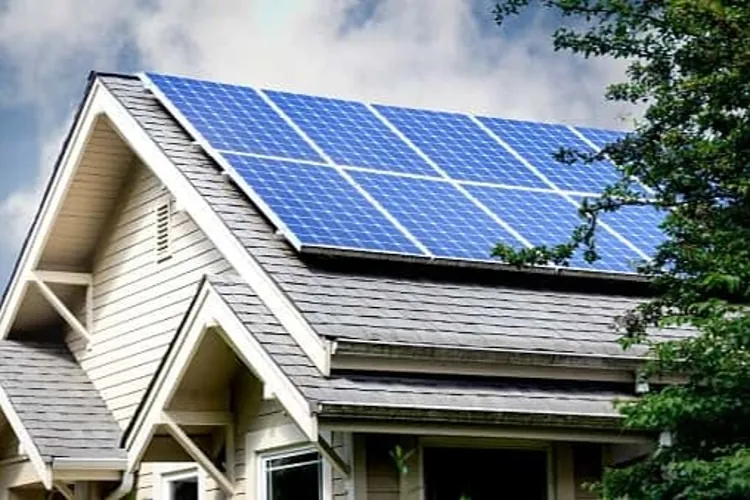
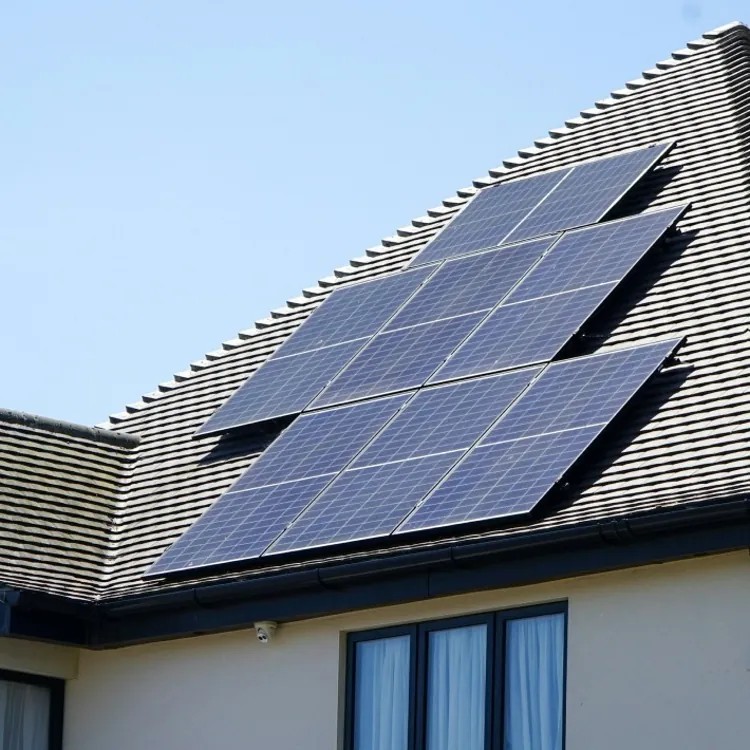
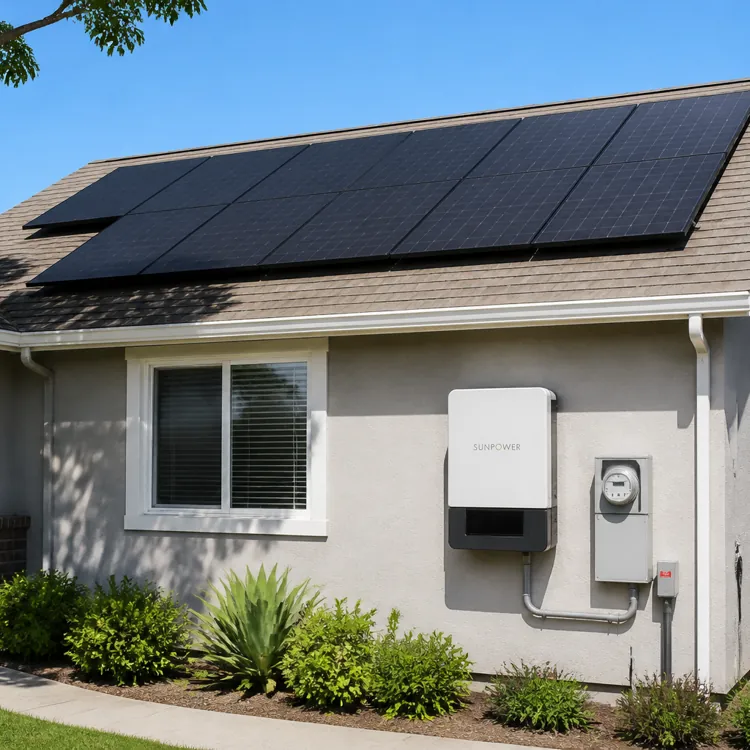
Data shows that solar panels are attractive to potential buyers, increasing your home value by 4% to 10%.
Jump to insightThe value solar panels add to a home depends on a combination of location, system quality, size, age and local energy costs.
Jump to insightWhile an investment in solar energy can pay for itself over time, it likely isn’t worth it for the increase in your home’s resale value alone.
Jump to insightEffect of solar panels on home value: what the research says
Research consistently shows that solar panels can increase a home’s resale value, though the exact amount varies depending on location, system age and whether the panels are owned or leased.
SolarInsure analysis
A 2025 study from SolarInsure focused on 5,000 single-family homes in California sold between 2020 and 2023. It found that homes with owned solar systems sold for 5% to 10% more than comparable homes without solar. Newer systems added more value than older ones, while leased systems showed little effect on resale price, likely because buyers are hesitant to take over lease obligations.
Zillow Study
A 2015 Zillow analysis found that homes with solar panels sold for 4.1% more than comparable homes without them. On a $500,000 home, that can translate into roughly $20,500 in added value. The study examined thousands of home sales across the country, taking into account factors such as square footage, age and neighborhood, offering a broad look at national trends.
Berkeley Lab study
The Berkeley Lab’s 2015 study, “Selling into the Sun,” analyzed almost 22,000 home sales across eight states, including nearly 4,000 homes with solar photovoltaic systems. Researchers found that homebuyers consistently paid a premium for owned solar systems, averaging about $4 per watt installed or roughly $15,000 for a typical system.
The study found that both new and existing homes with solar panels tend to sell for more, though the added value decreases as the panels get older. It also showed that traditional appraisal methods closely match what buyers are actually willing to pay, making the financial benefit of solar easy to see and quantify.
Estimating how much solar can boost your home’s value
For homeowners, the thought of increasing property values is an exciting prospect. However, determining precisely how much value a solar system will add can be challenging. If you’re planning to go solar, here’s how to estimate how much solar panels can increase your home’s value.
Begin by assessing your property’s current value. Try looking at similar homes without solar panels in your area to determine an average baseline price. You probably don’t need a formal home appraisal, but if you’ve recently had one done on your property, that could be a good place to start.
Per the Zillow study, solar panels can increase a home’s sale price by about 4%. To get an idea of your home’s worth with solar panels, multiply your approximate home value by 1.04. If comparable homes without solar panels are selling for $250,000 in your area, you may be able to list your home for closer to $260,000 with a solar energy system.
If you’re in a hot market like California, your home value might increase by even more. You can calculate your potential value increase based on your specific situation, but anywhere from 5% to 10% is possible.
Real-world example
Ericka, a ConsumerAffairs reviewer from California, spoke with us over the phone. She said that installing solar panels would increase the value of her home, even though California already requires solar panels on all new residential buildings. “I'm a real estate agent as well as an engineer,” she said. “So, I know that it is a great benefit. And a lot of clients are attracted to them when the home has solar already.”
ROI analysis: solar panel cost vs. value increase
When weighing the financial benefits of solar panels, it helps to compare what you pay against what you might gain in added home value. As of 2025, the average cost to install a residential solar system in the U.S. ranges roughly from $18,000 to $43,000 — with an average of around $28,000 — before any tax credits, depending on system size, your location and other factors.
After applying the full federal solar investment tax credit (ITC), many homeowners see effective costs closer to around $19,000 for a typical 10-kilowatt (kW) system, but this hinges on qualifying for the credit before it expires. Under recent federal tax law changes, the 30% residential solar tax credit is set to disappear after 2025, meaning homeowners who install later will no longer receive that incentive and will face higher net costs.
Without the federal tax credit after 2025, upfront costs will be higher for many homeowners, which could extend the time it takes for total financial benefits, including energy bill savings, to outweigh installation expenses.
To understand return on investment (ROI), consider how much solar can lift your home’s resale price. Research shows that owning solar panels can increase a home’s sale value by roughly 4% nationally and by 5% to 10% in strong solar markets like California. If a home without solar is worth $300,000, a 5% increase would suggest a resale value around $315,000, potentially adding $15,000 or more to your return.
Compared with a solar system that costs roughly $20,000 to $30,000 out of pocket, resale value alone may not be enough to fully recover the initial investment. However, solar also delivers ongoing electricity savings while you own the home, which can significantly improve overall ROI and help close the gap over time.
How much of your solar investment can you recover?
The amount of your solar investment you can recover depends on two main factors: energy bill savings and the increase in home value.
Most homeowners see their systems pay for themselves in roughly eight to nine years through lower electricity bills alone. After that point, the electricity generated is essentially “free,” meaning any additional savings directly recoup your investment.
Combining these savings with potential resale gains of 4% to 10%, many homeowners can recover most or even all of their initial investment over the system’s lifetime.
» MORE: Solar energy pros and cons
What determines how much value solar panels add?
External factors can influence the value of your solar installation, though, so don’t hold fast to a simple calculation if your situation has unique circumstances. Here are some of the main factors that influence how much solar panels can increase the value of your home.
- Home location: Due to different electricity rates and incentives, the benefit of solar panels varies based on where you’re located. Hawaii, for example, is the state where solar savings go the furthest.
- Panel location: How solar panels are installed on a roof can also affect how they impact your home’s value. The most desirable locations for solar panels are in areas with direct, unobstructed sunlight, like south-facing roofs with few trees. On the other hand, solar panels on a north-facing roof or a heavily wooded lot will not produce as much energy and may add less value to your home.
- Roof age and condition: If you install solar panels on an older roof, it may be necessary for a buyer to remove the panels and replace the roof later on, which is a hassle some people won’t want to deal with. Solar panels may also void the warranty on a roof.
- Quality and installation: The quality of solar panel equipment and its installation can affect energy production, impacting how much value the solar panels add to the home. Essentially, if you install low-quality solar panels or install them incorrectly, they may yield less energy and resale value.
- Size and efficiency: The size and rated efficiency of your solar panels may also determine how much value they add to your home. For example, larger, more efficient solar panels can generate more energy and yield more savings — possibly adding more value. However, some buyers may dislike the look of large solar panels, so don’t go overboard.
- Panel age and condition: Solar panels last 25 to 35 years on average, but older or damaged solar panels may add less value than newer ones with better performance capacity. Plus, outdated solar panels that make a home unattractive are more likely to deter buyers than increase resale value.
- Local energy costs: The cost of electricity in your area can also influence how much solar panels add to your home’s value. Based on U.S. Energy Information Administration data, residential utility bills averaged $144 per month in 2024. If energy costs are higher in your area — such as in Connecticut or Hawaii, where monthly costs exceeded $200 in 2024 — the increased savings from solar panels could be more appealing to potential buyers.
- Power outage frequency: The frequency of power outages in your area can also affect the value of solar panels. If the risk of a blackout is high, it could make solar panels more appealing and increase their value-add.
Is installing solar panels worth it just for resale value?
Most homeowners install solar panels for environmental reasons or to reduce their monthly utility costs, but are they worth installing just to increase your home’s resale value? We asked Rob Giuffria, managing broker at Connecticut-based Tea Leaf Realty, and he did not recommend solar panels as a short-term real estate investment.
Even if the potential boost in value outweighs the cost of the solar panels, home solar installations can actually complicate or delay the sale of a home — especially if there is a lease, ongoing maintenance contract or other long-term agreement in place. “While most buyers see solar panels as something that’s directionally correct, it becomes a negative when they learn about contracts for maintenance or other costs and commitments,” Giuffria said.
However, if you plan to be in your house for five years or more and are interested in solar, Giuffria still recommends the upgrade.
The increased resale value may not fully cover the cost of the solar installation. However, when considering other factors … installing solar panels can be a wise investment.”
Manuela Adami, a representative with Swiss solar company Volted, summarized the situation well: “In some cases, the increased resale value may not fully cover the cost of the solar installation. However, when considering other factors such as reduced energy bills, potential tax credits or rebates, and the environmental benefits, installing solar panels can be a wise investment.”
» MORE: Are solar panels worth it?
FAQ
Do solar panels increase property taxes?
In some cases, solar panels can increase property taxes. Depending on your location and the laws in place there, installing solar panels may increase the value of your property, which could mean an increase in property taxes. Prospective solar panel owners should contact their local tax assessors to get more information about how this might affect them.
Do bigger solar installations increase home values more?
Generally, bigger solar installations can increase home values more than smaller arrays. Larger installations typically generate more energy, leading to greater utility bill savings for homeowners and possibly qualifying them for additional incentives or credits.
Still, not every buyer likes the look of solar panels, and larger installations may be considered an eyesore. With that in mind, you may want to avoid investing in an overly large home solar system if you do not plan to stay in your home long-term.
Do solar homes sell faster?
Homes powered by solar energy may sell faster than those without. A study by the National Renewable Energy Laboratory reported that, on average, homes in California with solar energy systems sold 20% faster than similar homes that didn’t have solar panels.
Solar panel systems are becoming increasingly commonplace across the country, so prospective buyers may even be expecting them when searching for their next homes. That said, all buyers may not view solar panel systems favorably, which could negatively impact offers. Make sure you understand your local real estate market before installing a solar energy system.
Can solar panels hurt the resale value of your home?
Solar panels can sometimes hurt a home’s resale value rather than help it. Large-scale arrays might not be viewed positively by some potential buyers because of how they look.
Rob Giuffria, a Connecticut real estate broker we spoke with, told us that one of the main factors that can reduce a home’s resale value is having solar panels on the front of the house or otherwise visible from the road. A solar home’s resale value can also decrease depending on the age and condition of its roof under the solar panels and whether the buyer will be subject to a maintenance contract or other commitment.
Article sources
ConsumerAffairs writers primarily rely on government data, industry experts and original research from other reputable publications to inform their work. Specific sources for this article include:
- Zillow, “Home With Solar Panels Sell for 4.1% More.” Accessed Dec. 15, 2025.
- SolarInsure, “Solar Panels & Home Values: 2025 Research Analysis.” Accessed Dec. 15, 2025.
- Lawrence Berkeley National Laboratory, “Berkeley Lab Illuminates Price Premiums for U.S. Solar Home Sales.” Accessed Dec. 15, 2025.
- Solar Energy Industries Association, “Solar State By State.” Accessed Dec. 15, 2025.
- U.S. Energy Information Administration, “Residential electric bills in Hawaii and Connecticut are twice those in New Mexico, Utah.” Accessed Dec. 15, 2025.
- United States Department of Energy, “Will I Save Money with Solar Energy?” Accessed Dec. 15, 2025.