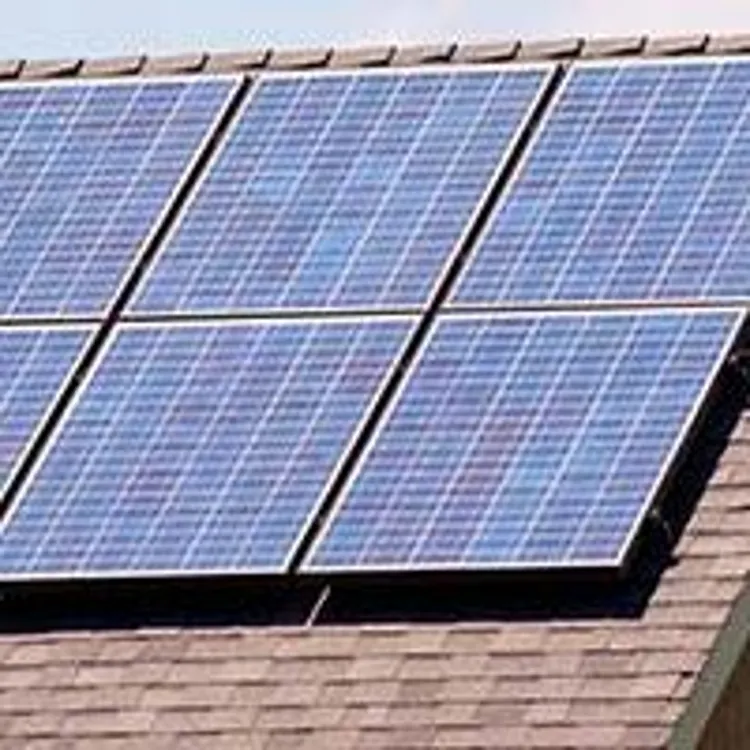


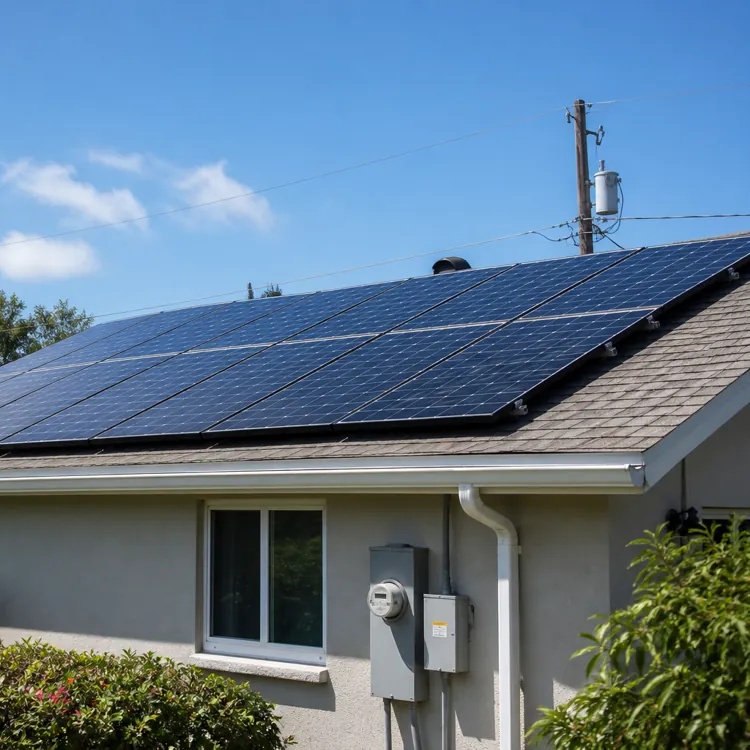
A few tax breaks encourage solar adoption in Florida, starting with no sales tax on renewable energy equipment. Duke Energy and FPL also offer programs encouraging solar adoption.
Post-installation, a property tax abatement means your property tax bill won’t go up if solar panels add value to your house. Here’s everything you need to know about how government incentives can make going solar more affordable.
Key insight
A typical 10-kilowatt system costs $21,200 in Florida before incentives.
Jump to insightThe 30% federal solar tax credit expired at the end of 2025, but Florida homeowners may still qualify for the federal programs.
Jump to insightThrough net metering, you can get compensated for any excess solar energy that you feed into your local power grid.
Jump to insightFlorida solar tax breaks
Florida offers a 100% sales tax exemption on solar equipment and a property tax abatement that prevents solar from increasing your property tax bill.
- Sales tax exemption: The Florida Department of Revenue offers a 100% sales and use tax exemption for eligible renewable energy equipment, including solar photovoltaic (PV) systems, solar water heaters and related components.
- Property tax abatement: Solar technologies, including solar photovoltaics, solar water heaters and lithium-ion storage systems, are exempt from the added assessed value for property tax purposes until 2037.
Solar loan programs
- Solar and Energy Loan Fund (SELF): Depending on where you live, you might be eligible for the Florida Keys Electric Cooperative loan program or Property-Assessed Clean Energy (PACE) financing. This is a unique nonprofit organization that offers solar loans up to $50,000 with rates starting at 5%.
- Florida Keys Electric Cooperative loans: If you’re a Florida Keys Electric Cooperative customer, you might qualify for funding up to $35,000 to pay for solar projects.
What to know about net metering in Florida
Florida’s net metering policy is currently favorable for homeowners, but new proposals could change how it works soon, according to Andrew Lokenauth, a Tampa-based finance expert with experience in the solar market.
How it works
Net metering lets you earn credits for the excess electricity your solar energy system generates and sends to your local power grid. These credits can offset electricity used when the panels aren’t producing (like at night or on cloudy days), effectively lowering monthly utility bills. Utilities like Duke Energy and Florida Power & Light (FPL) offer programs that support net metering.
Florida law requires a full retail-rate, 1-to-1 credit for excess solar energy sent to the grid.
“Florida’s net metering policy is actually pretty solid right now,” Andrew Lokenauth, a finance expert with experience in the solar markets in Tampa and Miami, explained. “I’m getting roughly 1-to-1 credit for excess power, which has cut my property’s electric bill by about 85%. But based on my conversations with local policy makers, I wouldn’t count on these great rates lasting forever.”
Recent changes to the state’s net metering policies have left some solar customers unhappy. For instance, Michael in Jacksonville switched to Jacksonville Electric Authority’s SolarSmart program in 2021, “but due to the changes in the net-metering rates it didn’t make financial sense,” he told us. It ended up costing more than expected due to unclear billing. We’ve heard similar concerns from FPL customers about confusing rate structures.
Should you get a solar battery?
A solar battery lets you store excess solar energy in your backyard instead of feeding it into the local power grid. It’s expensive ($7,000 to $18,000) but might be worth it in the long term if net metering rates continue to decline. A battery can also help protect you from power outages during hurricane season.
» MORE: Solar battery cost factors
How much are solar panels in Florida?
Solar panel costs in Florida typically range from $10,600 to $21,200 before incentives. Leasing is often cheaper upfront, but only a purchased system can qualify you for Florida’s sales-tax exemption and property-tax abatement.
On the high end, Norberto in St. Cloud paid $70,000 for his solar energy system. The size of your solar system is one of the biggest factors in determining total cost. A typical system in Florida is 14.53 kW (kilowatts). You might need a larger or smaller system, depending on your average household energy usage.
Average solar panel costs by system size in Florida
| 5 kW | 6 kW | 7 kW | 8 kW | 9 kW | 10 kW | |
|---|---|---|---|---|---|---|
| Statewide | $10,600 | $12,720 | $14,840 | $16,960 | $19,080 | $21,200 |
| Orlando | $10,400 | $12,480 | $14,560 | $16,640 | $18,720 | $20,800 |
| Clearwater | $10,250 | $12,300 | $14,350 | $16,400 | $18,450 | $20,500 |
| Lakeland | $10,400 | $12,480 | $14,560 | $16,640 | $18,720 | $20,800 |
| Sarasota | $10,750 | $12,900 | $15,050 | $17,200 | $19,350 | $21,500 |
| Cape Coral | $10,850 | $13,020 | $15,190 | $17,360 | $19,530 | $21,700 |
| Tallahassee | $10,550 | $12,660 | $14,770 | $16,880 | $18,990 | $21,100 |
| West Palm Beach | $11,250 | $13,500 | $15,750 | $18,000 | $20,250 | $22,500 |
| Jacksonville | $10,800 | $12,960 | $15,120 | $17,280 | $19,440 | $21,600 |
| Miami | $11,500 | $13,800 | $16,100 | $18,400 | $20,700 | $23,000 |
| Fort Lauderdale | $11,250 | $13,500 | $15,750 | $18,000 | $20,250 | $22,500 |
Federal solar programs
The 30% federal solar investment tax credit (ITC) expired at the end of 2025, but Florida homeowners may still qualify for one of the following federal programs.
- Energy Efficient Mortgages: FHA-backed Energy Efficient Mortgages can let a buyer roll the cost of solar panels or other energy upgrades into a home loan, based on the expected energy savings.
- Fannie Mae Green Financing: This financing is built mainly for multifamily properties, so it’s less relevant to most single-family Florida homeowners, though it may apply to larger residential solar projects.
Find solar companies in Florida
A good solar company helps you navigate local incentives, permitting and net metering policies. Compare our picks for Florida’s top solar companies to learn more.
| Company | Customer rating | Pro install | Payment options | Year founded | |
|---|---|---|---|---|---|
 Blue Raven Solar | Learn More | 3.0 |  | Cash, loan, lease, PPA | 2014 |
 SunVena Solar | Learn More | 5.0 | | Cash, loan | 2020 |
 Freedom Power Solar | Get Started | 4.1 | | Cash, loan | 2007 |
 Sunrun | Get Started | 4.3 | | Cash, loan, lease, PPA | 2007 |
 Tesla Energy | Learn More | 1.9 | | Cash, loan and lease | 2015 |
 ShopSolar | Learn More | 4.3 |  | Cash, loan | 2018 |
FAQ
Can I get a rebate when I buy solar panels in Florida?
No, we are not aware of a statewide solar panel rebate program in Florida. However, you can get rebates on solar water heaters in Jacksonville and Orlando. Some solar panel manufacturers offer rebates on their products.
Can I get free solar panels in Florida?
No, but you can enter a solar lease with little to no upfront costs. Still, it’s not totally free. Solar leases generally require a flat monthly fee.
» FREE SOLAR PANELS: Are they really free?
How much can I save with solar panels in Florida?
On average, Florida homeowners with solar panels avoid $64,627 in utility costs over 25 years. Even if you don’t generate 100% of your energy needs, you can still save a lot of money versus paying traditional utility bills.
» EXPLORE: Where solar savings go the furthest
Is my HOA allowed to restrict solar panels?
In Florida, the Solar Rights Act protects the rights of property owners to install solar panels. Homeowner associations (HOAs) can require approval of plans but cannot prevent functioning installations. They can request panels be placed in a specific area, as long as it’s within 45 degrees of due south and doesn’t interfere with the panels’ optimal effectiveness.
Bottom line
Florida doesn’t have as many solar incentives as other states. Still, appealing tax breaks, low-interest loans and other initiatives make going solar worthwhile. The ConsumerAffairs Research Team conducted an in-depth analysis to determine the average costs of going solar and incentives in other states. Turns out, it’s worth it for many homeowners, particularly in Florida.
Solar costs vs. savings: Florida and nearby states
| 6-kW system cost (before incentives) | 10-kW system cost (before incentives) | Typical system size needed* | Average cost per watt | Total utility power cost savings** | |
|---|---|---|---|---|---|
| Alabama | $23,100 | $38,500 | 14.16 kW | $3.85 | $42,252 |
| Florida | $12,720 | $21,200 | 14.53 kW | $2.12 | $64,627 |
| Georgia | $15,000 | $25,000 | 12.97 kW | $2.50 | $45,038 |
Article sources
ConsumerAffairs writers primarily rely on government data, industry experts and original research from other reputable publications to inform their work. Specific sources for this article include:
- DSIRE, "Florida Programs." Accessed July 15, 2026.
- Solar Energy Industries Association, "Florida Solar." Accessed July 15, 2026.
- Solar and Energy Loan Fund, "Solar Products." Accessed July 15, 2026.
- The Florida Senate, "Chapter 163 Section 04 - 2011 Florida Statutes." Accessed July 15, 2026.