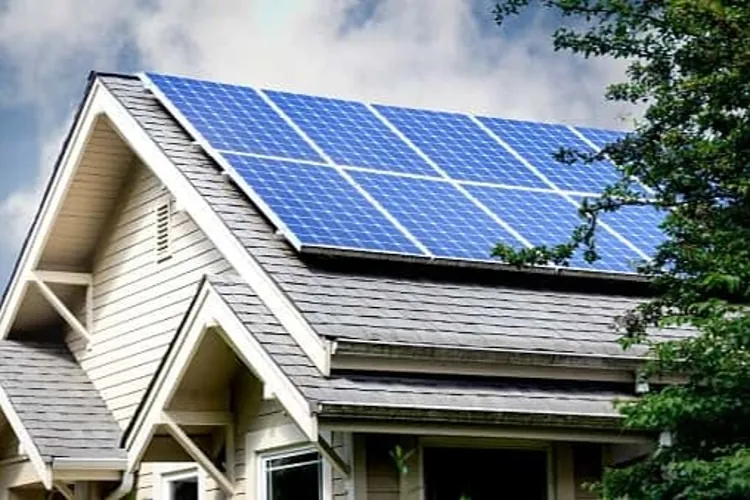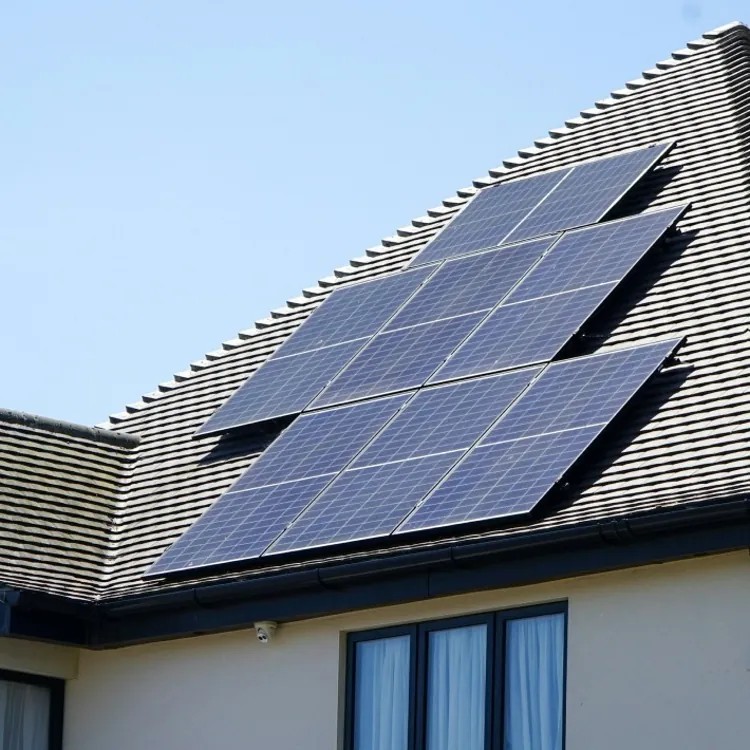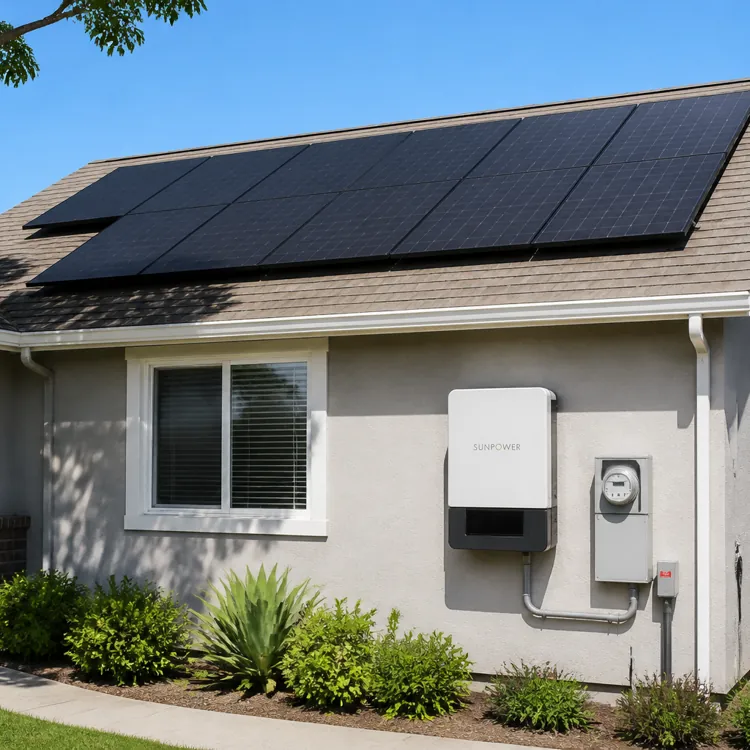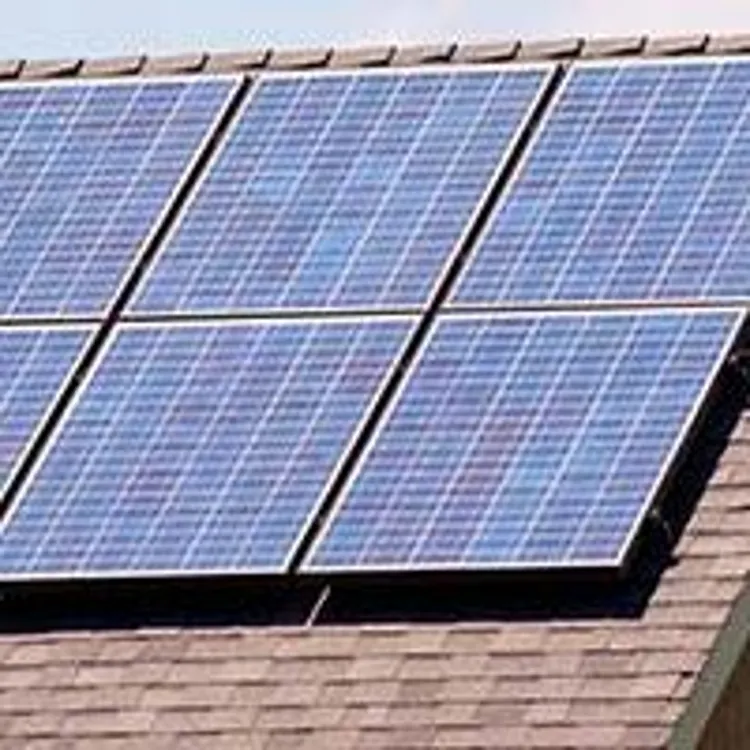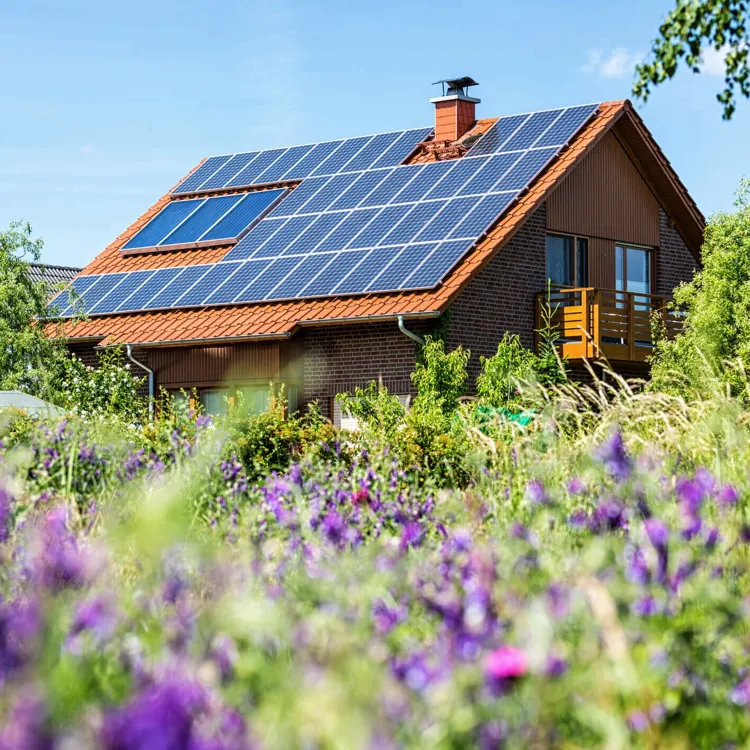



Solar panel efficiency measures how much sunlight a panel can convert into usable electricity. Most residential panels are rated between 18% and 23% efficiency, while high-end models reach 22% to 24%. But real-world performance depends on several factors.
Why trust ConsumerAffairs?
Our editors, fact-checkers and moderators work to uphold standards for accuracy, transparency and trust.
Our editorial standards
- Our editorial team reviews and fact-checks all content before it’s published.
- We rely on expert input and trusted sources to verify our articles.
- All articles published must meet our editorial standards and independence policy.
Our review standards
- Our moderation team evaluates reviews to make sure they meet our guidelines.
- We require contact information to verify reviews come from real customers.
- Financial relationships do not influence whether we publish a consumer review.
Key insights
Most solar panels today are rated around 20% to 22%, with top models exceeding 24% under Standard Test Conditions.
Jump to insightReal-world solar panel efficiency depends on system quality, installation and environmental conditions.
Jump to insightModern panels may lose as little as 0.2% to 0.3% of output per year, though about 0.4% per year is a common rule of thumb.
Jump to insightEven small maintenance and equipment upgrades can noticeably improve your solar system’s efficiency.
Jump to insightSolar panel efficiency ratings explained
The efficiency rating of a solar panel refers to the percentage of incoming sunlight (irradiance) that the module converts into electricity under test conditions. In other words, it’s a measure of how much sunlight the panel can convert into usable electrical power.
How efficient are solar panels?
Today, the majority of commercially available solar panels have efficiency ratings between 20% and 22%, which means they can convert about one-fifth of the available sunlight into energy.
The most efficient panels today, such as those from Maxeon, REC and LONGi, have tested efficiency ratings of up to 22% to 24%, with some high-end models approaching 25% under Standard Test Conditions (STC).
A slight percentage increase may seem insignificant, but even the smallest boost in solar power production can have a large impact on a system’s total energy generation over the life of the panels.
What affects solar panel efficiency?
When a manufacturer publishes a solar panel’s rated efficiency, the percentage refers to the module working in ideal conditions.
In the real world, however, the actual amount of electricity produced by a solar panel is highly dependent on external factors and the quality of the installation. The panel type and the solar energy company you work with can also make a huge difference.
“You could have two panels exposed to the same sunlight with the same environmental factors, and one could be putting out more energy than the other one, sometimes in a significant amount,” said Dan Carpenter, owner of West Coast Green, a website that publishes guides on sustainable energy topics.
Test ratings vs. real-world conditions
Manufacturers rate solar panels under Standard Test Conditions (STC):
- 77°F (25°C) cell temperature
- Full sun at 1,000 watts per square meter
- No wind
- Perfect panel angle
These are laboratory conditions (not typical rooftop conditions). In the real world:
- Roofs get much hotter than 77°F
- Sunlight varies by season, time of day and weather
- Panels may not face the ideal direction
Because of this, actual output is usually around 10% to 20% lower, depending on temperature, orientation and other site conditions.
Why it matters: A 400-watt panel rarely produces 400 watts continuously. That number reflects peak test conditions, not everyday performance.
Temperature coefficient impact
Solar panels actually become less efficient as temperatures rise.
Each panel has a temperature coefficient, which shows how much output drops for every degree above 77 degrees Fahrenheit (25 degrees Celsius). For example:
A temperature coefficient of -0.35% per °C means output decreases 0.35% for every degree Celsius above 25 degrees Celsius.
On a hot summer day, panel surface temperatures can reach 140°F (60°C) or higher, which can reduce performance.
Why it matters: In hot climates like Texas, Arizona or Florida, temperature losses can noticeably reduce system efficiency (even if the area gets abundant sunshine).
Soiling losses
“Soiling” refers to anything that blocks sunlight from reaching the panel surface, such as:
- Dust
- Pollen
- Bird droppings
- Leaves
- Air pollution residue
- Snow
Even a thin layer of dirt can reduce output by 2% to 5%. Heavy buildup can cause even greater losses. In dry, dusty regions, soiling losses can be higher unless panels are cleaned regularly.
Why it matters: Routine rain helps clean panels in many climates, but in arid or high-pollution areas, occasional cleaning may improve performance.
System factors
Panel efficiency is only part of the story. Overall system efficiency depends on:
- Inverter efficiency: Solar panels produce DC power, which must be converted to AC power. Inverters typically operate at 95% to 98% efficiency, meaning some energy is lost during conversion.
- Wiring and electrical losses: Small amounts of energy are lost through wiring resistance.
- Shading: Even partial shading from trees, chimneys or nearby buildings can reduce output — especially in systems without microinverters or power optimizers.
- Panel orientation and tilt: South-facing roofs (in the Northern Hemisphere) generally perform best. East- or west-facing roofs produce slightly less but can still be very effective.
Why it matters: A high-efficiency panel won’t perform well in a poorly designed system. Installation quality plays a major role in overall efficiency.
External influences
Several outside factors also affect how efficiently solar panels produce power:
- Geographic location: Areas closer to the equator receive more consistent sunlight year-round.
- Seasonal changes: Shorter winter days and lower sun angles reduce energy production.
- Weather patterns: Cloud cover, haze and air pollution reduce the amount of sunlight reaching panels.
- Roof condition and ventilation: Poor airflow under panels can increase operating temperature, reducing efficiency.
Why it matters: Two identical solar systems installed in different states can produce very different amounts of electricity annually.
Did you know?
Sometimes underperformance stems from human error rather than faulty technology. For instance, when Victor in California noticed his system wasn’t generating enough power to cover his bills, a technician discovered that “somebody forgot to turn on half the panels” during setup.
Why can’t solar panels be 100% efficient?
Solar panels can’t be 100% efficient because of basic laws of physics. Sunlight is made up of particles (photons) with different energy levels. Solar cells can only convert a certain range of that energy into electricity.
Some sunlight reflects off the panel, some doesn’t have enough energy to generate power, and some turns into heat instead of electricity. Even under perfect lab conditions, traditional silicon solar panels have a theoretical efficiency limit of about 33%, so reaching 100% simply isn’t physically possible.
You could have two panels exposed to the same sunlight with the same environmental factors, and one could be putting out more energy than the other one, sometimes in a significant amount.”
Solar panel degradation over time
Time is an unavoidable influence on a solar panel’s overall efficiency. Reputable manufacturers include degradation rates for solar panels, which are presented as percentage losses in production over time.
According to Carpenter, degradation rates vary between panels, and today’s highest-quality products may only lose 0.2% to 0.3% in production efficiency per year.
What are the most efficient solar panels?
The most efficient solar panels available in 2026 reach around 23% to 24% efficiency. This means they convert nearly a quarter of the sunlight they receive into usable electricity.
For comparison, today’s standard panels typically range from 20% to 22%, so choosing a high-efficiency model can generate more power in limited roof space. Researchers have achieved even higher numbers in the lab using advanced materials like perovskite, but those technologies aren’t yet widely available for homeowners.
With a high-efficiency solar panel, you can expect an increased sticker price — but higher efficiencies translate directly to more energy production, which can help systems more quickly pay for themselves against traditional electric costs.
Depending on your location, high-efficiency panels may even qualify for more renewable energy certificates or local green energy incentives.
Compare solar panel companies
Read our guide to the best solar energy companies for more information.
| Company | Customer rating | Max. panel efficiency | Panel warranty | Year founded | |
|---|---|---|---|---|---|
 Freedom Power Solar | Get Started | 4.1 | 22.8% | 25 years | 2007 |
 Sunrun | Get Started | 4.3 | 22% | 25 years | 2007 |
 Project Solar | Learn More | 3.0 | 20.9% | 25 years | 2020 |
 ShopSolar | Learn More | 4.3 | Varies | Varies | 2018 |
How to maximize solar panel efficiency
While the panels themselves have fixed efficiency ratings, you can boost your system’s overall performance with a few simple steps: Keep your panels clean and free of debris, ensure there’s no shading from trees or nearby structures and check connections and inverters regularly for faults or damage.
You can also consider adding power optimizers or microinverters, which help panels operate more efficiently if some are shaded or underperforming. Finally, upgrading to a modern monitoring system can help you track output and quickly spot issues.
Maintenance best practices
Regular upkeep keeps panels operating efficiently and helps prevent long-term performance loss.
- Clean panels regularly: Remove dirt, leaves or bird droppings with a soft brush or gentle rinse every few months.
- Inspect for damage: Check for cracks, corrosion or loose wiring at least twice a year.
- Monitor output: Use your inverter app or monitoring system to track daily performance and spot any sudden drops in production.
- Schedule professional checkups: Have a licensed installer inspect your system every few years to ensure all components are functioning properly.
Installation considerations
Proper installation plays a major role in how much sunlight your panels can capture.
- Orientation and tilt: Panels perform best when facing true south (in the Northern Hemisphere) with a tilt angle close to your location’s latitude.
- Avoid shading: Trim nearby trees and ensure chimneys or vents don’t cast shadows during peak sun hours.
- Hire a certified installer: Professionals ensure panels are securely mounted, correctly wired and optimized for your home’s unique layout.
Choosing high-efficiency panels
Selecting the right panels can make a big difference in total energy production.
- Compare efficiency ratings: Look for modules rated 22% or higher for top performance.
- Review warranties: Choose panels with at least 25-year performance guarantees for long-term reliability.
- Consider trusted brands: Models from SunPower (Maxeon), REC and LONGi are known for superior efficiency and durability.
FAQ
What are solar panels made of?
Solar panels are made up of individual solar cells, the efficiency of which directly correlates with total system production. Today, the majority of PV solar panels are constructed with monocrystalline or polycrystalline silicon wafers (treated with black or blue tints, respectively).
Monocrystalline panels have wafers made from a single silicon crystal and are more efficient than polycrystalline panels. Polycrystalline panels are less efficient, but the manufacturing process, which uses wafers made from fragments of multiple silicon crystals, is simpler and typically results in these panels costing less.
A treated glass layer on top can minimize the amount of sunlight reflected from a panel. By reducing reflectivity, panels capture more light and operate at high production efficiencies.
How do solar panels work?
Solar panels work by capturing sunlight and using its energy to generate electricity. Solar power is first produced as direct current (DC), then passed through an inverter. This modifies the electricity into alternating current (AC), which can be safely used within a home or sent to the power grid.
How long do solar panels stay efficient?
High-quality solar panels are typically good for 20 to 30 years of efficient production. Solar panel degradation rates are clearly stated on most manufacturers’ websites as a percentage loss in efficiency per year due to light degradation, component degradation and even a little bit of corrosion over time caused by weather and temperature fluctuations.
What is the 33% rule in solar panels?
The “33% rule” refers to the theoretical efficiency limit, also known as the Shockley-Queisser limit, for traditional silicon solar cells. It means that, under ideal conditions, a single-junction silicon panel can only convert about one-third of the sunlight it receives into electricity. Modern panels haven’t reached that ceiling yet, but the best models are now in the mid-20% range.
What is a good efficiency rating for a solar panel?
A good residential solar panel today typically has an efficiency rating between 20% and 22%, meaning it converts about one-fifth of the sunlight it receives into electricity. Panels with ratings above 22% are considered high-efficiency, while some premium models reach 24% to 25%. Choosing higher-efficiency panels can be especially worthwhile if you have limited roof space or want to maximize power output per square foot.
Will solar panels ever reach 50% efficiency?
It’s unlikely for traditional silicon solar panels, which are limited by physics to around 33% efficiency. However, emerging technologies like multijunction and perovskite tandem cells have already reached over 40% in laboratory tests and could one day approach 50% in commercial products. These advanced panels are still in development but show strong promise for the future.
Bottom line
As solar energy technology continues to advance, advancements in solar panel efficiency have made it possible for photovoltaic (PV) installations to produce more power than ever. With today’s highest-efficiency panels, you can maximize the amount of solar energy you generate without taking up more roof space.
Even the most advanced solar panels need the right setup and care to perform at their best. By paying attention to how your system is installed, maintained and monitored, you can make sure you’re getting the highest possible energy output.
Article sources
ConsumerAffairs writers primarily rely on government data, industry experts and original research from other reputable publications to inform their work. Specific sources for this article include:
- National Renewable Energy Laboratory, “News Release: NREL Creates Highest Efficiency 1-Sun Solar Cell.” Accessed Feb. 20, 2026.
- University of Michigan Center for Sustainable Systems, “Photovoltaic Energy Factsheet.” Accessed Feb. 20, 2026.
- U.S. Department of Energy Office of Energy Efficiency and Renewable Energy, “Solar Performance and Efficiency.” Accessed Feb. 20, 2026.
- National Laboratory of the Rockies, “Best Research-Cell Efficiency Chart.” Accessed Feb. 20, 2026.