

Average solar panel dimensions
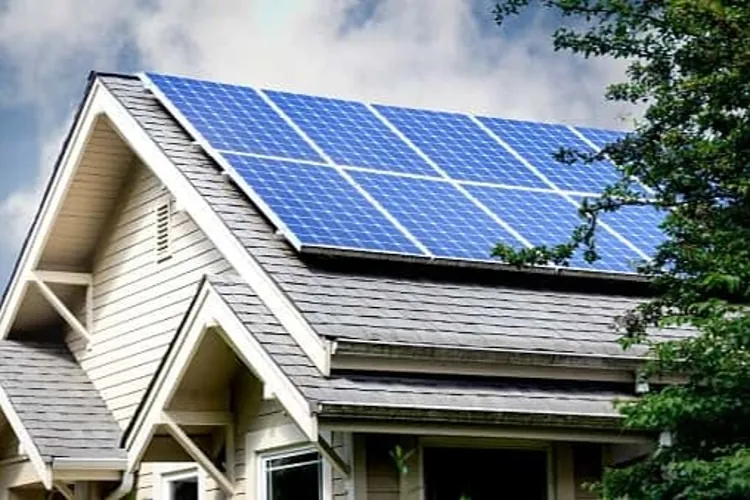
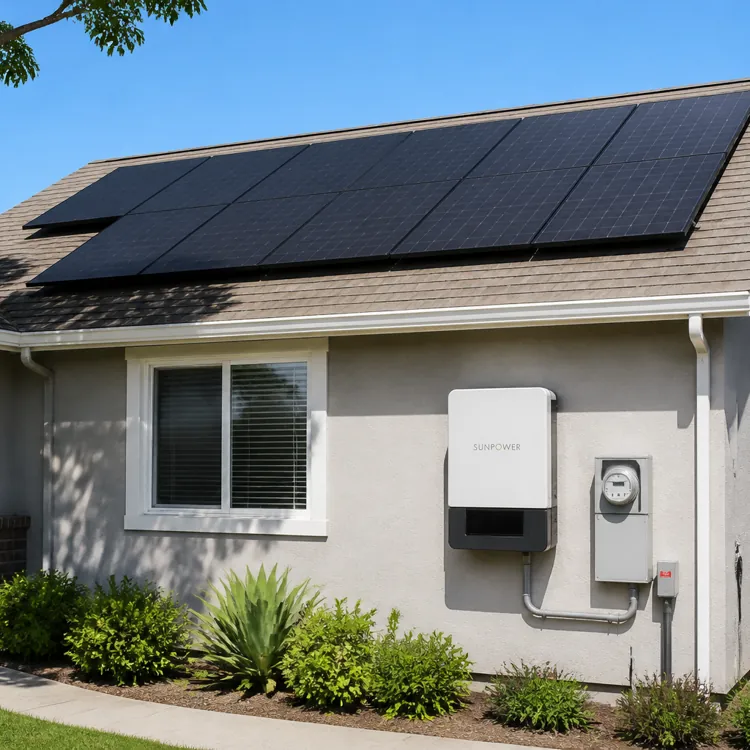
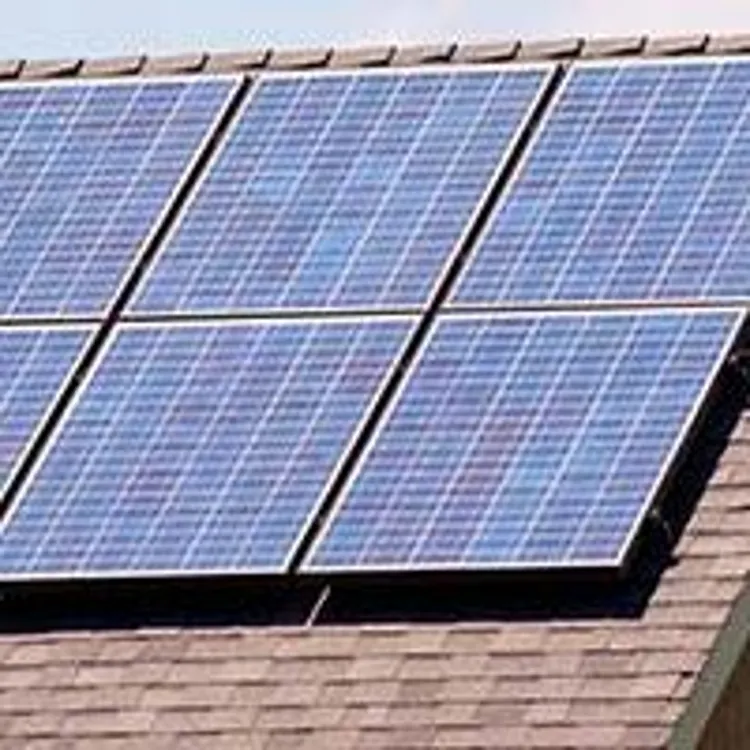
According to SunPower, the average dimensions of a single solar panel are 65 by 39 inches, or roughly 5.5 by 3.25 feet. At approximately 18 square feet, the average solar panel is about as large as a typical dining room table.
Almost all solar panels are under 2 inches deep, with modern residential and commercial equipment usually falling between 1.4 and 1.6 inches deep. Solar panels tend to be wide and tall but shallow in depth, so they stack easily for transportation and minimize the likelihood of damage from heavy winds while lying “flat” on a sloped roof face.
The average home requires between eight and 25 rooftop panels to generate enough solar power.
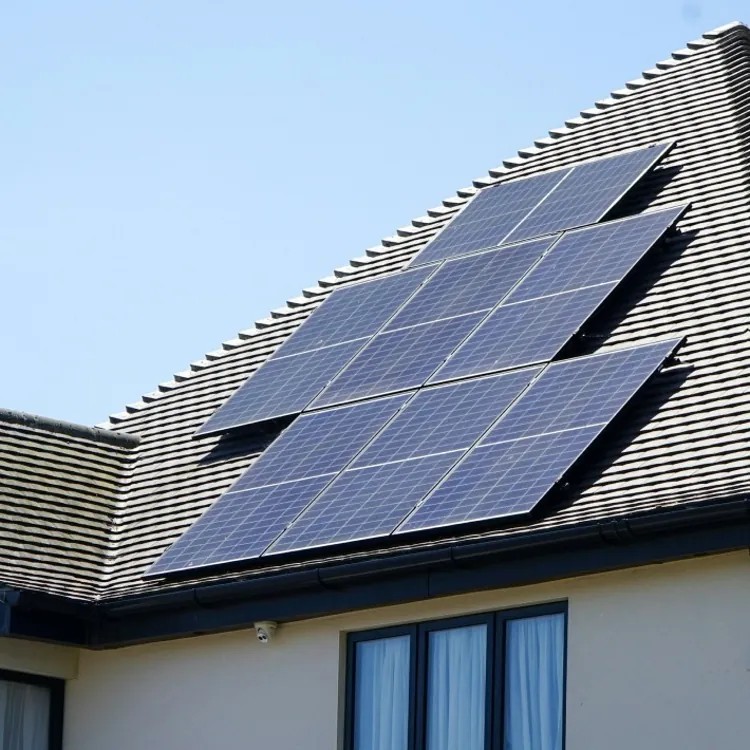
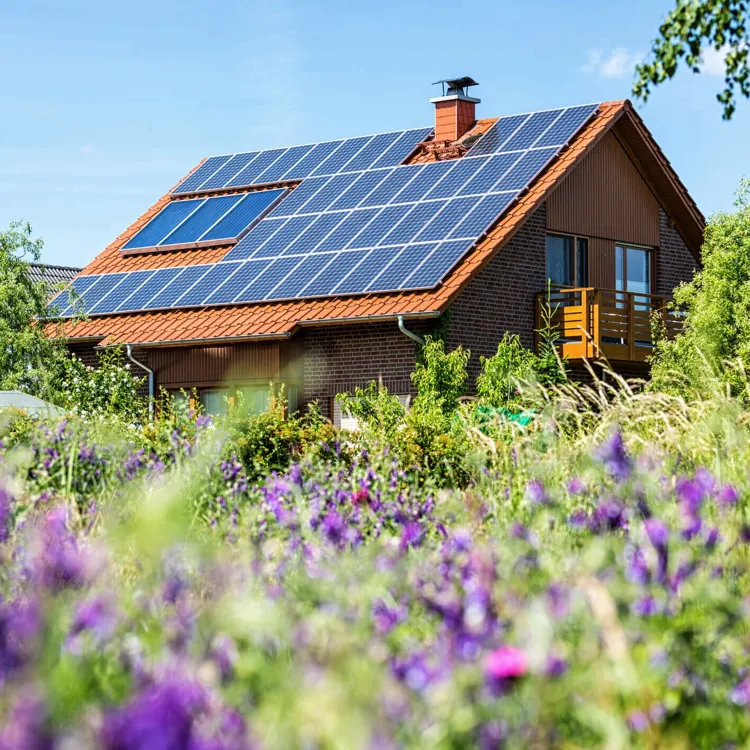
Depending on your home’s annual electricity usage and sunlight exposure, your solar array may include anywhere from eight to 25 panels. For the sake of space and cost efficiency, solar panels are usually installed as close together as possible in neatly arranged arrays.
Say you want to install 16 solar panels to cover your home’s approximate annual electricity consumption. At 18 square feet each, your array would cover about 288 square feet on your roof or property. In this example, equipment installed in four rows of four panels each would create total array dimensions of roughly 22 by 13 feet.
How much do solar panels weigh?
On average, solar panels weigh anywhere from 34 to 62 pounds, depending on size and material. Today most solar panels are encased in a heavy metal frame and weigh around 40 pounds each, while some flexible and portable solar panels are intentionally designed for special lightweight uses.
Mounting equipment is also a factor when considering the total weight of a solar installation, adding between 3 and 6 pounds, or an average of 4.5 pounds, per square foot, so our 16-panel, 288-square-foot example system would weigh approximately 1,296 pounds.
Occasionally, some residential roofs need to be reinforced so they can accommodate the extra weight of a solar panel system.
One example: A ConsumerAffairs reviewer from sunny California had solar panels installed on seven properties. The installation went off without a hitch on six of the projects, but the installer “found something that needed to be fixed” on the seventh property to secure the building permits. Once fixed, the installation went on without issue.
| Panel | Use | Dimensions | Weight |
|---|---|---|---|
| Jinko Solar 295W | Residential | 64 x 39 x 1.5 inches | 42 pounds |
| Panasonic HIT 330W | Residential | 62 x 41 x 1.4 inches | 41 pounds |
| Mission Solar PERC 60 | Residential | 65 x 39 x 1.5 inches | 40 pounds |
| SunPower Maxeon MAX6 435W | Residential | 73 x 41 x 1.5 inches | 48 pounds |
| Canadian Solar BiHiKu (Bifacial panels) | Commercial | 84 x 41 x 1.2 inches | 62 pounds |
Types of solar panels and their impact on size and weight
Three common types of solar panels are monocrystalline, polycrystalline and thin-film. While there are differences among them, their average weight doesn’t fluctuate by much purely based on the panel type.
- Polycrystalline solar panels are made from fragments of several silicon crystals, melted together to create the wafers inside each photovoltaic cell. On average, polycrystalline solar panels weigh about 49 pounds.
- Rather than comprising pieces of multiple silicon crystals, monocrystalline solar panels are made of “pure” wafers sourced from single silicon crystals. They tend to be more efficient (and more expensive) than their polycrystalline counterparts, but on average, they weigh about 45 pounds.
- As the name implies, thin-film solar panels tend to be less bulky than the other popular solar panel types. On average, they weigh about 40 pounds — nearly 10 pounds less than the average polycrystalline panel.
Regardless of panel type, keep in mind that weight can vary by manufacturer.
Factors that determine solar panel size
The production capacity (or wattage) of a solar panel doesn’t necessarily influence its physical size.
Instead, solar panel dimensions are largely dependent on whether they’re designed for residential or commercial use, the number of PV cells included and other particular manufacturing influences. A system’s efficiency is the most important thing to keep in mind when maximizing your available installation space.
- Number of photovoltaic (PV) cells: The number of individual PV cells in a solar panel is the factor that most affects panel size. It’s easy to count the number of PV cells on your solar panels. While cell counts may range from 8 to 96, most modern PV systems utilize either 60-cell or 72-cell solar panels.
- Residential vs. commercial use: Home solar panels are typically designed for maximum efficiency and minimal length and width, due to potential limited installation space on residential rooftops. On the other hand, commercial and utility-scale PV installations often use less efficient (but physically larger) solar panels to produce the same amount of power over a wider installation area.
- Manufacturing decisions: Although there are vague industry standards for size, shape and price, both how much a solar panel costs and its dimensions largely depend on individual manufacturing decisions. Slight variances in equipment size can be found across all of today’s top panel-producing companies.
How to calculate solar panel system size
If you’re wondering whether your roof is large enough for a full set of solar panels, there are a few quick steps you can take to get a fairly accurate estimate.
- Find the dimensions of your roof. To avoid physically measuring your roof or digging through old paperwork, you can use software such as Google Earth to see an accurate satellite image of your property and measure its dimensions.
- Calculate the square footage of your roof space that can be used to generate solar power. In the U.S., south-facing roofs unobstructed by shade or building features are best.
- Divide your usable roof space by 18 (assuming 18 square feet per panel) to get a rough estimate of how many solar panels could fit on your roof.
For example, let’s say that your roof is 1,500 square feet total, with a 750-square-foot south-facing area with lots of daily sunlight. With no major roof obstructions or shade concerns present, this means your roof could host roughly 40 solar panels (750 square feet divided by 18 square feet per panel).
While it’s unlikely your home will need all 40 panels to cover your electricity usage, it’s possible solar would be worth it in this scenario. If you’re thinking about going solar, we recommend talking to multiple experts to find the best system for your home or business.
FAQ
What is the weight per square foot of solar panels?
While weight can vary slightly depending on size and manufacturer, many solar panels weigh just over 2 pounds per square foot.
Do I need to reinforce my roof for solar panels?
If the roof on your home is older, you may need to reinforce or replace it before installing solar panels. A newer roof, or one that has already been reinforced to help withstand snow or high winds, for example, may not need additional reinforcement. An architect or structural engineer can determine whether your roof is up to the task or needs replacement or reinforcement.
How do I compare solar panels by weight and efficiency?
The weight and size of your solar panels might not affect efficiency as much as whether the panels are monocrystalline or polycrystalline. Monocrystalline panels are generally more efficient than polycrystalline panels, though they also tend to be more expensive.
Article sources
ConsumerAffairs writers primarily rely on government data, industry experts and original research from other reputable publications to inform their work. Specific sources for this article include:
- SunPower, "How Many Solar Panels Do You Need?" Accessed Dec. 1, 2025.
- Center for Sustainable Systems, University of Michigan, "Solar PV Energy Factsheet." Accessed Dec. 1, 2025.
- Paradise Energy Solutions, "Is Your Roof Strong Enough for Solar Panels?" Accessed Dec. 1, 2025.
- Solar Melon, "How Much Do Solar Panels Weigh?" Accessed Dec. 1, 2025.