


Key insights
Net metering rates and compensation varies depending on your location and the local utility company in your area.
Jump to insightThe cost of net metering includes fees and other charges you might have pay to your utility company to join the program and connect your solar system to the grid.
Jump to insightLow payments for extra solar power and high monthly utility fees can limit your net metering savings.
Jump to insightHow net metering works
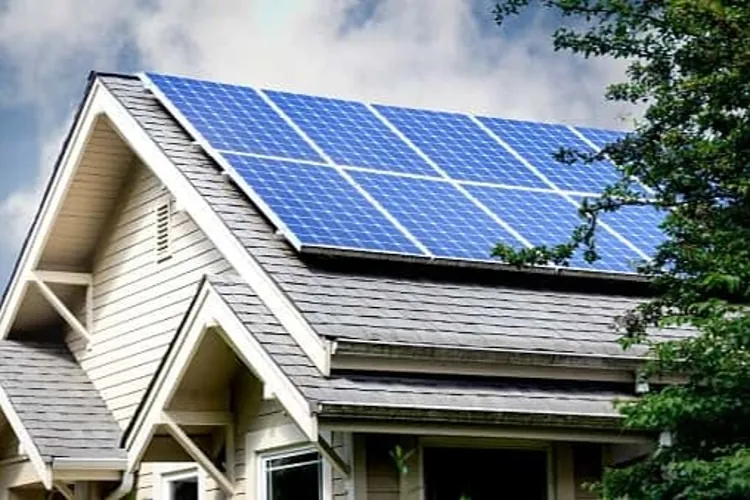
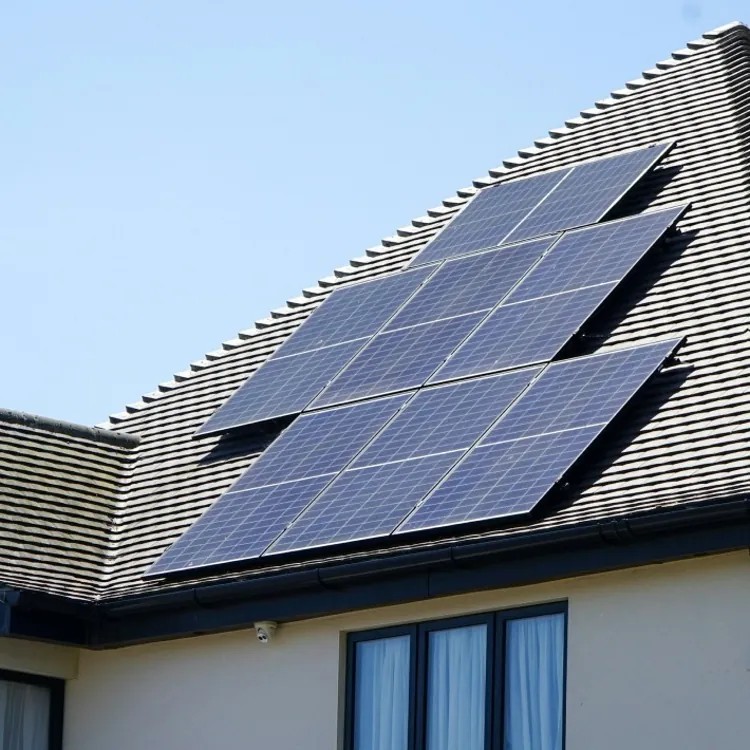
Solar panels work by capturing sunlight and converting it into the type of electricity we use to power our homes and businesses. Depending on the size of your solar panel array, there may be times when the system generates more electricity than you typically need to power the appliances and devices in your home. In these instances, you could benefit from participating in your utility's net metering program.
When your solar panels make more electricity than your home uses, net metering lets you send the extra power into the electrical grid through your utility meter. Your utility company tracks this and pays you in one of two ways:
Bill credits: Most commonly, the value of your excess generation is applied as credits on your future utility bills. This helps cover your electricity costs during times of lower solar production, like in the winter.
Direct payments: In some areas, utilities issue a check (or deposit) for the electricity you supplied, usually at a set rate per kilowatt-hour.
If your utility's net metering program supplies bill credits, you'll find it listed on your monthly energy bill. Utilities commonly list this as a "net metering credit" or "grid export credit." This line item will specify how many kilowatt-hours (kWh) of solar energy your system exported to the grid, as well as the credit you're receiving, which is normally listed as a negative number. In many cases, net metering bill credits will roll over to the following month, but this can vary depending on your utility and local regulations.
Net metering requirements
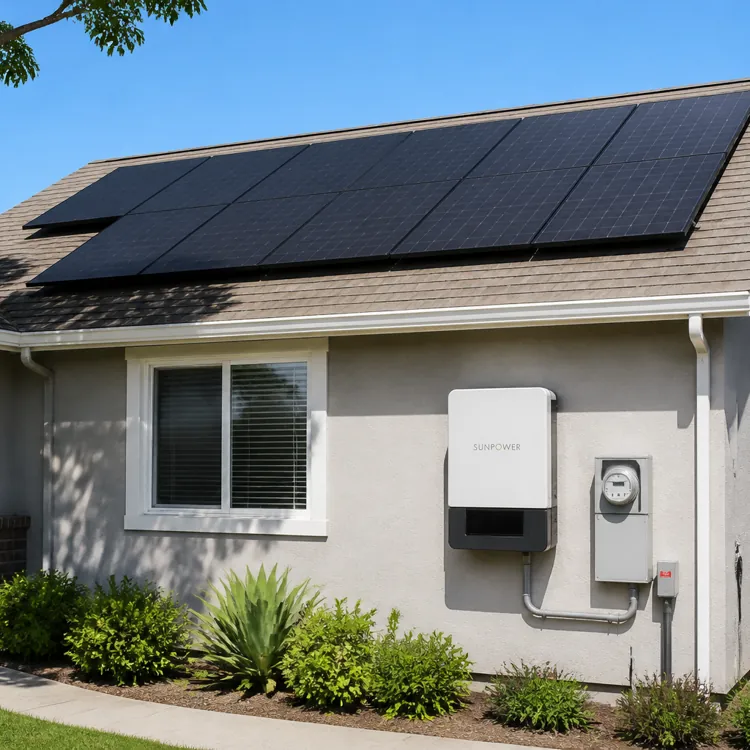
Your utility will have to reprogram your current meter or install a new meter that measures electricity flowing both ways. You'll also need utility approval. You may pay a one-time connection fee (usually $94 to $145, depending on your provider).
Key requirements
Solar system connected to the utility grid
Utility company participation
Proper metering equipment
Completed interconnection process
State and local policies
Currently, 45 states plus Washington D.C., American Samoa, the U.S. Virgin Islands and Puerto Rico have some form of mandatory net metering policies. Even states without mandatory programs often have utilities offering voluntary net metering services.
Changes to state policies
Many states now pay less for excess solar energy you send to the grid. For example, California’s NEM 3.0 pays at wholesale rates instead of retail, and Illinois stopped crediting delivery charges in 2025.
California shows the clearest example of how policy changes can surprise homeowners. The state's Net Billing Tariff (NEM 3.0), established by the California Public Utilities Commission, started in 2023. It cut payment rates for exported electricity by about 75% compared to the old NEM 2.0 program.
If you want to go fully off-grid, net metering isn't for you. It requires that you work with a local utility company.
"Unlike previous versions, NEM 3.0 bases compensation on the time of day," Vinnie Campo, co-founder and CEO of Haven Energy, explained. "This means the value of exported electricity fluctuates with demand." The shift was made to encourage battery storage for grid stability. But it greatly hurt expected payback for homeowners who installed solar after April 2023.
Many homeowners felt blindsided by the sudden shift. For instance, one California customer told us: "They buy back your energy from the panels at the current rate of 6 cents a kilowatt but charge you 30 to 80 cents. On top of that, I'm paying $125 in monthly fees that have nothing to do with the energy I use."
» EXPLORE: Solar rebates and tax incentives by state
How much does net metering cost?
Net metering is not one fixed cost. Fees can vary a lot by state and even by utility provider, but here's a breakdown of typical net metering costs in 2026:
Interconnection fees: A one-time charge to connect your solar system, usually $75 to $300 for homes under 10 kilowatts (kW). It can be higher if upgrades are needed.
Monthly fixed charges: Some utilities charge $10 to $20 per month to cover grid maintenance.
Equipment costs: You may need a new electric meter, inverter or wiring, which the customer usually pays for.
Net metering rates: Utilities set varying rates that they will pay in the form of bill credits in exchange for solar energy. If you're weighing the benefits of net metering in your area, your utility's rate is an important factor to consider.
To learn more, ask the contractor installing your solar system about net metering in your area. These companies often have departments specifically for helping residential customers set up net metering.
Why participate in net metering?
Net metering helps you save money by lowering your monthly power bill and improving the payoff of your solar panels. It’s especially useful if you don’t want to buy expensive batteries to store extra energy.
» COMPARE: Best solar energy companies
Pros and cons of net metering
Net metering can help lower your solar energy costs. But it's not for everyone, especially if you want to go fully off the grid.
Pros
- Payment for extra electricity
- Gives clean energy to the grid
- No batteries needed to store extra power
Cons
- Different compensation terms
- Credits may expire or you may not get paid
Benefits of net metering
The main advantage of net metering is getting paid for your extra electricity. You also save money because you don't need to buy batteries to store extra solar power. On cloudy days or in winter months, when your system isn't making enough solar electricity, you can get backup power from the electric company instead.
The net metering “clock” only starts after utility approval. Delays here directly impact ROI.
Another good thing is that you give clean, eco-friendly energy to the power grid. Solar is an emissions-free form of renewable energy. When used to replace energy from fossil fuels, it reduces greenhouse gases that cause climate change. Net metering programs can help to strengthen grid reliability during times of peak demand, all while supporting the use of renewable energy.
Potential disadvantages of net metering
The biggest problem with net metering is the runaround you can get from the electric company. For example, depending on where you live and the utility company, you may or may not get paid the full retail rate for the electricity your solar panels make. Companies can also limit how much electricity they pay you for. They can restrict how many solar customers can join net metering in your area.
Why net energy metering is controversial
Net metering requires utilities in some states to pay homeowners for the extra electricity their solar panels send back to the grid. The challenge is that utilities may end up buying that power at nearly the same price they sell it for, which can cut into their profits.
So, electric utility companies may raise rates for their nonsolar-producing customers to make more of a profit.
This creates tension: Solar owners want fair compensation, while traditional utility customers don’t want higher bills. On top of that, some solar customers have trouble getting the compensation they feel they earned.
Important considerations
System size limits: Many states cap eligible system sizes.
Enrollment caps: Some utilities limit the number of customers who can join. Also, if you do get a credit, it may expire before you can use it. Be sure to check your state laws and the policies of the utility company.
Grandfathering provisions: Existing customers often maintain original rate structures when policies change.
Time-of-use changes: Some programs (like California's NEM 3.0) base compensation on when electricity is exported.
Solar-plus-storage: If the net metering program in your area is weak or nonexistent, you may decide to invest in battery storage for your system instead. Solar batteries let you keep the extra electricity your system generates and pull from the battery storage later.
Real-world examples: when net metering gets complicated
Even when rooftop solar panels work as promised, the money benefits of net metering can be surprisingly weak. Utility billing errors, confusing policies and wrong expectations often leave homeowners frustrated. Getting issues fixed can turn into a long battle.
Billing errors and bureaucratic nightmares
One homeowner, Tim in Illinois, found that their net metering credits for extra power stopped showing on their ComEd bill. When Tim asked for a refund, he first got a $1,300 check. But then it was canceled without warning. "I no longer had access to the funds and was charged a $12 fee for the voided check," Tim told us. Nearly a month later, he was still being told to "call back in a week" for updates, with no clarity on when the billing department would fix the problem.
Tim’s experience reveals a common tension: The advertised simplicity of net metering — "sell your extra power and save" — can break down when the fine print takes over.
Timing and system design problems
Solar companies may focus on system designs that don't match the customer's net metering goals, such as deliberately avoiding overproduction.
For instance, Jeff in Texas found that their installer had deliberately sized their system to avoid overproduction. This prevented them from selling excess power back to the utility. While the installer saw this as "optimal" design, Jeff felt cheated of potential credits.
True-up dates, credit expirations and billing cycles greatly impact savings.
Another solar customer, Drew in Virginia, realized their utility resets credits every January. Because their system started in winter, Drew would lose fall-generated credits before peak summer energy use. “By going on the grid in January, I miss September, October, November and December credits," he explained. "When my highest bills come in June, July and August, I'll still have to pay out of pocket."
Types of net metering
With standard net metering, your home uses grid electricity while all solar production gets credited to your account. There are other types of net metering: buy all, sell all; net billing; and aggregate net metering (ANM).
Buy all, sell all
Some utility companies offer "buy all, sell all" deals. With this type of metering, two separate meters track home use and solar production separately. You buy all electricity from the utility and sell all solar production back, often at different rates.
Like with other net metering, the electric company may charge you more for using electricity than it pays you for the solar energy you sell it. So, you might not break even on each billing period.
Net billing
This is similar to net metering, but payment is based on wholesale electricity rates rather than retail rates. This usually means lower payments for solar exports.
With net billing, a solar panel kilowatt-hour is worth the same amount as a kilowatt-hour from the grid. You get paid at the wholesale rate, while net metering often pays residents with retail rates. Net metering is the better choice if you're looking to make a little profit while saving on your monthly bill.
Aggregate net metering (ANM)
Aggregate net metering is the same as regular solar net metering, but it's for people who own multiple properties. It lets the utility company track your solar energy system's output and use for multiple apartments or condos.
Virtual net metering
Virtual net metering is when a community shares a solar system and benefits from metering the shared unit. For example, if a condo association decides to collect from members to buy a solar system for everyone to share, virtual net metering makes sure each member gets the benefits. The credits are shared across multiple meters.
FAQ
Are solar panels worth it?
For a lot of homeowners, solar panels are worth it if they like the idea of helping the environment, lowering their monthly utility bills and gaining more energy independence. But it doesn’t work out for everyone. You have to consider your upfront cost, potential monthly savings and what local incentives are available.
Is net metering worth it?
If you want to lower your solar costs, then yes, net metering can be worth it. Even if you just get a credit of $25 from net metering per month, that would save you $7,500 over the lifetime of your home solar system. That credit can go toward electricity you may need throughout the year or the cost of your solar panels. If you plan to go off the grid, though, net metering isn't right for you. And keep in mind the utility might give you the runaround.
How can I get started with net metering?
The process varies by location, but often includes these five basic steps:
- Research local policies: Contact your utility company about net metering availability and terms
- Understand compensation rates: Learn how your utility calculates credits and payments
- Review interconnection requirements: Determine fees and timeline for grid connection
- Work with experienced installers: Choose solar installation companies familiar with local net metering processes
- Monitor your renewable energy system: Track production and billing to ensure proper credit application
Can I completely cover my own electricity needs with solar panels?
In many cases, yes. However, it depends on system size, household usage and local net metering rules. Some utilities don’t allow systems to be sized larger than your historic consumption, which means you can’t always overproduce. Net metering programs help you offset the cost of the energy you buy, but you may not always generate 100% of your own electricity.
What happens if I generate more power than I use?
If your generation system produces more than your household consumes, the extra flows into the distribution system. You’ll typically receive credits at a set rate, but these are often lower than the retail price of electricity. For example, you might pay $0.30 per kWh to use grid power but only earn $0.06 per kWh when selling it back. Always ask your utility how credits are valued and whether they expire.
Bottom line
Net metering is a good way to use excess electricity your solar panels produce while earning credits for your electricity bill. It also lets you strengthen your local power grid with renewable energy. However, the terms and practices of the electric company you partner with can make the process a little aggravating — thorough research can alleviate some of these problems, but oftentimes there is little you can do to change your utility's net metering terms.
Net metering isn't a set-and-forget benefit. Its value depends on a complex web of factors: utility rules, true-up cycles, installer design choices and even the timing of when your system goes live. Understanding these details upfront can mean the difference between long-term savings and long-term frustration.
Article sources
ConsumerAffairs writers primarily rely on government data, industry experts and original research from other reputable publications to inform their work. Specific sources for this article include:
Solar Energy Industries Association, “Net Metering.” Accessed Oct. 8, 2026.
California Public Utilities Commission, “Net Energy Metering and Net Billing.” Accessed Oct. 8, 2026.
NuWatt Energy, “How to Read Your Electric Bill After Installing Solar.” Accessed Oct. 8, 2026.
State Climate Policy Dashboard, “Net Metering.” Accessed Oct. 8, 2026.