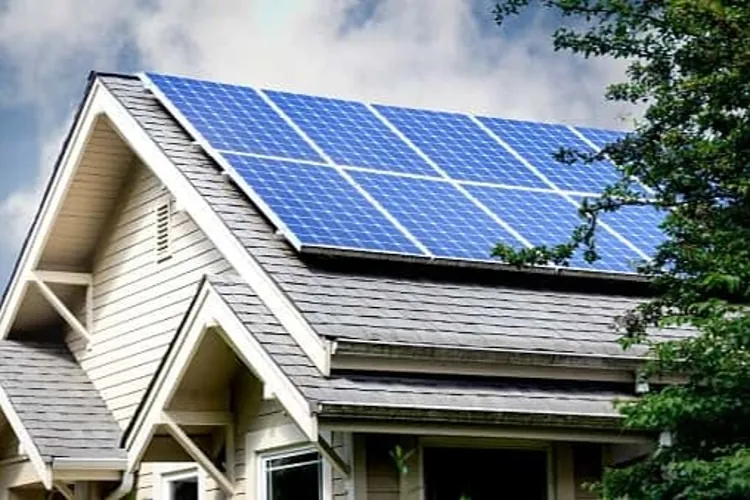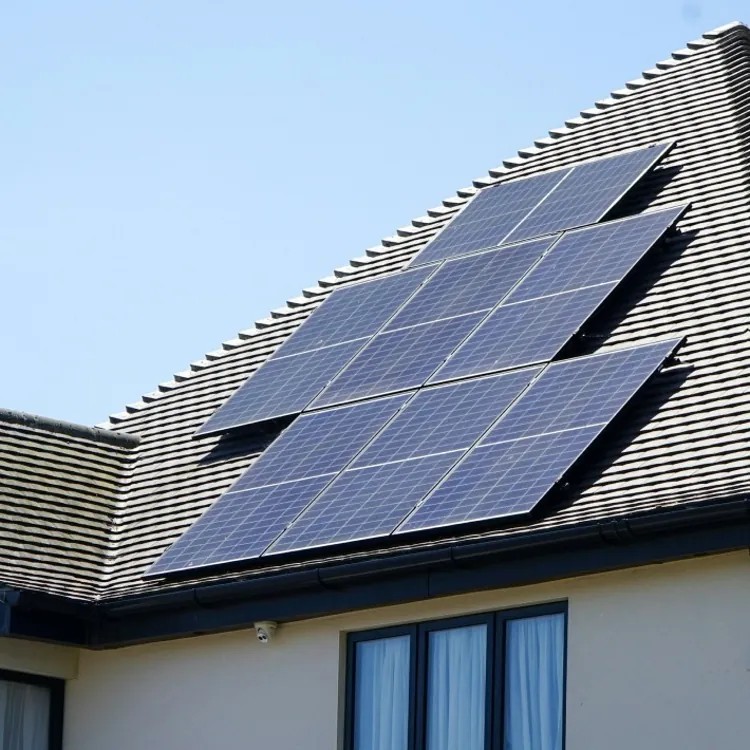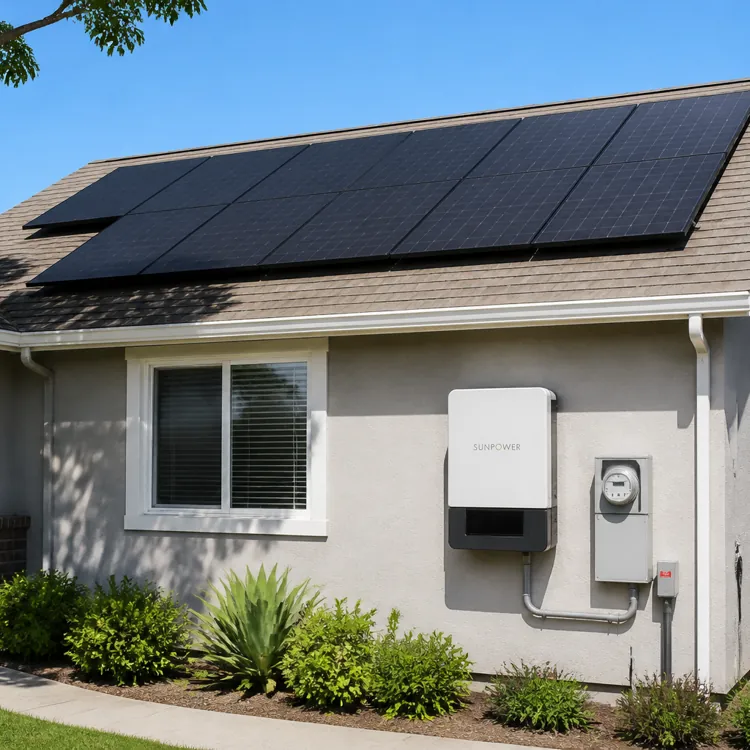

How many solar panels do you need?
The first step in figuring out how many solar panels you need to fully power your home with solar is determining your energy usage. According to the latest data from the U.S. Energy Information Administration (EIA), the average U.S. household uses about 10,500 kilowatt-hours (kWh) of electricity per year, which breaks down to about 875 kWh per month.
Of course, your typical energy usage may be higher or lower than this amount. For instance, the average U.S. household in the south typically uses much more electricity than the average home in the northeast, midwest or west.
Solar panels needed by square footage
The size of your home also impacts the amount of energy you consume. Larger homes typically have more people, take more energy to heat and cool, and contain more appliances, so they tend to consume more electricity overall. This means they'll need more solar panels.
Matthew Culley, a commercial sales and business development manager at Renu Energy Solutions, a solar installer based in Charlotte, North Carolina, said that the number of panels a home will need depends on its square footage. The table below shows Culley’s estimated number of panels according to a home’s square footage.
| Home size | Estimate of panels needed |
|---|---|
| 1,500 square feet | 14 solar panels |
| 2,000 square feet | 19 solar panels |
| 2,500 square feet | 24 solar panels |
| 3,000 square feet | 28 solar panels |
If you’re in another part of the country or your home doesn’t get much sun for whatever reason, these estimates might not be correct for you. It can help to consult a professional to get a good estimate of your energy consumption and how many panels you may need.
How to determine your typical energy consumption
Looking back on your utility bills can show how much energy your home uses each month and each year. It can help to look back on at least one year of energy consumption to determine your long-term needs since energy consumption varies from month to month and season to season.
Also, a solar panel installer may take satellite images of your house to see your roof at different times. This is a good way to tell which parts of your roof are the most exposed to the sun throughout the day. This information will help your installer create a proposal for the appropriate number of solar panels.
How much energy does a solar panel produce?
Most solar panels produce between 250 and 400 watts of power. However, the amount of energy a solar panel produces varies from one type of panel to the next. It’s best to ask about how much a given solar panel produces when you request a quote for solar panel installation on your home.
Also, your results will likely also vary from what’s advertised. Not all areas get the same amount of sunlight, and different parts of your roof will have different sun exposure levels.
What affects solar panel output?
Several factors impact solar panel output, including the panel’s size and the type of panel. Larger panels have the capacity to capture more sunlight and generate more electricity, and different solar technologies have different efficiency ranges. As for panel type, monocrystalline panels tend to be more efficient than polycrystalline or thin-film panels.
Other factors can impact how much energy a solar array can produce, such as roof size, the number of panels in the system and the hours of sunshine available. However, there’s not much you can do about your roof size or available sunshine other than moving to a different location.
» MORE: How do solar panels work?
Considerations for going solar
The decision to go solar is different for everyone. Some factors to take into consideration include:
Home size and energy usage
Bigger homes tend to use more energy, and the more energy your home uses, the larger your solar array will have to be. Bigger arrays typically cost more, but they also have the capacity to make a bigger dent in your average monthly utility costs.
Budget
While solar panels can save you money over time, the upfront costs can be steep. This may prohibit some homeowners from investing in solar technology. Solar financing, solar leases and solar power purchase agreements (PPAs) can spread costs out over time, so talk to your solar installer to find out what options are available to you.
Kate, a reviewer from Maine, signed up for a solar PPA and was very happy with their electricity savings. Kate said: “They [installed] their solar on my roof and I pay them for most of what I would pay [Central Maine Power] for power. [...] I’m saving a bit on the cost of electricity. [...] Plus[,] they did all the work getting me the net metering with [Central Maine Power].”
Sun exposure
Sun exposure makes a big difference in the number of solar panels your home needs. The amount of sun your home gets depends on factors like the design of your home, its location, the local climate and whether there are any nearby trees or buildings casting shade on your home.
Solar incentives
Although the federal solar tax credit expired on Dec. 31, 2025, there may be other solar incentives available depending on where you live. Check with your local and state government offices for information about any incentives where you live.
Energy-consuming appliances and vehicles
The more energy you use, the more you have to gain by going solar. While your home appliances and your heating and cooling systems have a major impact on your energy bill, so can electric vehicles and other large electronic devices.
Are solar panels worth it?
If you're trying to decide whether solar panels are worth it, weigh the cost of your purchase and installation against the potential long-term savings your solar panels can provide.
Tim Deters, a digital content manager at Green Ridge Solar, a solar company in Oregon, said that many people who choose to finance their systems can lock in payments at or below their current electricity costs. Since energy costs are subject to inflation, this can save people money over time. It can also help to achieve independence from a utility company.
Once a solar installation is paid off, your energy bills will be a thing of the past."
"You will be paying that utility bill for the rest of your life until you die, or you find an alternative way of producing your own power," Deters said. "Once a solar installation is paid off, your energy bills will be a thing of the past."
However, keep in mind that solar panel cost and quality can vary from one company to the next. Lower prices may correspond to substandard installation and poor customer service, while higher prices may correspond to a turnkey installation experience. It can also help to consider references, customer reviews, customer service and solar panel quality to make sure your solar panels are worth the investment.
» MORE: 7 steps to going solar
FAQ
What are solar panels made of?
Solar panels generally use silicon as a semiconductor material, but that typically ranges from pure silicon to melted silicon crystals. Thin-film solar panels use a variety of materials that only include a small amount of silicon.
Do solar panels need to be cleaned?
Solar panels typically only need to be cleaned about once every six months, though once a year may be sufficient depending on where you live.
Is it expensive to maintain solar panels?
Solar panels have few long-term or ongoing maintenance costs. They don’t have any moving parts, and their warranties typically last 10 to 25 years. Often, solar panels are guaranteed to produce 80% to 90% of their original power output over the warranty period.
Bottom line
How many solar panels a home needs depends on several factors, including home size, sun exposure and panel type. To ensure your home is properly outfitted with the correct number of solar panels, work with an experienced solar company that has a good reputation, solid customer service practices and a great warranty.
Article sources
ConsumerAffairs writers primarily rely on government data, industry experts and original research from other reputable publications to inform their work. Specific sources for this article include:
- U.S. Energy Information Administration (EIA), "Use of Energy Explained." Accessed March 9, 2026.
- Internal Revenue Service, “Residential Clean Energy Credit.” Accessed March 9, 2026.