

2025 Housing Market Trends

Article Image

Senate committee approves measure to increase home construction

  • The Senate Banking Committee unanimously approved the ROAD to Housing Act, a bipartisan effort to increase housing supply and reduce regulatory hurdles.

  • The bill includes provisions to streamline environmental reviews, promote construction in Opportunity Zones, and expand financial counseling programs.

  • The American Bankers Association voiced strong support, highlighting measures that would boost affordable housing investments and improve access to small-dollar mortgages.


In a rare show of bipartisan unity, the Senate Banking Committee voted unanimously to advance the ROAD to Housing Act, a major housing reform package aimed at increasing the nation’s housing supply crisis. 

Supported by Chairman Tim Scott (R-S.C.) and Ranking Member Elizabeth Warren (D-Mass.), the legislation blends proposals from both sides of the aisle to address housing affordability through deregulation, expanded investment incentives, and community-level support.

The bill would reward communities that actively build new housing, reduce barriers to development such as lengthy environmental reviews, and rethink federal rules that stifle lending for smaller mortgages. It also includes tenant protections and programs to expand access to financial literacy and housing counseling.

“For far too long, Congress believed this problem was too big to solve,” Scott said. “Today, we’re taking not a step – but we’re taking a leap in the right direction in a bipartisan fashion.”

Housing shortage

Since the housing market crash in 2009, home building has not kept up with housing demand, leading to a shortage and higher prices. Rock-bottom mortgage rates during the pandemic pushed home prices even higher. Now that rate have returned to normal, millions of people are priced out of the housing market.

By combining deregulatory reforms with expanded public support mechanisms, the bill attempts to strike a balance between supply-side growth and consumer protection.

The American Bankers Association has endorsed key provisions of the bill, including a provision enabling banks to channel more funding into affordable housing and community development projects. 

The measure now goes to the full Senate where, with bipartisan support, approval is expected.

Article Image

Something interesting is going on in the U.S. housing market

  • 1.36 million homes were for sale in June, the most since November 2019.

  • The market is balanced or in buyers' favor in 28 of the 50 largest US metros. 

  • A record-high 26.6% of listings dropped prices in June; cuts are most common in the Sun Belt and Mountain West.


Since early in the COVID-19 pandemic, homebuyers have been waiting for this moment. Zillow’s latest market report suggests the U.S. housing market is showing signs of a long-awaited rebalancing, giving buyers more leverage.

For most of 2025, buyers have been playing hard to get. That’s resulted in a spike in the number of available homes for sale, causing more sellers to lower their prices.

This marks a significant turn after years of seller dominance, ushering in what Zillow calls a "neutral" market, where neither buyers nor sellers have the upper hand.

“The shift to a 'neutral' market is significant,” Kara Ng, Zillow’s senior economist, said in a statement. “But it shouldn't be mistaken for a universally cool or easy market for buyers. The affordability crisis remains a high barrier to entry, especially for first-time buyers.”

More homes, less competition

In June, active listings hit 1.36 million — the highest number since November 2019 — reflecting a 17.2% increase from a year ago. A slowdown in buyer activity has reduced competition and allowed homes to linger longer on the market. Median time to pending sale is now 19 days, up from 11 days in June 2023.

Still, affordability is keeping many potential buyers on the sidelines because mortgage rates are in the “normal” range historically speaking, but prices have hovered near record highs. Despite a slight dip in mortgage costs, home prices and borrowing rates remain stubbornly high. Inventory, though improving, is still 21% below June’s pre-pandemic averages. Zillow said it anticipates this shortfall will continue to shrink, potentially closing the gap by year’s end.

Cutting prices at record rates

Price cuts have become increasingly common, especially in overheated markets in the Sun Belt and Mountain West. Nationwide, 26.6% of listings saw price reductions in June — the highest June share since Zillow began tracking in 2018. In cities like Denver (38%), Raleigh (36%), and Dallas (36%), more than a third of sellers lowered their asking prices to attract attention.

Sellers hoping to move their homes in this new market dynamic are being advised to price competitively and differentiate their listings. With more options and slower sales, buyers are under less pressure and more willing to wait for the right deal.

Article Image

Home sellers aren’t cutting prices; they’re delisting

  • Buyer options expand as inventory climbs 28.9%, hitting post-pandemic high

  • Delistings surge 47% as sellers pull bak amid market uncertainty

  • Price reductions reach the highest level in nearly a decade 


There can be little argument that the COVID-19 pandemic and its aftermath distorted the housing market. The median home price surged nearly 50% in that five-year period, according to the National Association of Realtors. Home prices rose because of increased demand and historically-low mortgage rates.

Now that mortgage rates have normalized to around 6.5%, an increasing number of buyers can’t afford those prices and have continued to rent. Normally, sellers would respond by cutting their asking prices, but according to an industry report, that isn’t happening.
While active listings are surging and giving buyers more choice than at any point since the pandemic began,  Realtor.com’s June Housing Trends Report found an increasing number of sellers are withdrawing their homes from the market, unwilling to settle for less than peak-era prices.

In June, the number of active listings nationwide reached 1,085,520, a 28.9% increase year-over-year and a 4.8% rise month-over-month, marking the 20th consecutive month of inventory growth. Despite being about 11% below June 2019 levels, the surge has significantly narrowed the pre-pandemic inventory gap.

However, that isn’t bringing down prices, at least not yet. One reason may be sellers unwilling – or perhaps unable – to compromise on price. According to the report, delistings rose 47% year-over-year in May and are up 35% year-to-date. 

That means many sellers are testing the waters but quickly pulling back if they don’t get their desired price. In fact, delistings have grown faster than active inventory, signaling growing seller impatience.

Testing the market

“The market is a study in contrasts,” said Danielle Hale, chief economist at Realtor.com. “Buyers are seeing more choices than they’ve had in years, but many sellers, anchored by peak price expectations and strong equity positions, are stepping back if they don’t get their number.”

In some markets like Phoenix, Miami, and Riverside, this trend is even more pronounced, suggesting a reserve of latent supply that could return later, possibly at unchanged price points. Nationally, the delistings-to-new listings ratio hit 13% this spring, a substantial rise from 10% in both 2023 and 2024 and 6% in 2022.

This indicates that for every 100 new homes listed, 13 were delisted, homes likely withdrawn due to slow activity or buyer pushback.

Article Image

Despite soft sales, home prices keep hitting record highs

  • U.S. median home-sale price reaches a record $400,125 amid declining mortgage rates

  • Buyer demand remains resilient despite a slight dip in new listings and pending sales

  • Touring activity and mortgage applications climb, offering signs of market stabilization


The median U.S. home-sale price surged to a record-breaking $400,125 during the four weeks ending June 29, according to a new housing market update from real estate brokerage Redfin. While the new high underscores ongoing market pressures, prospective homebuyers may find some solace as mortgage rates continue their downward trend.

Mortgage rates have eased in recent weeks, helping offset the impact of higher home prices. The weekly average 30-year fixed mortgage rate dropped to 6.67% as of July 3, the lowest it has been since early April. Daily rates hovered slightly higher at 6.75%. 

This reduction in borrowing costs has resulted in the median monthly mortgage payment falling to $2,742 — the lowest level in four months and a modest 1.6% decrease year-over-year.

Demand and supply hold steady

Despite affordability challenges, homebuyer demand remains relatively strong:

  • Mortgage-purchase applications rose 16% year-over-year, though they held flat week-over-week.

  • Home touring activity, tracked by ShowingTime, climbed 32% from the beginning of the year — notably higher than the 21% increase recorded at the same time last year.

  • Google searches for “home for sale” reached their highest level in a year, suggesting sustained buyer interest.

However, pending sales — a key indicator of market activity — dropped 3.2% from the same time last year, marking the sharpest decline in nearly four months. This dip may reflect hesitancy among buyers still facing affordability constraints, despite improving rate conditions.

Sellers begin to change their minds

New listings edged down 0.7%, the first weekly decline in nearly six months, while the total number of active listings rose 14.1% year-over-year — the smallest increase in over a year. The market's inventory now sits at 4.1 months of supply, inching toward a balanced market but still favoring sellers slightly.

Homes are staying on the market longer, with the median days on market rising to 37 days, up five days from the prior year. Additionally, only 36.3% of homes went off the market within two weeks, down from 40% a year ago.

Fewer bidding wars

With increased inventory and longer market times, competition among buyers has cooled slightly. The share of homes selling above list price dropped to 28.4%, down from 32%, while the average sale-to-list price ratio slipped to 99.1%, from 99.6% a year ago.

Market dynamics varied significantly by region:

  • Detroit led all metros with a 10.1% year-over-year increase in median sale price, followed by Newark, N.J. (9.4%) and Cleveland (7.3%).

  • On the flip side, Oakland, Calif., saw the largest decline at -3.7%, with San Diego and West Palm Beach, Fla., close behind at -3.4%.

  • Virginia Beach, Va., led in pending sales growth (+7.4%), while San Jose, Calif., and Las Vegas saw steep double-digit declines.

  • Tampa, Orlando and San Diego were among the metros with the largest year-over-year drop in new listings.

Article Image

Mortgage rates have leveled off, for now

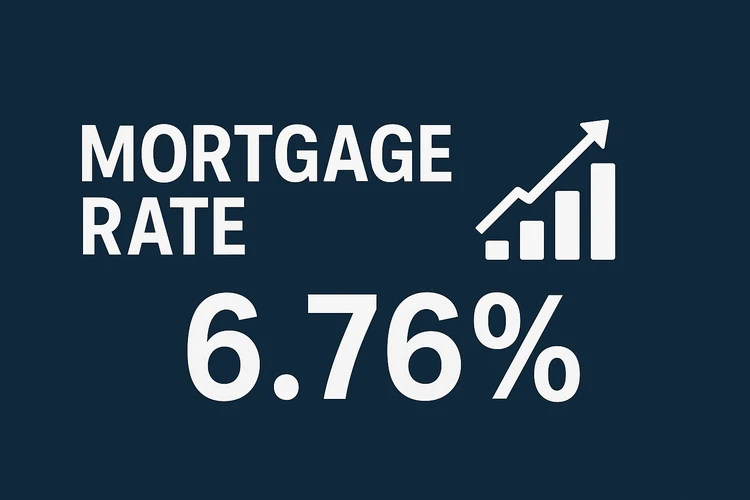
  • As of May 8, the 30-year fixed-rate mortgage (FRM) averaged 6.76%, remaining unchanged from the previous week and down from 7.09% a year ago.

  • The 15-year FRM dropped slightly to 5.89%, compared to 5.92% last week and 6.38% a year earlier.

  • Freddie Mac Chief Economist Sam Khater noted that stable and lower mortgage rates have led to a rise in home purchase applications.


Early April bond market turmoil ended a decline in mortgage rates but that now appears to be in the rearview mirror. After a couple of declines in mortgage rates, Freddie Mac reports its Primary Mortgage Market Survey shows the 30-year fixed-rate mortgage (FRM) averaged 6.76% this week.

“Mortgage rates stayed flat this week,” said Sam Khater, Freddie Mac’s chief economist, in a statement. 

“At this time last year, the 30-year fixed-rate mortgage was 30 basis points higher and purchase applications were declining. Today, rates are lower and have remained stable for weeks, sparking continued increases in purchase applications.”

Current rates

  • The 30-year FRM averaged 6.76% as of May 8, 2025, unchanged from last week. A year ago at this time, the 30-year FRM averaged 7.09%.

  • The 15-year FRM averaged 5.89%, down from last week when it averaged 5.92%. A year ago at this time, the 15-year FRM averaged 6.38%.

Article Image

Better financing for manufactured homes could unlock affordable housing, experts say

Key takeaways:

  • U.S. faces a housing shortage of up to 7 million homes, pushing prices to record highs
  • Experts urge policy reforms to expand access to mortgages and safer loans for manufactured homes
  • Outdated titling laws and financing gaps keep millions of affordable homes out of reach

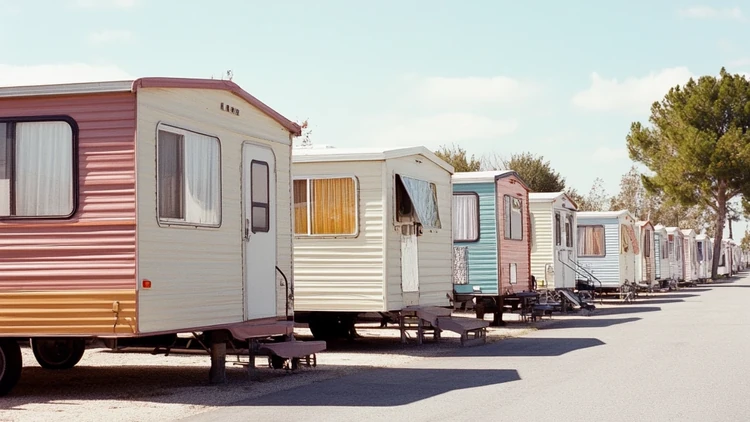
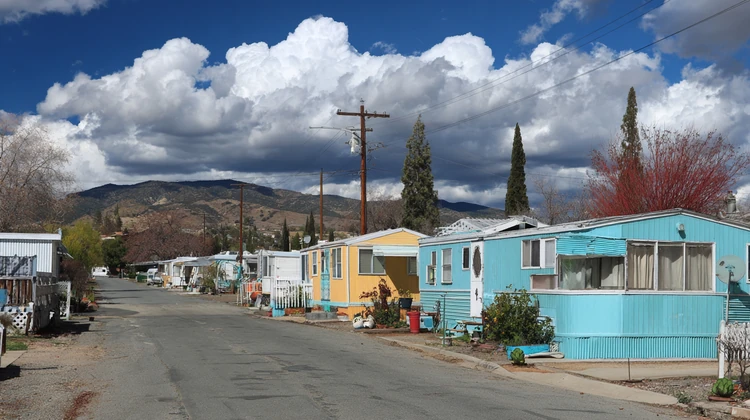
As the United States grapples with a historic housing shortage of 4 to 7 million homes, experts say an overlooked solution is hiding in plain sight: manufactured housing. At a recent event hosted by The Pew Charitable Trusts, housing advocates, lenders, and policymakers emphasized the urgent need to modernize financing rules for these homes, which are often cheaper, energy-efficient, and just as durable as traditional houses.

Affordable yet out of reach

Modern manufactured homes, built under updated HUD construction codes, can cost up to two-thirds less per square foot than site-built homes. More than 22 million Americans currently live in them, yet many remain locked out of affordable financing due to outdated laws and systemic lending obstacles, Pew researchers say.

A key issue? Titling. In 49 states, manufactured homes are automatically titled as personal property, like a vehicle—rather than real estate. This classification often disqualifies buyers from mortgages, forcing them into higher-cost, riskier alternatives.

“Manufactured home financing is the major holdback,” said Dave Anderson, executive director of the National Manufactured Home Owners Association. “If the financing was improved, it would open the floodgate.”

The risks of alternative financing

According to Pew, only 44% of manufactured home buyers have a mortgage. The rest rely on home-only loans, which carry higher interest rates, shorter terms, and fewer protections.

Worse, a significant portion—particularly those unable to title their home as real estate—resort to contract financing arrangements like lease-purchase or land contracts. These deals often lack clear terms and legal protections, putting borrowers at elevated risk of eviction, equity loss, or fraud.

“There are so few safeguards,” said Daniel Rezai, a housing attorney at the Virginia Poverty Law Center. “Oftentimes the seller never even owned the home—they just evicted the previous tenant and sold it again under contract.”

Three key policy opportunities

Speakers at the Pew event identified three major reforms to unlock safer, more accessible financing for manufactured homebuyers:

  1. Modernize Titling Laws: States can revise legal frameworks to make it easier for manufactured homes to be titled as real estate, enabling access to mortgages and refinancing options.

  2. Revive FHA Title I Loan Program: The Federal Housing Administration should update its home-only loan program to mirror standard mortgage policies—such as underwriting automation and allowable fees—making it more attractive for lenders.

  3. Enhance Protections for Contract Financing: Lawmakers at both the federal and state level should bolster consumer protections for borrowers using nontraditional financing arrangements.

A hidden opportunity in the housing crisis

Despite being safer and more affordable, home-only loans remain limited by the absence of a robust secondary market, leaving lending to private equity groups with fewer resources and higher pricing.

“We could offer homeownership to more Americans,” said Paula Reeves, president of the Affordable Housing Division at Land Home Financial Services. “It’s got to happen.”

With home prices soaring and millions priced out of the market, policymakers now face a clear opportunity: reforming manufactured home financing could not only bring relief to underserved buyers but also boost the national housing supply—quickly and affordably.


Article Image

Home sellers are giving concessions at near-record levels

Key takeaways:

  • Around two in five home sellers cut deals that lowered the total cost of buying a home in the first three months of 2025.
  • Cancellations of pending home sales went up in March, showing how economic concerns are weighing on prospective homebuyers and challenging sellers. 
  • Tariffs and economic uncertainty are presenting opportunities to homebuyers who are more comfortable with their finances.

Home sellers have been giving concessions at levels not seen for years, another sign that housing has shifted to a buyer's market.

Some 44% of home sellers in the first quarter of 2025 gave concessions, deals that lower the total cost of buying a home, which is just shy of the record 45% rate in 2023, according to a report from real-estate brokerage Redfin.

Concessions can include money towards repairs, homeowners association fees and closing costs, but don't include when the sale price is dropped even though that has been increasingly happening, too.

“Buyers used to ask for concessions to cover little things like repairs. Now they’re negotiating concessions so they can afford to buy a home,” Chaley McVay, a Redfin Premier real-estate agent in Portland, Oregon said in a statement. “A lot of sellers are offering money for mortgage-rate buydowns, and I recently had one seller cover seven months of HOA fees for the buyer.”

Some home prices have also dropped with concessions

Redfin said some 21.5% sold in the first quarter of 2025 had a final sale price below the asking price in addition to a concession, up from 18.5% a year earlier, while around 16% had a price cut and a concession, up from 13% a year earlier.

And nearly 10% had all three: A concession, a price cut and a final sale price below the original list price, up from 8% a year earlier, Redfin said.

Where are home sellers giving more concessions in 2025?

Concessions are far more common in parts of the country.

Seattle, Washington had the biggest share of home sales concessions in the first quarter of 2025, with 71%, up from 36% a year ago.

The other top five metros for concessions were Portland, Oregon (64%), Atlanta, Georgia (62%), San Diego, California (61%) and Denver, Colorado (59%).

Prospective homebuyers looking for concessions may also want to check out condos.

“It’s super common to see seller concessions for condos and new-construction townhomes, but less so for single-family homes — unless the single-family home has been sitting on the market for a while,” said Stephanie Kastner, a Redfin Premier real estate agent in Seattle, in a statement.

She said it is much more common for concessions to be offered with condos because of skyrocketing HOA fees, insurance and it is in the best interest of builders to keep sales prices high even if they will cut deals.

“Condos have become a tougher sell," Kastner said. "And builders are offering concessions because it’s in their best interest to keep sale prices high; they’re willing to pay buyers’ closing costs and maybe provide a free washer-dryer if it means they don’t have to drop the listing price.”

Concessions show signs of trouble in housing market

The jump in home sellers giving concessions follow's economic uncertainty, largely brought on by President Trump's tariffs, that is sending jitters through the housing market.

Tariffs are specifically hurting housing markets in a few ways, including sending mortgage rates seesawing and boosting construction costs.

Home listings are now at a five-year high and home sales slowed to their slowest pace in six years in March, Redfin said.

Home values also only increased 0.2% in March, a month of typically strong growth, and prospective homebuyers now have 19% more homes to choose from than a year ago, according to real-estate website Zillow, which also turned it home price forecast into negative territory, predicting that home values decline 1.9% in 2025.

And the equivalent of around 13% of homes in March saw their pending sales cancelled, which is the third highest March level in records dating back to 2017, Redfin said.


Article Image

Best states for price of rent per square foot

Key takeaways:

  • North Dakota, Oklahoma and Arkansas are the three best states for price of rent per square foot.
  • New York, Massachusetts and Hawaii are the three worst states for price of rent per square foot.
  • States in the Midwest, South and West typically have better rent prices for the cost of space.

It's no secret renters end up paying a lot more for less space across the country.

But some states have much lower rents based on the cost of space.

Rent prices per square foot varied widely from as little as $1.10 a square foot to as much as $3.23 among states, according to data provided to ConsumerAffairs by Cash For Home, which analyzed the average rent price per square foot by state.

North Dakota is the best state for renters by price per square foot, costing $1.10 a square foot, followed by Oklahoma ($1.19), Arkansas ($1.20), South Dakota ($1.25) and Wyoming ($1.27).

North Dakota outpaced the rest of the U.S. in domestic migration in 2023, the latest year of data from the U.S. Census, in part because of its low cost of living and and economic opportunity attracting Americans from other states, ConsumerAffairs previously reported.

"In states like New York, you’re paying top dollar for less room," Nathan Richardson, real estate expert and founder of Cash For Home, told ConsumerAffairs. "In places like North Dakota, the same money gets you space to live, grow and breathe." 

The worst state for price of rent per square foot is New York, costing $3.23 a square foot. The other five worst states are Massachusetts ($3.16), Hawaii ($3.16), California ($2.99) and New Jersey ($2.64).

"Affordability in real estate isn’t just about monthly rent—it's about what you're getting in return," he said.

Cost per square foot is an often overlooked figure in the rental market that gives a more accurate picture of value when comparing across locations, he said.

"In lower-density areas, you're not only getting more space for your dollar, but often a better quality of life: less congestion, more privacy, and room to grow, literally and figuratively," Richardson said. "With remote and hybrid work becoming the norm, renters are no longer tied to high-cost urban centres, making states like North Dakota or Arkansas even more appealing."

Article Image

Home sellers are showing new optimism as the spring market reaches a peak

Key Takeaways:

  • Sellers are optimistic: 70% of potential home sellers believe it's a good time to sell, with most confident they’ll get asking price or better.

  • Motivated by necessity and location: 79% cite life needs—like space, family, or affordability—as reasons to sell, with 46% seeking a new community.

  • Interest rates remain a major factor: While sellers are prepping their homes, many feel “locked in” by high mortgage rates, which is delaying their listing decisions.

Home prices have dipped in some of the housing markets where prices rose the most, but what about the rest of the country? It appears those prices are holding steady and a new survey from Realtor.com reveals a wave of confidence among people who are selling their homes.

According to the survey, 70% of potential sellers believe now is a good time to sell. This bullish outlook stems largely from the elevated value of homes and a strong expectation that buyer offers will meet or exceed asking prices. Nearly three-quarters of sellers believe their homes will sell quickly, and 81% anticipate receiving full price or more.

“Spring is historically the best time to sell, and this year, sellers are entering the season with high expectations,” Laura Eddy, vice president of Research and Insights at Realtor.com, said in a press release. “Still, many feel constrained by current mortgage rates, especially those who’ve been thinking about selling for over a year.”

Reasons for selling

Interestingly, market conditions are not the primary drivers behind the decision to sell. The survey found that 79% of potential sellers are motivated by necessity—such as needing more or less space, family-related moves, work transitions, or affordability issues. The top reason overall? Location. Nearly half (46%) of respondents are selling in hopes of finding a different community.

Here’s the breakdown:

  • 34% need more space

  • 25% want to downsize

  • 21% are moving for family reasons

  • 18% are experiencing life events (e.g., marriage, kids, divorce)

  • 15% are relocating for work

  • 10% can no longer afford their current home

Preparing to list

Despite economic concerns, potential sellers are actively preparing. An overwhelming 96% have taken at least one step toward listing their homes—ranging from researching property values (71%) to scoping neighborhood prices (61%). 

Renovations are also on the rise, with 38% making home improvements, mostly light upgrades like painting or landscaping, but also significant renovations such as kitchen and bathroom remodels.

Article Image

Housing starts rose more than expected in February

In spite of concerns about what tariffs will do to the price of building materials, the nation’s homebuilders got busy last month. The U.S. Census Bureau reports that privately-owned housing starts in February were at a seasonally adjusted annual rate of 1,501,000. 

This is 11.2% above the revised January estimate of 1,350,000, but is 2.9% below the February 2024 rate of 1,546,000. 

Single-family housing starts in February were at a rate of 1,108,000; this is 11.4% above the revised January figure of 995,000. The February rate for units in buildings with five units or more was 370,000. 

February’s numbers may be evidence that builders pulled forward some plans to get ahead of tariffs. In February, President Trump imposed a 40% tariff on Canadian lumber but later postponed the duty until April 2.

The Census Bureau report contains more evidence of that scenario, revealing a 1.2% decline in building permit applications for future construction.

For consumers hoping to purchase a home, tariffs may contribute to rising prices. The National Association of Homebuilders estimates that tariffs online will raise the price of a new home as much as $10,000.

Existing homes typically cost less than a new one but higher new home prices may pull some existing home prices up with them. Homes that need renovation and updates before going on the market may also carry a slightly higher list price.

Declining homebuilder sentiment

Homebuilders, meanwhile, are growing more pessimistic about the short-term future. Economic uncertainty, the threat of tariffs and elevated construction costs pushed builder sentiment down in March even as builders express hope that a better regulatory environment will lead to an improving business climate.

Builder confidence in the market for newly built single-family homes had a reading of 39 in March, down three points from February and the lowest level in seven months, according to the National Association of Home Builders (NAHB)/Wells Fargo Housing Market Index (HMI), released this week.

“Builders continue to face elevated building material costs that are exacerbated by tariff issues, as well as other supply-side challenges that include labor and lot shortages,” NAHB Chairman Buddy Hughes said in a statement.

“At the same time, builders are starting to see relief on the regulatory front to bend the rising cost curve, as demonstrated by the Trump administration's pause of the 2021 IECC building code requirement and move to implement the regulatory definition of ‘waters of the United States’ under the Clean Water Act consistent with the U.S. Supreme Court’s Sackett decision.”

Article Image

Home equity grew the most in these states in 2024, report says

Borrowers with mortgages gained more than $280 billion in home equity last year, but homeowners in some states were much better off due to changes in home values.

Homeowners with mortgages saw their home equity grow by an average of $4,100 in 2024 from 2023, an increase of around 1.7%, according to a report from property-data firm CoreLogic.

Still, the gains at the end of 2024 were smaller than the average home equity increase of $6,000 in the third quarter of 2023.

Moderating home price appreciation was the reason that equity growth slowed in 2024 compared with 2020 to 2023, said Selma Hepp, chief economist at CoreLogic, in the report.

"But homeowners maintain substantial equity gains from prior years, preserving their strong financial position," she said.

Homes in the Northeast, upper Midwest, California and Nevada had the strongest equity gains in 2024, while the South, including Florida and Texas, had big declines, CoreLogic said.

New Jersey had the biggest average gain in home equity with $39,436, followed by Connecticut ($36,297), Massachusetts ($34,401), Rhode Island ($32,877) and Maine ($30,231).

On the other hand, Hawaii had the biggest decline in average home equity with -$28,713, followed by Florida (-$18,055), Washington D.C. (-$14,679), Texas (-$10,357) and Louisiana (-$6,770).

For example, a number of Florida home markets, including Cape Coral, Saratosa, Lakeland and Tampa, have suffered weakening home prices in 2024, CoreLogic said, causing average home equity to decline. 

Article Image

U.S. short 4 million housing units, industry report finds

Despite a recent slowdown in home sales, brought on by the combination of prices and mortgage rates, the U.S. still faces a housing shortage. A new study by Realtor.com puts the shortfall at 4 million homes.

The stark figures, released in a press statement, highlight the growing chasm between housing demand and available inventory. The shortage was mostly caused by years of underbuilding following the 2009 housing market crash. It was compounded by recent economic factors that are driving up prices and creating fierce competition among prospective buyers.

The report concludes that the housing market is facing a significant crisis, causing families to struggle to find affordable housing. The report points to a confluence of factors contributing to the crisis, such as construction delays, supply chain disruptions, and rising material costs.

Another factor is causing a shortage. Current homeowners, especially those with low mortgage rates, are reluctant to sell. 

What can be done?

What’s the answer? Realtor.com is calling on policymakers to implement strategies that encourage new home construction and alleviate the existing supply constraints. These strategies include streamlining permitting processes, incentivizing builders, and addressing zoning regulations that hinder development.

"We need a comprehensive approach that tackles the root causes of the housing shortage," the real estate platform said in a statement. "By 'Letting America Build,' we can create more opportunities for homeownership and strengthen communities across the country."

An independent report suggests the struggle to find affordable housing is taking a toll on prospective buyers. The Fannie Mae Home Purchase Sentiment Index decreased 1.8 points in February to 71.6, driven largely by consumers' increased pessimism that mortgage rates will go down in the next year. 

The share of consumers who say it is a good time to buy a home is only 24%, while the share who say it is a good time to sell dipped to 62%. February also saw a notable decline in consumers' optimism toward their personal financial situation, including household income and concern they could lose their job. 

Article Image

Richest 1% could buy nearly every home in the U.S., report says

Look no further than the housing market for evidence of income inequality.

The richest 1% of Americans have enough wealth to buy 99% of the the homes in the country, according to a report from real-estate website Redfin, citing the company's own housing data and the Federal Reserve.

Redfin said that the combined value of nearly 100 million U.S. homes reached $49.7 trillion at the end of 2024, compared with the richest 1%'s combined wealth that grew to a record $49.2 trillion.

“It is a striking example of the concentration of wealth in America that the top 1% could hypothetically afford to buy every home in the country — without going into debt — while millions of households struggle to buy or hold onto just one," Redfin Economics Research Lead Chen Zhao said in the report. "Asset growth, including real estate, has consistently outpaced wage growth in recent decades, increasing the gap between the top and bottom wealth brackets.”

Zhao said the wealthiest 1% already own a disproportionate 13.4% share of real estate in the U.S.

“This group is able to watch their real estate assets appreciate without facing mortgage interest payments, as they mainly buy homes with cash,” she said.

The gap is even starker among the richest top tenth of one percent of Americans.

The top 0.1% wealthiest Americans have a combined net worth of $22.2 trillion, which is enough to buy every home in the 25 most populous metropolitan areas in the U.S, including New York City and Los Angeles, Redfin said.

Article Image

When trying to rent a home, it’s all about location, location, location

Challenged by high home prices and overall living costs, many renters are exploring new housing options in early 2025 to better meet their needs. 

Whether they’re chasing career growth in major urban hubs, seeking a quieter lifestyle in smaller locations, or simply looking for a fresh start in a new neighborhood in their current area, apartment hunters need to plan ahead and weigh their options well before the peak rental season begins.

Rent Cafe, an apartment search website, recently identified the nation’s “hottest” rental markets, meaning rents are higher than normal and vacant apartments are sometimes hard to find. It found that Miami was the most competitive rental market, followed by suburban Chicago.

In Miami, for example, the average apartment is only vacant for 35 days before being occupied and 14 renters are competing for it. That’s great for landlords but not so good for renters.

Where rents are most affordable

On the flip side, many cities in the Midwest and South are much less competitive and more affordable. Cities in states like Kansas, Ohio, and Texas consistently appear on affordability lists.

Apartments.com recently reported the average rent in Wichita, Kan., is just under $800 a month. Zillow recently placed the average rent in Toledo, Ohio at $869.

At the same time, it can be tricky to provide a single, definitive "most affordable" list, as affordability depends on various factors. Even in low-rent markets, the price of rent can vary widely, depending on the neighborhood.

When comparing rental markets, Rent Cafe found these factors provide strong clues to the competitiveness of a market, indicating whether rents will be higher or lower than normal.

  • the number of days apartments were vacant

  • the percentage of apartments that were occupied by renters

  • the number of prospective renters competing for an apartment

  • the percentage of renters who renewed their leases

  • the share of new apartments completed recently

In 2024, Realtor.com listed these markets as the 10 best for renters:

Rank

Cities/Towns

Metros

Rent-to-
Income
Ratio

Rental
Vacancy
Rate

Forecasted
Unemployment
Rate

Online Job
Posting
Index

Share of
Renting
HH (25+)

Average
Commute
Time

1

Austin

Austin-Round Rock, TX

19.7 %

9.0 %

3.3

121.2

56.1 %

26

2

Oklahoma City

Oklahoma City, OK

17.7 %

10.7 %

3.3

129.4

40.0 %

24

3

Birmingham

Birmingham-Hoover, AL

22.9 %

12.3 %

3.5

128.3

54.1 %

24

4

San Antonio

San Antonio-New Braunfels, TX

21.3 %

8.8 %

3.5

133.5

45.2 %

26

5

Minneapolis

Minneapolis-St.Paul-Bloomington, MN-WI

19.3 %

7.9 %

2.9

109.9

53.5 %

24

6

Sandy Springs

Atlanta-Sandy Springs-Alpharetta, GA

23.4 %

8.7 %

3.4

130.9

54.6 %

27

7

Nashville

Nashville-Davidson-Murfreesboro- Franklin TN

23.8 %

9.2 %

2.9

134.6

47.4 %

26

8

Kansas City

Kansas City, MO-KS

19.7 %

7.5 %

3.4

121.2

46.5 %

24

9

Raleigh

Raleigh, NC

20.0 %

8.7 %

3.3

115.6

49.0 %

25

10

Norfolk

Virginia Beach-Norfolk-Newport News, VA-NC

22.8 %

5.2 %

3.3

130.7

54.9 %

25

Article Image

Typical down payment was 16% at end of 2024, report says

Homebuyers have been putting a bit more down recently.

The typical U.S homebuyer put 16.3% down when buying a home in December, up from 15% at the end of 2023, according to a report on the 40 most-populous metropolitan areas from real-estate-website Redfin.

Still, the end-of-2024 levels are down from between nearly 18% and 20% from May through August of that year.

In dollar terms, Redfin said that equals $63,188, up 7.5% from a year earlier and the biggest increase in five months.

The increase in money put down is largely because home prices have increased, Redfin said: The median home price rose to around $428,000 in December, a spike of 6.3% from a year prior.

A bigger down payment can lower mortgage payments and help in a bidding war, but "bigger isn't always better," said Sheharyar Bokhari, senior economist at Redfin, in the report.

“Housing markets in much of the country have started tilting in buyers’ favor, allowing buyers to set the terms they want," Bokhair said. "That means house hunters don’t necessarily need to break the bank for a huge down payment if it makes more financial sense to save some money for things like future home renovations or other investments.”

Earlier in February, Redfin said the housing market has shifted to a buyer's market for the first time in six years.

What about all-cash home purchases?

The popularity of all-cash home purchases, which became more frequent when interest rates rose, has also fallen.

Nearly 31% of homes were bought entirely with cash at the end of 2024, up from September's low of nearly 29%, but down from nearly 34% in 2023, Redfin said.

More people were paying all cash for homes in 2023 because that is when mortgage rates peaked at a two-decade high of nearly 8%, Redfin said.

Since then, mortgage rates have come down to the 6% to 7% range.

How are down payments different in parts of the U.S.?

Wealthier, more desirable areas tend to see larger down payments.

Down-payment percentages were the highest in San Francisco (26.4%), followed by other California metros San Jose and Anaheim (both at 25%).

They were the lowest in Virginia Beach (3%), Detroit (6.5%) and Baltimore (8.5%).

The share going to down payments fell in eight of the 40 most-populous metropolitan areas, Redfin said, including the biggest declines in Portland, Oregon (-4.6 points to 15.4%), Orlando, Fl. (-3 points to 15%) and Jacksonville, Fl. (-2.1 points to 10%).

They rose the most in Charlotte, North Carolina (4.1 points to 14.1%), Minneapolis (1.4 points to 11.4%) and San Francisco (1.4 points to 26.4%).

Below is a table on down payment trends among 40 of the most-populous U.S. metropolitan areas in Dec. 2024.

Article Image

Home affordability conditions slightly improved this week

Mortgage rates continue to trend lower as the spring homebuying season approaches. Freddie Mac reports its Primary Mortgage Market Survey shows the 30-year fixed-rate mortgage (FRM) averaged 6.85% this week.

“Mortgage rates decreased slightly this week,” said Sam Khater, Freddie Mac’s chief economist. “The 30-year fixed-rate mortgage has stayed just under 7% for five consecutive weeks and in that time has fluctuated less than 20 basis points. This stability continues to bode well for potential buyers and sellers as we approach the spring homebuying season.”

Average rates

The 30-year FRM averaged 6.85% as of February 20, 2025, down from last week when it averaged 6.87%. A year ago at this time, the 30-year FRM averaged 6.90%.

The 15-year FRM averaged 6.04% this week, down from last week when it averaged 6.09%. A year ago at this time, the 15-year FRM averaged 6.29%.

But home prices continue to rise in most U.S. metros, suggesting rates need to fall even more before buyers are drawn back to the market. The Mortgage Bankers Association reports purchase applications rose in January from December but were 6% lower than in January 2024.

br>

Article Image

It’s now cheaper to rent a home than buy one in all but two metros

Whether you buy or rent, housing will take a big bite of your monthly budget. But in most major metros, new research shows it’s a little cheaper to rent.

According to an analysis by Realtor.com, renting a median-priced unit continues to be more economical for median-wage earners than purchasing a median-priced home in nearly all major U.S. metros. The exceptions to this trend are Detroit and Pittsburgh, where buying remains the more affordable option.

Over the last 12 months, there has been a consistent decline in rental prices, coupled with persistently high mortgage rates, contributing to a market that favors renters. This shift is evident as the number of markets where buying was less expensive than renting has decreased from six to just two. 

Danielle Hale, chief economist at Realtor.com, said her team expects an increase in renter households and declines in the homeownership rate in 2025.

The exceptions of Detroit and Pittsburgh

Detroit and Pittsburgh stand out as the only major metros where buying is more affordable than renting. These cities have the lowest median listing prices among the top 50 metros, with Pittsburgh at $229,700 and Detroit at $239,950. 

The affordability in these Rust Belt cities is attributed to their relatively low home prices, coupled with the increasing share of income required for rent, making homeownership a more economical choice.

Despite the decline in rental prices, renters are still experiencing the effects of the rapid rent growth the occurred in 2021 and 2022. Although the January 2025 rent figures are lower than those of the previous two years, they remain $257 higher than in January 2020, indicating that renting has not yet returned to pre-pandemic affordability levels.

Renting vs. buying

The report also examines the dynamics between wage growth, mortgage rates, median rent, and listing prices to identify which metros favor renting or buying. New York, San Jose, and Detroit are the only metros where the share of income required for both renting and buying is increasing, making them less favorable for both renters and buyers.

Conversely, Kansas City, Kan., is becoming more buyer-friendly, with a higher share of income spent on rents and a lower share on buying. Additionally, 18 metros have shifted towards being rent-favoring, where a greater portion of the median earner's income is needed to purchase a home compared to a year ago.

Article Image

As rents rise, it's harder to live alone

There is strength in numbers, especially when it comes to renting an apartment. Two or three roommates can share the cost of the rent. Living alone, however, carries what is known as the “singles tax.” And that tax increased in 2024.

The "singles tax," which represents the additional cost solo renters incur for a one-bedroom apartment compared to sharing with roommates or partners, has reached a new peak of $7,562, as revealed by a recent Zillow Rentals analysis. This financial burden equates to over 1,300 lattes or more than 12 years of premium dating app subscriptions, underscoring the hefty price of solitude.

The singles tax has surged by more than $450 from the previous year, mirroring the broader trend of escalating rents nationwide. For those who choose to share their living space, the financial benefits are significant, with couples or roommates saving an average of $15,123 annually. This data highlight the economic advantages of cohabitation, whether for love or financial prudence.

New York City has the highest singles tax

New York City continues to top the list for the highest singles tax, with solo renters facing an annual premium of $20,100, according to the analysis. This figure reaffirms the city's reputation as the most expensive place for independent living, where the cost of autonomy is exceptionally steep.

While the top five cities with the highest singles tax remain largely unchanged, Boston has made a notable ascent, moving from fifth place in 2024 to fourth in 2025, surpassing Washington, D.C. This shift reflects Boston's increasing rental affordability challenges, with the city's typical rent price standing at $3,002 as of December 2024, about 53% above the national average.

"Living alone offers complete control over one's space, allowing renters to personalize their environment, enjoy their favorite music, and set the thermostat to their liking," Emily McDonald, Zillow's rental trends expert, said in a news release. 

"However, the financial implications of solo renting are significant and should be carefully considered. Understanding the full cost of living alone can help renters make informed decisions about whether it's the right choice for their lifestyle and budget."

Article Image

Home mortgage rates continued to slide this week

Good news for home shoppers – mortgage rates dipped again this week.

Freddie Mac reports its Primary Mortgage Market Survey shows the 30-year fixed-rate mortgage averaged 6.87% this week.

“The 30-year fixed-rate mortgage continued to inch down this week, reaching its lowest level thus far in 2025,” Sam Khater, Freddie Mac’s chief economist, said in a statement. 

“Recent mortgage rate stability is benefitting potential buyers, as purchase demand is stronger than this time last year. This is an indication that a thaw in buyer activity could be on the horizon.”

February began with an increase in mortgage applications, according to the Mortgage Bankers Association. But Joel Kan, MBA’s deputy chief economist, attributed that to a slight dip in rates the previous week.

Kan said the average loan size for refinance borrowers increased, as these borrowers tend to be more responsive to a given change in rates. Purchase applications were down from the previous week’s level but were slightly ahead of last year’s pace.

In December, the combination of high mortgage rates and high home prices kept many buyers on the sidelines. There were so few buyers that 73,000 homeowners took their properties off the market, according to CoreLogic.

The data firms also reported that affordability tumbled to the lowest level in decades despite home price growth slowing from previous years. Growth in home prices continued, but there were stark divisions between the areas of the country with gains and areas that were at risk of price declines.

Article Image

More home sellers cut their prices in January

While it might appear that home prices are still rising nearly everywhere, there’s growing evidence that some sellers are ready to make a deal in order to entice buyers put off by both prices and mortgage rates.

Real estate marketplace Zillow reports nearly 23% of home sellers reduced their listing prices in January, marking the highest share for this month in Zillow's recorded history. This trend underscores the increasing negotiating power buyers wield, despite persistently high mortgage rates, as the home shopping season kicks off.

While regional competition varies, the San Francisco Bay Area and the coastal Northeast remain fiercely competitive. However, Zillow said most buyers nationwide are likely to encounter price reductions on their preferred listings.

"Homeowners are finally returning to the market as the effects of rate lock ease over time, but buyers are still grappling with high monthly costs," Skylar Olsen, Zillow's chief economist, said in a press release. 

"Sellers are in a favorable position and are willing to make price cuts to close deals. Home equity is near record highs, and the general economy and financial markets are surprisingly strong. Homes are selling faster than they did before the pandemic."

Home prices have continued to rise even as sales have slowed, confounding many buyers who expect supply and demand to work in their favor. But lower than normal inventory levels have kept prices near record highs.

Huge gains since the pandemic

Home values have surged by 44% compared to pre-pandemic levels, with a 2.6% increase year over year. However, appreciation rates differ significantly across the country, ranging from an 8.1% rise in San Jose to a 3.4% decline in Austin.

Mortgage rates climbed to 7.04% in January, the highest since May and notably above the mid-6% rates from the previous January. This increase has posed additional challenges for buyers, leading to a 3.6% year-over-year decline in newly pending sales.

Sellers appear less perturbed by rate fluctuations. New listings from existing homeowners rose by nearly 12% year over year. The grip of "rate lock" is loosening as homeowners accumulate equity and face compelling reasons to sell. Zillow's surveys reveal that 78% of recent sellers were motivated by life events, such as job changes or family size adjustments.

Fewer sellers became buyers

Interestingly, only 54% of sellers purchased another home, the lowest proportion since 2018 and a drop from 70% last year. New listings are increasing most rapidly in costly Western markets, with Portland, Seattle, Denver, and San Francisco leading the surge.

Despite buyer challenges, a significant number of sellers are achieving more than their asking prices. Nearly 25% of homes sold in December exceeded their original listing prices, compared to about 19% before the pandemic.

Although high rates are a hurdle, buyers have opportunities to secure deals. Zillow's market heat index indicates that buyers had more negotiating leverage than in any January over the past five years.

Article Image

Pending home sales dropped by 5.5% in December

The U.S. housing market faced a setback in December as pending home sales plunged by 5.5%, following a period of four consecutive months of growth. This decline, reported by the National Association of Realtors, reflects challenges posed by rising mortgage rates and near-record-high prices.

The Pending Home Sales Index (PHSI), a key indicator of housing market activity based on contract signings, fell to 74.2 in December. This marks a 5% decrease compared to the same month last year. The index had previously reached a cyclical low of 70.2 in July 2024. An index level of 100 corresponds to the contract activity seen in 2001.

NAR Chief Economist Lawrence Yun said the December report is not welcome news, but it is not entirely surprising. He noted that high mortgage rates have not significantly dented housing demand due to greater numbers of cash transactions.

The numbers also suggest that the combination of rates and prices has priced out many moderate-income buyers out of the housing market, with investors and upper-income consumers making most of the purchases.

Regional breakdown

All four U.S. regions experienced month-over-month declines in pending home sales, with the West seeing the most significant drop:

  • Northeast: The PHSI decreased by 8.1% to 62.3, a 1.3% decline from December 2023.
  • Midwest: The index fell by 4.9% to 74.3, marking a 6.9% year-over-year decrease.
  • South: The PHSI slipped by 2.7% to 90.6, down 5.1% from the previous year.
  • West: The index tumbled 10.3% to 57.7, also a 5.1% decline from December 2023.

Yun noted that contract activity fell more sharply in the high-priced regions of the Northeast and West, where elevated mortgage rates have significantly impacted affordability. He added, "Job gains tend to have greater impact in more affordable regions. It is unclear if heavier-than-usual winter precipitation impacted the timing of purchases."

As the housing market navigates these challenges, the outlook for early 2025 remains uncertain, with economic conditions and mortgage rates continuing to play a pivotal role in shaping homebuying activity.

Article Image

There has been little movement in mortgage rates this week

Freddie Mac reports its Primary Mortgage Market Survey shows the 30-year fixed-rate mortgage (FRM) averaged 6.95% this week, the same as the previous week. For homebuyers, affordability didn’t get any better but at least it didn’t get worse.

"The 30-year fixed-rate has hovered between 6% and 7% for most of the last two and a half years, Sam Khater, Freddie Mac’s chief economist, said in a statement. “That trend continued this week, with the average rate remaining essentially flat at 6.95%. Driven by these higher rates and a persistent supply shortage, affordability hurdles still exist for many homebuyers and a significant number of them remain on the sidelines.”

That was evident in the latest update from the Mortgage Bankers Association, which reported that new mortgage applications plunged 2% from the week before

The Market Composite Index, a measure of mortgage loan application volume, decreased 2% on a seasonally adjusted basis from one week earlier. On an unadjusted basis, the Index fell 9% compared with the previous week. 

With rates at this level, very few current homeowners are refinancing. The Refinance Index declined by 7% from the previous week and was 5% higher than the same week one year ago. The seasonally adjusted Purchase Index decreased 0.4 percent from one week earlier. The unadjusted Purchase Index decreased 4 percent compared with the previous week and was 7 percent lower than the same week one year ago.

MBA and Freddie Mac track mortgage rates in different ways and often come up with different results. Joel Kan, MBA’s deputy chief economist, says the average 30-year mortgage rate was 7.02% for the week ending Jan. 24.

Mortgage rates are linked to the yield on the 10-year Treasury bond, which has held steady over the last few months.

Article Image

Renting a single-family home is more costly than ever

As we recently reported, apartment rents fell in December for the 17th straight month. But if you’re renting a single-family home, you’re paying more than ever.

A new report from real estate marketplace Zillow shows rents for single-family homes now average about 20% more than apartments. It’s the largest disparity ever recorded by the real estate company, highlighting a significant trend in housing preferences.

According to Zillow, the surge in single-family rental prices is driven by several factors, including persistently high mortgage rates that have dampened buyer demand and slowed home value growth. While multifamily rent growth remains stable due to a robust response from builders, rents for detached single-family homes continue to climb. 

Zillow Chief Economist, Skylar Olsen, attributes this trend to the influx of multifamily units, which are hitting the market at unprecedented rates, while detached homes lag in new construction.

"High and unpredictable mortgage rates, coupled with hefty down payments, are pushing many, especially the large millennial generation, to rent larger spaces instead of buying," Olsen said in a statement.

Demographic shift

Olsen says the demographic shift is evident as millennials, now the largest U.S. generation, are renting longer, with the median age of renters rising to 42 in 2024, up from 33 just three years prior.

The annual growth rate for single-family home rents stands at 4.4%, aligning with pre-pandemic trajectories, while apartment rents grow at a stable 2.4% annually. Since before the pandemic, single-family rents have surged by 41%, compared to a 26% increase in multifamily rents. Among major U.S. metros, Salt Lake City exhibits the largest price premium for single-family rentals at 59%, while Detroit shows the smallest at 9%.

Despite the surge in apartment construction, rents in the multifamily sector remain sticky, with stable growth in the mid-2% range over the past year. To attract tenants, property managers are increasingly offering concessions, such as a month of free rent or parking, now available on 41% of rental listings on Zillow.

On the buying side, inventory levels are gradually recovering, with December seeing just under 1 million homes on the market, the highest for any December since 2019. However, inventory remains 25% below 2018-2019 averages. If the trend of more sellers returning to the market continues, buyers may find more options and less competition.

Article Image

Mortgage rates declined this week, falling below 7%

After rising for several weeks, mortgage rates have dipped slightly this week. Freddie Mac reports its Primary Mortgage Market Survey shows the 30-year fixed-rate mortgage (FRM) averaged 6.96% this week, down from 7.09%.

It’s finally a bit of good news for homebuyers ahead of the start of the spring housing market.

“After crossing the 7%-mark last week, the 30-year fixed-rate mortgage saw its first decline in six weeks,” Sam Khater, Freddie Mac’s chief economist, said in a statement. 

“While affordability challenges remain, this is welcome news for potential homebuyers, as reflected in a corresponding uptick in purchase applications.”

According to the Mortgage Bankers Association, interest in taking out a mortgage rose last week despite elevated interest rates. MBA reports the average contract interest rate for 30-year fixed-rate mortgages with conforming loan balances ($766,550 or less) decreased to 7.02% percent from 7.09% percent, with points decreasing to 0.62 from 0.65 (including the origination fee) for 80% loan-to-value ratio (LTV) loans. The effective rate decreased from last week.

Mortgage rates are keyed to the yield on the 10-year Treasury bond, which declined slightly this week. Further declines could lower mortgage rates heading into spring.

Article Image

Fannie Mae is offering mortgage assistance to Southern California fire victims

Fires are still burning in Southern California, threatening and destroying homes in their paths. The latest outbreak has forced evacuations of thousands of people about 45 miles northwest of Los Angeles.

Fannie Mae, meanwhile, has announced a comprehensive set of mortgage assistance and disaster relief options for affected homeowners and renters. The initiative is aimed at providing support to those grappling with the aftermath of the natural disaster.

Cyndi Danko, senior vice president and chief credit officer for Single-Family at Fannie Mae, said Fannie Mae is closely monitoring the situation and remains committed to assisting people affected by the fires. She urged residents to reach out to their mortgage servicers promptly for help.

Fannie Mae has outlined several relief measures under its guidelines for single-family mortgages affected by disasters. Homeowners can request mortgage assistance by contacting their mortgage servicer, as listed on their mortgage statement. 

12-month forbearance plan

Affected homeowners may be eligible to reduce or suspend their mortgage payments for up to 12 months through a forbearance plan, during which late fees and foreclosure proceedings are halted.

In cases where direct contact with homeowners is not possible, mortgage servicers are authorized to offer a 90-day forbearance plan if they believe the property has been impacted by the disaster. In the period after forbearance, homeowners have options such as Disaster Payment Deferral and Fannie Mae Flex Modification to address any delinquencies without requiring a lump sum payment.

Fannie Mae also provides disaster recovery counseling services, accessible by calling 855-HERE2HELP (855-437-3243) or visiting their website. These services are free and delivered by HUD-approved housing counselors, offering personalized recovery plans, assistance with financial relief applications, and ongoing guidance for up to 18 months. Support is available in multiple languages to cater to diverse communities.

Article Image

It cost less to rent the average apartment in December

Another housing metric shows renters continued to get some relief in December, even as homebuyers faced increasing affordability hurdles.

According to the latest Realtor.com December Rental Report, the rental market experienced its 17th consecutive month of declining rents, with a year-over-year decrease of 1.1%, bringing the national median asking rent to $1,695. 

It was the first time since April 2022 that the median rent has fallen below $1,700. Danielle Hale, chief economist at Realtor.com, says the decline can be attributed to supply and demand.

"We are reaping the benefits of the multi-family surge in housing starts that lasted throughout 2023, but as starts and completions slow, we anticipate seeing more balance in the rental market ahead," Hale said in a statement.

Hale said this balance is a welcome change for renters, signaling an end to the pandemic-era rental market spikes.

The nationwide absorption rate, which measures the share of newly built rental units leased within three months of completion, has fallen to 55%, about the same as 2019 levels. This suggests a more balanced market, as the influx of new multi-family construction helps stabilize rent prices. 

Rents have risen less than inflation

Since 2019, overall inflation has increased by 22.8%, while rents have risen by only 16%, highlighting the impact of increased housing supply on rent stabilization.

Despite the overall trend towards balance, affordable rentals continue to show stronger demand than their pricier counterparts. The absorption rate for affordable apartments stands at 56.3%, compared to 53.8% for more expensive units, underscoring the persistent need for affordable housing options.

As the rental market continues to adjust, renters may find relief in the form of more stable prices and increased availability, particularly in regions where new construction has been the strongest. However, the report said the demand for affordable housing remains a critical issue, highlighting the need for continued focus on developing accessible rental options.

Article Image

How many homes in LA fires are second homes, investment properties?

Headlines have often focused on homes owned by the ultra-wealthy burning down from the fires that have swept Los Angeles, including a $450,000-per-month mansion filmed in the HBO show "Succession" and Paris Hilton's $8.4 million Malibu home.

But property data acquired by ConsumerAffairs reveals the number of second homes and investment homes typically aren't much higher than normal in the areas hit by LA fires, with a few exceptions.

Among 10 ZIP codes where the the Palisades or Eaton fires have burned, an average of 10% were either second homes or investment homes, which are often used for long-term or short-term rentals, according to a ConsumerAffairs analysis of estimates based on mortgages from 2018 to 2023 provided by Homebuyer.com.

In the Pacific Palisades ZIP code of 90272, which fires almost completely destroyed, nearly 8% of the homes were second homes or investment properties.

That compares to the Los Angeles County share of nearly 7% and California's and the U.S.'s share of nearly 8%.

Fires, which are still being fought, have destroyed more than 12,300 structures as of Friday, according to CalFire, but the ZIP codes identified by ConsumerAffairs had 102,143 homes as of 2023 Census estimates, meaning most homes aren't destroyed since the fires haven't fully engulfed all the postal regions.

The data also doesn't cover all-cash home purchases, which have grown more popular in recent years in competive housing markets because of high interest rates.

Still, some areas where fires have burned had higher shares of second homes or investment homes than usual.

In ZIP codes hit by the Palisades fire, the average was nearly 14%, compared to nearly 7% for those hit by the Eaton fire.

The East Malibu ZIP code of 90265, where the Palisades fire burned down beachfront homes, had the highest share by far: Nearly 34% of homes in the postal region are second homes or investment properties.

"Fires in LA County are tough on towns with a lot of second homes," Dan Green, founder of Homebuyer.com, told ConsumerAffairs. "When people stop visiting, local businesses take a big hit."

But having a second home isn't on the minds of many people who have seen their only house burn down, including in Altadena which has much fewer second homes.

The Altadena ZIP code of 91001, where the Eaton fire burned, had the lowest share of second homes or investment homes at nearly 4%, compared with the California share of nearly 8%.

What about short-term vacation rentals?

Airbnb and VRBO vacation rentals also aren't out of the ordinary among ZIP codes where fires burned, according to figures provided to ConsumerAffairs by rental-data firm AirDNA.

Most of the ZIP codes averaged around 1% of properties for entire home or apartment rental listings on Airbnb and VRBO, which is in line with national averages.

But the 90290 ZIP code in Calabasas and 90265 ZIP code in East Malibu did have higher shares of around 11% and 7% of properties as short-term vacation rentals, respectively.

The 90049 ZIP code encompassing Crestwood Hills had the lowest share of vacation rentals at around half a percent.

Article Image

HOA fees – an often overlooked cost of homeownership

In addition to record high home prices and interest rates once again north of 7%, many homeowners face another rising cost – homeowner association fees.

Not every home is connected to an HOA but most new ones are. The fees they charge can be fairly high, especially if the HOA has amenities that it must maintain, like streets, swimming pools and dog parks, just to name a few. A new report from Realtor.com found an increase in both the prevalence and cost of HOA fees for homes listed in 2024. 

The report reveals that 40.5% of for-sale listings last year included a nonzero HOA fee, up from 39.2% the previous year. The median monthly fee also rose to $125, compared to $110 in 2023.

Danielle Hale, chief economist at Realtor.com, emphasizes the financial burden these fees add to the already daunting costs of homeownership. 

"With a down payment and closing costs upfront, and then principal, interest, taxes, and insurance every month after that, purchasing a home is already a financially daunting task, before adding in the rising cost of HOA dues," Hale said. 

New homes more likely to have an HOA

The report identifies newly constructed homes as more likely to have HOA dues, with 69.9% of new builds in 2024 requiring such fees, compared to 37.1% of existing homes. Condos, rowhomes, and townhomes are particularly affected, with 83.8% of these listings carrying HOA fees, while only 33.6% of single-family homes do.

Geographically, areas with high concentrations of new construction or condos, especially in desirable beach or ski markets, are more likely to impose HOA fees. The top metropolitan area for HOA prevalence is Edwards, Colo., where 89.9% of listings have HOA dues, with a median monthly fee of $525. Other notable areas include Myrtle Beach, S.C., and Heber, Utah, with significant shares of listings subject to HOA fees.

However, there are locations where you are less likely to encounter fees. These are mostly smaller, inland markets with fewer new constructions and condos. Anniston-Oxford, Ala., and Elizabethtown-Fort Knox, Ky., are among the areas with the lowest share of listings with HOA dues, at 3.8% and 5.0% respectively, and considerably lower median fees.

Article Image

Mortgage rates top 7% once again

With sticky inflation and rising bond yields, mortgage rates continue to move higher. The Mortgage Bankers Association, whose readings are often slightly higher than Freddie Mac’s, says the average rate on the 30-year fixed-rate mortgage hit 7.09% at the end of last week.

It’s the first time the rate has exceeded 7% in several months and is a full percentage point higher than it was in September.

“Bond yields in the U.S. and abroad continued to move higher in response to concerns over a sticky inflation outlook and still too-high budget deficits, which pushed mortgage rates higher for the fifth consecutive week,” said Joel Kan, MBA’s deputy chief economist. 

“This time of the year is a particularly volatile time for application volumes, so it can be more helpful to focus on the level rather than the percent change.  Purchase applications were 2% and refinances were 22% higher compared to a year ago.”

“We expect a gradual reduction in mortgage rates could thaw the market, encouraging more buyers and sellers to re-enter after a relatively stagnant 2024, Edward Asher, vice president of Treasury at Better.com, told ConsumerAffairs. “However, lingering affordability concerns in metropolitan areas and tight new home construction could still place upward pressure on prices.”

Renters may be getting a break

Mortgage rates have risen for five consecutive weeks, adding to the challenge for homebuyers. But while its getting more expensive to purchase a home, a report from real estate broker Redfin suggests renting a home is getting more affordable.

The median asking rent was down 0.1% from a month earlier, and down 6.2% from its August 2022 record high of $1,700 per month.

The median asking rent per square foot dropped 1.9% year over year in December to $1.78, and fell 0.1% month over month. Rents are declining after a wave of apartment construction that has increased vacancy rates.

The December Consumer Price Index shows rent rose 0.3% from November and was up 4.3% year-over-year. The owner’s equivalent of rent – a category that measures home ownership costs – rose at a faster rate and was up nearly 5% in 2024.

Article Image

EXCLUSIVE: LA rent prices spike 41% average for hundreds of rentals since fires, volunteers say

Los Angeles landlords are facing accusations of price gouging after volunteers have collected hundreds of rental listings with eye-popping price hikes following devastating fires.

Rent prices have shot up an average of around 41%, often by thousands of dollars, among more than 400 LA rental listings since the fires broke out as of Jan. 14, according to a ConsumerAffairs analysis of online rental listings in a public spreadsheet collected by volunteers.

More than two dozen of the rentals more than doubled their prices.

ConsumerAffairs didn't independently verify all entries, but excluded a handful of outliers that appeared to have data-entry errors.

Volunteers have collected more than 800 submissions and around half have been reviewed by the volunteers, based on price history for the rental properties on websites such as Zillow and Redfin.

Chelsea Kirk, an LA native and community organizer with the LA Tenants Union, started the volunteer project.

She told ConsumerAffairs the project went viral after the LA Tenants Union encouraged people on X, formerly Twitter, to submit examples of price gouging through an online web form.

"It's been crazy," Kirk said. 

Kirk said there is now a team of volunteers reporting alleged price gouging and helping review submissions.

“This price gouging is profoundly shameful," she said.

The figures suggest that price gouging is taking place in violation of California law.

Price gouging occurs when sellers increase prices on consumers goods and services during an emergency or disaster, according to the California attorney general. 

California’s Penal Code 396 prohibits raising prices by more than 10% after an emergency declaration, including on permanent or temporary rental housing, motels, hotels and mobile homes.

The office of California’s attorney general, Rob Bonta, also warned of the penalties for price gouging following the fires, saying it can result in a year in jail-time or a fine of up to $10,000.

In a Monday press conference, Los Angeles County District Attorney Nathan Hochman continued to warn against price gouging. 

“The criminals have decided that this is an opportunity, and I’m here to tell you that this is not an opportunity,” he said during the conference. “You will be arrested, you will be prosecuted and you will be punished to the full extent of the law.”

Know more about price gouging? Write to dholger@consumeraffairs.com and asandhulongoria@consumeraffairs.com.

Article Image

Experts see the 2025 housing market as ‘more of the same’

With home prices still rising in many areas of the U.S., affordable housing will remain one of the most pressing consumer and economic issues in 2025, especially if mortgage rates remain elevated.

There are fewer homes for sale, which has put upward pressure on prices. In November, the National Association of Realtors reported the median price of an existing home was $406,100, up 4.7% from one year ago.

Industry experts quizzed by ConsumerAffairs don’t expect much improvement for buyers in the months ahead.

“I think the housing situation will likely remain tight in 2025, especially in high-demand urban areas like Miami, New York, and San Francisco,” said Andy Saintilus, the founder of We Buy Doors, a real estate investment company in Miami. “While interest rates may stabilize and new construction efforts increase, the gap between supply and demand is substantial and will take time to resolve.”

Worse before it gets better

Jonathan Klemm, CEO of Chicago-based Quality Builders, thinks the market will get worse before it gets better, although some markets may offer exceptions.

“There are areas that offer more opportunities to buyers but these will not be your Tier 1 cities, Klemm , told ConsumerAffairs. “It will be in the Southeastern/Appalachian region like Huntsville, Ala, Northeast Tennesse, Northwest Arkansas, Louisville, Ky., and so on.”

“For buyers, some areas stand out as great opportunities,” said Michael Severns, of The Severns Group at Keller Williams Main Line in Philadelphia. “Harrisburg, Pa., for example, is fantastic for first-time homebuyers. It’s affordable, with a strong economy and promising growth. Rochester, N.Y., also offers reasonably priced homes and a solid local economy. In the South, places like Villas, Fla., combine affordability with a growing market. These areas have that perfect mix of value and opportunity.”

People will move to find an affordable house

During the pandemic, home prices surged in markets like Austin, Phoenix and Nashville because mortgage rates were low and remote work was common. Today, there is a growing gap between prices in those markets and smaller cities that didn’t see nearly as much price appreciation. 

Melanie French, the CEO of RR Living, a Dallas property management company, said that is likely to entice many people to move to those places, even if they have to look for a new job.

“In fact, it’s no longer just ‘a consideration’—it’s becoming the deciding factor,” French told us. “With rising prices and limited inventory, people are carefully weighing their housing options before making any moves. For many, relocating to areas where they can secure more affordable, spacious, and high-quality housing is a priority.”

Article Image

Airbnb sued after host refuses to rent to family with children

The U.S. Justice Department has sued Airbnb for housing discrimination after a host refused to rent an apartment to a mother with three school-age children.

The department filed the lawsuit in San Francisco, claiming Airbnb violated the Fair Housing Act. The issue began when a host, Jarrod Blake, told Charisse Ylitalo that the apartment was not suitable for children.

The complaint alleges that Airbnb allows hosts to mark properties as unsuitable for children, which is discriminatory. Airbnb says it does not support discrimination and prohibits such practices, but the government is seeking damages and an order to prevent further discrimination.

Ylitalo said she had been looking for a temporary rental while her family prepared to move to Hawaii, where he husband had a new job. The complaint says that Airbnb advised Yitalo that hosts are not obligated to accept children and advised to look somewhere else. 

She said she wound up renting a property an hour's drive away, which was a significant disruption in her life.

Article Image

Here’s another reason it’s so hard to buy a home

Buyers seeking a home purchase face many challenges and a new survey suggests at least one challenge will remain for the foreseeable future. Fewer current homeowners have expressed interest in selling, reducing the number of homes on the market.

In fact, a new survey conducted for real estate broker Redfin found 34% of current homeowners have no intention of “ever” selling while 27% say they wouldn’t consider selling for at least 10 years.

Broken down by generation, older homeowners are more likely than their younger counterparts to say they’ll never sell. More than two of every five baby boomer homeowners say they’ll never sell, compared to 34% of Gen X owners and 28% of millennial/Gen Z owners.

This fact makes it harder to buy a home for a couple of reasons. Fewer home listings reduce options. 

But a second important factor is what limited inventory does to home prices. When there are a limited number of homes, there is more competition among buyers, allowing sellers to remain firm on asking prices.

New listings of existing homes are below pre-pandemic levels in much of the country, though listings have started ticking up in recent months. A recent Redfin analysis found that just 25 of every 1,000 U.S. homes changed hands in the first eight months of 2024, the lowest turnover rate in decades.

Why fewer people are moving

Nearly two in five (39%) homeowners who don’t plan to sell anytime soon say it’s because their home is almost or completely paid off, making that the most commonly cited reason. 

Homeowners who have paid off their mortgage are motivated to stay put because it means they own their home free and clear, and get to live there while paying only for things like property taxes and HOA fees. Almost as many respondents – 37% -- said they’re not selling because they simply like their home and have no reason to move.

Affordability appears to be another major reason homeowners are hesitant to sell. Nearly one-third of respondents said they’re staying in their current home because today’s home prices are too high, and 18% don’t want to give up their low mortgage rate. This survey question was asked to respondents who have owned their home for at least six years and have no intention of selling within the next five years.

Homes cost more

Housing costs have risen significantly since before the COVID-19 pandemic; home prices are up roughly 40% since then, and the weekly average mortgage rate is 6.91%, up from just under 4% in 2019. A recent Redfin analysis found that more than 85% of U.S. homeowners with mortgages have an interest rate below 6%.

“The just-because movers—those who just want a bigger or nicer house—are staying put, mostly because it’s so expensive to buy a new house,” said Marije Kruythoff, a Redfin Premier agent in Los Angeles. 

Simply put, most of the people who are selling their homes are selling because they need to. Those numbers may be too small to increase the number of available homes for people who want to buy.

Article Image

These housing markets may be best for first-time buyers in 2025

First-time homebuyers faced challenges in 2024 with elevated mortgage rates and rising home prices. However, 2025 may offer some relief, at least in certain housing markets.

In its analysis of current housing trends, Realtor.com finds the most promising opportunities for first-time buyers are in Mid-Atlantic and some Florida housing markets.

According to the analysis, Harrisburg, Pa., will be the best market for first-time buyers, followed by Rochester, N.Y., and several Florida locales, including Villas, Lauderdale Lakes, and Altamonte Springs. These markets are recognized for their affordability, strong local economies, and appealing amenities. 

The report found that 2024 saw a record low in first-time homebuyer activity, with only 24% of successful buyers falling into this category. Despite high home prices and mortgage rates projected to remain above 6% throughout 2025, an increase in market inventory offers a glimmer of hope for prospective buyers. 

"The places highlighted offer opportunities for first-timers in terms of the cost of housing, availability of homes for sale, and quality of the location,” said Danielle Hale, Realtor.com’s chief economist. 

Expect trade-offs

“Even in these high-opportunity areas, tradeoffs likely need to be considered for buyers to get to the closing table. Choosing the best place will come down to what's most important to each buyer and their family, and our list of places, and their qualities, is a good guide."

Affordability remains a key factor for first-time buyers, with all top 10 markets featuring median listing prices significantly below the national median of $416,880. For instance, Villas, Florida, the most expensive market on the list, has a median price of $236,950, nearly $180,000 less than the national figure. 

These affordable prices align with the general rule that housing costs should not exceed 30% of a buyer's income, a criterion met by all highlighted markets.

Strong economies 

Economic strength is another crucial consideration, as maintaining mortgage payments requires stable employment. The top-ranked markets boast lower-than-average unemployment rates and proximity to major job hubs.

Harrisburg and North Little Rock, Ark., are near state capitals, while Rochester, Lansing, and Baltimore benefit from nearby academic institutions and hospitals. Wilmington, Del., offers commuting access to Philadelphia, enhancing its appeal.

Beyond financial and economic factors, the report underscores the lifestyle benefits these markets offer. Each location scores well for family-friendliness, with amenities catering to diverse needs, from daycares for young families to nightlife for singles and parents. However, some areas, like Lansing and North Little Rock, may lack in dining and shopping options but excel in family-oriented services.

Finally, the potential return on investment is a significant consideration for first-time buyers. All top 10 markets are expected to experience price growth exceeding the national forecast of 3.7%, with Florida's Altamonte Springs, Villas, and Lauderdale Lakes projected to see the most substantial gains.