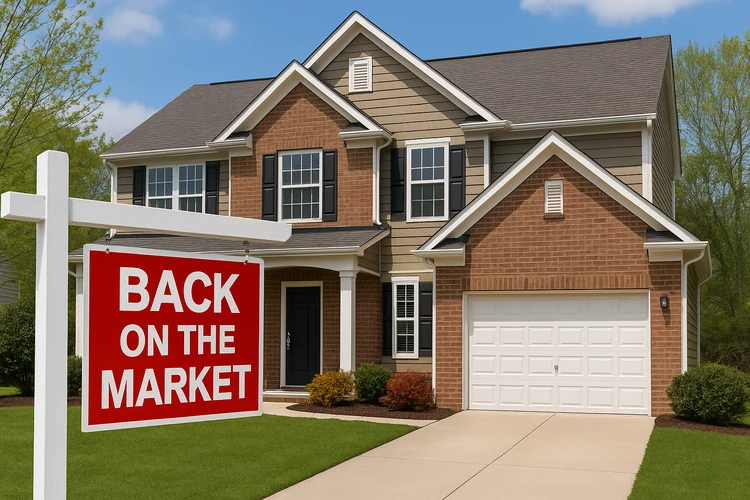

Roughly 53,000 home-purchase deals fell through nationwide in September — 15% of homes that went under contract that month.
Florida and Texas metros led the nation in canceled deals, with Tampa topping the list at 20.1%.
Experts cite high prices, inspection issues, and rising climate and insurance costs for the growing trend of homebuyers “ghosting” sellers.
Treasury Secretary Scott Bessent believes the U.S. housing market could be in a recession, but he is assigning blame to the Federal Reserve’s interest rate policy.
“I think that we are in good shape, but I think that there are sectors of the economy that are in recession,” Bessent said on CNN’s “State of the Union” program. “And the Fed has caused a lot of distributional problems with their policies.”
Whether it’s interest rates, high prices or other economic factors, the data show that a growing number of Americans are backing out of home-purchase agreements, signaling deepening tension between buyers and sellers in today’s high-cost housing market.
According to a new report from Redfin, about 53,000 home-purchase contracts were canceled in September, accounting for 15% of all homes that went under contract, up from 13.6% a year earlier.
The data show that in many markets, particularly in Florida and Texas, buyers are “ghosting” sellers at unprecedented rates as affordability, inspection concerns, and climate risks weigh on decision-making.
Florida and Texas had the most canceled contracts
In Tampa, 20.1% of pending home sales were canceled in September, the highest share in the nation and up from 17.7% last year. San Antonio followed at 19%, alongside Atlanta, Orlando, Fort Worth, Dallas, and Fort Lauderdale, where nearly one in five deals also fell through.
“Buyers are ghosting sellers at a fairly high rate nationwide,” Redfin reported, noting that both sides are often unwilling to compromise on repairs, pricing, or concessions. With mortgage rates near multi-decade highs and competition cooling, buyers expect perfection — while sellers, many of whom bought during the pandemic, are reluctant to lower their prices.
Sun Belt fatigue
“I’m seeing a lot of buyer’s remorse,” said Jo Chavez, a Redfin Premier agent in Kansas City. “Buyers make an offer, then they start worrying they could have found a better deal or a better home because there are more home sellers than buyers in the market.”
That hesitancy is especially pronounced in the Sun Belt, where prices surged during the pandemic boom. Cities like Tampa, Las Vegas, and Jacksonville saw massive in-migration in 2021 and 2022, but the combination of rising insurance premiums, HOA fees, and climate risks has cooled enthusiasm. Builders in these states are also adding supply faster than anywhere else, giving buyers confidence they can wait for a better fit.
Inspections reveal problems
Redfin found that over 70% of failed deals fall apart during the inspection phase — when buyers push for repairs or price cuts and sellers push back. In this buyer-tilted market, even small inspection issues can send buyers running. Many are also targeting lower-priced homes, which are more likely to have inspection problems in the first place.
The growing rate of cancellations is also discouraging some sellers from listing their homes. Those unwilling to meet market expectations or make repairs are instead choosing to wait, adding to the slow pace of sales.