2024 Food and Beverage Industry Trends

Article Image

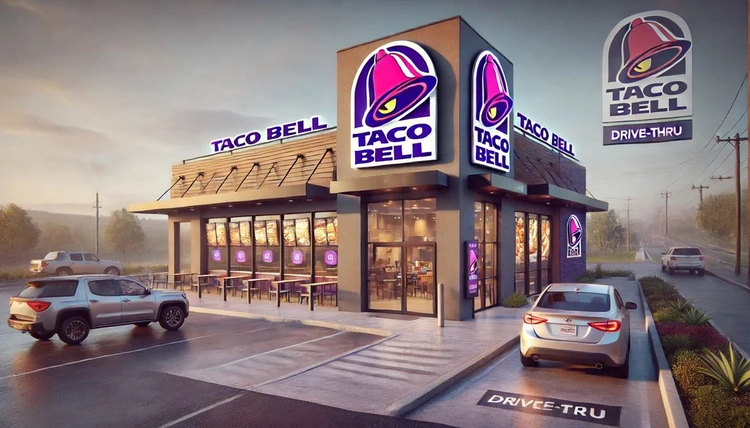
Taco Bell is adding chicken nuggets to its menu

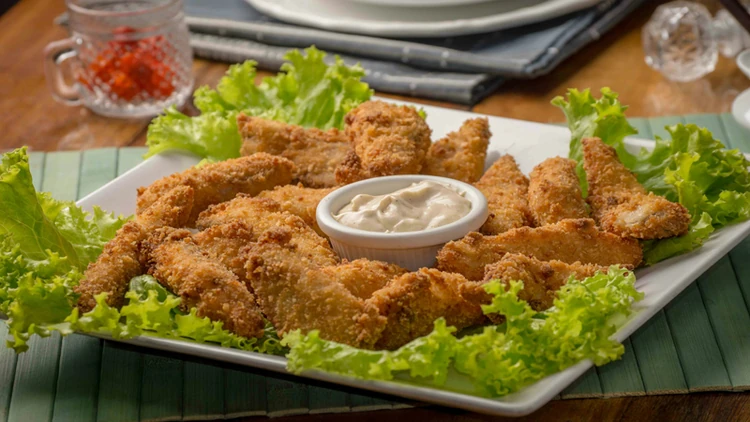
Taco Bell has introduced its latest menu item, and it’s one that many customers are sure to recognize from their favorite fast food chains – chicken nuggets. 

Starting on December 19, customers can try Taco Bell’s take on crispy chicken nuggets – which include a jalapeno buttermilk flavor, and a breading that combines tortilla chips and breadcrumbs. 

In addition to the chicken nuggets, Taco Bell is also working with Hidden Valley to create new dipping sauces – the Hidden Valley Fire Ranch sauce, new signature Bell Sauce, and Jalapeno Honey Mustard sauce. 

“As the inventors of Nacho Fries, Taco Bell is fully aware that reinventing an American classic with a Taco Bell twist is a responsibility we don’t take lightly. But in a world dominated by chicken cravings, it was time to show the world how Taco Bell does chicken nuggets – unexpected and undeniably bold,” said Taco Bell’s Chief Marketing Officer, Taylor Montgomery. 

“The Crispy Chicken Nuggets deliver a crispier, more flavorful nugget experience, and combined with the Hidden Valley Fire Ranch Sauce, we hope it will test people’s devotion to their favorite nuggets.”

“We’re thrilled to partner with Taco Bell on the new Hidden Valley Fire Ranch Sauce, combining the bold flavors of Hidden Valley Ranch with Taco Bell's signature heat,” said CC Ciafone, Marketing Director at Hidden Valley Ranch. “Ranch and chicken nuggets are an iconic pairing, so it just made sense to create a ranch perfectly designed for Taco Bell's unique twist on nuggets.”

New meal, deal offerings at Taco Bell

With the introduction of chicken nuggets, Taco Bell has also worked to create new meal offerings around its new menu item. Here’s what customers can expect: 

  • 5-piece nugget  + 1 dipping sauce: $3.99

  • 10-piece nugget + 2 dipping sauces: $6.99

  • 5-piece nugget combo + 1 dipping sauce: $5.99

  • 10-piece nugget combo + 2 dipping sauces: $8.99

  • 5-piece nugget + 1 dipping sauce, Crunchy Taco, Beef Chalupa, regular Nacho Fries, and a medium fountain drink: $10.49

The combo meal at Taco Bell includes an order of regular Nacho Fries, nacho cheese sauce, and a large fountain drink. 

Taco Bell also explained that the chicken nuggets will only be available for a limited time. To entice customers to try them before they’re gone, the fast food chain has shared a number of digital deals for customers to take advantage of over the next few weeks. 

Here’s a look at how to save on Taco Bell’s newest menu item: 

  • Order on DoorDash, UberEats, Postmates, Grubhub, or the Taco Bell app or website between 12/19 and 12/31 to receive a free fountain drink or freeze of any size with the purchase of a 5-piece nugget. 

  • Starting January 1 and running through January 22, Taco Bell app users can get a regular order of Nacho Fries for $1 with the purchase of any 5- or 10-piece nugget. This reward will be available once per day. 

  • On January 10, orders made on DoorDash, UberEats, and Grubhub will be eligible for a $1 order of a 5-count nugget. 

  • On January 21, there will be a coupon available for a $1 order of a 5-count nugget, though only the first 20,000 Taco Bell rewards members will get access to it. 
Article Image

What would RFK Jr.'s food policies mean for consumers?

Robert F. Kennedy, Jr., President-elect Trump's choice to lead the Department of Health and Human Services, has definite ideas about making changes to the U.S. food system. 

Kennedy, who abandoned his independent presidential campaign earlier this year to support Trump, has targeted ultra-processed food and some food ingredients that he says are not healthy.

Kennedy has pointed out that dyes used to color food products sold in the U.S. are not allowed in some other countries, noting that Kellogg’s Fruit Loops sold in the U.S. are different from those sold in Canada.

Kennedy has also been critical of seed oils, used by many fast food restaurants, saying they are not as healthy as oil from animal fat. 
What may be emerging, however, is a conflict between health and economics. In an op-ed in the Wall Street Journal, Alan Blinder, former vice-chair of the Federal Reserve, argues that many of the policies Trump and his appointees advocate are inflationary.

Julian Plateado, a chef and owner of Los Angeles’ Nordic Catch seafood market, says using more natural ingredients in food might raise the price, but it might not be a bad thing.

“Substituting beet juice or turmeric for neon artificial dyes is not inexpensive, and premium oils like avocado or olive oil can further raise costs,” he told ConsumerAffairs. 

“However, perhaps cutting back on bright-blue cupcakes isn't as bad for our stomachs or our wallets. In the long run, if demand increases, prices may decline. Consider it an investment in a future free of night-glow-producing munchies.”

And while some food items might cost consumers more, Plateado says food would taste better and consumers might be willing to pay more for better-tasting food with natural ingredients.

‘Petrochemical aftertaste’

“A splash of beet juice might add an earthy undertone to your frosting, and trading neutral seed oils for avocado oil could give your fries a subtle, nutty vibe,” Plateado said. “But honestly, isn’t it worth it to trade chemical tang for real flavor? Besides, when was the last time anyone said, ‘You know what I love about this cake? The petrochemical aftertaste.’"

While industries typically resist change, the trade publication Modern Retail reports some food producers are welcoming the shift. 

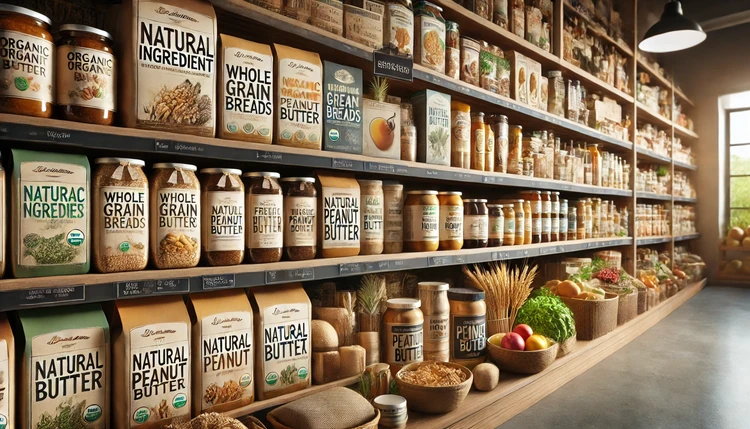
Elly Truesdell, partner at New Fare Partners, which invests in clean ingredient brands like Actual Veggies and Mid-Day Squares, told the publication that many producers have already invested in more natural ingredients and says a growing number of consumers have embraced products with natural ingredients.

Article Image

Got a TGI Fridays gift card? It might be smart to use it soon

When TGI Friday’s declared bankruptcy, there were still nearly $50 million in TGI Fridays gift cards in circulation that had not been used. If you have one in your wallet, it might be a good idea to use it quickly.

In bankruptcy, a company has some protection from creditors, and if you have a gift card, technically you’re a creditor – the company owes you money.

The $50 million in gift cards may be a bigger problem for TGI Fridays franchises. The franchises are not included in the bankruptcy, just the 39 company-owned stores.

Under normal circumstances, when customers pay for meals at franchise restaurants using gift cards, the company reimburses the franchise. Now, it’s not clear if the reimbursements will continue.

According to court documents, some of the unused TGI Fridays gift cards are more than 20 years old. Some of those might have been misplaced and will never be used. Franchisees can only hope.

But the possibility that 122 franchise restaurants could be on the hook for nearly $50 million in ”free” meals could be a harsh blow to an industry that is already facing economic headwinds. Isaac Marcushamer, co-founder and partner at South-Florida based DGIM Law, says chains like TGI Friday’s face a mix of economic challenges and changing consumer behavior.

Several challenges

“During the pandemic, many restaurants relied on government relief programs to survive,” Marcushamer told ConsumerAffairs. “Now, rising inflation, higher food and labor costs, and lease adjustments back to pre-pandemic rates have compounded the strain on already tight margins. 

“Additionally, consumer preferences have shifted toward delivery and takeout, reducing in-person dining revenue. An uncertain economy, increased interest rates and lease adjustments create the perfect storm for many restaurants to fall into bankruptcy. Several of the same drivers are also being felt by smaller restaurants. This is industry-wide."

According to court records, TGI Friday’s franchises likely will be required to honor company gift cards, regardless of whether they will be reimbursed. Still, it may be smart to use a gift card as soon as possible.

Article Image

New DoorDash/Lyft partnership comes with perks for consumers

DoorDash and Lyft have announced a new partnership that will help consumers score discounts and benefits from both companies. 

The one catch: consumers must be signed up to DoorDash’s membership program, DashPass, and link their DoorDash and Lyft accounts to receive the perks. 

"Since the launch of DashPass, we’ve been focused on building a membership program that provides tremendous value by helping people save on everything from restaurant meals to groceries to entertainment,” said Prabir Adarkar, president and COO at DoorDash. 

"Members enjoy $0 delivery fees, and get streaming with Max included at no additional cost with the DashPass Annual Plan. Our partnership with Lyft, a leader in the transportation space, gives DashPass members yet another way to save on the things that matter most to them."

What are the perks?

Each month, DashPass members who link their Lyft accounts to their DoorDash accounts will be able to get member benefits from both companies. 

These include: 

  • 5% on-demand Lyft rides and 10% off scheduled airport rides – up to four per month combined

  • Two free Priority Pickup upgrades from DoorDash per month 

  • A three-month free trial of a DashPass membership for new members

In addition, DashPass members who link their accounts before the end of the year will receive a special bonus: 

  • 50% off up to four scheduled airport rides (up to $25 per ride) through the end of the year

  • 50% off one DoorDash order (up to $10)

What are the DashPass benefits?

If you’ve been considering a DashPass membership, but you’re not sure if it’s right for you, here is a breakdown of what you’ll receive: 

  • $0 delivery fees on all eligible orders – including food, groceries, convenience, alcohol, and more

  • Members-only discount offers throughout the year 

  • Reduced service fees on eligible orders

  • 5% back in DoorDash credits on eligible pickup orders

  • Discounts on Max subscriptions 

DashPass will cost you $8/month or $96/year, though there are some discounts to be found here, too. While this new partnership with Lyft will give consumers their first three months free, those who have certain Chase credit cards can get a membership for free. 

Students can also get a discounted rate for their DashPass membership, as the delivery company offers a $4.99/month student plan. Additionally, students who subscribe to Chegg Study Pack or Chegg Study get free DashPass memberships. 

Article Image

Why are so many restaurants in financial trouble?

When TGI Friday’s declared bankruptcy, it was just the latest restaurant chain to run up the white flag in 2024. Red Lobster filed Chapter 11 before that and Denny’s, while not declaring bankruptcy, is closing 150 restaurants to shore up its finances.

Alfred Goldberg, chief brand strategist at Absolute Marketing Solutions, says the last few years have been a unique time in the industry.

“The recent wave of restaurant chain bankruptcies, including TGI Fridays, reflects a combination of economic pressures and evolving consumer preferences rather than a single cause,” Goldberg told ConsumerAffairs. “While the economy has stabilized somewhat since the pandemic, restaurant chains are still grappling with several unique challenges.”

One of them is inflation. According to the Consumer Price Index, “food consumed away from home,” which is the category for restaurants, prices have risen each month this year. Menu prices were up 0.3% in September and have risen 3.9% during the last 12 months. That’s not great for business.

Predictable and complex

Scott Stuart, the CEO of the Turnaround Management Association, says the TGI Fridays bankruptcy is both predictable and complex.

“Although a popular brand and one that likely still has some cash, what will be most telling in this restructuring is the approach on re-capitalization, a potential sale and what they do to make changes to counter the issues they claim were the cause of this decision, primarily capital structure, and post-pandemic stress and inflation,” he told us.

If those were the drivers of the bankruptcy, Stuart says the business fundamentals need to be carefully reviewed.

Zach Goldstein, CEO of Thanx, a brand loyalty software company, says 2024 has been a wake-up call for much of the restaurant industry. 

“Many restaurants are over-investing in third-party delivery and rote discount programs,” he told us. “Our data shows this actually reduces customer lifetime value. The most successful brands are focusing on first-party digital channels and building genuine loyalty through personalization and exceptional experiences.”

‘Longstanding structural issues’

“Chains like TGI Fridays and Red Lobster have had longstanding structural issues that recent economic shifts have only exacerbated,” Bob Vergidis, founder of pointofsale.cloud, said. “These brands have struggled to adapt to changing consumer preferences and are now feeling the impact of years of underinvestment in innovation.

Goldberg agrees, suggesting that TGI Fridays, which was established in the 1960s for young baby boomers, faces an economic problem caused by changing demographics.

“Younger people are looking for a different kind of experience,” he said. “They want the ‘discovery’ and to be able to ‘introduce’ a new concept, item, or venue to their social media audience. Few people have ever impressed anyone on social media by posting from a chain.”

Vergidis adds that large restaurant chains have often responded slowly to evolving customer needs, relying on outdated business models. This lag, he says, has created vulnerabilities that are more pronounced in today’s fast-changing landscape.

“Gen Alpha and Gen Z are transforming the dining scene with a preference for tech-driven, unique experiences,” Vergidis said. “Brands that fail to appeal to these new generations risk falling out of favor quickly.”

Article Image

Seafood salad recalled due to undeclared soy allergen

Elevation Foods has issued a recall for 1,668 units of mislabeled Hannaford Seafood Salad in 12-ounce packages because it contains an undeclared soy allergen. Consumers with an allergy or severe sensitivity to soy run the risk of serious or life-threatening allergic reactions if they consume these products.

The recall extends to the following labels and package sizes.

Brand Name

Product

UPC

Use by

Units

Hannaford

Seafood Salad 12oz

0 41268 25161 2

BB 11/13/2024

BB 11/14/2024

1,668

The use-by can be found printed on the lid of the container.

The product is only sold in Hannaford stores. The product is sold in Maine, New Hampshire, Vermont, Massachusetts, and New York. The products were distributed between 10/25/24 to 10/29/24 with Use by of 11/13/24 and 11/14/24. Hannaford has been notified and has removed the product from store shelves.

The recall was initiated after it was discovered that the printer of the labels for Hannaford Seafood Salad had provided Elevation Foods with labels that did not match the current product formulation. These labels were created for an upcoming formulation change and were shipped to Elevation Foods in error.

To date, Elevation Foods is not aware of any reports of consumer illness related to this product.

What to do

Consumers who purchased the impacted product specified above should not consume the products and can return them to the place of purchase for a full refund. Consumers with questions may contact Elevation Foods during regular business hours, Monday-Friday 9 am-4 pm +1 (978) 646-8950 x 104.

Article Image

Buying food online? Be careful -- it can be hard to choose healthy options

A new study by researchers at Tufts University finds that many online grocery stores don't show important information about the food they sell, like nutrition facts and ingredients. This makes it hard for people to make healthy choices and can even be dangerous for people with allergies.

The problem

  • Missing information: Online grocery stores often don't show the same information that's on food packages in the store.

  • Lots of marketing: It's easy to find marketing claims, but hard to find actual facts about the food.

Why this matters

  • Hard to make healthy choices: People need to know what's in their food to make healthy choices.

  • Dangerous for allergies: People with allergies need to know about ingredients to avoid dangerous reactions.

What can be done

  • New rules: The government could make new rules requiring online stores to show this information.

  • Public database: The government could create a database of food information that online stores could use.

In the meantime

  • Check the manufacturer's website: You can often find more information on the food maker's website.

It's important for online grocery stores to make it easy for people to find the information they need to make informed choices about their food, the study concluded. 

About the study

When shopping online for groceries, you may try to pick healthy options based on the information provided by the online retailer. You can tell that the products you’re choosing are organic, non-GMO, or Fair Trade Certified. But in many cases, you can’t find the nutrition facts, ingredient list, or even a list of allergens.

A new, comprehensive study of online grocery retailers shows this problem is pervasive, to the detriment of public health and safety in the U.S.

The study, led by researchers at the Friedman School of Nutrition Science and Policy at Tufts University and published in Public Health Nutrition on Oct. 17, shows a lack of present, accessible, and legible information about the food consumers buy, while marketing claims are still prominent.

The absence of accessible food labeling has tangible consequences for public health, said Julia Sharib, first author on the study and manager of research and communications for the Food is Medicine Institute at the Friedman School.

“The government has clearly intended that you should be able to know certain things about your food,” said Sean Cash, senior author on the study. “The way we’ve regulated that in the United States is to put that information on the packaging. But that hasn’t carried over to online spaces very well.”

A lack of information

An earlier pilot study of 10 food products across nine online grocery retailers found similar deficiencies. That study found that information required by the Food and Drug Administration (FDA) about food, such as nutrition facts, an ingredient list, and an allergen list were often absent, and were less present than marketing claims.

The lack of information accessible in online settings reveals a “major gap” in federal regulations, Cash said. While food manufacturers are required by the FDA to present certain information on food packaging, online grocery retailers aren’t required to reproduce that information on their websites.

That means that consumers won’t necessarily be able to access information about calories, nutrition content, or allergens when buying their groceries online.

Since 2022, there were some reasons to think that retailers would step up their game. First, online grocery shopping is here to stay—recent data from the U.S. Department of Agriculture (USDA) indicates that 20% of Americans buy their groceries online, while over 80% have done so in the past three years.

The trend has been aided by a drop in online food prices relative to in-store shopping: Prices are now roughly comparable between in-store and online groceries, which hasn’t always been the case.

Second, online food retailers could have responded to the growing market by deciding to get out ahead of any regulatory action. “We thought there might be practical changes in what food retailers are doing,” Cash said.

“We, and others, have been pushing for change,” Cash said. But the FDA has not yet taken regulatory action to close the gap.

Study findings

The new study gives a more complete look at the issue and analyzes 60 food products across 10 different online grocery retailers. The results show the trend has persisted: Each FDA-required label was present, accessible, and legible for just 35.1% of products.

Marketing claims and labels, though, were present for 83.7% of products. That’s what Cash finds unpalatable. “It’s far easier to find marketing that’s trying to sell you the food rather than the information that our society agrees should be there to tell you about your food,” he said.

“We saw many cases in which a nutrition facts label, for example, was only accessible after scrolling through a dozen marketing images, essentially forcing any consumers seeking that label to interact with marketing language,” Sharib said.

Go to the source

The best way consumers can get the FDA-required information is to visit the websites of the food manufacturers themselves, Cash said. On those sites, nutrition information and ingredient lists are much more likely to be present and legible. Cash cautions that food labeling found in product reviews can be helpful, but may also be out of date or inaccurate.

And ultimately, the onus should be on regulators and the industry to provide important information to consumers, Cash said. “Putting the burden on consumers is not what we should be doing,” he said.

Article Image

Taco Bell plans to introduce AI to the drive-thru lane

Fast-food restaurants are struggling to hire and retain staff, even as they are raising wages. So Taco Bell is bringing on artificial intelligence (AI) to lend a hand. The chain, owned by Yum Brands, said it plans to employ AI voice technology in drive-thrus at hundreds of U.S. locations.

In the months ahead, it’s possible customers will interact with a computer and not a human being when they place their order. Will it work?

If you will recall, McDonald’s tried using AI in the ordering process with mixed results. In June, the company informed franchises that it was ending its AI experiment at about 100 locations. 

The partnership with AI produced correct orders about 85% of the time, according to company executives. The other 15% of orders went viral on social media after the computer made up hilarious food combinations.

One video on TikTok showed a customer who ordered ice cream and some water, but was baffled when the order also included four packets of ketchup and three patties of butter.

Worth the risk?

Taco Bell may be willing to risk unproven technology in a bid to ease staffing crunches and save money, especially at California locations, where the minimum wage recently rose to $20 an hour.

According to a survey of California restaurant operators, conducted by the Employment Policies Institute, the minimum wage increase is already having a big impact. The survey found that 67% believe the wage increase will cost their restaurant at least $100,000 per location. One in four said it would cost more than $200,000 per location.

Nearly all of those surveyed – 99% – said prices will increase to cover the added cost, with 73% saying prices will “significantly increase.”

Article Image

Here's how to counter 'dynamic pricing' at major retailers

It took almost a year after ConsumerAffairs raised the caution flag about dynamic pricing at restaurants, but last week Wendy’s decided to try it out. However, the company quickly found out that consumers were having none of that idea and pulled its horns back in.

While the restaurant biz is the latest to go to a revenue-based-on-demand approach, there are lots of others that consumers don’t even think about that are goosing up the meter when there’s a lot of activity – airlines and rideshare companies for example.

There's little consumers can do to push back an airline or Uber's based-on-demand pricing, but there are ways you can get around the dynamic pricing bricks in the road that the three major retailers can throw at you.

Amazon

We don’t think of Amazon being part of the dynamic pricing crowd, but it is a pioneer in that business model, adjusting prices based on factors like demand, competition, and customer behavior. 

To get around it, you can try price tracking tools – such as browser extensions or websites like CamelCamelCamel or Keepa to track price history and set alerts for price drops on specific items.

You can also use Amazon Watchlist and add the products you want most to your Amazon Watchlist and monitor price fluctuations from there.

If you watch the occasional NBA game, you've probably seen Seth Curry wearing a “Rakuten” patch on his Warriors jersey. Well, Rakuten fits nicely in keeping tabs of Amazon prices. All you have to do is log on to the Rakuten website, see what the deals are, and if there’s any cash back available for what you’ve got your eye on at Amazon.

The last Amazon trick is Amazon Marketplace – a virtual marketplace operated by Amazon that allows third-party sellers to list and sell their new or used products alongside Amazon's own offerings.

The benefit to you is that it’s sort of a one-stop shop that provides you with a wide range of products from various sellers.

The potential for counterfeit or low-quality products can be higher than “normal” Amazon, and because these third-party sellers aren’t as marketing savvy as Amazon’s own employees, the product listings might not be as straightforward as you would get on Amazon’s own platform. 

Walmart

The company probably feels that if Amazon can get away with dynamic pricing, it can, too – especially online. 

To play Walmart’s game, compare prices between Walmart's physical stores and their online platform. Prices might differ, especially because of in-store promotions.

Apps like Brickseek or PriceBlink let you track price history and compare prices across different retailers, including Walmart's online and in-store prices.

Speaking of apps, you can also utilize Walmart’s own App because its "Scan & Go '' feature allows you to scan product barcodes and check prices before heading to checkout, potentially revealing price discrepancies.

If you shop at Walmart for groceries, you might want to give the company a chance to prove its value with its grocery pickup and delivery program. Why? Because prices might occasionally differ from in-store pricing.

Comparatively, Walmart is far more “old school” than Target or Amazon and it still has weekly ads. 

In ConsumerAffairs' research, we found one of the simpler ways to keep tabs on those ads is by letting someone else do all the work, like the “Lady Savings” website.

Target

Target may be a little tougher to stay on top of when it comes to dynamic pricing, but there are some strategies that can help you find the best deals.

Here, again, you can employ browser extensions or websites like CamelCamelCamel or Keepa to track price history on specific products you might be interested in. The advantage of those two is that they’ll help you identify price trends and potential future sales.

But you may also consider signing up for Target Circle. It’s the store’s free loyalty program and one that allows you access to exclusive discounts, personalized offers, and the ability to earn rewards points redeemable for future purchases.

Insider tip: The secret weapon for Target Circle is the app. There, you'll find ongoing promotions, targeted discounts, and Circle Offers that can provide additional savings on specific items.

And don’t forget about price-matching

If you don’t use price-matching in your search for the best price, you should consider doing so. 

Many major U.S. companies offer price-matching policies, allowing you to get the difference refunded if you find a lower advertised price elsewhere. Here are some popular examples:

  • Best Buy

  • Fry's Electronics

  • Lowe's

  • Toys R Us

  • Target

  • Walmart

  • Staples

  • Office Depot           

These are just a few examples, but it's important to note that specific policies can vary. It's always best to check the individual store's website or ask an employee for details on their price-matching policy before making a purchase.

Here are some additional things to keep in mind:

  • Matched competitor: Most stores will only match prices from authorized retailers, not individual sellers on marketplaces.

  • Timeframe: The timeframe for requesting a price match can vary, typically ranging from 14 to 30 days after purchase.

  • Conditions: Some stores may have restrictions on the type of product, minimum price difference, or online-only offers they will match.

By understanding price-matching policies, you can potentially save money on your next purchase!