
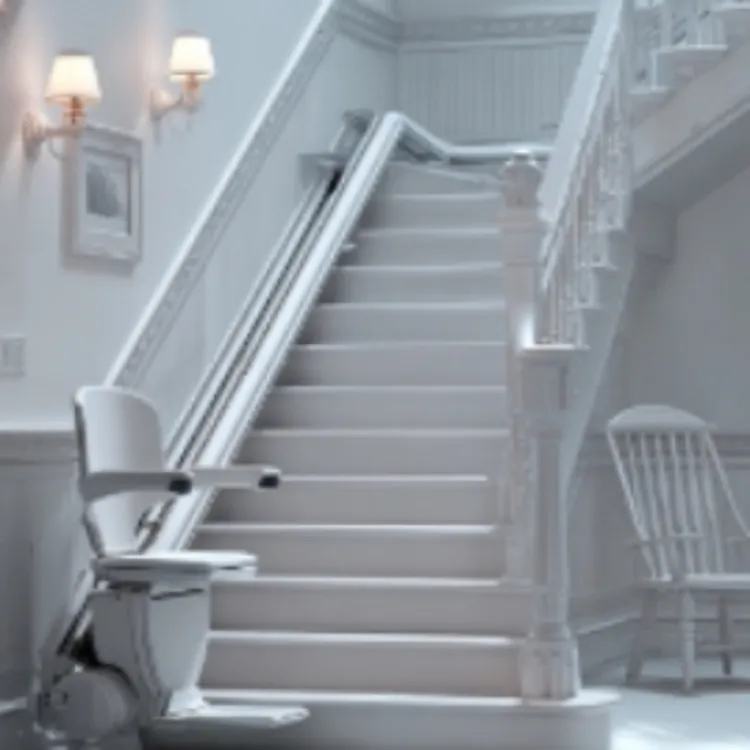
Climbing stairs gets challenging for people with mobility issues or age-related changes, making simple trips feel dangerous or exhausting. Stair lifts work by restoring safe access throughout your home. But they come with considerations like cost, space usage and maintenance needs. Evaluating the advantages and disadvantages helps determine whether a stair lift suits you.
Why trust ConsumerAffairs?
Our editors, fact-checkers and moderators work to uphold standards for accuracy, transparency and trust.
Our editorial standards
- Our editorial team reviews and fact-checks all content before it’s published.
- We rely on expert input and trusted sources to verify our articles.
- All articles published must meet our editorial standards and independence policy.
Our review standards
- Our moderation team evaluates reviews to make sure they meet our guidelines.
- We require contact information to verify reviews come from real customers.
- Financial relationships do not influence whether we publish a consumer review.
Key insights
The cost of stair lifts varies based on staircase layout, installation requirements and chosen features.
Jump to insightStair lifts boost safety and independence for users with mobility challenges.
Jump to insightSpace limitations and decreased home resale value are stair lift drawbacks to consider.
Jump to insightDifferent stair lift types exist for various staircase layouts and mobility requirements.
Jump to insightRenting a stair lift works best for temporary use, while buying suits long-term needs.
Jump to insightStair lift prices
Stair lift costs differ depending on your staircase design and specific requirements. “Straight stair lifts represent the most affordable option … with custom curved lifts being the most expensive,” Mike Peck, vice president of installation at Leaf Home Safety Solutions, explained.
Average price ranges
| Type | Low end cost | High end |
|---|---|---|
| Straight stair lifts | $2,000 | $8,000 |
| Outdoor stair lifts | $4,000 | $10,000 |
| Curved stair lifts | $10,000 | $15,000 |
Stair lift cost factors
Know that stair lifts are far from a one-size-fits-all product. “While this provides a general understanding, a personalized assessment is always necessary to determine the actual cost,” Peck said.
- Staircase complexity: Length, turns and landings increase costs.
- Custom features: Powered footrests and upgraded upholstery add expense.
- Installation requirements: Simple setups cost $300 to $1,000, while complex curved installations reach $2,500.
- Brand and supplier: Different manufacturers offer varying price points.
- Ongoing maintenance: Service and repairs can cost anywhere from a few hundred dollars to over $1,000, depending on the issue.
Tips to save money
- Buy refurbished: Save $1,000 to $1,500 when you get a refurbished model from an authorized dealer.
- Creative installations: Brandy Archie, founder of AskSAMIE, a digital health platform that connects family caregivers to vetted adaptive equipment, services and resources, suggests homeowners with landings consider two straight stair lifts instead of one curved model if users can maneuver between units.
- Federal and/or state aid: “Financial assistance for mobility aids is sometimes available through Medicaid,” Tina Roberts, marketing manager at Stannah Stairlifts, pointed out. “Certain states [also] offer Home and Community Based Services waivers that assist with home modifications for older adults and those with disabilities.”
- Rental programs: Ask about rent-to-own options for more affordable monthly payments.
Benefits of stair lifts
“When professionally installed, stair lifts are safe for elderly and disabled individuals,” Peck said. “They provide a new level of independence and mobility for those who struggle to access upper floors or areas only reachable by stairs — helping users [live at home] comfortably.” Here are the primary benefits of stair lifts, according to industry professionals:
- Enhanced safety: Stair lifts reduce fall risk by offering a stable, seated alternative to navigating steps with built-in safety features such as seat belts and obstruction sensors.
- Greater independence and accessibility: Users can access all home areas without assistance.
- Energy conservation: Archie noted that people with certain conditions (e.g., multiple sclerosis) can preserve energy for other activities rather than exhausting themselves on stairs.
- Improved mental health: “When (you) regain the ability to move up and down the stairs, [your] autonomy and confidence increase,” Roberts highlighted.
- Family peace of mind: Relatives gain reassurance knowing their loved one can move throughout the home without supervision.
Stair lifts also provide practical convenience beyond personal mobility. You can transport laundry, groceries or pets between floors using the lift. Modern models include features like remotes that allow family members to call or send the lift as needed. This makes daily household tasks easier for everyone.
Drawbacks of stair lifts
Despite their advantages, stair lifts present several disadvantages. “The biggest barrier I hear from clients about adding a stair lift is changing the home’s resale value,” Archie said. “It’s a concern that realtors [have] validated.” When it’s time to sell your home, it’s smart to hire a professional to remove your stair lift. This way, you avoid damaging walls or doorways.
Here are other stair lift drawbacks to know:
- Space consumption: “Stair lifts are generally space-efficient, especially straight models that fold up when not in use,” Peck explained. “[But] curved lifts may [need] extra room at landings or in hallways.”
- High maintenance costs: Without a service plan, individual repairs start at $300 and can reach $1,500. Annual maintenance plans cost $400 to $1,000 per year, according to Roberts.
- Aesthetic impact: The equipment changes your home’s appearance. But many models offer color options and discreet designs to blend with existing decor.
- Safety concerns: Incorrect installation can create safety hazards for you and others in the home.
- Emergency limitations: “Almost all manufacturers have some form of urgent service, but are not first responders,” Roberts emphasized. In an emergency, you must contact 911 for immediate help.
Ongoing costs
Beyond these concerns, stair lifts need ongoing attention to operate reliably. Regular cleaning prevents malfunctions, especially if you have shedding pets at home. Professionals advise scheduling annual maintenance visits to extend your stair lift’s lifespan through preventative care.
» RELATED: Costs of aging in place home remodeling
Types of stair lifts
Stair lift types come in several configurations to match different staircase layouts and user needs:
- Straight stair lifts are cost-effective for simple staircases without turns or landings, according to Archie. Roberts added that these models are often cut on-site, scheduled within days and installed in a few hours.
- Curved stair lifts work well for staircases with landings or direction changes. These units need custom fabrication but offer the most installation versatility.
- Outdoor stair lifts feature weather-resistant materials to handle temperature variations. However, Roberts recommends covering yours when not in use to extend its lifespan.
- Platform lifts accommodate wheelchair users and people with mobility devices. These larger units need more space and home modifications, but work for users who can’t transfer independently.
Choosing the right stair lift depends on your needs and staircase layout. Customization options vary by manufacturer but can impact usability. “For example, it might be important to have a handheld controller instead of one fixed to the armrest, depending on someone’s hand function,” Archie noted. Most curved models offer turn configurations ranging from 45 to 180 degrees, while custom rail designs can maximize space by fitting closer to walls.
Renting vs. buying a stair lift
The choice between renting and buying a stair lift depends on how long you expect to use it. Buying a stair lift is cost-effective if you'll need it for over a year and allows for full customization since you own the equipment. However, it requires a high upfront cost and you’re responsible for all repairs. Reselling can also be difficult — not all companies offer buyback options.
Stair lift rental pros and cons
Pros
- Lower upfront costs with monthly payments instead of paying the full purchase price
- Many companies handle maintenance and repairs during the rental period
- Ideal for temporary needs or rental homes where permanent installation isn’t possible
Cons
- Monthly payments make the rental expensive beyond one year of use
- You can’t modify the unit or gain any equity in the equipment
- You’re locked into monthly payments for the rental duration
FAQ
Is it worth getting a stair lift?
A stair lift can be worth getting if you struggle with mobility challenges or worry about falling. It helps you stay independent in your home by giving you safe access to every floor. The value depends on your needs and whether the cost fits your budget.
Is there an alternative to a stair lift?
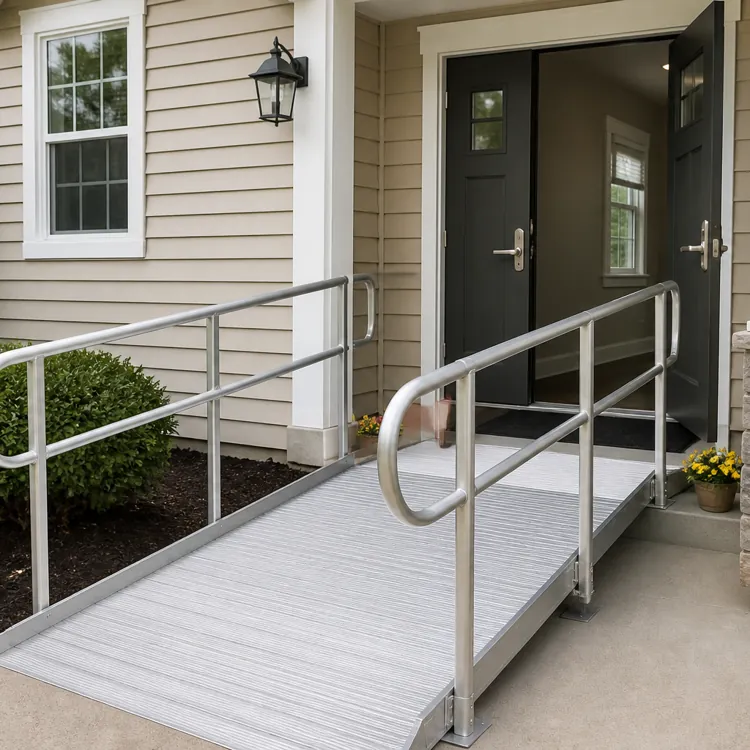
Yes, you have several options besides stair lifts: stair handrails, ramps, stair climbers or home elevators. Handrails work for minor balance issues, while ramps help wheelchair users. Home elevators offer greater capacity but cost more.
Are stair lifts safe for children and pets?
Stair lifts include safety features that make them safe around children and pets. Most models have sensors that stop the lift if something blocks its path, plus key switches to prevent unauthorized use. Still, you should always supervise children around the equipment and keep pets away during operation.
How long does it take to install a stair lift?
Installing a straight stair lift usually takes one to two hours. Curved models may need half a day or more. The timeline depends on your staircase’s length, any turns or landings and whether you need custom features.
» COMPARE: Top stair lift companies
Article sources
ConsumerAffairs writers primarily rely on government data, industry experts and original research from other reputable publications to inform their work. Specific sources for this article include:
- UDS Foundation, “Stairlifts to Aid the Elderly and Individuals with Disabilities.” Accessed June 26, 2025.