

Key insights
Stair lifts are motorized chairs on rails, ideal for people who can transfer in and out of seats independently.
Jump to insightHome elevators are enclosed cabs traveling between floors that work best for wheelchair users or those planning to age in place.
Jump to insightMobility level, future needs and home ownership status are some factors to weigh when choosing between options.
Jump to insightElevators require a bigger upfront investment than stair lifts, but can bolster home value.
Jump to insightWhat is a stair lift?
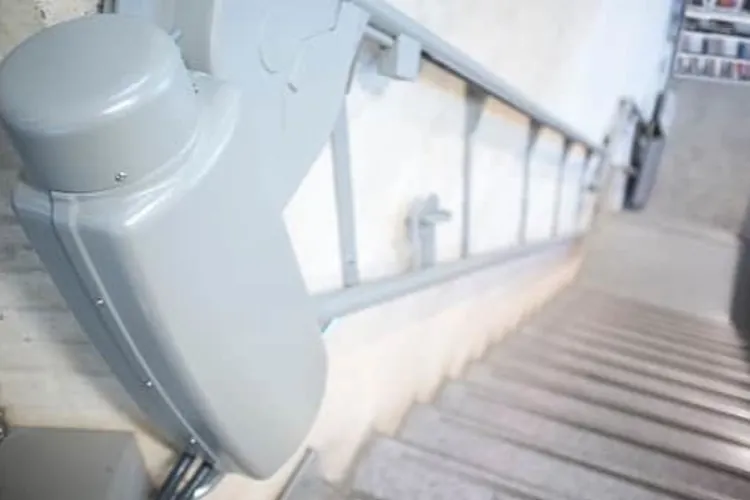
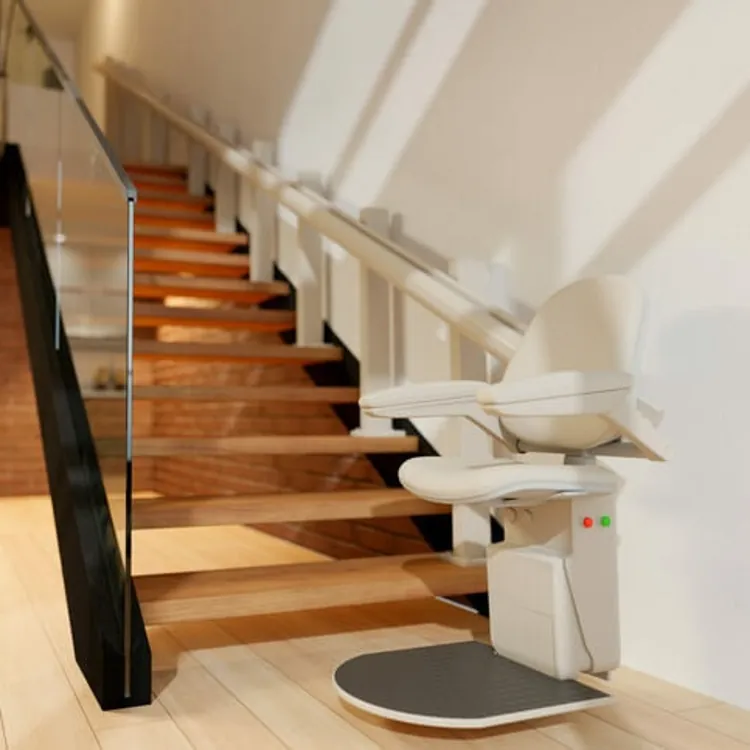
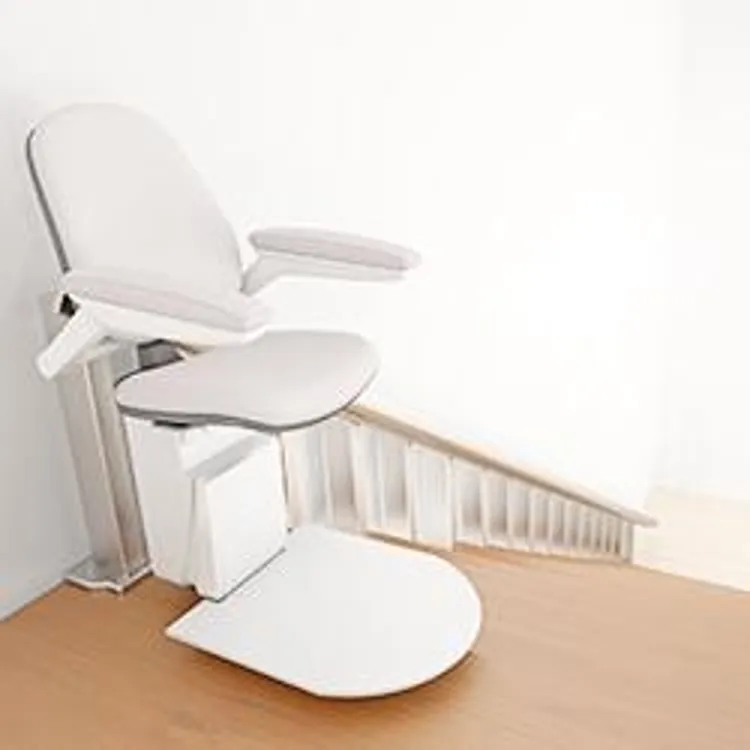
A stair lift is a motorized chair that travels along rails up and down stairs. It is “mounted to the staircase and can handle stairs with turns and multiple stories,” Tina Roberts, marketing manager at Stannah Stairlifts, explained. Outdoor models are also available to help users navigate decks, porches and gardens.
Most stair lift installations take less than a day without major construction or remodeling work, according to Roberts. The main exception is curved staircases, which require custom-built rail systems. This can take a month to fabricate before installation. If you’re getting a straight stair lift, a technician can install it the same week they measure your stairs.
» MORE: Different types of stair lifts
Stair lift pros and cons
Stair lifts work best for people who can transfer in and out of a seat but struggle with climbing stairs. They run quietly and don’t take up much space, making them an unobtrusive solution for many homes. Alison Starkey, a certified aging in place specialist and owner of home therapy concierge provider Gaitway of Charlotte, pointed out more advantages and disadvantages:
Pros
- Allow safe access to upper levels
- Cost-effective way to improve home accessibility
- Easy to maintain
- Quick installation with minimal home disruption
Cons
- Can’t accommodate wheelchairs or mobility aids
- Limited to one user at a time
- Not suitable for people who can’t sit up
- Tighter weight restrictions than elevators
What is a home elevator?
A home elevator is an enclosed cab that moves vertically between floors. It’s similar to elevators in office buildings, but designed for residential use. Unlike stair lifts, elevators allow wheelchair users to stay in their mobility device throughout the trip between floors.
Home elevators come in three types, each with different installation needs and capabilities:
- Hydraulic elevators use hydraulic pistons, which give them a 700 to 1,000-pound weight capacity. “Their best features are the smooth ride and quiet machinery,” Roberts said. “These powerful elevators require extensive installation, including a pit on the lowest floor landing and a hoistway or central column for the elevator to travel through to each floor.”
- Shaft elevators need permanent vertical enclosures built directly into your home. They offer the greatest power and weight capacity but require the most structural work.
- Vacuum elevators use air pressure to move the cab between floors. “These elevators don’t require a complete, built-in shaft but instead travel in a prefabricated [enclosed] tube that is simpler to install,” explained Roberts. “[They] have a minor impact on your home, are ideal for two to three-story structures and carry between 350 to 525 pounds.”
Home elevator pros and cons
Residential elevators are ideal for wheelchair users or people who anticipate needing mobility aids in the future. They offer greater flexibility for households with varying mobility needs. But before committing, weigh these pros and cons of home elevators:
Pros
- Accommodate wheelchairs and large mobility aids
- Can carry multiple people or heavy items
- Can increase home value
Cons
- Complex installation taking days to months
- Higher upfront costs than stair lifts
- Often requires more space and extensive structural modification
Factors to consider when choosing between a stair lift and a home elevator
Is a stair lift or a residential elevator better? Your mobility level, home structure, budget and long-term goals all play important roles in making the right decision.
Here are six factors to weigh when deciding:
- Current mobility level: Can you transfer in and out of a seat on your own? Stair lifts are great for those who can walk short distances and move in and out of the seat independently, according to Roberts. Elevators, on the other hand, are better if you use a wheelchair or heavy mobility aids that can’t be carried upstairs.
- Future mobility needs: Brandy Archie, founder of AskSAMIE, a digital health platform that connects family caregivers to vetted resources, recommends elevators for wheelchair users who plan to stay in their homes long-term, as mobility needs may worsen over time.
- Home ownership status: You can rent stair lifts and easily remove them. This makes them ideal for rental homes or temporary situations. Elevators, though, are installations better suited for long-term homeowners.
- Space and structural requirements: Stair lifts need only a few inches of stair width and minimal structural changes. On the other hand, elevators require dedicated space and extensive modifications that can take days to months to complete.
- Maintenance and long-term value: Both require annual servicing, but elevators need more complex upkeep while adding significant home value. Additionally, Starkey emphasizes that elevators provide long-term peace of mind regardless of future health challenges.
- Budget considerations: Stair lifts cost $2,000 to $15,000, while elevators start around $30,000 per floor, according to Starkey. However, she points out that elevator costs are comparable to one to three months of assisted living. So, they can be worthwhile if you want to age in place.
Ultimately, you must balance your immediate needs with long-term planning to make a wise choice. A stair lift will likely suffice if you have moderate mobility limitations and want minimal disruption. But if you use a wheelchair or plan to stay in your home long-term, an elevator offers greater flexibility and independence.
Cost comparison: stair lift vs. home elevator
Stair lifts and home elevators sit at opposite ends of the price spectrum. The former offers a budget-friendly solution with straightforward installation, while the latter requires a much larger upfront investment but can add value to your home over time. Here are the typical costs you can expect for each:
- Stair lifts: $2,000 to $15,000 for the unit, plus low installation fees for basic drilling (and no permits needed)
- Home elevators: $30,000 to $100,000 plus for the unit, plus installation costs of $700 to $15,000 that often include site preparation, permits and specialized contractors
The financial benefits also differ between the two options. “Stair lifts are cost-effective because the modifications are straightforward to implement,” Roberts explained. However, they may actually hurt your home’s resale value if not removed before selling.
Elevators tell a different story when it comes to long-term value. “Adding [one] could increase your property value,” Archie said. While elevators cost more upfront, they can pay off through higher home values and appeal to buyers who want to age in place.
FAQ
What is the general cost of a stair lift?
Straight stair lifts cost between $2,000 and $8,000, while curved models range from $10,000 to $15,000 due to custom manufacturing. Outdoor stair lifts fall in the middle at $4,000 to $10,000, with weather-resistant features driving up the price. The final cost depends on your staircase design and chosen features or upgrades.
Are home elevators worth the investment?
Home elevators can be a smart investment for many homeowners. They boost property value while improving accessibility and daily convenience throughout the home. The investment often pays off by allowing people to stay in their homes longer instead of moving to assisted living facilities.
What are the maintenance requirements for home elevators?
Home elevators need professional servicing at least once per year to ensure reliability. Annual checkups examine mechanical, electrical and safety components to maintain smooth elevator operation. Regular maintenance also includes lubricating moving parts and adjusting door systems as needed.
Can stair lifts be installed on curved staircases?
Yes, professionals can install stair lifts on most curved staircases through custom design. The best stair lift companies build these models specifically to match your staircase's shape, including turns, landings and multi-level designs.
Article sources
ConsumerAffairs writers primarily rely on government data, industry experts and original research from other reputable publications to inform their work. Specific sources for this article include:
- UDS Foundation, “Stairlifts to Aid the Elderly and Individuals with Disabilities.” Accessed May 24, 2025.