

Falls affect 1 in 4 seniors annually and rank as the leading cause of injuries among older Americans, according to the Centers for Disease Control and Prevention (CDC). For the millions with mobility challenges, stair lifts offer a vital solution for safe home navigation. But with prices reaching thousands, many find them financially out of reach.
This obstacle leads Medicare beneficiaries to ask: “Will health insurance cover the cost?” While original Medicare typically doesn’t cover stair lifts, other funding options exist. Below, medical insurance experts break down coverage policies and share helpful assistance avenues that could make a stair lift affordable for you or your loved one.
Key insights
Medicare doesn’t cover stair lifts because they don’t qualify as durable medical equipment (DME).
Jump to insightIf you have a Medicare Advantage plan, you may qualify for some stair lift coverage if a doctor deems it medically necessary.
Jump to insightPrivate health insurance and veteran, federal and state housing programs may help pay for a stair lift.
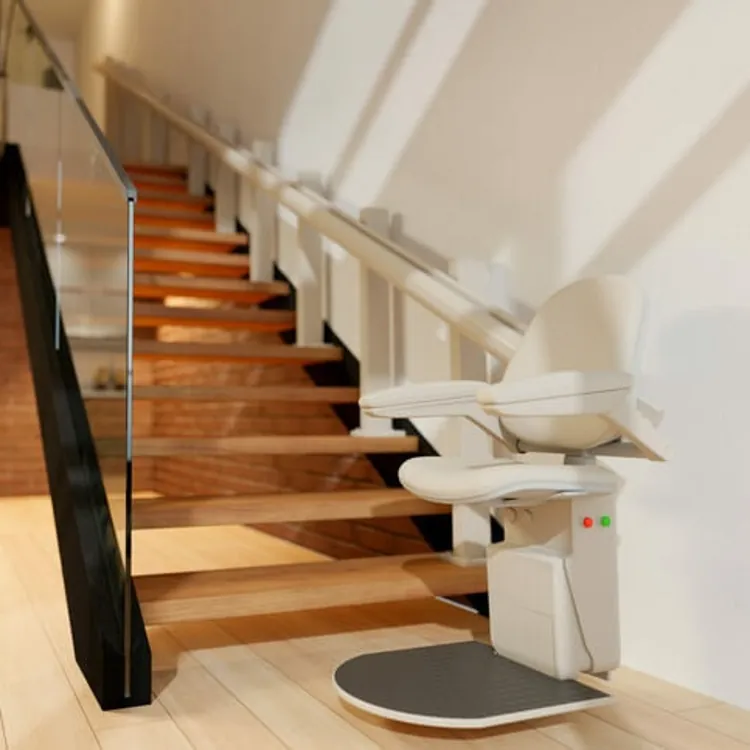
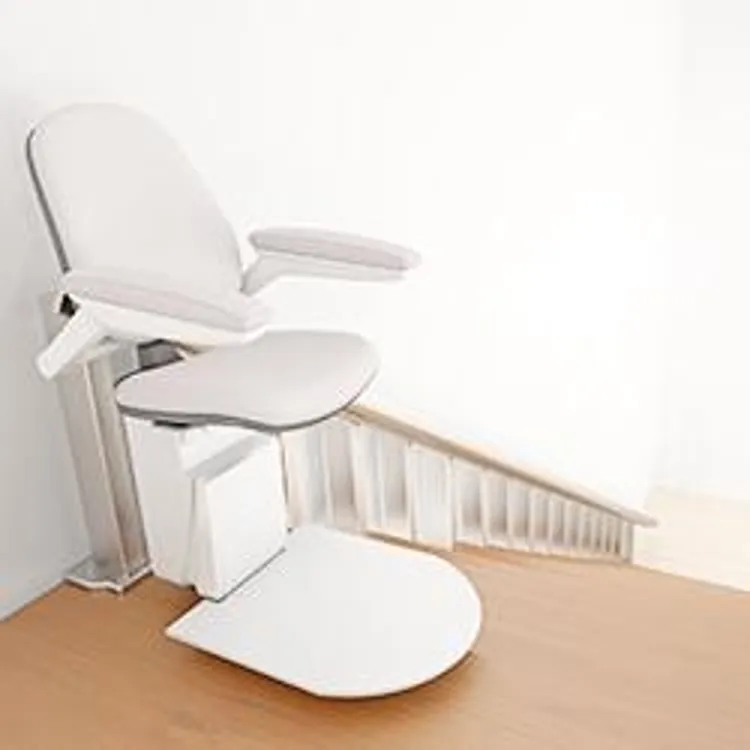
Jump to insightA straight stair lift will set you back $3,000 to $8,000, while a curved model costs $10,000 to $15,000.
Jump to insightYour local council on aging can connect you with financial aid programs and help you navigate the application process for stair lift funding.
Jump to insightMedicare’s policy on stair lifts
Medical insurance professionals say original Medicare rarely covers stair lifts because they don’t qualify as durable medical equipment (DME). “Stair lifts are considered (permanent) home modifications, not medical necessities, under Medicare guidelines,” Evan Tunis, president of Florida Healthcare Insurance, an agency in Coral Springs, explained.
According to Garrett Ball, owner of 65Medicare.org, an independent Medicare insurance agency, to qualify as DME under Medicare, the equipment must meet the following criteria:
- Be intended for long-term use
- Be intended for home use
- Serve a medical purpose
- Be reusable
Even though Medicare doesn’t cover stair lifts, Medicare Part B does cover mobility devices when a doctor prescribes them, Whitney Stidom, vice president of Medicare enablement at the health insurance marketplace eHealth, told us. This includes (but isn’t limited to) hospital beds, patient lifts, walkers, oxygen equipment and accessories, wheelchairs and scooters.
Medicare Advantage and stair lifts
“Some Medicare Advantage plans do offer some coverage for stair lifts,” Tunis noted. However, coverage varies between plans and locations. “To check if a Medicare Advantage plan covers stair lifts, contact your [provider] directly or read through your coverage document for terms such as ‘home modification benefit,’ ‘fall prevention’ or ‘home safety devices,’ ” Stidom advised.
Pre-authorization is necessary if you need a stair lift and want your insurance company to help cover the cost. To get this, your doctor will need to submit evidence of medical necessity to your insurance company, Stidom explained. If the insurance company agrees to cover it, it may pay a portion, but typically not the entire cost.
Pro tip
The fall’s Annual Enrollment Period (AEP) presents an opportunity to find better coverage options. Shop around because “benefits can differ from one Medicare Advantage plan to another,” Stidom said. She recommends working with a licensed benefit advisor to find the right plan based on your needs, healthcare goals and budget.
» RELATED: Will Medicare pay for nursing homes?
Alternative funding options for stair lifts
Alternative funding options for stair lifts include the VA, nonprofit organizations, local charities and state-based programs, according to Ball. Each has different eligibility requirements and application processes.
Medicaid may offer the most accessible path for many seniors. “If you meet certain ‘level of care required’ requirements (and are) a Medicaid recipient, you may qualify for assistance with stair lift costs,” he noted. Unlike Medicare, Medicaid often covers home modifications through Home and Community-Based Services waivers when they help people avoid nursing home placement.
In addition to Medicaid, you may find these funding avenues helpful:
- Federal and state housing programs: The Department of Housing and Urban Development (HUD) has limited funding for home modifications, but it’s still worth looking into. Contact your local HUD office to learn about programs in your state that help seniors with accessibility improvements.
- Fundraising: Online crowdfunding platforms can help you raise money for a stair lift with support from friends, family and your community.
- Home equity: If qualified, you may explore tapping into your home’s value through a home equity loan or line of credit (HELOC) to pay for a stair lift. These financing options often have lower interest rates than personal loans or credit cards.
- Private health insurance: Call your provider and ask about their requirements for stair lift coverage. Some private insurers cover medically necessary mobility devices as long as a doctor prescribes them.
- Veteran programs: Veterans injured while in service can apply for stair lift assistance through VA Health Care. It often funds mobility devices that Medicare doesn’t, including stair lifts. You don’t have to worry about existing Medicare or Medicaid benefits affecting your coverage.
» MORE: Stair lift financing options
Costs and financial considerations
Stair lift costs depend largely on whether your staircase is straight or curved. The investment also varies based on your staircase design and the type of stair lift you choose.
Generally, straight stair lifts are the most affordable option. On average, you can expect to pay $3,000 to $8,000. Curved stair lifts, which must be custom-manufactured to fit your staircase, range between $10,000 and $15,000 due to their complexity.
It’s possible to save money on your stair lift purchase and installation with some research and planning:
- Ask about rental programs if you need a stair lift temporarily.
- Get multiple quotes from different manufacturers and installers.
- Look into refurbished or used models, which can cost 50% less than a new unit.
- See if you can take advantage of financing plans with low or zero interest.
Pro tip
Beyond the stair lift purchase price, account for long-term costs, such as repairs, maintenance and possible modifications. Experts recommend budgeting around $400 per year for these needs. While this adds to your investment, it can prevent expensive emergency repairs later.
Resources for financial assistance
Knowing where to turn for financial help with a stair lift can mean the difference between affording one or not.
“The best starting point would be [getting in touch with] your local council on aging,” Ball emphasized. It’s a central point for resources on programs and grants to help with stair lift costs. Find your local council through The National Council on Aging’s website.
Many states offer home modification programs through housing departments, providing financial aid based on age, income and medical need.
When applying for financial assistance, preparation is key:
- Apply to multiple programs at once to increase your chances.
- Document your income and assets according to program requirements.
- Gather several quotes from reputable stair lift companies.
- Get a written prescription from your doctor explaining medical necessity.
- Take photos of your staircase to demonstrate the need.
Beyond state programs, the area agencies on aging (AAA) — a network of over 600 agencies serving older adults — are excellent resources. These agencies provide information, support services and help with applications for various senior aid programs. You can find your local Area Agency on Aging by visiting eldercare.acl.gov or calling 800-677-1116.
If you meet certain ‘level of care required’ requirements (and are) a Medicaid recipient, you may qualify for assistance with stair lift costs.”
FAQ
How do you qualify for a free stair lift?
You may qualify for a free (or more affordable) stair lift through your state’s Home and Community Based Services waivers. These programs often cover home modifications for people who need nursing-home-level care but want to stay in their homes. Reach out to your local aging services agency to learn about eligibility requirements in your area.
How much does a standard stair lift cost?
The cost of a standard stair lift varies by provider, upgrade options, make and model. However, most people spend $3,000 to $8,000. Some homeowners save money by buying reconditioned, pre-owned models.
Does Medicaid cover stair lifts?
Medicaid often covers medically necessary stair lifts through state-specific programs designed to help people remain in their homes. These programs aim to reduce nursing home admissions, which cost states more money. Your doctor must document that the stair lift is essential for you to keep living independently.
» MORE: Medicare vs. Medicaid
Does Blue Cross Blue Shield cover stair lifts?
Most Blue Cross Blue Shield health plans exclude stair lifts and similar home modification equipment. The company classifies these items as “environmental accommodations” rather than medical equipment. Check your policy details, as coverage can vary by plan and state.
Article Sources
ConsumerAffairs writers primarily rely on government data, industry experts and original research from other reputable publications to inform their work. Specific sources for this article include:
- Centers for Disease Control and Prevention, “Older Adult Falls Data.” Accessed June 16, 2025.
- Eldercare Locator, “Area Agencies on Aging.” Accessed June 16, 2025.
- U.S. Department of Housing and Urban Development, “Helping Americans.” Accessed June 16, 2025.
- Medicare.gov, “Durable Medical Equipment (DME) coverage.” Accessed June 16, 2025.
- Medicare.gov, “Medicare Coverage of Wheelchairs & Scooters.” Accessed June 16, 2025.