Best overall

- Flooring types
- Laminate, vinyl, carpet, hardwood and tile
- Warranty
- Lifetime installation warranty
- Discounts
- Low price guarantee, regular sales and promotions
- Availability
- 13 states
How ConsumerAffairs uses cookies
This website utilizes technologies such as cookies to enable essential site functionality, as well as for analytics, personalization, and targeted advertising. To learn more, view the following link:





New floors can make your home feel cleaner, quieter and more comfortable. But choosing the right flooring company matters just as much as choosing the material. The best companies offer durable flooring, clear pricing and reliable installations. Poor experiences, on the other hand, often come down to delays, surprise costs or problems after the job is done.
Key takeaways:
- Our top picks include National Floors Direct and other Buyer’s Choice Award-winning brands.
- Determine how to choose the right flooring by reading our guide and explore the types of flooring available for your home.
Why trust ConsumerAffairs?
Our editors, fact-checkers and moderators work to uphold standards for accuracy, transparency and trust.
Our editorial standards
Our review standards
The ConsumerAffairs Research Team compared flooring companies based on verified customer reviews, installation experiences, pricing and key features like flooring selection, financing and warranty coverage. Read our full methodology for more details on how we chose our top picks.
| Company | Customer rating | Flooring types available | Free consultation | Discounts | Warranty | Financing options | Installation | Availability | |
|---|---|---|---|---|---|---|---|---|---|
 National Floors Direct | Learn More | 4.6
2,325 reviews
2,325 reviews
| Laminate, vinyl, carpet, hardwood and tile |  | Low price guarantee, regular sales and promotions | Lifetime installation warranty | | Next-day installation available on in-stock flooring | 13 states |
 Express Flooring | Learn More | 3.9
229 reviews
229 reviews
| Carpet, hardwood, laminate, vinyl and tile | | Regular sales and promotions | Lifetime installation warranty | | Most projects can start as soon as next day | 6 states |
 Empire Today | Get Pricing | 4.5
10,640 reviews
10,640 reviews
| Carpet, hardwood, laminate, vinyl and tile | | Low price guarantee, regular sales and promotions | Varies by product; 1-year limited installation warranty | | Next-day installation available on select in-stock flooring | 27 states |
 Luna Flooring | Learn More | 4.5
933 reviews
933 reviews
| Carpet, hardwood, laminate, vinyl and tile | | 110% low-price guarantee; regular promotions | 1-year installation warranty | | As soon as next day on eligible flooring | Select markets |



Jump into our guides and start learning
Flooring companies can simplify your remodel for you. Typically, these companies can schedule an in-home consultation to discuss your options, and most also offer labor warranties and guarantees. Look for flooring companies with a history of happy customers and at least several years of experience, and ask them about their workmanship warranties.
The main types of flooring are hardwood, laminate, tile, carpeting and vinyl.
Jump to insightIt can help to consider seasonal sales and promotions, resale value and insulation when determining a flooring budget.
Jump to insightSome companies offer free installation, while others subcontract the job or charge extra for certain services.
Jump to insightFlooring can make a huge difference in the atmosphere of your home, and a good floor can also improve your home’s overall value. To choose the right flooring for your space, start by evaluating each room — not every type of flooring is best for every type of room.
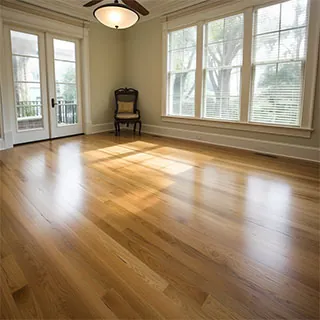
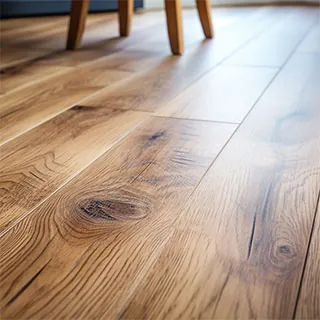
Hardwood brings warmth and natural beauty to a space, and it’s highly customizable. It comes in several different species and stains, with all kinds of features to choose from. However, it’s more expensive, typically costing around $6 to $25 per square foot.
There are different grades of hardwood flooring, including:
Here are some hardwood customization options to consider:
Engineered hardwood, which uses layers of hardwood and plywood, has the same look and finish as true hardwood floors, but its materials and installation typically cost less. However, it has a shorter life span, so hardwood is better if you want longevity and can afford the investment.
Hardwood floors can work well in almost every room, but they tend to be best in:
Although the risk of spills or nicks might deter you from installing hardwood floors in your kitchen, there are new sealants and finishes that can help repel water on wood.
Some of the pros and cons of hardwood include:
Pros
Cons
What’s the best flooring for the money?
Although it’s expensive, hardwood flooring is a classic choice that can improve your home’s value. If you’re trying to sell your home or increase its overall worth, hardwood flooring is definitely worth considering.
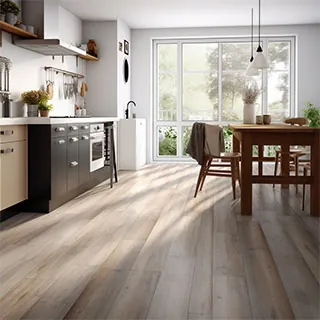
Plastic laminate is easy to install and comes in many different faux finishes and colors that resemble natural wood and stone. It’s also a more affordable alternative to hardwood or tile floors, only costing about $3 to $12 per square foot. However, it doesn’t have the long lifespan of other floor types because it’s prone to chipping.
Laminate flooring is typically 8 or 12 millimeters thick, and both options have advantages and disadvantages. Decide which is best for you based on the following:
Laminate flooring is a great option for homes with:
Since laminate is susceptible to moisture damage, it’s best to avoid it in moisture-prone areas, like laundry rooms and kitchens, unless you invest in a waterproof or water-resistant option.
Some of the pros and cons of laminate include:
Pros
Cons
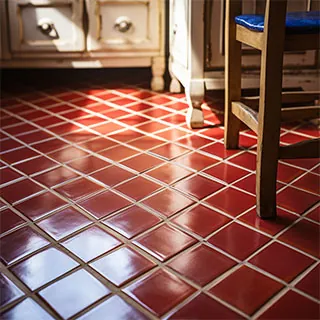
Tile comes in many forms and styles, from natural stone options like marble and limestone to decorative styles like cement or glass tiles. Each type has benefits and common uses, and some tiles are better suited for certain spaces. Depending on the tile you get, you might spend $15 to $20 per square foot.
» MORE: Installation costs for tile flooring
Some types of tile and their popular uses include:
Tile is a great flooring option for almost any space thanks to its variety of materials and styles. It’s typically best for rooms like:
Some of the pros and cons of tile include:
Pros
Cons
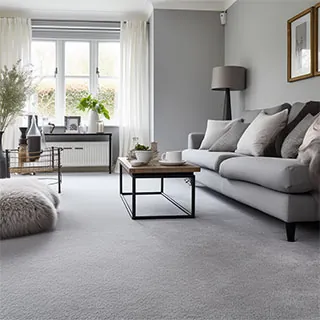
Carpet is one of the most popular flooring materials. Some retailers sell carpeting that can be used outdoors, and you can also buy carpet tiles, which let you mix colors and patterns to create a unique design. Carpet prices range widely, costing anywhere from $3 to $15 per square foot.
Use the following factors to determine carpet quality:
Fabric twist is a better indicator of carpeting quality than weight. Uncut carpet piles are good for high-traffic areas and resist stains well.
Nylon is the most durable indoor carpet material, which means it withstands general use and cleaning better than other options on the market. However, nylon is also susceptible to staining. Be sure to find out if your nylon carpet includes a stain-resistant treatment before buying.
Carpet is a great flooring choice for:
Some of the pros and cons of carpet include:
Pros
Cons
Vinyl flooring is waterproof and comes in a variety of looks, styles and forms. There are even scratch-resistant varieties, making it ideal for heavy-traffic rooms. It has a long life span of up to 25 years if it’s properly cared for. Most vinyl flooring costs between $2 and $15 per square foot, though the cost to install vinyl flooring also depends on labor and floor preparation.
Vinyl flooring comes in a wide variety of styles, sizes and forms.
» WHICH TO CHOOSE? Tile vs. vinyl flooring
Because it’s waterproof and easy to clean, vinyl flooring is great for:
Some of the pros and cons of vinyl include:
Pros
Cons
» MORE: Best flooring for living rooms
Certain flooring may fit your aesthetic more than others, but choosing flooring isn’t just a matter of taste and style — you’ll also have to consider costs and financing options.
While some flooring and carpet companies specialize in discount products, others position themselves in the upscale market. When determining your budget, be sure to understand all pricing considerations.
» CALCULATE: Home remodeling ROI: Costs vs. value
Some manufacturers make just one or two types of flooring, while others offer a broader range of products. And although there are retailers who focus on one product category, most stores sell and install virtually every type of flooring.
Some of the most common types of flooring include:
Should you customize your flooring?
You can design your own floors or hire a company to design them for you. Dealers can customize flooring using photos, sketches and artwork provided by homeowners. You can also use online tools to help you design the style, color and pattern.
Note that certain flooring materials, like carpet tiles and ceramic and porcelain tiles, are more customizable than other options.
Flooring samples let you see the color, thickness, construction and quality of the flooring before purchasing it. When evaluating samples, consider the following:
Several companies offer free flooring installation, while others subcontract the job to third parties. Never assume a seller will take care of the flooring installation. Get it in writing and ask about the following:
» MORE: The cost of flooring installation
Dealers frequently offer financing through specialty credit cards. Others provide financing through loans, either their own or through local banks. Here’s what you should factor in when considering financing options:
Most flooring types are designed to have a long life span while withstanding wear and tear. If you’re looking for a durable floor that can handle moisture for a laundry room or kitchen, porcelain tile or vinyl flooring is usually better than hardwood.
Vinyl tile is a very low-maintenance flooring option. It’s waterproof and very resilient, making it easy to care for. Plus, it has a relatively long lifespan.
Engineered wood floors typically last around 30 years. Thinner engineered wood floors with a top layer that’s 1 to 2 millimeters thick typically last 20 to 30 years, while thicker floors with a top layer that’s thicker than 6 millimeters can withstand use for up to 40 years.
The typical cost of a hardwood floor installation is approximately $6 to $25 per square foot, so a 1,000-square-foot installation typically costs anywhere between $6,000 and $25,000. However, the cost can vary depending on the type of hardwood floor you’re installing.
Installation costs for tile typically range from $15 to $20 per square foot, so you may pay around $15,000 to $20,000 for 1,000 square feet of tile. If you’re installing cheap tile, you’ll likely spend more on labor and installation than the tile itself.
Carpet can last anywhere from five to 15 years, depending on how well you care for it and the overall quality.
Information in this guide is general in nature and is intended for informational purposes only; it is not legal, health, investment or tax advice. ConsumerAffairs.com makes no representation as to the accuracy of the information provided and assumes no liability for any damages or loss arising from its use.
The ConsumerAffairs Research Team compared flooring companies using verified customer reviews and company features.
We looked at customer satisfaction with:
We also compared:
Recent review volume and company response rates were included too.
Each company received a score from zero to 10 for each metric. We then weighted those scores differently depending on the award, such as “Best for flooring selection” or “Best warranty coverage.”
In some cases, we selected another high-scoring company to give readers more strong options to compare.
Thanks for subscribing.
You have successfully subscribed to our newsletter! Enjoy reading our tips and recommendations.
| Company | Customer rating | About | Learn More |
|---|---|---|---|
|
Empire Today
| 4.5
10,640 reviews
| 24/7 customer service available. Offers free in-home consultations. Includes all-inclusive price estimates and next-day installation. Financing and referral programs. Low-price guarantee. | Get Pricing |
|
Express Flooring
| 3.9
229 reviews
| Offers carpet, laminate, luxury vinyl plank (LVP), hardwood and tile flooring. Available in four states. Free in-home design consultation and furniture moving. Includes lifetime installation warranty. Financing options available. | Read Reviews |
|
National Floors Direct
| 4.6
2,325 reviews
| Offers a variety of carpeting and flooring options. Promises 15% lower prices than competitors or your order is free. No-interest financing for up to a year. Provides next-day professional installation. Includes in-home estimates. | Read Reviews |
|
Luna Flooring
| 4.5
933 reviews
| Two-year limited installation warranty. Financing options from 12 to 48 months. Free flooring measurements with 110% low price guarantee. 30-day “Love Your Floors Promise” replacement warranty. | Read Reviews |
 Floor Coverings International
| 4.1
9 reviews
| Sells and installs multiple types of flooring, including carpet, hardwood, tile and laminate. Provides free in-home consultation with mobile showroom. Offers labor warranty of up to two years with factory warranty on material. | Learn More |
 TSR Concrete Coatings
| 3.7
8 reviews
| Offers customizable concrete floor coatings. Residential and commercial services. Financing available. Limited transferable lifetime warranty. No pricing listed online. Free quotes available. Limited service area. | Read Reviews |
 HomeAdvisor (Powered by Angi)
| 2.4
22,724 reviews
| Connects homeowners and renters with home improvement specialists for free. Average home improvement job costs between $120 and $6,000. Includes damage protection guarantee up to $500,000. Online booking available. | Get a Quote |
 Flooring America
| 2.2
33 reviews
| 30-day ultimate confidence guarantee. Lifetime installation. 90-day replacement warranty for most floor types. Uses five distinct flooring brands for hardwood, carpet, laminate, tile and vinyl. Financing available. | Read Reviews |
 LL Flooring
| 1.9
4,570 reviews
| Offers over 400 floor types for installation. Free samples for testing products. Uses visualizer tool before consultation. Online experience includes virtual video shopping option. One-year installation warranty. | Read Reviews |
 Avalon Flooring
| 1.8
29 reviews
| Offers six flooring options and a selection of rugs and windows. Installations completed in as little as two weeks after signing. Offers a 12-year installation warranty. Provides warranty and maintenance guide for products. | Read Reviews |
 Mohawk Flooring
| 1.4
1,026 reviews
| Lifetime flooring stain warranty. Exclusive Mohawk credit card and a finance program available. Nine flooring choices plus four technologies including waterproof, eco-friendly and pet-friendly options. | Read Reviews |
 Lowe's Home Improvement
| 1.4
5,483 reviews
| Lowe’s Home Improvement is a Fortune 500 American chain of retail home improvement and appliance stores. It sells all major brands of tools and paint, as well as replacement electric and plumbing parts. | Read Reviews |
 Home Depot Floors
| 1.1
544 reviews
| 31 flooring options available. Limited lifetime residential warranty. Includes a limited five-year light commercial warranty. Prices range from $3.49 to $5.61 per square foot. Online project tracking. | Read Reviews |
 Pergo
Pergo
| 1.0
87 reviews
| Do-it-yourself options available. Three distinct flooring options in laminate, hardwood and rigid vinyl. Limited lifetime warranties depend on location. Servicing at Home Depot and Lowe's. Warranties range from 5 to 10 years. | Read Reviews |
 Armstrong Flooring
| 1.0
52 reviews
| Specializes in cost-efficient projects. Available from dealers like Home Depot and Lowe's. Limited warranties available for various projects. Has two air quality and sustainability certifications. | Read Reviews |
 Apollo Concrete Coatings
| No reviews | Provides fast-drying floor coatings in parts of New York and Pennsylvania with one-day installations available. Offers free quotes, flexible financing terms and a limited transferable lifetime warranty. | |
 Alpine Hardwood
| No reviews | Offers hardwood installation and servicing in Minnesota. Solid and engineered options. In-home assessments. Cleanup included. No pricing online or mention of financing options. Limited to hardwood flooring. | |
 Next Level Concrete Coatings
| No reviews | Offers damage-resistant, customizable polyurea and polyaspartic floor coatings in Massachusetts and Connecticut. Most installations in one day. Flexible financing. Limited transferable lifetime warranty. No online pricing. | |
 Bella Cera Flooring
| No reviews | Offers a variety of flooring options. Includes online do-it-yourself installation instructions. Pre-installation warranty and 50-year residential finish warranty included. Available in 32 states. | |
 Floors To Go
| No reviews | Offers five flooring options including area rugs. Flexible financing available. 60-day satisfaction guarantee and exclusive lifetime warranty. Full-service professional installation available and complimentary measurements. | |
 HardwoodBargains.com
| No reviews | Order free samples before making a purchase. Same-day sample shipping. Offers a range of hardwood flooring options. Includes a design app online. Three locations and showrooms in Texas and Tennessee. | |
 Mirage Floors
| No reviews | Offers nine different collections of hardwood floors and maintenance products. Comes with a 35-year finish warranty. Order up to four free samples before purchasing. Floors designed and manufactured in North America. |