
Key insights
The average solar panel installation costs $2.73 per watt in Virginia. “Cost per watt” is similar to the price per square foot when you buy a house. It helps you compare the value of solar energy systems in different sizes.
Jump to insightVirginia’s incentives help lower ongoing costs and improve savings rather than significantly reducing the upfront price of solar panels.
Jump to insightOn average, Virginia homeowners with solar panels avoid $41,992 in total utility costs over 25 years.
Jump to insightAssuming an upfront cash purchase, it takes about 12.86 years to break even (when your savings with solar panels make up for the cost) in Virginia.
Jump to insightHow much do solar panels cost in Virginia?
With professional installation, a typical 8-kilowatt residential solar panel system in Virginia costs $21,817. On the high end, Isaac in Arlington told us he spent about $45,000 going solar.
The size of your system is a big factor in your overall solar costs. A typical Virginia household needs a 6.9 kW (kilowatts) system to offset their electrical needs. Depending on your household energy usage, you might need a smaller or larger system. Please note, the table below doesn’t include the cost of a solar storage battery, which sometimes costs as much as the panels.
Average solar panel costs by system size in Virginia
| 5 kW | 6 kW | 7 kW | 8 kW | 9 kW | 10 kW | |
|---|---|---|---|---|---|---|
| Statewide average | $13,636 | $16,363 | $19,090 | $21,817 | $24,544 | $27,271 |
Are solar panels worth it in Virginia?
Many homeowners we’ve talked to say solar panels are worth it in Virginia. For example, it made sense financially for Dustin in Jarrell. “So far, I only pay $200 a month for my solar loan versus paying over $300 a month for electricity. I'd tell my friends that if they're interested in it, they should do it,” Dustin told us.
Homeowners with solar panels typically save $20,000 to $90,000 over 25 years.
“It's also nice not seeing the utility bill other than the grid access fee,” Paul in Arlington told us. “The fact that I will only be paying $38 a month no matter how much electricity I use is going to be a big impact as the time goes on.”
But it doesn’t work out for everyone. Deborah in Buchanan told us she regretted the decision. Their solar batteries stopped working, making their panels effectively useless, and the company did not help find a solution. Though Deborah’s experience appears to be an outlier, it emphasizes the importance of working with a reputable solar installer.
Payback period and return on investment
Solar panels tend to pay for themselves in about six to 12 years. The average payback period is 12.86 years. On average, Virginia homeowners with solar panels avoid an estimated $41,992 in total utility costs over 25 years. If you also have an electric vehicle, solar panels will save you even more.
If your house is a good candidate, solar is worth considering if you like the idea of lower monthly utility bills and more energy independence.
» STILL NOT SURE? Solar energy pros and cons
Solar cost factors in Virginia
The equipment — solar panels, inverters, mounting hardware and other electrical accessories — is typically the largest portion of your overall total costs (approximately 25% to 50%). Labor, which includes planning, preparing and connecting your system to the grid, accounts for 10% to 30%. Local permits and fees are a small part of your overall costs.
Solar panels
Monocrystalline panels are generally considered the best bang for your buck. Cheaper solar panels are typically polycrystalline. The difference between polycrystalline and monocrystalline panels comes down to efficiency and materials: Monocrystalline panels are made from pure, single silicon crystals; various silicon fragments melted together are used to make polycrystalline panels.
Additional solar equipment costs
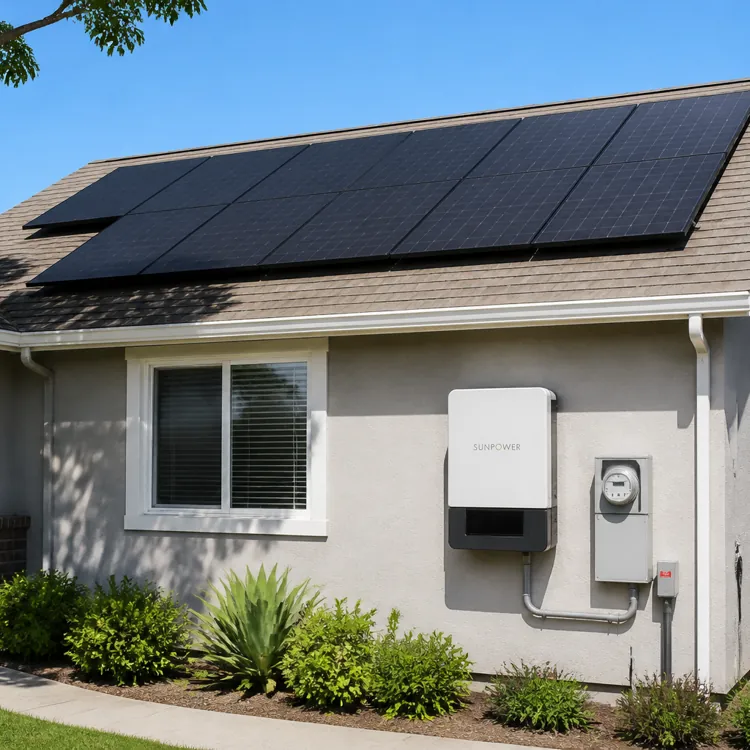
Beyond the costs of the panels themselves, there is some extra equipment that can add to the price of your system. Solar arrays contain mounting equipment, wiring and other devices, such as inverters, batteries or a monitoring system.
- Solar batteries: Battery storage lets you save energy for later use. Solar battery prices depend on the battery’s capacity, life span, brand and other factors. Expect to pay between $7,000 and $18,000, though some cost $30,000 or more.
- Solar inverter: Inverters convert the electricity generated by your solar panels from direct current (DC) to alternating current (AC). Inverter costs usually range from $1,000 to $3,000.
- Monitoring system: Some companies include a solar monitoring system to track how much energy your system produces and if there are any problems. If not, a standalone system costs $80 to $400.
Condition of your roof
Quality solar panels should last 25 to 30 years, and your roof needs to last just as long. ConsumerAffairs often hears from disgruntled solar customers who felt blindsided by expensive roof repairs needed after their solar panel installation was complete. This is a frustrating and expensive process you should avoid if you can. Get your roof inspected, fixed or replaced before you go solar.
Other cost factors
- Permits and fees: Permits and interconnection fees, though relatively cheap, are worth mentioning. Before you can get solar installed, you’ll probably need to obtain a permit. The fees for these vary depending on where you live in Virginia, but they average around $300.
- Maintenance: Clean energy systems require maintenance and occasional repairs or replacements, which add to your overall cost. You may also need to hire someone to clean your panels periodiocally.
Pro tip
Before going solar, it’s smart to upgrade any old appliances. For example, replacing an old refrigerator with a more eco-friendly one reduces your electric load, which also helps lower your energy bills. If you use less electricity, you need fewer solar panels, making the whole system cheaper.
Solar incentives in Virginia
Virginia doesn’t offer a broad statewide solar rebate, but homeowners can still benefit from several programs.
Property tax exemption: Qualifying residential solar systems up to 25 kW are exempt from state and local property taxes.
SRECs: Solar owners can earn extra money by selling solar renewable energy certificates (SRECs) based on how much electricity their system produces.
Shared solar: Some Dominion Energy and Appalachian Power customers can get solar bill credits without installing panels at home.
Net metering in Virginia
Net metering lets you earn bill credits for extra solar power you send to the grid.
The 30% federal solar tax credit ended in 2025.
In Virginia, credits generally carry over for 12 months. If you still have extra credits at the end of that period, they may be paid out at a lower rate than the retail price of electricity.
Rules vary by utility, so check your provider’s rates and fees before estimating your solar savings. Dominion Energy customers with larger systems may also face additional monthly charges.
» MORE: Solar incentives in Virginia
How can I pay for solar panels in Virginia?
Affordable financing options make the upfront costs of solar more manageable. For instance, most leases let you start saving from day one with little or no money down.
Loans and Property Assessed Clean Energy (PACE) financing
A solar loan works like any other type of home improvement loan — there’s an application and approval process, and you pay it back over time (with interest) each month. In an ideal financing scenario, your system generates enough extra power to pay off the loan. Solar loan terms typically last eight to 20 years.
Virginia has additional solar loan options, including a PACE program. Through this program, your solar is 100% paid for. The loan is paid off through an addition to your property taxes. These loans are usually paid off in 10 to 20 years.
Leases and power purchase agreements (PPAs)
A solar lease is an agreement where a homeowner allows a solar company to install panels on their roof and pays a fixed monthly fee to use the electricity they produce (similar to renting the system). The company owns, maintains and monitors the panels, while the homeowner benefits from potentially lower electricity bills without paying upfront costs.
A solar PPA is similar to leasing. A solar developer buys, installs and maintains solar panels on your property. You buy the power generated by the system on a per kilowatt-hour (kWh) basis. It’s a fixed price, and the cents/kWh is usually cheaper than the utility’s rate for the same amount of electricity.
» SOLAR PANELS: Lease vs. buy
Compare solar installation companies in Virginia
We compared ratings and reviews, equipment options, warranties, availability and other factors to pick the top solar companies in top solar companies in Virginia.
| Company | Customer rating | Professional installation | Payment options | Year founded | |
|---|---|---|---|---|---|
 ION Solar | Learn More | 1.2 |  | Cash, loan | 2013 |
 Blue Raven Solar | Learn More | 3.0 | | Cash, loan, lease, PPA | 2014 |
 Sunrun | Learn More | 4.2 | | Cash, loan, lease, PPA | 2007 |
 Project Solar | Learn More | 3.7 | | Cash, loan | 2020 |
 ShopSolar | Learn More | 4.5 |  | Cash, loan | 2018 |
FAQ
Can I get free solar panels in Virginia?
We’re not aware of a totally free solar option in Virginia. You can lease or enter a PPA with little to no upfront costs, though neither is totally free. Solar leases usually come with a flat monthly fee, and PPAs make you pay per unit of electricity. In general, beware of deals that sound too good to be true.
How can I save money on solar panels in Virginia?
A couple tips to maximize your savings on solar panels in Virginia:
- Compare quotes: Get quotes from at least three or four solar companies in Virginia. This lets you compare different proposed equipment, pricing, financing terms and estimated energy production to find the best overall value. Don't just go with the cheapest option without vetting quality and services.
- Lower your electrical load: Before going solar, it’s smart to upgrade any old appliances. For example, replacing an old refrigerator with a more eco-friendly one reduces your electric load, which also helps lower your utility bill. If you use less electricity, you need fewer solar panels, making the whole system cheaper.
What does solar panel efficiency mean?
Solar panel efficiency is how well a panel can turn sunlight into energy. Most panels have an efficiency of 15% to 20%, while higher-quality panels have an efficiency of 20% to 22%. More efficient panels tend to have a higher price, but you may be able to buy fewer panels overall.
How do I know what system size I need?
Check the amount of electricity you used last year in kilowatt-hours (kWh). You’ll find this information in your electric account dashboard online. Then, divide your annual kWh by 1,200 to find the system size you need. For example, if your home used 15,000 kWh last year, you would need a 13-kW system.
Will solar panels increase the value of my home?
Installing solar panels can significantly increase a home's value. According to a Zillow study, homes with solar panels sell for 4.1% more on average. The exact increase in value varies by location, with homes in active solar markets seeing higher boosts.
Bottom line
Installing solar panels leads to big long-term savings on electricity bills for Virginia homeowners. On average, you’ll spend $13,636 to $27,271 for panels that last about 25 years. Over that same time period, you’d avoid approximately $41,992 in total utility costs.
Solar costs vs. savings: Virginia and nearby states
| 6-kW system cost (before incentives) | 10-kW system cost (before incentives) | Typical system size needed* | Average cost per watt | Total utility power cost savings** | |
|---|---|---|---|---|---|
| Kentucky | $15,771 | $26,285 | 7.3 kW | $2.63 | $18,380 |
| Maryland | $15,823 | $26,372 | 8.2 kW | $2.64 | $75,628 |
| North Carolina | $13,875 | $23,125 | 7 kW | $2.31 | $29,610 |
| Tennessee | $18,277 | $30,462 | 6.7 kW | $3.05 | $2,846 |
| Virginia | $16,363 | $27,271 | 6.9 kW | $2.73 | $41,992 |
| West Virginia | $18,573 | $30,955 | 8.4 kW | $3.10 | $63,643 |
Article sources
ConsumerAffairs writers primarily rely on government data, industry experts and original research from other reputable publications to inform their work. Specific sources for this article include:
DSIRE, “Virginia Programs.” Accessed Aug. 19, 2026.
EnergySage, “The cost of solar panels in Virginia.” Accessed Aug. 19, 2026.
Solar Energy Industries Association, “Virginia Solar.” Accessed Aug. 19, 2026.
SolarReviews, “How much do solar panels cost in Virginia?” Accessed Aug. 19, 2026.
Virginia Department of Energy, “PACE.” Accessed Aug. 19, 2026.
Solar United Neighbors, “Homeowners associations and solar access in Virginia.” Accessed Aug. 19, 2026.
Virginia PACE Authority, “Frequently Asked Questions.” Accessed Aug. 19, 2026.