


Key insights
A PPA can eliminate upfront installation costs, but it usually commits you to buying solar electricity for up to two decades.
Jump to insightAnnual escalator clauses can potentially erase long-term savings: a 3% increase nearly doubles the per-kWh price over 20 years.
Jump to insightA PPA is best for homeowners who prioritize zero upfront cost, no maintenance over ownership and maximum lifetime savings.
Jump to insightHow does a solar PPA work?
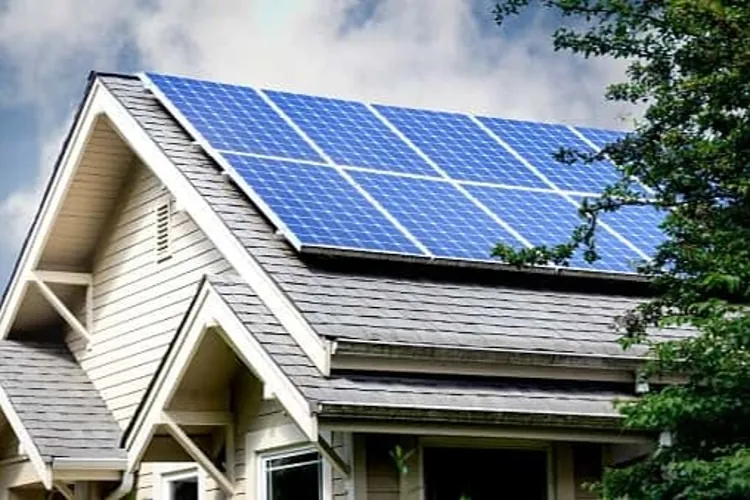
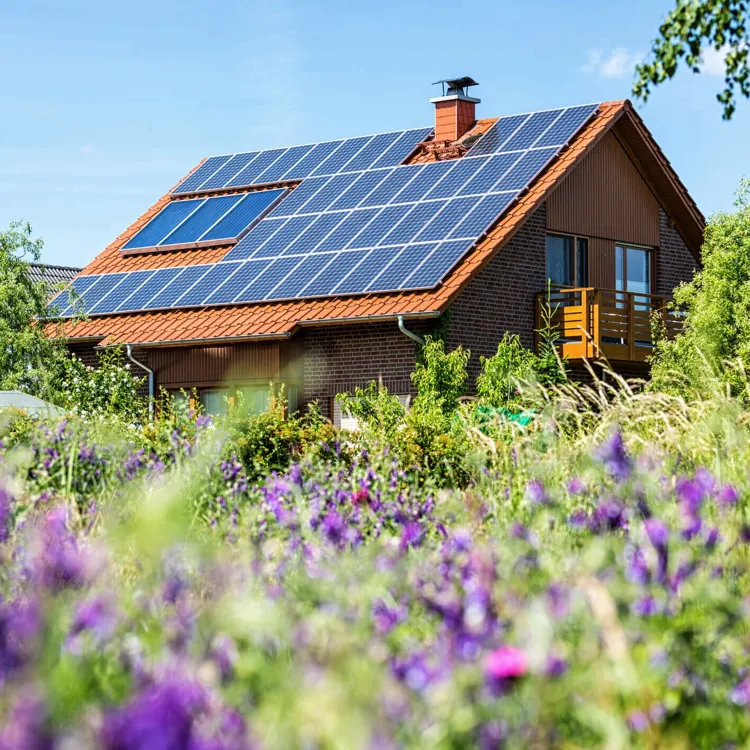
A solar PPA is an agreement between you and a solar provider that typically lasts 15 to 20 years. The provider installs, owns, operates and typically maintains the solar panel system on the roof of your home. In exchange, you agree to buy the electricity that system generates at a set price per kilowatt-hour.
You pay for power generation rather than renting the equipment. Each month, your PPA provider bills you for the electricity your system makes. This rate is usually negotiated to start 10% to 30% below your existing utility company's base electric rate.
Will you receive a utility bill?
You may still receive a utility bill because solar production might not cover all your electricity use, and utility fixed charges may still apply. The Federal Trade Commission recommends reviewing a full year of utility usage and all fixed utility charges before deciding whether solar will reduce your total electricity costs.
You don’t own the system. Because the solar company owns the panels, it handles all repairs and ensures the system is working properly. The provider also claims all available commercial tax benefits, renewable energy certificates and other ownership-based incentives.
How PPA escalator clauses affect costs
Your contract may include an escalator clause, which raises the PPA electricity price each year. A 1% to 3% annual increase is common, but the effect compounds over time.
For example, a PPA starting at 15 cents per kWh would rise to about 20 cents per kWh in year 10 and about 26 cents per kWh in year 20 with a 3% escalator. That’s nearly double the starting rate. A 0% escalator would remain 15 cents per kWh throughout the term.
A 3% escalator isn’t automatically a bad deal, but take the time to compare it with likely changes in utility rates. If utility rate hikes slow in your area, an escalating PPA rate can eventually exceed the local grid price, flipping your agreement from a money-saver into an added expense.
Before signing, ask your provider to show the total estimated payments for the entire contract under 0%, 1%, 2% and 3% escalators. Try to negotiate the lowest available annual increase — ideally, that’s a 0% escalator.
What happens after the term ends?
At the end of a solar PPA, your available options depend on the contract terms. You typically can:
- Renew the agreement, often at a lower or adjusted fair market rate.
- Purchase the system at the contract’s stated buyout price or its depreciated fair market value.
- Remove the system by requesting that the provider uninstall the system, typically at no cost to you.
Author’s note
Early termination is sometimes possible, but it usually involves buyout fees or transfer requirements. If you plan to sell your home, you'll likely need to transfer the PPA to the new homeowner — and the buyer may need to meet the provider’s credit requirements to assume the contract.
» MORE: Solar energy pros and cons
Solar PPA pros and cons
A solar PPA lets you go solar with no upfront cost and predictable energy rates. In return, you give up ownership, tax benefits and some flexibility. Whether that trade-off works depends on the contract and how long you expect to stay in the home.
Anecdotally, Heather in Arizona spends about $40 per month on her PPA and is happy with the setup. Some homeowners, though, also report feeling “stuck” in their PPA. For instance, H. in California wrote in a solar company review: “I have a PPA and I am STUCK with whatever [the company] wants to tell me.”
Pros
- No upfront costs for installing solar panels
- No maintenance responsibilities
- Fixed rates mean cost stability
- Potential to save on energy costs over time
- Reduces carbon footprint
Cons
- Not available in all states
- Complicated contract terms
- Long-term commitment
- Potential rate increases over time
- Could make your house harder to sell
States that allow solar PPAs
Not all states allow PPAs. As of this publication, 29 states and Washington, D.C., allow solar power purchase agreements. Several states restrict or ban them, while others do not clearly address residential PPAs at all. Availability can also vary by utility territory and provider. This leaves homeowners with loans or direct cash purchases as their primary solar options.
Solar PPA vs. lease
A solar PPA may offer lower initial payments, while a lease might provide greater long-term savings, depending on the contract terms.
Solar PPAs and leases can each be loosely described as renting your rooftop to a power company and paying the rent yourself. This is fairly accurate — the installments you pay on a PPA cover the cost of the system, installation, maintenance and a margin of profit on both the system and the financing. The fundamental difference lies in how you’re billed.
With a solar lease agreement, you pay a fixed monthly fee to use the solar equipment, regardless of how much electricity it produces. With a PPA, on the other hand, you pay only for the electricity the panels actually generate each month at a fixed rate for a certain number of years. You might think of it as a separate electricity bill for power generated on your roof.
Which is better?
A PPA may be a fit if you prefer to pay for actual solar generation rather than a fixed monthly equipment charge. A solar lease might be your choice if you want predictable monthly payments regardless of how much you generate that month. Ultimately, the best option depends on your goals, budget and electricity usage.
» MORE: Are solar panels worth it?
Solar PPA vs. solar panel ownership
A typical solar panel system costs approximately $14,000 to $28,000 to install. PPAs don’t have a payback period (unlike system ownership) since you're not paying for the system. Your savings are directly from lower electricity rates.
In other words, PPAs work less like a loan and more like a utility bill contract. You’re not borrowing money to own the panels; you’re agreeing to buy the electricity they produce. Ownership can offer more long-term control, but it requires upfront cash or financing approval.
What should I look for in a solar PPA?
When considering a PPA, don’t stop your research at the first-year rate. Request a written proposal, then ask these questions before you sign:
- Will the PPA lower my total electricity costs after accounting for utility fixed charges and any remaining grid purchases?
- Does it have an escalator clause?
- Is there a minimum production guarantee?
- What reimbursement applies if the system underproduces?
- What happens if I miss a payment?
- Can I buy out the agreement early, and how is the buyout calculated?
- What are my choices at the end of the term, and what will each option cost?
Solar PPA red flags to avoid
Treat vague claims, missing documents and high-pressure sales tactics as reasons to reevaluate a solar PPA provider. Watch for these red flags:
- Free solar panels advertising: A no-upfront-cost PPA is not free solar. You are agreeing to make long-term payments for electricity. The FTC warns that claims of free rooftop solar or government-paid systems can be misleading or fraudulent.
- High escalators (3% or higher): Aggressive escalators benefit the solar company by compounding costs annually, often wiping out your net energy savings within seven to 10 years.
- No performance guarantee: The contract should state expected production, the minimum production level if one applies and the remedy if the system underperforms. The FTC specifically advises comparing these terms.
- Pushy sales tactics: Reputable installers will provide detailed proposal copies and allow you plenty of time to review the fine print without demanding same-day signatures.
Is a PPA right for me?
To determine if a solar PPA is right for you, consider your energy consumption, the orientation and shading of your roof, the incentives and rebates available in your area and the cost of electricity from your utility.
You should also compare the terms of the PPA with those for other options and assess the reliability and reputation of the company offering the contract.
If you move forward, it's crucial to carefully review your contract to ensure it meets your needs and provides good value for your solar investment.
Compare solar companies with PPAs
Many of our top-rated solar companies offer PPAs:
| Company | Customer rating | Max. panel efficiency | Year founded | Availability | |
|---|---|---|---|---|---|
 Sunrun | Get Started | 4.3 | 22% | 2007 | Some states |
 Sunlux | Get Started | 4.7 | 19.7% | 2015 | California |
 Blue Raven Solar | Learn More | 3.0 | Varies | 2014 | Some states |
 Project Solar | Learn More | 3.9 | 20.9% | 2020 | Most states |
Explore top solar companies by state
- Alabama
- Alaska
- Arizona
- Arkansas
- California
- Colorado
- Connecticut
- Delaware
- Florida
- Georgia
- Hawaii
- Idaho
- Illinois
- Iowa
- Indiana
- Kansas
- Kentucky
- Louisiana
- Maine
- Maryland
- Massachusetts
- Michigan
- Minnesota
- Mississippi
- Missouri
- Montana
- Nebraska
- Nevada
- New Hampshire
- New Jersey
- New Mexico
- New York
- North Carolina
- North Dakota
- Ohio
- Oklahoma
- Oregon
- Pennsylvania
- Rhode Island
- South Carolina
- South Dakota
- Tennessee
- Texas
- Utah
- Vermont
- Virginia
- Washington
- West Virginia
- Wisconsin
- Wyoming
FAQ
Can a solar company put a lien on my house?
A PPA does not usually involve a lien, but it may involve something similar called a UCC-1 filing. This means that if the homeowner dies or sells the property, the company has a legal claim to the equipment. It doesn't attach to your home itself, but to the solar equipment installed on your property.
What happens if I sell my house?
If you sell your home while under a PPA, you may need to:
- Transfer the PPA to the new homeowner (subject to their credit approval).
- Prepay or buy out the remainder of the contract.
Can I exit a PPA early?
You might be able to exit a PPA, but it usually involves buying out the system, paying fees or transferring the contract. It’s best to ask for these details upfront before signing a PPA.
How much can you save with a solar PPA?
The savings you get from a PPA compared to your energy bill vary depending on the cost of electricity, the size of the solar energy system, and the terms of the agreement. Generally, homeowners can save money on their energy bills by using clean, renewable energy from the sun, including through a solar PPA, but PPA monthly fees may include markups that cut into these savings.
Bottom line: Is a PPA a good idea?
Whether a solar PPA is a good idea for your solar installation depends on your home’s energy usage, your budget and your long-term goals. One of the biggest advantages of solar PPAs is that they allow you to go solar without paying upfront for a solar panel system. On the other hand, PPAs have higher long-term costs than options like leasing.
If you’re interested in installing solar panels on your roof or beside your home, but can’t afford the upfront cost of the system and installation, a solar PPA may be a good solution.
| PPA | Solar lease | Ownership | |
|---|---|---|---|
| Upfront costs | $0 or minimal | $0 or minimal | Varies |
| Payment type | Per kWh used | Flat monthly fee | Cash or financing |
| Bill changes with production | |||
| Maintenance | Included | Included | Homeowner’s responsibility |
| Incentives claimed by | Solar company | Solar company | Homeowner |
Article sources
ConsumerAffairs writers primarily rely on government data, industry experts and original research from other reputable publications to inform their work. Specific sources for this article include:
- California Solar & Storage Association, “Going Solar FAQ.” Accessed Aug. 24, 2026.
- U.S. Environmental Protection Agency, “Financial PPA.” Accessed Aug. 24, 2026.
- U.S. Environmental Protection Agency, “Financing.” Accessed Aug. 24, 2026.
- U.S. Department of Energy, “Homeowner’s Guide to Solar.” Accessed Aug. 24, 2026.
- U.S. Federal Trade Commission, “Solar Power for Your Home.” Accessed Aug. 24, 2026.
- Solar Reviews, “Solar Power Purchase Agreements (PPAs): Pros, Cons, & Red Flags.” Accessed Aug. 24, 2026.
- U.S. Department of Energy, "Solar Photovoltaic System Cost Benchmarks." Accessed Aug. 24, 2026.