
How to maintain your solar panels
Maintaining solar panels is relatively straightforward, but it still requires following a few basic procedures. Routine care mainly involves cleaning the panels safely and periodically checking the system for signs of damage or declining performance.
Clean panels as needed
Solar panels don’t need frequent cleaning, but periodic maintenance can help prevent dirt buildup that reduces efficiency. How often you should clean them depends on your environment. Homes in dusty areas or near trees may require more frequent cleaning because of pollen, sap, bird droppings or debris.
Here’s how to clean them, step by step.
Dirty panels are 25% to 35% less efficient.
- Review your owner’s manual first. Before doing any maintenance, check the manufacturer’s instructions for approved cleaning methods. This can help you avoid accidental damage and protect your warranty.
- Shut down or isolate the system if recommended. Many manufacturers advise turning off the system before cleaning to reduce electrical risks. Follow the shutdown steps provided for your equipment.
- Choose the right time of day. Clean panels early in the morning or later in the evening when they’re cool. Spraying cold water on hot panels in the middle of the day can create thermal stress and potentially damage the glass.
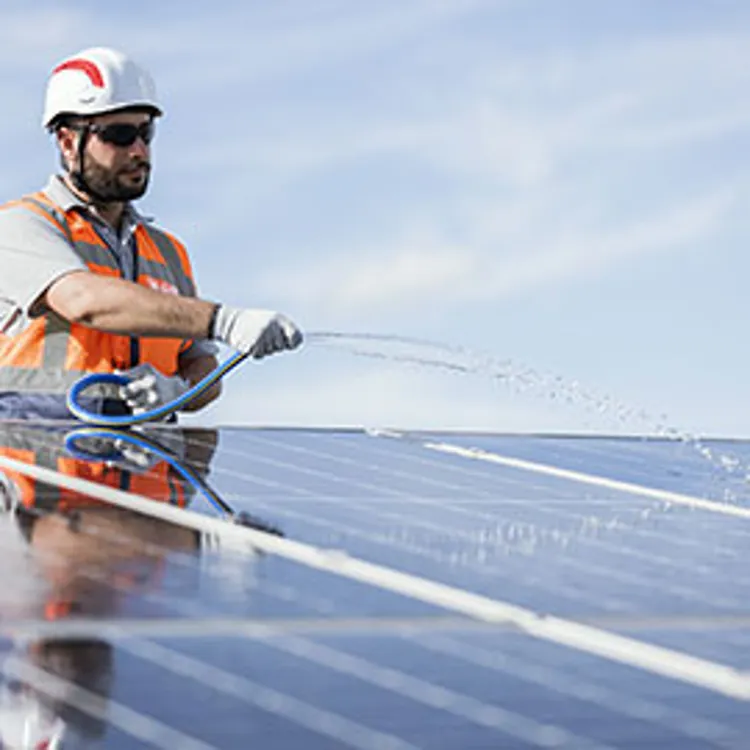
- Rinse the panels gently. Use a standard garden hose to wash away loose dust and debris. In areas with hard water, deionized or distilled water can help prevent mineral spots from forming on the glass.
- Use a soft tool for stuck-on grime. If dirt remains, use a soft brush or sponge with water to gently clean the surface. Avoid abrasive pads, harsh chemicals and anything that could scratch the glass.
- Clear off light debris carefully. If leaves or snow are blocking sunlight, use a leaf blower, soft broom or careful rinse to remove them without damaging the panels.
- Call a professional if needed. If your panels are difficult to reach or roof access feels unsafe, it’s usually best to hire a professional cleaning service.
Do
- Rinse panels with a standard garden hose
- Use a soft brush or sponge if needed
- Clean during cooler parts of the day
- Follow the instructions in your manufacturer’s manual.
Don't
- Use pressure washers or high-pressure spray
- Scrub panels with abrasive pads or harsh chemicals
- Walk directly on panels or apply excessive force
- Clean the system while it’s producing power if the manufacturer recommends shutting it down
Check for visible damage
Checking your solar panels for damage is an important part of keeping your system running properly. Look for cracked glass, dings, loose panels, loose mounting hardware, discolored areas or damaged wiring.
“The electrical system should be inspected occasionally to ensure that the terminals haven’t become loose and that the wiring hasn’t been compromised,” said Will White, a solar application specialist at Fluke. “A residential system should be inspected every few years,” he advised.
The electrical system should be inspected occasionally to ensure that the terminals haven’t become loose and that the wiring hasn’t been compromised.”
If you find damage, take photos and then contact your solar company for any repairs that are covered by your warranty.
Trim trees and other vegetation
Make sure to keep encroaching trees at bay. Regularly trim any nearby trees to prevent branches from blocking much-needed sunlight or hitting the panels when it’s windy.
Monitor your panels’ efficiency
Many systems include a monitoring app that shows how much electricity your panels are generating. If production suddenly drops and cleaning doesn’t solve the problem, the issue could be shading, debris buildup or a malfunctioning component.
Hot spots can occur when individual cells overheat due to shading, debris or defects, which can reduce output and potentially damage the panel. Potential induced degradation (PID) is another issue that can slowly reduce performance when stray electrical currents affect the solar cells over time.
Contact your installer if your panels drop in efficiency and regular maintenance doesn’t solve the problem.
» MORE: Solar Panel Cleaning
Safety precautions for DIY maintenance
DIY solar panel maintenance can be safe if you follow the proper precautions. Because solar systems involve both electricity and roof work, use the right equipment and avoid situations that could put you at risk.
Wear PPE
Before starting any work, wear appropriate personal protective equipment (PPE), especially if you need to access your roof. Basic safety gear includes:
- Nonslip shoes with good traction
- Protective gloves to avoid cuts or electrical contact
- A safety harness when working on steep roofs
Practice electrical safety
Solar panels can produce electricity whenever they receive sunlight, so take electrical safety seriously. If your maintenance task involves the system itself, follow the manufacturer’s instructions for shutting it down and avoid handling exposed wiring. Basic electrical precautions include:
- Following lockout/tagout procedures when shutting down the system
- Avoiding contact with live wires or connectors
- Keeping water away from electrical components
Minimize fall risk
You should also minimize fall risk when working on your roof. Avoid maintenance during unsafe conditions and have someone nearby to assist if needed. Stop work immediately if you notice warning signs such as:
- Burning smells near the system
- Electrical arcing or sparks
- Repeatedly tripped breakers
When to hire a professional for solar maintenance
Many homeowners can handle light maintenance like rinsing off dust or removing leaves, but some issues require professional attention. Solar systems involve electrical components and roof-mounted equipment that may need specialized tools or training to diagnose safely.
Consider hiring a professional if you notice signs that your system may not be working properly, such as:
- Persistent drops in energy production shown in your monitoring app
- Cracked glass or damaged panels
- Loose mounting hardware or exposed wiring
- Panels shifting out of position
Professional technicians can also safely isolate the system from power and perform electrical diagnostics that most homeowners shouldn’t attempt themselves. In many cases, using a qualified technician can also help protect your warranty, since some manufacturers require certified professionals for repairs.
Solar panel maintenance costs
For the most part, you won’t spend any money on solar maintenance most of the time, except for the cost of the water to hose down your panels (and maybe buy a snowblower or leafblower). If you decide to hire a professional to clean your panels, you’ll spend around $100 to $350, on average.
You will, however, want someone to come out every few years and inspect the system to make sure everything is running properly. This will cost about the same as hiring someone to clean them.
Is maintenance covered under warranty?
Maintenance for residential solar energy systems is generally not covered by your equipment manufacturer’s warranty, and it isn’t usually included in the installation warranty, according to White.
Some installers offer an additional maintenance package or third-party maintenance for an additional fee. Before signing an agreement, review the details carefully to confirm how often inspections occur and what types of repairs or services are included.
Solar panel maintenance checklist
While there’s not a lot to maintaining your solar panels, there are a few tasks you should mark down on your calendar.
- Every six months: Clean your solar panels twice a year (or more if you notice a drop in efficiency).
- Fall: If fallen leaves accumulate on your panels, sweep them or blow them clean with a leafblower.
- Winter: After each snowfall, carefully wipe the panels clear or use a snowblower to remove the snow.
- Throughout the year: If you see tree branches growing close to your panels, make sure to trim them right away. Limbs can damage panels if they come into contact.
- After a storm or once every few years: Check your system to make sure the wiring, mounts and other components are in good condition.
What to do if your solar panels are damaged
If your panels are damaged by a storm or have lost a lot of efficiency even when they’re clean, then it’s time to consult your warranty to see about getting them repaired or replaced.
Here are some things to do before you call your solar company:
- Make sure your panels are still within the warranty timeline. Most solar companies warranty their panels for around 20 to 25 years.
- Check what level of efficiency your warranty guarantees. Often, warranties guarantee panels maintain at least 90% of their original efficiency after 10 years and at least 80% efficiency after 25 years.
- Look to see what kind of damage is covered in your warranty. Some companies will cover faulty equipment but not damage done by weather events. In those cases, you’ll want to contact your home insurance provider.
Just make sure whoever repairs or replaces your solar panel(s) has approval from your solar company. Otherwise, you could void your warranty completely.
» COMPARE: Best Solar Panels
FAQ
How does severe weather affect solar panels?
Generally, panels are made to withstand strong winds, pouring rain and 1- to 2-inch-sized hail. Of course, panels aren’t impervious to damage. Strong winds can loosen them from your roof, and hail can crack them. Very high or very low temperatures can also damage solar panels.
Can you monitor the health of your solar panels?
Most solar panel companies offer apps or dashboards that allow you to monitor the efficiency, wattage, currency and other elements of your system from your phone or computer.
How do you dispose of solar panels?
Solar panels shouldn’t be thrown away since some are considered hazardous waste. Contact your local recycling company or waste disposal authority to find out how to get rid of them safely.
What is the lifespan of a solar panel?
Most solar panels are designed to last 25 to 30 years or longer. Manufacturers typically offer performance warranties guaranteeing that panels will still produce about 80% to 90% of their original output after 25 years. Even after that period, panels often continue generating electricity, though at gradually reduced efficiency.
What wears out on a solar panel?
The solar cells themselves degrade slowly over time, but other components usually wear out first. Inverters, which convert solar power into usable electricity, often need replacement after 10 to 15 years.
Seals, wiring and mounting hardware can also deteriorate due to weather exposure, while dirt buildup and microcracks may reduce panel efficiency if not addressed.
How long do solar panels last without maintenance?
Solar panels can continue operating for many years with minimal maintenance, but neglect may reduce their performance. Dust, debris and shading can gradually lower energy output, and undetected damage may worsen over time. Even though panels are designed to be durable, occasional cleaning and inspections help maintain efficiency and catch problems early.
Article sources
ConsumerAffairs writers primarily rely on government data, industry experts and original research from other reputable publications to inform their work. Specific sources for this article include:
- Environmental Protection Agency, "End-of-Life Solar Panels: Regulations and Management." Accessed March 11, 2026.
- Enphase Energy, "Solar panel cleaning and maintenance: A guide for optimal performance." Accessed March 11, 2026.