2025 Lawsuits and Class Actions

Article Image

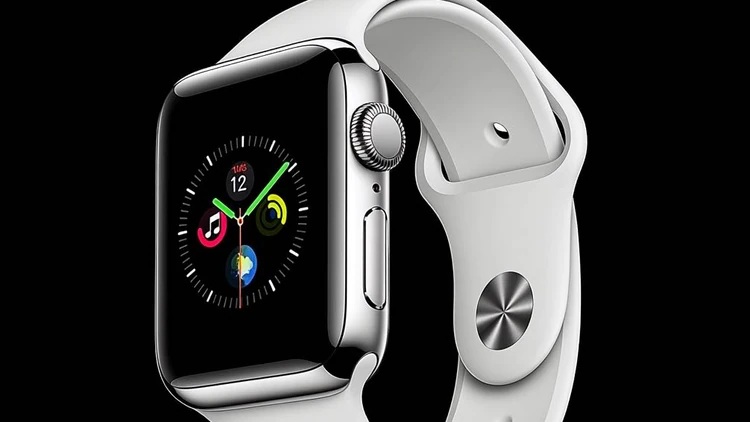
HP to pay $4 million in class-action settlement over discount claims

Key takeaways: 

  • HP agrees to $4 million payout over claims of misleading “strike-through” pricing and false scarcity tactics.

  • Eligible customers may receive $10–$100 if they bought discounted HP gear between June 2021 and October 2024.

  • HP admits no wrongdoing, settles civil lawsuit that alleged violations of FTC deceptive pricing guidelines.


Article Image

Kia sued for Soul, Seltos with fire risk

Kia is facing a class-action lawsuit alleging a defect, which risks starting fires, has harmed customers by dropping the value of certain Kia Souls and Kia Seltoses.

The lawsuit, filed March 7 in Pennsylvania, alleges defects in the piston oil rings, which caused a February 2025 recall, means the cars are "simply not worth as much" and Kia needs to compensate owners more than offering free repairs, ClassAction.org reports.

"The value of a car with a known history of engine issues is worth much less than a car with a properly working engine, or at least a history of a working engine with no critical issues," the lawsuit said.

In February, Kia recalled 137,256 of its 2021-2023 Kia Soul or 2021-2023 Kia Seltos because of the defect and offered free repairs as a solution.

Symptoms of the defect include increased oil consumption, abnormal engine noise and the illumination of the dashboard oil pressure light, Car and Driver reports.

A Kia spokesperson told ConsumerAffairs the company doesn't comment on pending litigation.

The lawsuit aims to represent all U.S. residents who bought or leased a 2021-2023 Kia Soul or 2021-2023 Kia Seltos that was recalled.

Lawyers at Carpey Law are on the case and can be reached at scarpey@carpeylaw.com.

Article Image

CFPB inaction harming state consumer protection efforts, Democratic AGs allege

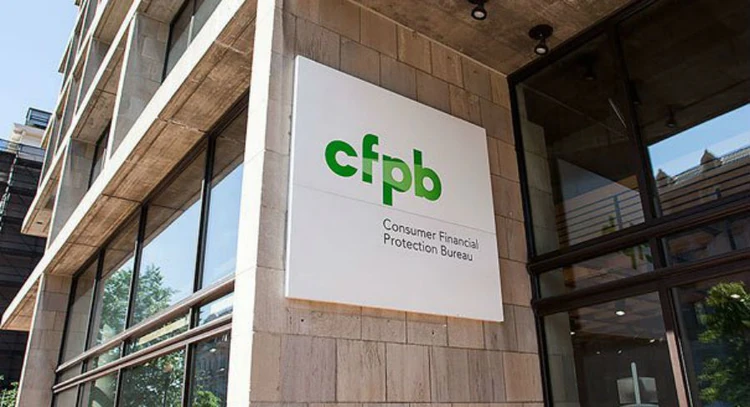
A coalition of 23 Democratic state attorneys general is urging a federal judge in Washington, D.C. to block the Trump Administration’s efforts to shut down the Consumer Financial Protection Bureau (CFPB), arguing that doing so would harm consumer protection efforts across the country.

In a legal brief filed in support of a lawsuit brought by the National Treasury Employees Union (NTEU), the attorneys general claim that the administration’s actions amount to a “total dereliction of all mandatory statutory duties.” A similar brief has also been filed in a separate lawsuit by the city of Baltimore, which makes similar allegations.

Legal battle over CFPB’s future

The lawsuit, filed by the NTEU and several advocacy groups, seeks a court order requiring the CFPB to resume operations, arguing that halting the agency’s work violates the Administrative Procedure Act.

Judge Amy Berman Jackson has ruled that no further changes be made to the agency until at least March 10, when she will hold an evidentiary hearing to review the case.

The Democratic attorneys general argue that shutting down the CFPB would severely impact consumer protection efforts, as many states rely on the agency for critical enforcement and investigative support.

Consumer protection concerns

According to the attorneys general, states depend on the CFPB for:

  • Handling consumer complaints, which provide vital data for investigating fraud and abuse.
  • Collaborating on investigations into predatory lending, deceptive financial practices, and fraud.
  • Accessing mortgage lending data under the Home Mortgage Disclosure Act, which helps enforce fair lending laws.
  • Distributing financial penalties already awarded to consumers through the CFPB’s Civil Penalty Fund.

“In the CFPB’s absence, consumers will be left without critical resources,” the brief states. “Although some states have similar mechanisms in place, those mechanisms alone cannot replace the CFPB’s vast nationwide complaint intake system overnight.”

CFPB’s fate is uncertain

While Jonathan McKernan, President Trump’s nominee to head the CFPB, assured a Senate committee last week that the agency would continue to function, employees have been sent home, the headquarters has been closed, and the CFPB’s name has been removed from its windows.

This contradictory messaging has raised concerns among state officials, who say the sudden disruption is already affecting ongoing investigations and enforcement actions.

The attorneys general represent New York, California, Illinois, Massachusetts, New Jersey, and 18 other states that have historically worked closely with the CFPB to enforce consumer protection laws.

With the future of the agency hanging in the balance, the court’s upcoming March 10 hearing could determine whether the CFPB resumes its operations or remains effectively shuttered under the Trump Administration.

Article Image

Mott's ReaLemon, ReaLime aren't 100% juice, lawsuit alleges

Juice maker Mott's is facing a class-action lawsuit alleging it is falsely advertising its ReaLemon and ReaLime products as "real," "natural" and "100% juice."

The lawsuit, filed in Delaware on March 3, alleges the juice products contain the artificial preservatives sodium benzoate and sodium metabisulfite, ClassAction.org reports.

The front labels advertise "with added ingredients," but should read "with added preservatives" to be in line with state and federal laws, the lawsuit said.

“A reasonable consumer viewing the front labeling of the Products would come away with the impression that the Products are composed of only natural, real ingredients,” the lawsuit said. “Given that artificial preservatives are such a turn-off for consumers buying what they perceive as a natural 100% juice product, it is not appropriate, and is misleading, for [Mott’s] to simply state ‘with added ingredients,’ as opposed to ‘with added preservatives."

Keurig Dr. Pepper, the parent company of Mott's, didn't immediately respond to ConsumerAffairs's request for comment.

The lawsuit aims to represent all U.S. residents who bought a ReaLemon or RealLime product.

Lawyers at Cooch and Taylor and Smith Krivoshey are representing the case and can be reached at gdick@coochtaylor.com, yeremey@skclassactions.com and joel@skclassactions.com.

Article Image

FTC's antitrust case against Amazon green-lighted by judge

A federal judge has ruled that the Federal Trade Commission (FTC) can move forward with its high-profile antitrust lawsuit against Amazon, dealing a significant blow to the e-commerce giant. However, the judge dismissed a handful of claims made by individual states involved in the legal battle, offering Amazon a minor reprieve.

The ruling, issued last week by U.S. District Judge John H. Chun in Washington and unsealed Monday, marks a major defeat for Amazon, which has spent months attempting to have the case thrown out. The trial is scheduled for October 2026, setting the stage for one of the most significant legal battles in the company’s nearly 30-year history.

“We are pleased with the court’s decision and look forward to moving this case forward,” FTC spokesperson Doug Farrar said in a statement. 

Last year, the FTC alleged Amazon.com, which has 1 billion items in its online superstore, was using an algorithm that pushed up prices U.S. households paid by more than $1 billion. Amazon has said in court papers it stopped using the program in 2019.

While Judge Chun allowed federal antitrust and consumer protection claims to move forward, he dismissed some state-level allegations, particularly those brought by New Jersey, Pennsylvania, Oklahoma, and Maryland. The ruling limits certain aspects of the case but leaves the core allegations against Amazon intact.

'FTC must prove its claims'

Amazon, for its part, is stridently denying the claims. It argues that the FTC’s claims misrepresent how consumers and sellers engage in online shopping.

“The ruling at this early stage requires the court to assume all facts alleged in the complaint are true. They are not,” Amazon spokesperson Tim Doyle said. He further claimed that the FTC’s case is built on a flawed premise, arguing that it “falsely” assumes shoppers only consider major sites like Walmart, Target, Amazon, and eBay when making purchases.

“Moving forward, the FTC will have to prove its claims in court, and we’re confident those claims will not hold up when the FTC has to prove them with evidence,” Doyle added, asserting that the agency’s approach could ultimately make online shopping “more difficult and costly.”

Article Image

USAA settles data breach class action

USAA has agreed to a $3.25 million class action settlement to resolve claims that it failed to prevent a 2021 data breach that exposed sensitive personal information of its customers.

The settlement benefits individuals whose personal data was accessed, stolen, or compromised in the breach, which occurred on or around May 6, 2021.

Plaintiffs in the lawsuit claimed that USAA did not implement proper cybersecurity measures to protect customer data, leaving it vulnerable to hackers. As a result, thousands of individuals had their personal and financial information compromised.

USAA, a financial services company serving military members and their families, has denied any wrongdoing but agreed to settle the case to avoid further litigation.

Compensation for class members

Under the terms of the settlement, class members will receive an equal share of the net settlement fund. The exact amount will depend on the number of claims filed and any legal fees deducted from the settlement.

To be eligible for compensation, individuals must have received a notification stating that their personal data was compromised in the May 6, 2021, data breach.

File a claim

  • Claim Deadline: April 7, 2025
  • Exclusion & Objection Deadline: April 7, 2025
  • Final Approval Hearing: May 21, 2025
  • Claim form

Class members must submit a valid claim form by the April 7, 2025, deadline to receive a payment. Those who wish to opt out of the settlement or file an objection must also do so by April 7, 2025.

Article Image

CFPB shutdown challenged in court

The Trump administration's effort to shut down the Consumer Financial Protection Bureau is facing a new lawsuit by advocacy groups.

President Trump and his officials have illegally taken steps to eliminate the CFPB without the permission of Congress that is harming Americans, including shutting off funding for the agency, according to allegations in a lawsuit filed by nonprofit Public Citizen Litigation Group, law firm Gupta Wessler LLP and the National Treasury Employees Union.

"Their actions have caused mass confusion and imposed significant and irreparable harm on consumers across the country," advocacy groups said in a statement.

The CFPB didn't respond to ConsumerAffairs's request for comment. 

One case involves plaintiff Eva Steege, an 83-year-old retired Lutheran pastor currently in hospice, who advocates said had been working with the CFPB staff to resolve issues with a Public Service Loan Forgiveness application that could provide her with more than $15,000 in refunds from previous payments.

Her follow-up meetings with the CFPB were cancelled after the Trump administration limited the agency's operations.

Trump's allies have said the CFPB has overreached in its authority and manipulates competition in the market.

The CFPB, founded in 2011 in the wake of the 2008 financial crisis, has said it has returned more than $21 billion to people who were unfairly treated by financial institutions.

The CFPB had a budget cap of $785.4 million in the fiscal year of 2024.

Email Dieter Holger at dholger@consumeraffairs.com.

Article Image

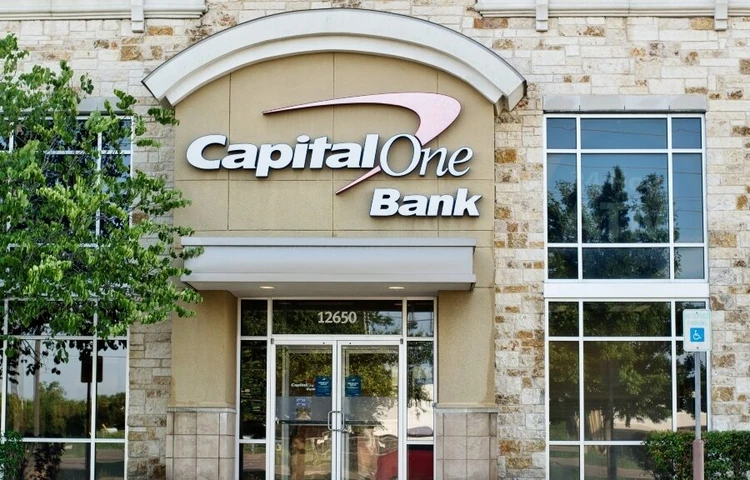
Capital One sued for 'cheating' customers out of more than $2 billion, CFPB alleges

Capital One has been sued by the Consumer Financial Protection Bureau (CFPB) for allegedly "cheating" millions of customers out of more than $2 billion of interest payments on savings accounts.

When interest rates rose across the U.S., Capital One allegedly froze interest rates on its flagship "360 Savings" account, which promised one of the nation's "best" and "highest" interest rates, the financial regulator said Tuesday.

Around the same time, Capital One created a new savings account, "360 Performance Savings," that differed from the other account only in that it paid out more interest, including as much as more than 14 times the "360 Savings" account rate at one point in time, the CFPB said.

Capital One allegedly kept "360 Savings" customers in the dark about the better savings account when it waged a marketing campaign for the higher-yielding accounts, saving the bank more than $2 billion in interest rates it could've paid to those customers, the CFPB said.

The CFPB said the lawsuit aims to stop the conduct, which it calls unlawful, and seeks fines and money to pay back victims.

Capital One didn't immediately respond to ConsumerAffair's request for comment.

Article Image

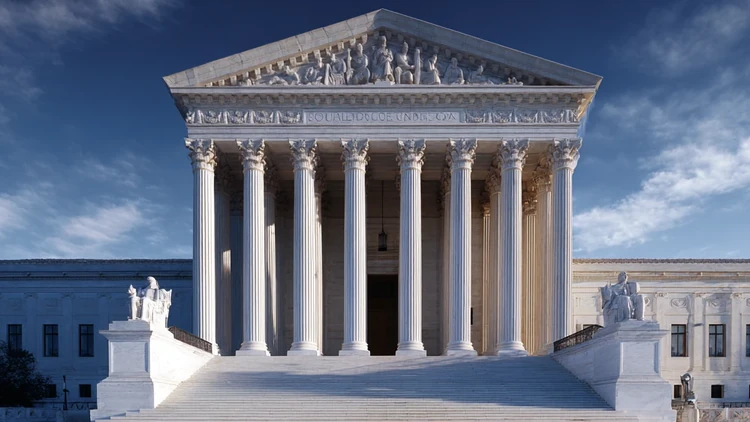
It's not looking good for TikTok after Supreme Court hearing

With just nine days to go until it's banned in the U.S., things aren't looking great for TikTok. The Supreme Court heard arguments today on TikTok's challenge to the law banning it because of concerns about its Chinese owner, ByteDance Ltd. 

"Are we supposed to ignore the fact that the ultimate parent is in fact subject to doing intelligence work for the Chinese government?” Chief Justice John Roberts asked TikTok’s lawyer.

That and similar questions from the justices made it clear to observers that ByteDance's defenses aren't winning the hearts and minds of the court. 

ByteDance and the thousands of content creators that keep the platform rocking along and entertaining 170 million U.S. users have tried to frame the issue as one centering on free speech, which is prominently enshrined in the First Amendment.

It's not absolute

But, sacred though it is, the freedom to speak and publish is not unlimited. The classic example of speech that is not protected is shouting "Fire!" in a crowded theater. 

The Biden Administration basically cites that argument, saying that Chinese control of TikTok permits a foreign totalitarian adversary to spread propaganda, manipulate the platform's content and collect the data of individual Americans for espionage or blackmail purposes.

“Just on the data collection, that seems like a huge concern for the future of the country,” Justice Brett Kavanaugh said to TikTok’s lawyer, Noel Francisco, according to Bloomberg News.

The content creators whose videos, stand-up routines and how-to spiels populate TikTok argue that their users' right to view the content they select deserves protection and they generally minimize the dangers cited by the government.

But the justices and government lawyers arguing for the Biden Administration say the basic issue is that Congress and the White House have deemed that ByteDance has dangerously close ties with the Chinese Communist government. 

Texas chimes in

As if being banned by two (so far) of the three branches of the federal government wasn't enough, Texas has waded into the skirmish, charging in a lawsuit that TikTok has been deceptively marketing its app as safe for minors, despite regularly showing inappropriate and explicit material to children.

"TikTok actively worked to deceive parents and lure children onto their app despite the presence of an overwhelming amount of profane and illicit material,” said Texas Attorney General Ken Paxton in an email to ConsumerAffairs. “Companies may not jeopardize the health and wellbeing of Texas children by blatantly lying about the products they provide.”

In a suit filed Jan. 9, Paxton charged that TikTok lied about its safety standards and concealed the truth about the prevalence of inappropriate and explicit material. Specifically, to deceive parents and maintain its current age rating in major app stores, TikTok falsely represented that the presence of graphic videos depicting drugs, nudity, alcohol, and profanity was “infrequent” and “mild,” the suit alleges.

Paxton said an investigation found a virtually endless stream of videos on such topics easily accessible to minors. Paxton previously sued TikTok for violating the Securing Children Online Through Parental Empowerment (“SCOPE”) Act by unlawfully operating its platform in a manner that puts the online safety and privacy of Texas children at risk.

What's a TikTok to do?

If, as expected, the court turns down TikTok's plea, come Jan. 19 it will be illegal for TikTok to continue operating and posting its material. ByteDance would then have just a few options:

  • Sell the business. ByteDance has said it would not consider unloading the platform but it may not have much choice if the decision goes against it.
  • Go rogue. Presumably, ByteDance could continue hosting the site on servers outside the United States but, while that's theoretically possible, it would be very difficult to implement and maintain. Operating a gigantic web platform isn't like running a single server. It would require continued services from U.S. tech companies that now provide routing, caching and any number of other tasks. Those companies would face enormous fines if they continuing aiding in the distribution of TikTok.  
  • Close TikTok down and dispose of its intellectual property. It could presumably sell off the most popular videos to other platforms and simply retire as an ongoing U.S. business enterprise. TikTok might become a Facebook feature (it now syndicates some videos to Facebook, billing them as "Reels"). This would be akin to a television network going out of business and selling off its most popular shows.  

It will be missed

To a certain extent, it's a generational debate, with younger consumers depending on TikTok and older ones largely dismissing it as a silly waste of time. It's also criticized for some of its racier content, which critics say amounts to sexual exploitation.

Younger Americans, in fact, seem to see TikTok as something more than an algorithm-driven mishmash of entertainment. shameless self-promotion, online retailing and, believe it or not, news.

A recent survey conducted by Numerator found that 31% of U.S. adult consumers use TikTok, making it the fifth-most-popular social media app behind Facebook, YouTube, Instagram, and Pinterest, although its support falls off with age:

  • 76% of Gen Z use it,
  • 40% of Millennials,
  • 36% of Gen X, and
  • 18% of Baby Boomers. 

TikTok users are not only loyal, they also tend to be heavy mobile users, with 41% saying they spend more than six hours per day using mobile devices compared to 31% of all consumers. 

Lobbyists and promoters for TikTok have been heard to say that its young fans will remember the ban and seek retribution in the next election. Threats like that are easy to make but in the thick-skinned atmosphere on Capitol Hill they are regarded as being about as significant as, say, a cat's meow.    
Article Image

Authors sue Meta alleging it used pirated books to train its AI systems

A group of authors, including Ta-Nehisi Coates and Sarah Silverman, have accused Facebook parent Meta Platforms of using pirated books to train its artificial intelligence systems with approval from CEO Mark Zuckerberg.

Coates is an author, journalist, and activist. He gained a wide readership during his time as national correspondent at The Atlantic, where he wrote about cultural, social, and political issues, particularly regarding African Americans and white supremacy. Silverman is a comedian who first rose to prominence for her brief stint as a writer and cast member on Saturday Night Live.

The authors allege that Meta Platforms CEO Mark Zuckerberg knew about the pirating but approved using the material anyway. Their suit, filed in 2023, claims that Meta used pirated works from a database called LibGen to train its AI, which includes millions of pirated books, and distributed them through torrents.

The suit accuses Meta of copyright infringement, arguing that the company misused their books to train its AI system, Llama. Meta has argued that their actions fall under the "fair use" doctrine, use of such material falls under "fair use."

The fair use doctrine is a legal principle that allows limited use of copyrighted material without permission from the copyright holder. It is part of U.S. copyright law and provides exceptions to the exclusive rights granted to copyright holders. The fair use doctrine is intended to balance the rights of creators with the public's interest in using creative works for certain purposes like education, commentary, or research.

The authors are now seeking to update their complaint, based on new evidence showing that Meta knowingly used pirated content. They also want to revive certain claims, including allegations that Meta illegally stripped their books' copyright information.

What about fair use?

Whether or not Zuckerberg knew about the copying, the case revolves around whether copying an entire book can possibly be considered fair use.

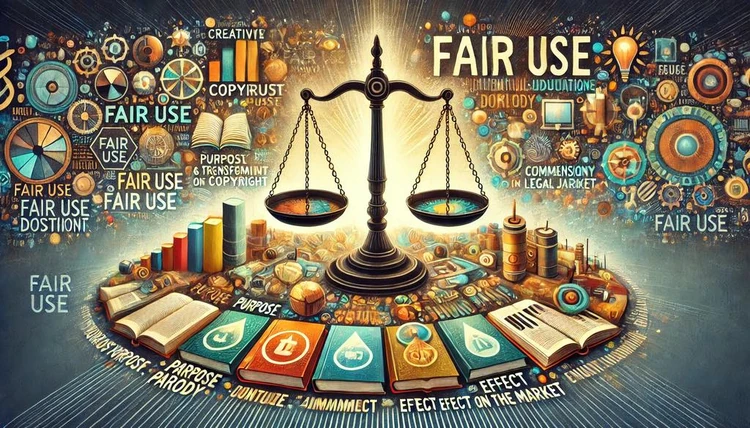
In determining whether a use qualifies as fair use, courts consider four factors, according to Cornell Law School's Legal Information Institute:

  1. Purpose and Character of the Use: This looks at whether the use is for commercial or non-commercial purposes and whether it transforms the original work. Uses that are educational, non-profit, or transformative (e.g., using a work in a way that adds new meaning or value) are more likely to be considered fair use.

  2. Nature of the Copyrighted Work: This considers whether the work is factual or creative. Factual works are more likely to be subject to fair use than highly creative works (like novels or movies).

  3. Amount and Substantiality of the Portion Used: The less of the work you use, the more likely it is to be considered fair use. However, even a small portion may be too much if it's considered the "heart" of the work.

  4. Effect on the Market or Value of the Work: If the use negatively impacts the market value or potential sales of the original work, it's less likely to be considered fair use. If the use does not affect the market for the original work, it’s more likely to be deemed fair use.

Examples of fair use include:

  • Quoting or paraphrasing a work in a review, commentary, or academic paper.
  • Using brief excerpts of a copyrighted work in a parody or satire.
  • Reproducing a copyrighted work for educational or non-profit purposes.

Fair use is not always clear-cut and often requires a case-by-case analysis or, as in this case, litigation.

The fair use doctrine is discussed in Section 107 of the Copyright Act of 1976 (Title 17 of the U.S. Code). This section outlines the factors that courts should consider when determining whether a particular use of copyrighted material qualifies as fair use.

For further details on the fair use doctrine, you can refer to the U.S. Copyright Office's official page:

  • U.S. Copyright Office - Fair Use: https://www.copyright.gov/fair-use