
Average solar panel installation costs range from $9,423 to $24,600 in Oregon. How much you spend depends on many factors, including the size of your system and what incentives you’re eligible for.
Residents’ solar panel investments tend to pay off over time. Thanks to many solar-friendly policies, relatively cheap installation costs and a decent amount of sunlight, Oregon is one of the better states for solar.
Key insights
The average solar panel installation costs $2.46 per watt in Oregon. “Cost per watt” is similar to the price per square foot when you buy a house. It helps you compare the value of solar energy systems in different sizes.
Jump to insightThe federal solar tax credit expired at the end of 2025, but you might still be eligible for other solar incentives.
Jump to insightIn Oregon, you can lease a system or enter a power purchase agreement with low upfront costs.
Jump to insightHow much do solar panels cost in Oregon?
A typical residential solar panel installation costs $29,914 in Oregon. That doesn’t include the cost of a solar storage battery, which adds an extra $7,000 to $18,000 to your system. One resident, Gary in Corbett, told us he paid more than $35,000 for a solar panel system with a backup battery.
The size of your solar panel system is a big factor in your overall solar costs. A typical Oregon household needs a 12.16 kW system to offset enough energy costs to make solar viable. Depending on your household energy usage, you might need a smaller or larger system.
Average solar panel costs by system size in Oregon
| 5 kW | 6 kW | 7 kW | 8 kW | 9 kW | 10 kW | |
|---|---|---|---|---|---|---|
| Statewide | $12,300 | $14,760 | $17,220 | $19,680 | $22,140 | $24,600 |
| Portland | $12,100 | $14,520 | $16,940 | $19,360 | $21,780 | $24,200 |
| Salem | $12,500 | $15,000 | $17,500 | $20,000 | $22,500 | $25,000 |
Are solar panels worth it in Oregon?
We’ve talked to thousands of people who have already gone solar across the country. It’s generally worth it in Oregon if you like the idea of lower monthly utility bills and more energy independence.
Over 25 years, Oregon homeowners with solar panels avoid $35,464 in utility costs on average. Assuming an upfront purchase, it takes about 11.7 years to break even (when your savings with solar panels make up for the cost).
Nobody knows what energy costs will be like in the future, but they probably won’t be cheaper. Getting solar panels now is a good hedge against that.
One resident, Karla in Talent, financed a system in 2021. When we followed up in 2023, she said her bills are “pretty much $0 except for a couple of months during the winter, so that’s good.” She expects to get the investment back if she ever sells the house.
The solar loan will take about 20 years to pay off, so Karla’s not exactly “making money. “We just liked the idea of being able to use power and not worry about it, not feel like we're doing harm to the planet,” she said.
Karla's monthly loan payments are also more predictable. “If we do stay in this house until I’m 90-something, I don’t want to worry about energy bills,” she told us. “I’ve seen older people who don’t use their heat or don’t use their air conditioning because they are afraid of the energy bill at the end of the month.”
If you finance, it’s worth considering as long as your loan payment is less than what you would pay for traditional utilities.
» STILL NOT SURE? Solar energy pros and cons
Solar panel installation cost factors in Oregon
The equipment — solar panels, inverters, mounting hardware and other electrical accessories — is typically the largest portion of your overall total costs (approximately 25% to 50%). Labor, which includes planning, preparing and connecting your system to the grid, accounts for 10% to 30%. Permits and other soft costs generally make up the rest of the total price tag.
Solar equipment
Solar panels are usually the most expensive part of the array. Monocrystalline panels are considered the best bang for your buck. Cheaper solar panels are typically polycrystalline. The difference comes down to efficiency and materials: Monocrystalline panels are made from pure, single silicon crystals; various silicon fragments melted together are used to make polycrystalline panels.
Average solar panel efficiency rates range from 15% to 20%.
Like most things, better quality panels come with a more expensive price tag, but they often pay off in the long run with better performance and durability. High-efficiency panels are great if you have limited roof space — they generate more power per square foot, allowing you to produce the same energy with fewer panels. However, lower-efficiency panels may be more cost-effective if space isn't a concern.
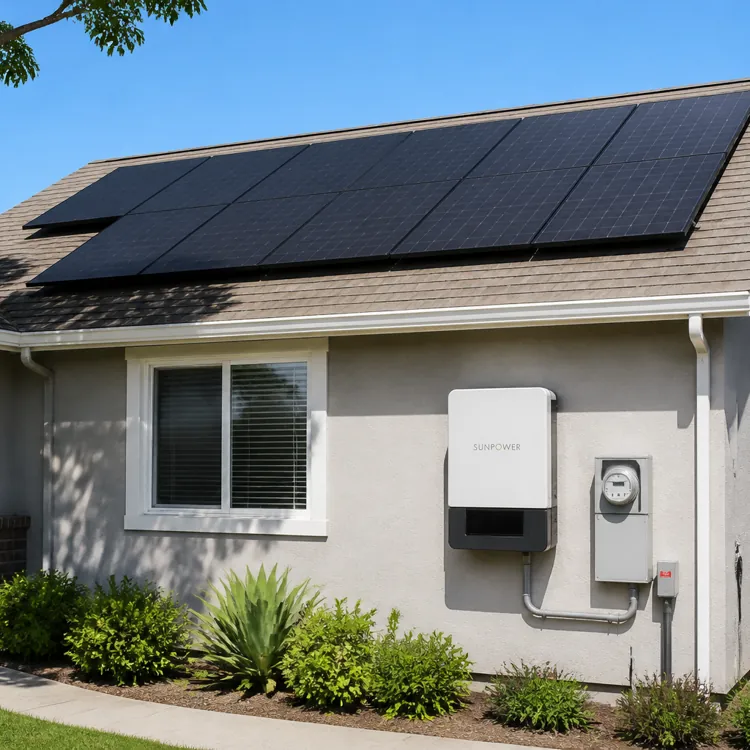
Systems also contain mounting equipment, wiring and other devices, such as inverters, batteries or a monitoring system.
Solar batteries: A battery stores energy for later use. It’s a must if you want real energy independence, and they sometimes cost as much as the panels. Battery prices range $7,000 and $18,000 or more, depending on the storage capacity, lifespan, brand and other factors.
Solar inverter: Inverters convert the electricity generated by your solar panels from direct current (DC) to alternating current (AC). Inverter costs usually range from $1,000 to $3,000.
Monitoring system: Some companies include a solar monitoring system to track how much energy your system produces and if there are any problems. If not, you can get one for $80 to $400.
System size
The cost difference between a 6-kilowatt system and a 7-kilowatt system is thousands of dollars. To estimate what size system you need, first look up how many kilowatt-hours (kWh) you used last year on your electricity bill. Divide that number by 1,200. This will be roughly the system size you need. For example, if your home used 30,000 kWh last year, you would need a 25-kW system.
» WATT’S THE DIFFERENCE? Kilowatt vs. kilowatt-hour
Labor costs
Solar equipment costs are going down, but labor costs are higher than ever in some areas. The cost of hiring professionals to install your solar system varies based on project size and complexity. Most installers set the price according to the system's wattage, with a typical cost between $2.50 and $5 per watt. In Oregon, the average cost per watt is $2.46.
DIY solar panels are cheaper but not ideal for large residential projects. We suggest hiring a professional to help with installation and permitting. Otherwise, you run the risk of safety issues, roof leaks and other problems.
Condition of your roof
If you’ve been thinking about replacing your roof, it’s a good idea to do that before getting solar panels. Quality solar panels should last 25 to 30 years, so you need your roof to last just as long. Otherwise, you’ll have to pay to remove the panels, fix your roof and reinstall them again. This is a frustrating and expensive process you should avoid if you can.
ConsumerAffairs has heard from many disgruntled solar customers who felt blindsided by expensive roof repairs needed after their solar panel installation was complete. It's important for your roof to match the system’s longevity if you want to ensure a seamless and cost-effective solar journey. Get your roof inspected, fixed or replaced before you get a solar energy system.
How can I pay for solar panels in Oregon?
You have options when it comes to paying for your solar system. You can pay cash upfront, take out a solar loan, lease your system or get a power purchase agreement (PPA). With leasing or a PPA, you get the benefits of solar, but you don’t own the system. Each scenario has pros and cons, and your choice affects the overall costs.
Solar loans: A solar loan works like any other type of home improvement loan — there’s an application and approval process, and you pay it back over time (with interest) each month. In an ideal financing scenario, your system generates enough extra power to pay off the loan. Solar loan terms typically last eight to 20 years.
Solar leases: Leasing solar panels is a great way to set up a system without the high upfront costs.
Power purchase agreements: A solar power purchase agreement (PPA) is similar to leasing. A solar developer buys, installs and maintains solar panels on your property. You buy the power generated by the system on a per kilowatt-hour (kWh) basis. It’s a fixed price, and the cents/kWh is usually cheaper than the utility’s rate for the same amount of electricity.
» SOLAR PANELS: Lease vs. buy
How to save money on solar panels in Oregon
There’s no way around it — solar panel installations are expensive. Here are some tips to maximize your savings on solar panels in Oregon:
- Lower your energy use: It’s smart to upgrade any old appliances before going solar. For example, replacing an old refrigerator with a more eco-friendly one reduces your electric load, meaning your household will need fewer solar panels overall. Your system size greatly affects how much you pay overall. The cost difference between a 9-kilowatt system and a 10-kilowatt system is thousands of dollars.
- Compare quotes: Get quotes from at least three or four different solar installers in Oregon. This lets you compare different proposed equipment, pricing, financing terms and estimated energy production to find the best overall value. Don't just go with the cheapest option without vetting quality and services.
- Explore payment options: Affordable financing makes the upfront costs of solar more manageable. For instance, leases and power purchase agreements (PPAs) can let you start saving from day one with little or no money down.
» TIPS: Get the best solar quotes
Solar incentives, tax credits and rebates in Oregon
Oregon solar incentives are generous compared to many states. The state offers solar rebates up to $5,000 and battery rebates up to $2,500. However, funding for some rebates is limited. Additional utility-specific rebates, a property tax exemption and net metering are also available.
Compare solar installation companies in Oregon
We compared ratings and reviews, equipment options, warranties, availability and other factors to pick the top solar companies in Oregon.
| Company | Customer rating | Professional installation | In-house financing | Year founded | |
|---|---|---|---|---|---|
 Blue Raven Solar | Learn More | 3.0 |  | Yes | 2014 |
 ION Solar | Learn More | 1.2 | | No | 2013 |
 ShopSolar | Learn More | 4.3 |  | No | 2018 |
FAQ
Can I get free solar panels in Oregon?
We’re not aware of a totally free solar option in Oregon. You can also lease or enter a PPA with little to no upfront costs. Though, neither is totally free. Solar leases usually come with a flat monthly fee, and PPAs make you pay per unit of electricity. In general, beware of deals that sound too good to be true. Solar scams that promise free solar panels often, unfortunately, end up costing people quite a bit of money.
» FREE SOLAR PANELS: Are they really free?
Are there any solar options for renters in Oregon?
If you're a customer of Portland General Electric, Pacific Power, or Idaho Power, and you either can't put solar panels on your own home or just don't feel like dealing with it, you can sign up for this "community solar" program that Oregon offers. It lets you get your electricity from solar farms located somewhere else instead of having to install panels on your own property. It's an optional program, but it can help lower your electric bills and support the shift to renewable energy sources.
This program is available to both homeowners and renters — anyone can take advantage of it. So, if putting solar on your own roof just isn't in the cards, this is an easy alternative way to go green and save some money on your power bill.
How does net metering work in Oregon?
In Oregon, you can benefit from net metering by generating your own electricity with solar panels. Your utility provides a free net meter to track the electricity you consume and produce, and you only pay for the net amount of electricity you use. If you produce more than you consume, your bill will show just the basic $12 service charge. Any extra energy you produce becomes credits for your future bills, especially handy for less sunny periods like winter.
How much can I save with solar panels?
On average, Oregon homeowners with solar can avoid $35,464 in total utility costs over 25 years.
Will solar panels increase the value of my home?
Installing solar panels can significantly increase a home's value. According to a Zillow study, homes with solar panels sell for 4.1% more on average. The exact increase in value varies by location, with homes in active solar markets seeing higher boosts.
What’s the difference between a solar broker and a solar installer?
A solar broker is a middleman or intermediary who helps connect homeowners with solar installation companies. A solar installer specializes in designing, procuring and installing solar panels and related components.
Ultimately, deciding between a solar broker and a solar installer depends on how much you want to be involved in the process. A broker can be helpful if you value convenience. If you want more control and potentially lower costs, it’s best to work directly with a solar installer.
How are solar costs trending in Oregon?
The cost to go solar in Oregon has fallen 47% over the last 10 years, according to the Solar Energy Industries Association.
Bottom line
Oregon is already one of the greenest states in the U.S., thanks to its renewable energy generation, low carbon emissions and waste generation per capita, and percentage of waste that is recycled or composted.
Many homeowners in Oregon already have rooftop solar systems, and thousands more get them installed each year. It is a great state for going solar. The main drawback is the high cost of purchasing and installing the panels and equipment. Many residents we've talked to say the long-term savings outweigh the upfront expense.
Solar costs vs. savings: Oregon and nearby states
| 6 kW system cost (before incentives) | 10 kW system cost (before incentives) | Typical system size needed* | Average cost per watt | Total utility power cost savings** | |
|---|---|---|---|---|---|
| California | $15,120 | $25,200 | 8.35 kW | $2.52 | $120,735 |
| Idaho | $18,120 | $30,200 | 13.03 kW | $3.02 | $36,949 |
| Nevada | $14,520 | $24,200 | 13.28 kW | $2.42 | $69,323 |
| Oregon | $14,760 | $24,600 | 12.16 kW | $2.46 | $35,464 |
| Washington | $15,240 | $25,400 | 13.52 kW | $2.54 | $31,108 |
Article sources
ConsumerAffairs writers primarily rely on government data, industry experts and original research from other reputable publications to inform their work. Specific sources for this article include:
DSIRE, "Oregon Programs." Accessed Aug. 18, 2026.
EnergySage, “The cost of solar panels in Oregon.” Accessed Aug. 18, 2026.
Solar Energy Industries Association, "Oregon Solar." Accessed Aug. 18, 2026.
Oregon Department of Energy, “Solar in Oregon.” Accessed Aug. 18, 2026.
Oregon Department of Energy, “Oregon Solar + Storage Rebate Program.” Accessed Aug. 18, 2026.