
Key insights
The average solar panel installation costs $2.98 per watt in Illinois.
Jump to insightNet metering rules in Illinois have changed for homeowners going solar in 2025 and beyond.
Jump to insightLoans, leases and PPAs make it possible to go solar with minimal upfront costs.
Jump to insightHow much do solar panels cost in Illinois?
A typical residential system costs $34,449 in Illinois. On the high end, Joseph in Illinois paid $95,000 for a renewable energy system.
Most installers price systems according to their wattage. “Cost per watt” is similar to the price per square foot when you buy a house. It helps you compare the value of solar energy systems in different sizes. The average cost per watt is $2.98 per watt in Illinois
System size is one of the biggest cost factors. A typical Illinois household needs a system with a capacity of 11.56 kW to offset enough energy costs to make solar viable. You might need a smaller or larger system depending on your household energy usage.
Solar panel costs by system size in Illinois
The table below doesn’t include the cost of a solar storage battery. A battery stores energy for later use and can provide backup power during outages, but it can add thousands of dollars to your total cost.
| 5 kW | 6 kW | 7 kW | 8 kW | 9 kW | 10 kW | |
|---|---|---|---|---|---|---|
| Statewide average | $14,900 | $17,880 | $20,860 | $23,840 | $26,820 | $29,800 |
| Chicago | $15,150 | $18,180 | $21,210 | $24,240 | $27,270 | $30,300 |
Are solar panels worth it in Illinois?
Overall, if your house is a good candidate for solar, it’s worth considering if you like the idea of lower monthly utility bills and more energy independence.
Several residents have told us that solar is worth it in Illinois. For many, it comes down to saving on electric bills. Whether it’s worth it for you depends largely on your current electricity costs and local utility rates.
Real-world examples
“Going solar has saved my life,” Valerie in Chicago told us. Her bill went from around $200 to $40. Others also report lower or more predictable energy costs, too.
“So far, everything’s working fine and my bill always stays the same, $76 a month all year round,” James in Kingston told us. “Going solar is the best thing I ever did.”
Another resident, Kathy in New Lenox, said she “loves getting this $14 ComEd bill” since going solar.
Similarly, Jake in Germantown Hills said he likes that he has locked energy costs for the next 20 or 30 years: “When power prices go up in the future I won't have to worry about it because my home is powered by the sun!”
» STILL NOT SURE? Solar energy pros and cons
Solar cost factors in Illinois
The equipment — solar panels, inverters, mounting hardware and other electrical accessories — is typically the largest portion of your overall total costs (approximately 25% to 50%). Labor, which includes planning, preparing and connecting your system to the grid, accounts for 10% to 30%. Local permits and fees are a small part of your overall costs.
Solar equipment
Like most things, high-quality panels are more expensive, but they often pay off in the long run with better performance and durability.
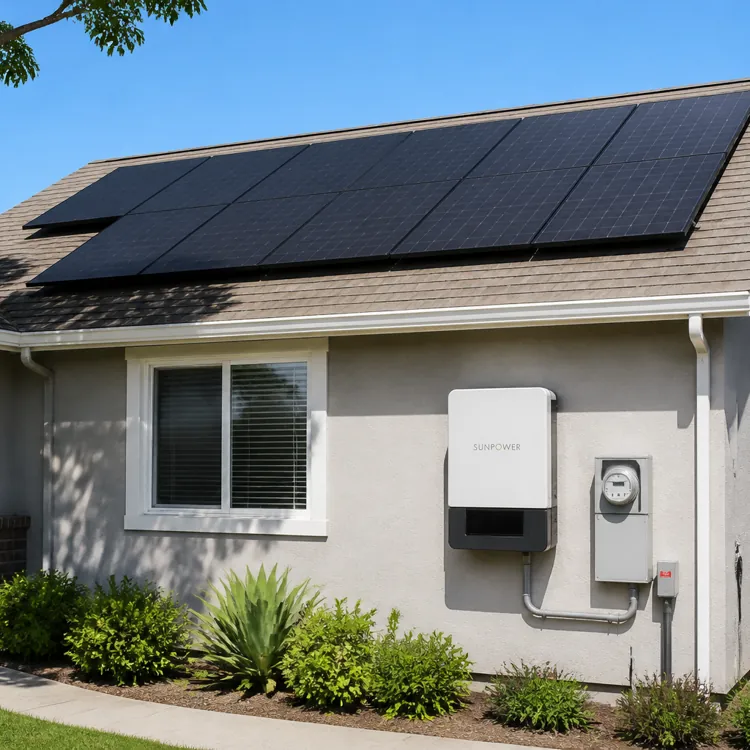
Solar arrays also contain mounting equipment, wiring and other devices, such as inverters, batteries or a monitoring system.
Solar batteries:Solar battery costs typically range $7,000 to $18,000, though some cost $30,000 or more.
Solar inverter: Inverters convert the electricity generated by your solar panels from direct current (DC) to alternating current (AC). Inverter costs usually range from $1,000 to $3,000.
Monitoring system: Some companies include a solar monitoring system to track how much energy your system produces and if there are any problems. If not, a stand-alone monitoring system costs $80 to $400.
Size of your system
The cost difference between a 6-kilowatt and 7-kilowatt system can be thousands of dollars. To estimate what size system you need, first look up how many kilowatt-hours (kWh) you used last year on your electricity bill. Divide that number by 1,200. This will be roughly the system size you need. For example, if your home used 12,000 kWh last year, you would need a 10-kW system.
» WATT’S THE DIFFERENCE? kW vs. kWh
Condition of your roof
Quality solar panels should last 25 to 30 years, so you need your roof to last just as long. Otherwise, you’ll have to pay to remove the panels, fix your roof and reinstall them again. This is a frustrating and expensive process you should avoid if you can. If you’ve been thinking about replacing your roof, it’s a good idea to do that before getting solar panels.
ConsumerAffairs often hears from disgruntled solar customers who felt blindsided by expensive roof repairs needed after their solar panel installation was complete. If you want to ensure a seamless and cost-effective solar journey, your roof must match the system's longevity. Get your roof inspected, fixed or replaced before you get a solar energy system.
Labor costs
Solar equipment costs are going down, but labor costs are higher than ever in some areas. Installing solar panels yourself might initially seem cheaper because you'll save on labor costs.
However, there are pros and cons to DIY solar to consider. If not installed correctly, solar panels pose safety risks, causing roof leaks and other problems.
Solar incentives and rebates in Illinois
The 30% federal solar tax credit has expired for residential systems installed after Dec. 31, 2025. But several Illinois incentives can still help make going solar more affordable, including rebates, RECs and net metering.
Illinois Solar for All: Helps income-qualified households access solar at a reduced cost, with required energy-bill savings for participants.
Ameren Illinois: Offers qualifying homeowners $300 per kW for solar, plus battery rebates.
ComEd: Offers eligible residential customers $300 per kW for solar and $300 per kWh for qualifying battery storage.
Property tax break: Homeowners with qualifying solar systems can apply for an alternate property tax valuation that can prevent the system from increasing their assessment.
How net metering works in Illinois
Net metering is a system of give-and-take between you and your utility company. Net metering gives you bill credits for eligible excess solar power you send to the grid. Those credits can help offset electricity you buy from the grid at other times.
For ComEd, Ameren and MidAmerican customers, net metering changed on Jan. 1, 2025. New customers generally receive less valuable credits than customers grandfathered under the older rules.
Renewable Energy Credits (RECs) vs. net metering
Illinois Shines provides solar incentives through Renewable Energy Credits (RECs). Payments go to approved vendors, which may pass some or all of the savings on to homeowners. Selling your RECs through Illinois Shines does not affect your net-metering credits.
RECs: Represent the environmental value of solar power. One REC equals 1,000 kWh of renewable electricity.
Net metering credits: Lower your electric bill based on the solar power your system produces or sends to the grid.
» MORE: Solar incentives in Illinois
How to save money on solar panels in Illinois
There’s no way around it — solar panel installations are expensive. Here are some tips to maximize your savings on solar panels in Illinois:
Compare quotes: Get quotes from at least three or four different solar companies in Illinois. This lets you compare different proposed equipment, pricing, financing terms and estimated energy production to find the best overall value. Don't just go with the cheapest option without vetting quality and services.
Lower your electrical load: Before going solar, it’s smart to upgrade any old appliances. For example, replacing an old refrigerator with a more eco-friendly one reduces your electric load, which also helps lower your utility bill. If you use less electricity, you need fewer solar panels, making the whole system cheaper.
How can I pay for solar panels in Illinois?
You have options when it comes to paying for your solar system. You can pay cash upfront, take out a solar loan, lease your system or get a power purchase agreement (PPA).
Solar loans work like any other type of home improvement loan. There’s an application and approval process. You pay it back over time (with interest) each month.
Leasing solar panels lets you set up a system without the high upfront costs. Monthly payments usually range $150 to $250. Agreements last 20 to 25 years.
Power purchase agreementsare similar to leases. A third party owns the panels, and you pay for the electricity they produce. Illinois Shines PPAs pass REC savings on to customers, but rates may increase over time, so check the contract carefully.
» SOLAR PANELS: Lease vs. buy
Compare solar installation companies in Illinois
We compared ratings and reviews, equipment options, warranties, availability and other factors to pick the top solar companies in Illinois.
| Company | Customer rating | Professional installation | Payment options | Year founded | |
|---|---|---|---|---|---|
 Blue Raven Solar | Learn More | 3.0 |  | Cash, loan, lease, PPA | 2014 |
 Sunrun | Get Started | 4.3 | | Cash, loan, lease, PPA | 2007 |
 Project Solar | Learn More | 3.0 | | Cash, loan | 2020 |
 ShopSolar | Learn More | 4.3 |  | Cash, loan | 2018 |
FAQ
Can I get free solar panels in Illinois?
We’re not aware of a totally free solar option in Illinois. You can lease or enter a PPA with little to no upfront costs, though neither is totally free. Solar leases usually come with a flat monthly fee, and PPAs make you pay per unit of electricity. In general, beware of deals that sound too good to be true. Solar scams that promise free solar panels often, unfortunately, end up costing people quite a bit of money.
» FREE SOLAR PANELS: Are they really free?
What does solar panel efficiency mean?
You’ll hear installers talk about how “efficient” their panels are. Solar panel efficiency is a measure of how well a panel makes electricity. The more efficient the solar panels you buy are, the fewer panels you need. While more efficient panels cost a little more, you save by buying fewer panels.
What are the different types of solar panels?
In general, monocrystalline panels are considered the best bang for your buck. Cheaper solar panels are typically polycrystalline. The difference comes down to efficiency and materials: Monocrystalline panels are made from pure, single silicon crystals; various silicon fragments melted together are used to make polycrystalline panels.
Will solar panels increase the value of my home?
Installing solar panels can significantly increase a home's value. According to a Zillow study, homes with solar panels sell for 4.1% more on average. The exact increase in value varies by location, with homes in active solar markets seeing higher boosts.
» EXPLORE: Where solar savings go the furthest
Bottom line
On average, it costs $14,900 to $29,800 for panels that last about 25 years. Over that same time period, Illinois homeowners with solar panels should avoid approximately $57,382 in total utility costs.
The ConsumerAffairs Research Team has conducted extensive research to compare the overall costs of going solar in Illinois and other states.
Solar costs vs. savings: Illinois and nearby states
| 6-kW system cost (before incentives | 10-kW system cost (before incentives) | Typical system size needed* | Average cost per watt | Total utility power cost savings** | |
|---|---|---|---|---|---|
| Illinois | $17,880 | $29,800 | 11.56 kW | $2.98 | $57,382 |
| Indiana | $16,500 | $27,500 | 11.91 kW | $2.75 | $62,208 |
| Iowa | $19,680 | $32,800 | 13.19 kW | $3.28 | $55,871 |
| Kentucky | $15,240 | $25,400 | 14.75 kW | $2.54 | $42,146 |
| Missouri | $15,000 | $25,000 | 13.42 kW | $2.50 | $63,348 |
| Wisconsin | $18,360 | $30,600 | 13.42 kW | $3.06 | $56,047 |
Article sources
ConsumerAffairs writers primarily rely on government data, industry experts and original research from other reputable publications to inform their work. Specific sources for this article include:
DSIRE, “Illinois Solar Programs.” Accessed Sept. 15, 2026.
EnergySage, “The cost of solar panels in Illinois.” Accessed Sept. 15, 2026.
Solar Energy Industries Association, “Illinois Solar.” Accessed Sept. 15, 2026.
SolarReviews, “How much do solar panels cost in Illinois?” Accessed Sept. 15, 2026.
Citizens Utility Board, “Introduction to Rooftop Solar.” Accessed Sept. 15, 2026.
Citizens Utility Board, “Illinois Net Metering: Systems installed post-2025.” Accessed Sept. 15, 2026.
Illinois Environmental Protection Agency, “Climate and Equitable Jobs Act.” Accessed Sept. 15, 2026.