

How much do solar panels cost in New Jersey?
A typical residential solar panel installation costs $20,775 in New Jersey. On the higher end, Vina in Keansburg spent $55,000 going solar.
The size of your system is a big factor in your overall solar costs. A typical New Jersey household needs a 7.5 kW (kilowatt) system to adequately power its home. Depending on your household’s energy usage, you might need a smaller or larger system.
Solar panel costs by system size in New Jersey
| 5 kW | 6 kW | 7 kW | 8 kW | 9 kW | 10 kW | |
|---|---|---|---|---|---|---|
| Statewide average | $13,827 | $16,592 | $19,357 | $22,122 | $24,888 | $27,653 |
| Newark | $15,241 | $18,289 | $21,337 | $24,385 | $27,434 | $30,482 |
Are solar panels worth it in New Jersey?
We’ve talked to hundreds of residents who have already gone solar, and many say it’s worth it in New Jersey. “They are worth every dollar I spent on them,” Lisa in Elizabeth told us. Over 25 years, homeowners with solar panels avoid $87,420 in utility costs on average.
Homeowners with solar panels typically save $20,000 to $90,000 over 25 years.
Another resident, Brandon in Camden, said his energy production has been even better than anticipated: “It's definitely worth it. Even though they're not the cheapest out there, as long as somebody understands the value of what you put into something, it's gonna be beneficial.”
Michael in Voorhees told us his electric bill is $0 since going solar. Eric in Jackson isn’t generating 100% of his energy needs but says his utilities are $30 to $70 each February.
But it doesn’t work out for everyone. We’ve also heard plenty of complaints about billing problems, poor customer service and issues with system performance. That’s why it’s so important to do your research before hiring a solar company.
» STILL NOT SURE? Solar energy pros and cons
Cost factors of going solar in New Jersey
The equipment — solar panels, inverters, mounting hardware and other electrical accessories — is typically the largest portion of your total costs (approximately 25% to 50%). Labor, which includes planning, preparing and connecting your system to the grid, accounts for 10% to 30%. Local permits and fees are a small part of your overall costs.
Solar panels
Most of your solar equipment costs come down to how much you pay for solar panels. You’ll hear installers talk about how “efficient” their panels are. Solar panel efficiency is a measure of how well a panel makes electricity.
Investing in quality panels pays off in the long run because they generate more power over time. For example, Carl in Metuchen considered proposals from four companies and chose one “because the kW output was equal to or higher than the others, the panels were the most efficient, and the cost/kW was at least as good or better than the others.”
However, lower-efficiency panels may be more cost-effective if space isn't a concern.
» COMPARE: Most efficient solar panels
Solar batteries
A battery stores energy for later use and can provide backup power during outages. It’s especially important if you want to go off-grid.
Solar battery costs vary by storage capacity, life span, brand and other factors. Expect to pay between $7,000 and $18,000, though some cost $30,000 or more.
Additional equipment costs
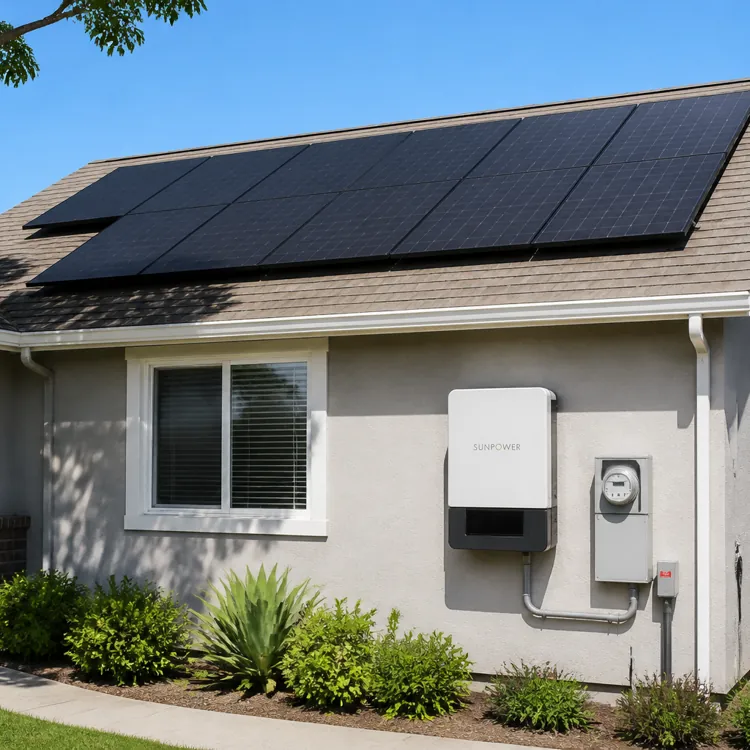
Solar arrays also contain mounting equipment, wiring and other devices, such as inverters.
Solar inverter: Inverters convert the electricity generated by your solar panels from direct current (DC) to alternating current (AC). Inverter costs usually range from $1,000 to $3,000.
Monitoring system: Some companies include a solar monitoring system to track how much energy your system produces and if there are any problems. If not, you can buy a stand-alone monitoring system for $80 to $400.
Condition of your roof
Solar panels last about 25 years. You need your roof to last at least as long. Otherwise, you’ll have to pay to remove the panels, repair your roof and reinstall them, which can cost thousands of dollars.
Dorrine in Hammonton found this out the hard way when she was told she had to pay $4,500 to remove the panels to fix a leaky roof.
Another resident, Charles in Jackson, was quoted up to $6,350 for removal and reinstallation. “If I knew that, I would have waited until AFTER I got my new roof to convert to solar,” he told us.
This is a frustrating and expensive ordeal, and you should avoid it if you can. Get your roof inspected, fixed or replaced before you go solar.
Local permits and fees
Before installing solar panels, you need building and electrical permits from your local building department. The installation contractor usually handles this and includes permitting costs in the overall price.
Pro tip
Upgrade old appliances before going solar. For example, replacing an old refrigerator with a more eco-friendly one reduces your electric load, which also helps lower your utility bill. If you use less electricity, you need fewer solar panels, making the whole system cheaper.
How to pay for solar panels in New Jersey
You can pay cash, but many homeowners finance or lease.
Solar loans
A solar loan works like any other type of home improvement loan. Ideally, the savings on your electric bill are enough to offset some or all of your monthly loan payment, like Marisol in Perth Amboy.
“I'm financing the system, and what I'm producing covers the price every month,” Marisol told us. “Plus, I'm making a little extra. My electric bill is $4.99 now.”
Solar leases
Leasing solar panels lets you set up a system without the high upfront costs. One resident, Marla in Paulsboro, started leasing a 26-panel system last year. “I pay one flat fee of $97 per month for my solar rental for 25 years, and the electric bill taxes, which have so far ranged between $5 to $7 per month,” she said.
A solar power purchase agreement (PPA) is similar to leasing. With PPAs, you buy the power generated by the system on a per-kilowatt-hour (kWh) basis. The rate in cents/kWh is usually cheaper than the utility’s rate for the same amount of electricity.
» SOLAR PANELS: Lease vs. buy
Solar incentives, tax credits and rebates in New Jersey
The 30% federal residential solar tax credit has expired, but New Jersey still offers several ways to lower the cost of going solar:
Sales tax exemption: Solar equipment is exempt from the state’s 6.625% sales tax.
Property tax exemption: Adding solar generally won’t increase your property taxes, though you need to apply for the exemption.
SREC-II payments: Eligible homeowners can earn extra money based on how much solar energy their system produces.
Net metering: Extra solar power sent to the grid can earn credits at the retail electricity rate.
» MORE: Solar incentives in New Jersey
Compare solar installation companies in New Jersey
We compared ratings and reviews, equipment options, warranties, availability and other factors to pick the top solar companies in New Jersey.
| Company | Customer rating | Pro install | Payment options | Year founded | |
|---|---|---|---|---|---|
 Sunrun | Learn More | 4.2 |  | Cash, loan, lease, PPA | 2007 |
 Project Solar | Learn More | 3.7 | | Cash, loan | 2020 |
 Freedom Forever | Learn More | 3.6 | | Cash, loan, lease | 2011 |
 CleanChoice Energy | Learn More | 1.4 |  | Varies | 2012 |
 ShopSolar | Learn More | 4.5 | | Cash, loan | 2018 |
FAQ
Can I get free solar panels in New Jersey?
We’re not aware of a totally free solar option in New Jersey. You can lease or enter a power purchase agreement (PPA) with minimal upfront costs. Neither is totally free. Solar leases usually come with a flat monthly fee, and PPAs make you pay per unit of electricity. In general, beware of deals that sound too good to be true.
» LEARN MORE: Solar scams
How does net metering work in New Jersey?
New Jersey's net metering program lets homeowners earn bill credits for extra solar power sent to the grid.
Those credits generally offset electricity at the full retail rate over a 12-month period. If you still have unused credits at the end of the year, they’re paid out at a lower wholesale-based rate.
For homeowners, that means net metering can significantly improve long-term solar savings.
How do I know what system size I need?
Check the amount of electricity you used last year in kilowatt-hours (kWh). You’ll find this information in your electric account dashboard online. Then, divide your annual kWh by 1,200 to find the system size you need. For example, if your home used 15,000 kWh last year, you would need a 13-kW system.
Bottom line
Residential solar panel system costs typically fall between $10,000 and $30,000 or higher, depending on factors like the system’s size, local labor rates and available incentives. New Jersey homeowners with solar panels can typically save more than that in total avoided energy costs over the lifetime of a system.
The ConsumerAffairs Research Team has conducted extensive research to compare the costs of going solar in New Jersey and other states.
Solar costs vs. savings: New Jersey and nearby states
| 6-kW system cost (before incentives) | 10-kW system cost (before incentives) | Typical system size needed* | Average cost per watt | Total utility power cost savings** | |
|---|---|---|---|---|---|
| Delaware | $13,934 | $23,224 | 7.7 kW | $2.32 | $54,494 |
| New Jersey | $16,592 | $27,653 | 7.5 kW | $2.77 | $87,420 |
| New York | $16,641 | $27,734 | 6.9 kW | $2.77 | $57,678 |
| Pennsylvania | $15,802 | $26,336 | 7.8 kW | $2.63 | $65,657 |
Article sources
ConsumerAffairs writers primarily rely on government data, industry experts and original research from other reputable publications to inform their work. Specific sources for this article include:
DSIRE, “New Jersey Programs.” Accessed Aug. 27, 2026.
State of New Jersey Board of Public Utilities, “NJBPU Approves 3,750 MW Successor Solar Incentive Program.” Accessed Aug. 27, 2026.
New Jersey Treasury, “Sales Tax Exemption Administration.” Accessed Aug. 27, 2026.