

Solar tax incentives in New Jersey
- State sales tax exemption: Solar systems are exempt from sales tax at the time of purchase. This exemption helps lower the installation costs for high-performing solar panels.
- State property tax exemption: Homeowners can benefit from increased property value for installing a solar system without paying additional taxes. This incentive makes going solar even more economically appealing in New Jersey. However, it is not automatic. You must file Form CRES with your local municipal tax assessor after installation to lock it in.
Successor Solar Incentive (SuSI) program
New Jersey’s SuSI program rewards homeowners for the solar energy their systems produce. For every megawatt-hour (MWh) of electricity generated, an eligible system earns one Solar Renewable Energy Certificate II, or SREC-II.
The program has two parts. The Administratively Determined Incentive (ADI) Program covers residential solar, community solar and smaller commercial projects. A separate competitive program covers larger projects.
SRECs vs. SREC-IIs
SREC-IIs replaced New Jersey’s earlier SREC and TREC programs. Unlike the original market-based SRECs, SREC-II rates are set by the state, making payments more predictable.
Residential systems registered through July 26, 2026, earn $85 per SREC-II for 15 years. Systems registered on or after July 27, 2026, earn $77 per SREC-II.
SREC-II payments are separate from net metering. Net metering reduces your electric bill, while SREC-IIs provide additional income based on how much solar energy your system generates.
New Jersey Community Solar Energy Program
If your roof isn’t a good fit for solar — or you rent — the Community Solar Energy Program (CSEP) lets you subscribe to a shared solar project and still get credited on your electric bill.
The New Jersey Board of Public Utilities made the program permanent in August 2023 after a successful pilot, and expanded it by another 3,000 megawatts of capacity in March 2026. Subscribers are guaranteed a bill credit discount of at least 15%, and at least 51% of each project’s capacity must serve low- and moderate-income subscribers.
Additional solar incentives in New Jersey
The Residential New Construction program provides a generous financial incentive for builders who meet or exceed EPA Energy Star program standards.
| Incentive type | Amount | Eligible solar equipment | Applicable sectors | Administrator | |
|---|---|---|---|---|---|
| Garden State Commercial Property Assessed Clean Energy Loan Program (C-PACE) | Commercial loan program | Loan for property owners to pay for energy improvements | Solar panels, solar water heating and solar space heating systems | Commercial, industrial, multifamily residential (5+), agricultural, schools | State of New Jersey with local municipalities able to opt in |
| Successor Solar Incentive Program - Competitive Solar Incentive (CSI) | Commercial financial incentive | Awards payouts through renewable energy certificates on a pay-per-bid mechanism and continues for 15 years | Solar panels | Grid supply and non-residential net metered solar projects with nameplate capacity greater than 5 MW | New Jersey Board of Public Utilities |
What to know about net metering in New Jersey
New Jersey has a statewide net metering policy that lets homeowners earn bill credits for excess solar electricity sent to the grid. The state’s four investor-owned electric utilities — PSE&G, Jersey Central Power & Light, Atlantic City Electric and Rockland Electric — offer net metering under state rules.
How it works
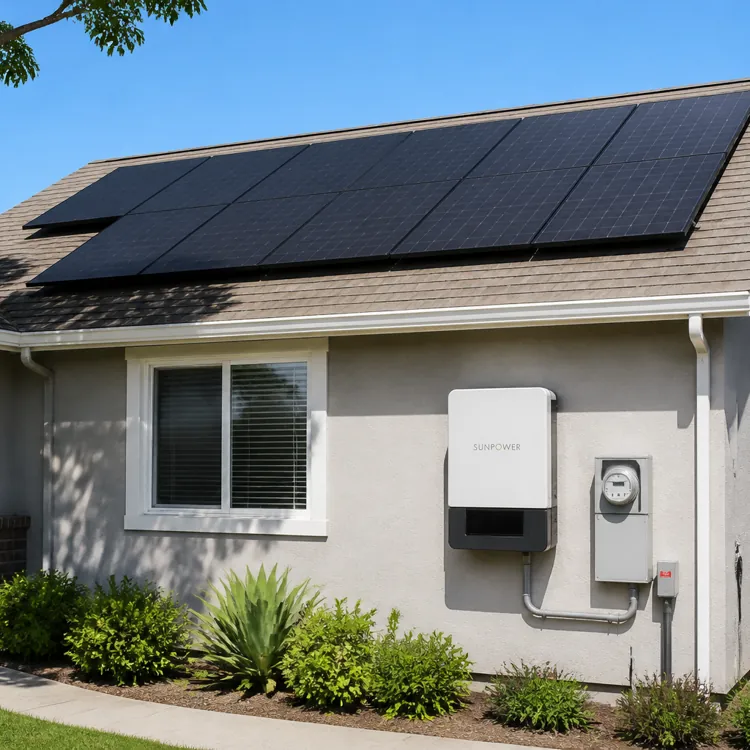
A bidirectional meter tracks how much electricity you take from the grid and how much excess solar power you send back. When your panels produce more than your home needs, the extra electricity earns credits. You can use those credits when your system produces less electricity, such as at night or during cloudy weather.
Why it’s worth it
Solar generation can offset your electricity use at the full retail rate over a 12-month period. This means each kilowatt-hour credited through net metering is generally worth the same as a kilowatt-hour you would otherwise buy from your electricity provider.
At the end of the annual period, any credits left over are converted using the utility’s avoided wholesale power cost, which is lower than the retail electricity rate.
Marla in Paulsboro got credit for generating an extra 3,200 kWh one year. When we followed up, she told us the panels still generate plenty of electricity. She expects to get $600 to $900 back each year.
Marisol in Perth Amboy is also coming out ahead. She said she earns $182 or $200 per month, which is enough to pay her solar loan “plus two tanks of gas.”
Federal solar programs
Beyond the state programs below, a few ongoing federal options can also help New Jersey homeowners offset the cost of going solar or financing other energy upgrades:
- Residential Energy Conservation Subsidy Exclusion: Under Internal Revenue Code Section 136, certain utility-provided subsidies for buying or installing solar and other energy-conservation equipment aren’t counted as taxable income.
- Energy-Efficient Mortgages: FHA-backed Energy-Efficient Mortgages let homebuyers and homeowners roll the cost of a solar installation or other qualifying energy upgrades into their home loan.
- Fannie Mae Green Financing: Fannie Mae’s multifamily green financing options offer better loan terms to properties that add solar or cut energy and water use; it’s less relevant to single-family homeowners but can apply to larger residential projects.
How much are solar panels in New Jersey?
Before any incentives, solar panel costs in New Jersey typically range from $12,950 to $25,900.
Leasing or entering a power purchase agreement (PPA) is often cheaper upfront, but you typically won’t own the system or qualify for ownership-based incentives like the state’s SREC-II payments.
Your system size greatly affects how much you pay overall. The typical system size for solar systems in New Jersey is 12.26 kW. You might need a larger or smaller system, depending on your average household energy usage.
Average solar panel costs by system size in New Jersey
| 5 kW | 6 kW | 7 kW | 8 kW | 9 kW | 10 kW | |
|---|---|---|---|---|---|---|
| Statewide average | $12,950 | $15,540 | $18,130 | $20,720 | $23,310 | $25,900 |
| Newark | $15,050 | $18,060 | $21,070 | $24,080 | $27,090 | $30,100 |
Find solar companies in New Jersey
A good solar company helps you navigate local incentives, permitting and net metering policies. Compare our picks for New Jersey’s top solar companies to learn more.
| Company | Customer rating | Pro install | Payment options | Year founded | |
|---|---|---|---|---|---|
 Sunrun | Get Started | 4.3 |  | Cash, loan, lease, PPA | 2007 |
 Project Solar | Learn More | 3.9 | | Cash, loan | 2020 |
 Momentum Solar | Learn More | 1.5 | | Cash, loan, lease | 2009 |
 CleanChoice Energy | Learn More | 1.7 |  | Varies | 2012 |
 ShopSolar | Learn More | 4.3 | | Cash, loan | 2018 |
 Tesla Energy | Learn More | 1.9 | | Cash, loan and lease | 2015 |
FAQ
How does a PPA work?
A solar power purchase agreement (PPA) works similarly to a lease. A solar developer buys, installs and maintains the panels on your property, and you pay for the power generated on a per kilowatt-hour (kWh) basis. The cost per kWh is typically lower than the utility’s rate for the same amount of electricity. It’s a good option to get solar without high upfront costs, but you’ll miss out on some tax incentives.
Is my HOA allowed to restrict solar panels?
No. New Jersey Statute § 45:22A-48.2 clearly states that homeowners associations (and similar organizations) “shall not adopt or enforce a restriction, covenant, bylaw, rule or regulation prohibiting the installation of solar collectors on certain roofs of dwelling units.” However, an association can regulate the installation and maintenance of your solar panels.
Can I get free solar panels in New Jersey?
No, but you can enter a solar lease or PPA with little to no upfront costs. Still, neither is totally free. Solar leases generally require a flat monthly fee; PPAs make you pay per unit of electricity.
How can I pay for solar panels?
You can pay cash, but most people finance solar panels with a solar loan. It works a lot like any other type of loan — there’s an application and approval process, and you pay it back over time (with interest). You also have the option of getting a lease or power purchase agreement.
How much can I save with solar panels in New Jersey?
On average, New Jersey homeowners with solar panels avoid $64,962 in utility costs over 25 years. Even if you don’t generate 100% of your energy needs, you can still save a lot of money versus paying traditional utility bills. In New Jersey, solar panels usually pay for themselves within 7.52 years.
How do I know if my house is a good candidate for solar?
It’s best to have plenty of unshaded roof space that faces south or west for optimal sun exposure. It’s also smart to upgrade any old, inefficient appliances first. Reducing your electrical loads now means you can get a smaller system, which will be cheaper.
The condition of your roof matters too — if it needs replacement soon, do that before installing solar panels. Installing solar panels on an old roof might mean you have to remove the panels, replace your roof and then reinstall the panels again. This will cost around $5,000 for a 19-panel setup.
Solar photovoltaic (PV) technologies, more commonly known as solar panels, absorb sunlight and convert it into usable electricity. If you have a lot of shading around your house, they might not get enough sun to power your home.
What has New Jersey’s investment in solar been so far?
Total solar investment in the state amounts to $21.1 billion, according to the Solar Energy Industries Association.
Bottom line
State policies have already encouraged rooftop solar projects, according to the Energy Information Administration. Residents can also invest in community solar projects if they wish, under a newly permanent state program.
The ConsumerAffairs Research Team conducted an in-depth analysis to determine the average costs of going solar and incentives in other states. Turns out, it’s worth it for many homeowners, particularly in New Jersey.
Solar costs vs. savings: New Jersey and nearby states
| 6-kW system cost (before incentives) | 10-kW system cost (before incentives) | Typical system size needed* | Average cost per watt | Total utility power cost savings** | |
|---|---|---|---|---|---|
| Delaware | $15,840 | $26,400 | 13.12 kW | $2.64 | $61,442 |
| New Jersey | $15,540 | $25,900 | 12.26 kW | $2.59 | $64,962 |
| New York | $16,560 | $27,600 | 12.24 kW | $2.76 | $71,770 |
| Pennsylvania | $15,480 | $25,800 | 12.85 kW | $2.58 | $61,682 |
Article sources
ConsumerAffairs writers primarily rely on government data, industry experts and original research from other reputable publications to inform their work. Specific sources for this article include:
- DSIRE, “New Jersey Programs.” Accessed July 14, 2026.
- Official Site of the state of New Jersey, “Notice in the Matter of the Establishment Of A Remote Net Metering Application and Approval Process Pursuant to L. 2023, C. 190.” Accessed July 14, 2026.
- Solar Energy Industries Association (SEIA), “New Jersey Solar.” Accessed July 14, 2026.
- NJBIZ, “Community solar program now permanent in NJ.” Accessed July 14, 2026.
- U.S. Energy Information Administration, “Record U.S. small-scale solar capacity was added in 2022.” Accessed July 14, 2026.