

How much do solar panels cost in Wisconsin?
Before considering any incentives, a 7-kilowatt (kW) solar panel system costs $21,420 in Wisconsin. Prices in Milwaukee are comparable, ranging from $15,150 to $30,300. It costs between $15,300 and $30,600 to go solar in Madison.
Average solar panel costs by system size in Wisconsin
| 5 kW | 6 kW | 7 kW | 8 kW | 9 kW | 10 kW | |
|---|---|---|---|---|---|---|
| Statewide | $15,300 | $18,360 | $21,420 | $24,480 | $27,540 | $30,600 |
| Milwaukee | $15,150 | $18,180 | $21,210 | $24,240 | $27,270 | $30,300 |
| Madison | $15,300 | $18,360 | $21,420 | $24,480 | $27,540 | $30,600 |
NOTE: The estimated costs above do not include the price of a solar storage battery. Adding a battery costs $7,000 to $18,000, which can double your total system costs.
How to compare solar quotes
Most installers set the price according to the system's wattage. Similar to “cost per square foot” when buying a house, “cost per watt” allows you to compare the relative value of a solar panel system. It shows you the per-dollar price of your system’s energy production potential.
Solar prices in Wisconsin have decreased 42% over the last decade.
Get quotes from at least three to four different solar companies in Wisconsin. Make sure the estimated price includes all the equipment you want, labor and grid hookup fees. Watch for hidden costs for system monitoring or maintenance service charges.
According to our latest research, the average cost per watt is $3.06 in Wisconsin.
Solar panel costs in Wisconsin
| Statewide | Milwaukee | Madison | |
|---|---|---|---|
| Average cost per watt | $3.06 | $3.03 | $3.06 |
| Typical installation cost | $41,065 | $36,087 | $40,637 |
Are solar panels worth it in Wisconsin?
We’ve talked to several residents who have already gone solar. It’s often worth it in Wisconsin for the long-term savings on utility bills. Over 25 years, residents with solar panels avoid $56,047 in utility costs on average.
Homeowners with solar panels typically save $20,000 to $90,000 over 25 years.
“I wanted to save the planet and save a little money,” Nathaniel in Eau Claire said. Now, his system is “pumping out a lot of power and it's billing us only a few bucks.”
Another resident, Lynda in Madison, told us, “I paid the electric bill today and it was $37, which is low. $25 of that is the fee they charge us every month for being attached to the grid.” A $37 electric bill is especially low considering they work remotely and have an electric vehicle charger. “My husband goes in the app all the time and likes looking at it. He's very happy with it. It's like a new toy,” Lynda added.
I wanted to save the planet and save a little money.”
Regional solar considerations in Wisconsin
Whether going solar is worth it depends on where you live in Wisconsin. The state only averages 3 to 4 peak sun hours daily. Lots of shading — like tall trees above your roof — will make your system less efficient. Since solar panels generate more power with more sunlight, this can affect the financial returns on your investment.
| Statewide | Milwaukee | Madison | |
|---|---|---|---|
| Typical installation cost | $41,065 | $36,087 | $40,637 |
| Payback period | 8.8 years | 11.1 years | 8.8 years |
| Utility costs avoided over 25 years | $56,047 | $46,147 | $56,047 |
» STILL NOT SURE? Solar energy pros and cons
Solar panel installation cost factors in Wisconsin
How much you pay to go solar largely depends on the size of your system, the equipment you want and the condition of your roof. Local permits and fees are a small part of your overall costs.
Size of your system
A typical Wisconsin household needs about a 13.42 kW system, which costs $41,065 on average. Depending on your energy needs, you might need a smaller or larger system.
How to estimate what system size you need: First, look at your electric bill. It should say how many kilowatt-hours (kWh) you used last year. Then, divide that number by 1,200 to estimate your system size in kilowatts (kW).
For example, if you used 12,000 kWh of electricity last year, you would need a 10-kW system. If you used 10,800 kWh, you would need a 9-kW system.
Pro tip
Upgrade old appliances with more eco-friendly ones before you go solar. If you use less electricity, you need fewer solar panels, which makes the entire system more cost-effective.
» WATT’S THE DIFFERENCE? kW vs. kWh
Solar equipment
The equipment — panels, inverters, mounting hardware and other electrical accessories — is typically the largest portion of your overall solar costs (approximately 25% to 50%).
Solar panels: Prices vary by efficiency rating. In general, monocrystalline panels are considered the best value. Cheaper solar panels are typically polycrystalline.
Solar batteries: Solar battery costs generally range from $7,000 to $18,000. Batteries store any excess energy your panels produce during the day, allowing you to keep your lights on at night. Without a battery, that unused clean energy goes to the power grid, and you’ll still depend on utility power after dark.
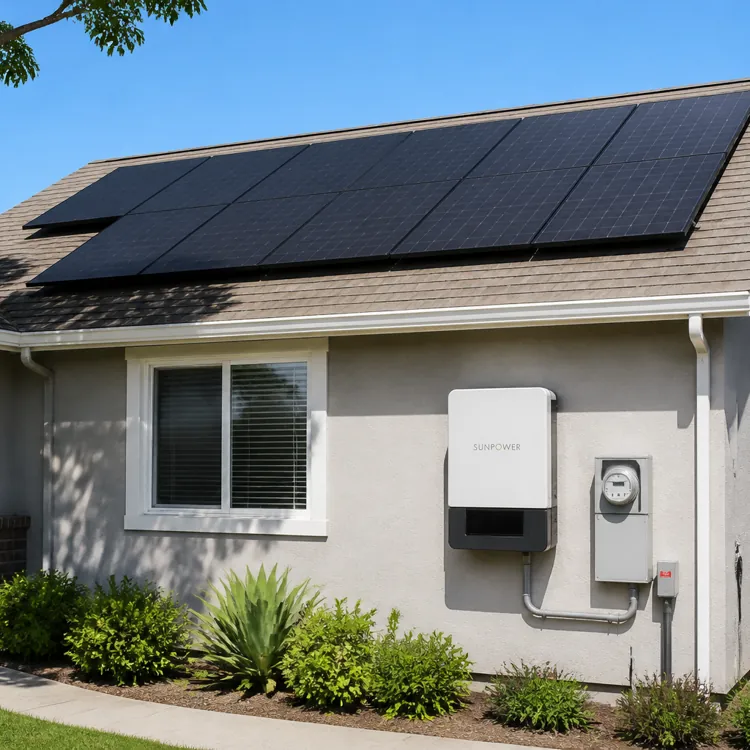
Solar inverters: Inverters convert solar power from direct current (DC) to alternating current (AC). Inverter costs typically range from $1,000 to $3,000.
Monitoring system: Some companies include a solar monitoring system to track energy production and identify potential issues. If not, you can buy a standalone system for $80 to $400.
Condition of your roof
High-quality solar panels last 25 to 30 years, and your roof needs to last just as long.
ConsumerAffairs often hears from customers who were blindsided by expensive roof repairs discovered after their solar panels were already installed. This is a frustrating and expensive process — avoid it if you can.
To ensure a seamless and cost-effective solar journey, your roof must match the system's longevity. Get your roof inspected, fixed or replaced before you go solar.
Local labor costs
Labor, which includes planning, preparing and connecting your solar system to the grid, accounts for 10% to 30% of total costs. Solar equipment costs are going down, but labor costs are still relatively high in some parts of the state.
You might be tempted to install the system yourself. DIY solar panels are cheaper, but there are potential issues: Incorrectly installed solar panels can cause roof leaks, electrical safety risks and other dangerous problems.
Local permits and fees
Wisconsin’s solar panel installation permit costs generally fall between $25 and $350. An interconnection fee from the local electric company is also required to approve the connection of solar panels to the grid.
Pro tip
If you have an electric car, ask about EV charger options. Homeowners in rural parts of Wisconsin should also consider critter guards to protect the panels.
» RELATED: How many solar panels do you need for your house?
How can I pay for solar panels in Wisconsin?
Financing options and leasing programs make solar more affordable for Wisconsin homeowners. Ideally, your monthly electricity savings offset some or all of your solar payment.
Solar loans work like any other type of home improvement loan. There’s an application and approval process. You pay it back over time (with interest) each month.
Leasing solar panels lets you set up a system without the high upfront costs. Monthly payments usually range $150 to $250. Agreements last 20 to 25 years.
» SOLAR PANELS: Lease vs. buy
Solar incentives in Wisconsin
The residential federal solar tax credit has expired, but Wisconsin still has a few incentives that can lower the cost of going solar:
Focus on Energy: Eligible single-family homes can get $600 per kW, up to $2,400, for qualifying solar systems.
Tax exemptions: Qualifying solar equipment is exempt from state sales tax, and solar systems generally don’t increase your property taxes.
Milwaukee Shines: Milwaukee homeowners may qualify for low-interest solar loans of up to $25,000.
Pro tip
Eligibility and funding vary, so check current program requirements before installing solar.
» MORE: Solar incentives in Wisconsin
Compare solar companies in Wisconsin
We compared ratings and reviews, equipment options, warranties, availability and other factors to pick the top solar companies in Wisconsin. Read our guides to solar companies in Milwaukee and solar companies in Madison for more information.
| Company | Customer rating | Max. panel efficiency | Panel warranty | Year founded | |
|---|---|---|---|---|---|
 Project Solar | Learn More | 3.4 | 20.9% | 25 years | 2020 |
 ION Solar | Learn More | 1.2 | 21.9% | 30 years | 2013 |
 SunPower | Learn More | 3.3 | 22.8% | 25 years | 1985 |
 ShopSolar | Learn More | 4.3 | Varies | Varies | 2018 |
FAQ
Can I get free solar panels in Wisconsin?
We’re not aware of a totally free solar option in Wisconsin. Unfortunately, solar scams that promise free solar panels often end up costing people quite a bit of money.
» FREE SOLAR PANELS: Are they really free?
How does net metering work in Wisconsin?
Net metering lets you earn credits for sending excess solar energy to the grid.Wisconsin doesn’t have one statewide solar buyback rate. How much you get for extra electricity sent to the grid depends on your utility.
Some utilities offer credits close to the retail electricity rate, while others pay a lower rate. That can make your utility’s net metering policy an important part of whether solar is worth it.
What is the difference between monocrystalline and polycrystalline solar panels?
The difference comes down to efficiency and materials: monocrystalline panels are made from pure, single silicon crystals, whereas polycrystalline panels are made from various silicon fragments melted together. Both are types of photovoltaic (PV) solar panels.
Are solar panels expensive to maintain?
No, solar panels have relatively low maintenance costs. If you clean the solar panels yourself, the only maintenance cost will be the water used to hose them down. Hiring a professional to clean your solar panels typically costs between $100 and $350.
How do solar batteries work?
Solar panels only generate electricity when the sun is shining. A solar battery stores the extra energy your panels produce during the day so you can use it at night or during a power outage.
Without a battery, that unused energy goes to the grid, and you’ll still depend on utility power after dark.
Bottom line
Home solar system costs typically range from $10,000 to $30,000 or higher, depending on factors such as system size, local labor rates and available incentives.
The ConsumerAffairs Research Team has conducted extensive research to compare the costs of going solar in Wisconsin and other states.
Solar costs vs. savings: Wisconsin and nearby states
| 6-kW system cost (before incentives) | 10-kW system cost (before incentives) | Typical system size needed* | Average cost per watt | Total utility power cost savings** | |
|---|---|---|---|---|---|
| Illinois | $17,880 | $29,800 | 11.56 kW | $2.98 | $57,382 |
| Iowa | $19,680 | $32,800 | 13.19 kW | $3.28 | $55,871 |
| Michigan | $17,460 | $29,100 | 11.9 kW | $2.91 | $53,052 |
| Minnesota | $19,320 | $32,200 | 13.1 kW | $3.22 | $54,092 |
| Wisconsin | $18,360 | $30,600 | 13.42 kW | $3.06 | $56,047 |
Article sources
ConsumerAffairs writers primarily rely on government data, industry experts and original research from other reputable publications to inform their work. Specific sources for this article include:
DSIRE, "Wisconsin Programs." Accessed Sept. 24, 2026.
The Cap Times, “Metering change would kill badly needed rooftop solar, critics say.” Accessed Sept. 24, 2026.
Global Solar Atlas, “Global Solar Atlas v2.12.” Accessed Sept. 24, 2026.
Federal Trade Commission, “Solar Power for Your Home.” Accessed Sept. 24, 2026.
Solar Energy Industries Association, “Residential Consumer Guide to Solar Energy.” Accessed Sept. 24, 2026.