
2025 Healthcare Costs and Policy Issues

Article Image

Reality setting in as money for SNAP benefits runs out

  • Harsh reality sets in as funding for SNAP food program runs out this weekend
  • Political parties blame each other, MTG warns that voters are "pissed"
  • Policy group says it's not true there are no contingency funds available

It’s day 28 of the federal shutdown and funding for the Supplemental Nutrition Assistance Program (SNAP) runs out this weekend, cutting off food aid to 42 million Americans. Politicians from both parties are using the prospect of human suffering to further their goals, seeking to shift blame for the shutdown onto the opposite party.

There are scattered efforts to keep the program running:

  • A coalition of 23 state attorneys general filed suit to block the blockage;
  • Scattered legislative attempts have so far produced nothing. Sen. Josh Hawley (R-MO) picked up ten new sponsors for his bill that would keep SNAP alive. Needy families in Missouri should not be going hungry because a bunch of politicians in DC can’t figure out how to open the government,” said Hawley;
  • The Center for Budget and Policy Priorities said that reserve funds to keep SNAP operating are available and should be used, as they recently were to keep the WIC (Women, Infants and Children) program in operation. 

Congress has no plans

The House of Representatives is in recess and House Speaker Mike Johnson told House GOP members that party leaders have no plans for legislation that would put expiring food benefits up for a vote. "Things are getting real" this week, Johnson said as he urged members to brace for mounting pressure from their constituents, Politico reported. 

Johnson said the "pain register is about to hit level 10," saying that would put maximum pressure on Democrats to cave in to GOP demands that any resolution includes cuts in Affordable Care Act funding. Some Republicans, including Missouri's Hawley, have said the stand-off has gone on long enough and 42 million poor and disabled Americans must not be left without food. 

"Congress must not let that happen," Hawley said in an op-ed. "America is a great and wealthy nation, and our most important wealth is our generosity of spirit. We help those in need. We provide for the widow and the orphan. Love of neighbor is part of who we are. The Scripture’s injunction to “remember the poor” is a principle Americans have lived by. It’s time Congress does the same."

States file suit against the "unlawful" shutdown

A coalition of 23 state of attorneys general and governors have filed a lawsuit against the U.S. Department of Agriculture and Secretary Brooke Rollins for their role in the aid cut-off. 

“It is clear President Trump and his USDA are making a deliberate, illegal, and inhumane choice to not fund the SNAP program during the federal government shutdown despite the availability of contingency funds. The government is legally required to make payments to those who meet the program requirements,” said Colorado Attorney General Phil Weiser. “We are asking the court to resume essential food assistance for the more than 600,000 Coloradans who use SNAP benefits to feed themselves or their families.”

The lapse in benefits will have dire consequences for the health and well-being of Americans who rely on the program to feed themselves and their families and will also put unnecessary strain on state and local governments and community organizations, as families increasingly rely on emergency services and local food pantries that are already struggling to fill a growing nutrition gap. It will affect school systems and college and university communities, where food insecurity will stand in the way of educating our students.

Suspending SNAP benefits will also harm the hundreds of thousands of grocers and merchants that accept SNAP payment for food purchases. USDA has estimated that in a slowing economy, every $1 in SNAP benefits generates $1.54 in economic activity.

Joining in the lawsuit are the attorneys general of Arizona, California, Connecticut, Delaware, the District of Columbia, Hawaii, Illinois, Maine, Maryland, Massachusetts, Michigan, Minnesota, Nevada, New Jersey, New Mexico, New York, North Carolina, Oregon, Rhode Island, Vermont, Washington, and Wisconsin. The Governors of Kansas, Kentucky, and Pennsylvania have also joined.

Money is available: CBPP

The Trump Administration's claim that no contingency funds are available to keep SNAP benefits coming is not accurate, according to the Center for Budget and Policy Priorities.  "This stands in opposition to the law and prior practice, including by the Trump Administration itself, the CBPP said in a published statement.

"The Administration could use its legal transfer authority — the same authority it already used to provide additional funds to WIC — to supplement the contingency reserves, which alone are not enough to fund families’ full benefits for November. The Administration must use all available options to fund November benefits for the 1 in 8 people in the U.S. who need SNAP to afford their grocery bill.

  • The plain language of the law;
  • Prior Trump Administration practice ― including as recently as a few weeks ago in the Agriculture Department (USDA) Lapse of Funding Plan, which the agency has since removed from its website;
  • The first Trump Administration’s understanding, as communicated repeatedly in multiple USDA documents and confirmed by the Government Accountability Office (GAO), that contingency funds could be used for SNAP benefits during the 2018-2019 shutdown.
  • Previous administrations’ understanding that contingency funds could be used for SNAP benefits during a shutdown.

Under past shutdowns, during both Republican and Democratic administrations, SNAP benefits have always been provided using available funding sources to prevent a break in benefits. While it is not clear whether past administrations used the contingency reserve or instead used other available funding sources, making use of the contingency reserve unnecessary, the guidance documents from past shutdowns or near-shutdowns make it clear that the SNAP contingency reserve was available to cover regular SNAP benefits, CBPP said.

By law, it said, individuals and families who meet SNAP’s eligibility requirements are entitled to benefits. Despite this requirement, historically Congress has treated SNAP as what is known as an “appropriated entitlement,” funding SNAP through the annual appropriations process with the following language (using the fiscal year 2024 language as an example.

"People are pissed"

Putting it all a bit more plainly, Rep.  Marjorie Taylor Greene (R-Ga.) railed against the White House political team in a conference call yesterday and said people are “pissed” about Republicans failing to deliver on “America First” principles, Politico said.

Article Image

How DoorDash is stepping in for SNAP families

  • DoorDash is delivering one million free meals nationwide through its food-bank network.

  • The company is waiving delivery and service fees on grocery orders for eligible SNAP (EBT) recipients at partner stores.

  • Additional aid: DoorDash is also donating fresh and shelf-stable food and essentials from its DashMart locations to food banks.


With the looming threat of a funding interruption for the Supplemental Nutrition Assistance Program (SNAP) — potentially affecting more than 40 million Americans — DoorDash is mobilizing an emergency response to address the immediate hunger risks. 

Families, working households, seniors, and children could all face increased food insecurity if the program’s benefits pause. Recognizing that gap, DoorDash has stepped up with a suite of consumer-facing and food-bank-facing actions aimed at helping people stretch their resources until the federal program is restored. 

“No one should go hungry in America – period,” Max Rettig, Vice President and Global Head of Public Policy at DoorDash, said in a news release. 

“Millions of families are worried right now about how they’ll put food on the table. Fighting hunger is core to our mission at DoorDash, and we’re stepping up alongside leading grocers and retailers to help bridge the gap. We know this is a stopgap, not a solution. But doing nothing simply isn’t an option.”

The specifics of the effort

Here’s a breakdown of what DoorDash is doing:

  • One million free meals via food-bank partners. Through its initiative called Project DASH, DoorDash is supporting over 300 food-bank and pantry partners across the country by waiving merchant/delivery fees and enabling distributions. This effort is estimated to equal about one million meals in November.

  • Fee-free grocery orders for SNAP recipients. If you use your SNAP/EBT card and have it linked in your DoorDash account, then at participating grocery stores (including names like Sprouts, Dollar General, Schnucks, Ahold Delhaize brands, Hy-Vee, Giant Eagle, and Wegmans) you’ll get your delivery fee and service fee waived on one eligible order between November 1 and November 30.

  • Food and essentials donations from DashMart. DoorDash will also donate fresh produce, shelf-stable items and household essentials from its DashMart fulfillment locations to food banks in communities that are likely to be impacted by any shortfall of SNAP benefits. 

For consumers, this means if you receive SNAP benefits and shop through DoorDash at one of the designated grocery partners, you can take advantage of waived fees this coming November. 

How to claim the deal

  1. Make sure your DoorDash account is set up and your eligible Supplemental Nutrition Assistance Program (SNAP)/EBT card is added under Account → Payment → Program Cards.

  2. Between November 1–30, shop at one of the participating grocery partners (look for names like Sprouts, Dollar General, Hy-Vee, Wegmans, Giant Eagle, etc.) and place a grocery order through DoorDash.

  3. At checkout, select your SNAP/EBT card for the grocery portion. Because of the special deal, the delivery fee and service fees on that eligible order will be waived. (If your cart includes items that are not SNAP-eligible, you’ll need a backup payment method for those & any tip.)

  4. Tip: Make sure your order meets any minimum subtotal required by the grocery partner to qualify for the fee waiver. Double-check the “Offers” or “Promotions” tab in the app for any additional details. 

Article Image

USDA confirms no SNAP payments in November

  • USDA says November SNAP benefits won’t be issued as funding runs out

  • About 40 million Americans rely on the program each month

  • Political standoff over health care subsidies leaves low-income families caught in the middle


The U.S. Department of Agriculture has posted a notice on its website saying federal food aid will not go out Nov. 1, raising the stakes for families nationwide as the government shutdown drags on.

The new notice comes after the Trump administration said it would not tap roughly $5 billion in contingency funds to keep benefits through the Supplemental Nutrition Assistance Program, commonly referred to as SNAP, flowing into November. That program helps about 1 in 8 Americans buy groceries.

“Bottom line, the well has run dry,” the USDA notice says. “At this time, there will be no benefits issued November 01. We are approaching an inflection point for Senate Democrats.”

The shutdown, which began Oct. 1, is now the second-longest on record. While the Republican administration took steps leading up to the shutdown to ensure SNAP benefits were paid this month, the cutoff would expand the impact of the impasse to a wider swath of Americans — and some of those most in need — unless a political resolution is found in just a few days.

The administration blames Democrats, who say they will not agree to reopen the government until Republicans negotiate with them on extending expiring subsidies under the Affordable Care Act. Republicans say Democrats must first agree to reopen the government before negotiation.

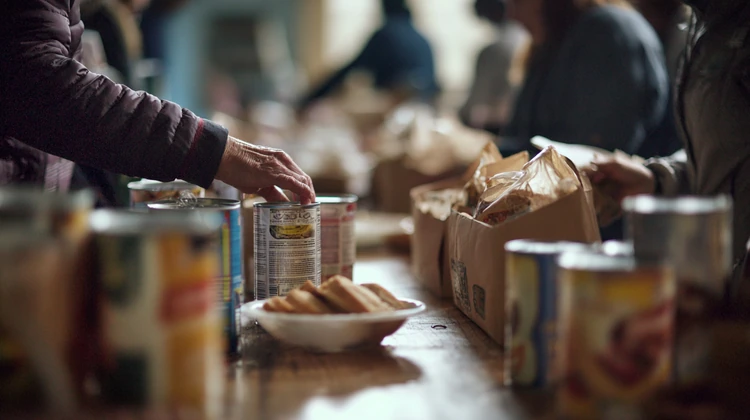
Consumers cut off from SNAP benefits have no immediate recourse. Local food banks or community meal programs will try to cover the gap but many are already running short of supplies and funds.


Article Image

Emergency departments complain of lack of insurance compensation

When people have trauma or severe physical symptoms, they often head to the nearest hospital emergency department for treatment. Because of that, emergency departments have become the backbone of America’s medical safety net.

However, these EDs are facing severe financial and operational headwinds that could undermine their ability to provide care to millions of patients, according to a newly released report from RAND Corporation, backed by the Emergency Medicine Policy Institute.

The study, which focuses on widening cracks in the current payment structure for emergency care, reveals that declining reimbursements, rising operational costs, and a surge in uncompensated care are pushing many emergency physician groups – particularly independent practices – to the brink of financial instability. If left unaddressed, experts warn, these challenges could result in fewer emergency departments, longer wait times, and reduced access for vulnerable populations.

Rising demands, shrinking payments

Emergency physicians treat all patients, regardless of insurance status or ability to pay, under the Emergency Medical Treatment and Labor Act, a federal mandate. Despite representing just 4% of the physician workforce, they provide nearly two-thirds of all acute care for uninsured individuals.

Yet the economic realities paint a grim picture. Between 2018 and 2022, in-network payments from commercial insurers declined by 10.9%, while out-of-network payments fell by nearly 48%. Payments from Medicare and Medicaid fell by 3.8% during the same period. 

At the same time, 20% of expected payments for emergency care go unpaid, adding up to a staggering $5.9 billion in uncompensated services annually.

“In 2024, ED visit numbers almost reached prepandemic numbers nationally, with a consistent rise between 2020 and 2024,” the authors wrote. “Patient complexity is on the rise, with EDs managing patients with complex medical and social needs.”

Insurers under scrutiny

The report also shines a spotlight on what it describes as “bad payer behavior,” pointing to tactics such as delayed or denied reimbursements and systemic underpayment by insurers. These practices, the authors argue, erode the financial viability of emergency departments and increase the risk of closures or forced acquisitions by larger health systems.

Patrick Velliky, chair of EMPI, warned that unchecked consolidation and insurer misconduct could lead to dire consequences. He warned that these practices threaten the survival of emergency departments and the patients that rely on them for care when it’s needed most.

Article Image

EPA should ban pesticide chlorpyrifos on more crops, 9 attorneys general say

The U.S. Environmental Protection Agency should ban the pesticide chlorpyrifos on more crops because it is linked to neurological damage, a group of nine attorneys general said Tuesday.

The EPA has already proposed banning chlorpyrifos on 70 crops, but the proposal would allow it on 11 others, including apples, asparagus, citrus, cotton, peaches, soybeans and strawberries.

The ban is still under review and the EPA said an interim decision would come in 2026.

Chlorpyrifos is toxic and linked to neurodevelopmental harms in children, with exposures among pregnant woman causing lower birth weight, reduced IQ, loss of memory, attention disorders and delayed motor development, said the California attorney general, who joined with attorneys general of New York, Hawaii, Maryland, Massachusetts, Oregon, Vermont, Washington and the District of Columbia in filing a comment letter with the EPA.

Acute exposure to chlorpyrifos can cause sweating, salivation, vomiting, low blood pressure and heart rate, seizures and even death, the attorneys general said.
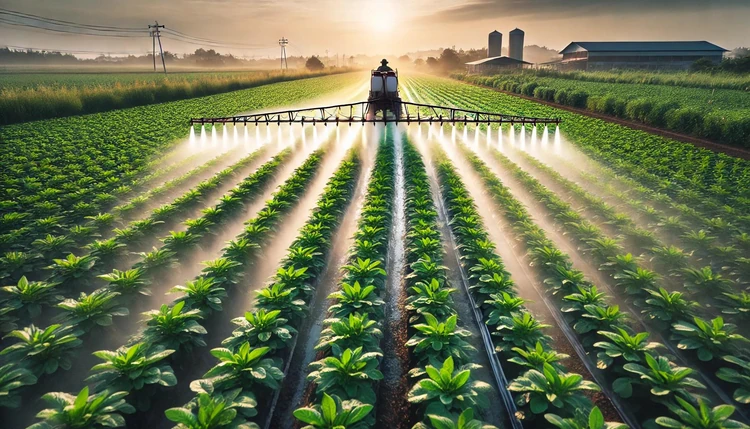
People are exposed to chlorpyrifos through food residues, drinking water contamination and drifts of agricultural sprays, the attorneys general said.

“The facts are clear: chlorpyrifos exposure poses a grave danger to a child’s health," California Attorney General Rob Bonta said. "This pesticide has no place in our food systems."
California has already banned chlorpyrifos on all crops, but Bonta said the health of its residents are threatened by imports of crops sprayed with the pesticide.

Email Dieter Holger at dholger@consumeraffairs.com.

Article Image

Energy drinks cause surge of calls to poison centers among youth, study says

Calls to poison control centers among youth because of energy drinks have surged recently.

There was a 35% increase in calls to poison centers fearing overdoses from energy drinks for people younger than 20 from 2011 through 2023, according to a study by researchers at the Center for Injury Research and Policy of the Abigail Wexner Research Institute at Nationwide Children’s Hospital and the Central Ohio Poison Center, published in the the Journal of Medical Toxicology.

And there was an alarming 633%, or more than seven times, increase in calls after youth consumed powders that mix into liquid to create energy drinks, the researchers said.
"Because of unclear dosing instructions or preparation errors, overdose can occur," said Hannah Hays, co-author of the study and medical director at the Central Ohio Poison Center. "Concentrated powder or granules may also be mistaken by a young child as a food item."

Most calls were among children younger than six at 70% and males at 57% among all caffeine-energy products, which included energy drinks, powders and solids, such as capsules, the researchers said.

“The high and increasing rate of exposure in this vulnerable age group indicates that caffeine energy products are accessible and attractive to young children,” Hays said. “Caffeine energy products should not have packaging that is appealing to young children and should be kept out of the sight and reach of young children.”
Still, 81% of calls didn't result in treatment at a medical facility and only 1.6% of cases were admitted for treatment, the researchers said.

But the researchers said teenagers aged 13 to 19 years old were more likely to need medical attention.

How can parents protect kids from energy drinks?

The researchers have recommendations for parents who want to keep their children safe from caffeine products:

  • Talk with children: Have age-appropriate conversations with children about caffeine-energy products, explaining what these products are and why they can be dangerous. Review labels together so everyone understands what’s in the products. The American Academy of Pediatrics recommends that children and teens don't consume energy drinks.
  • Store safely: The best way to keep children safe from caffeine energy products is to keep them out of the home. If these products are kept in the home, store them in a safe place away from your children—stored up and out of sight, away from food and locked, if possible. Ask that caregivers around children do the same in their homes.
  • Don’t use in front of children: It is helpful to never use these products in front of children, especially if packaged to look like treats.
  • Keep the national Poison Help Line handy: Have the number for stored in phones and posted in a visible pace. The national Poison Help Line can be reached 24 hours a day, seven days a week at 1-800-222-1222. 

Email Dieter Holger at dholger@consumeraffairs.