

Americans are increasingly living in places with no nearby pharmacies after more stores have shuttered.
More than 48.4 million Americans, or one in seven, are living in counties where residents have to drive 15 minutes or longer to reach a pharmacy, although it often takes much longer, according to a report from online drug marketplace GoodRx, which analyzed U.S. Census and and University of Wisconsin Population Health Institute data.
In these so-called pharmacy deserts, nonmetropolitan residents typically drive 85 minutes and cover 36 miles for a round trip visit, while metropolitan residents travel 53 minutes and 18 miles, GoodRx said.
For instance, in Arizona’s Navajo County, more than 118,000 residents must travel more than 100 minutes round trip, on average, to reach the closest retail pharmacy, and in neighboring Apache County, nearly 87,000 residents have an average travel times exceeding 3 hours.
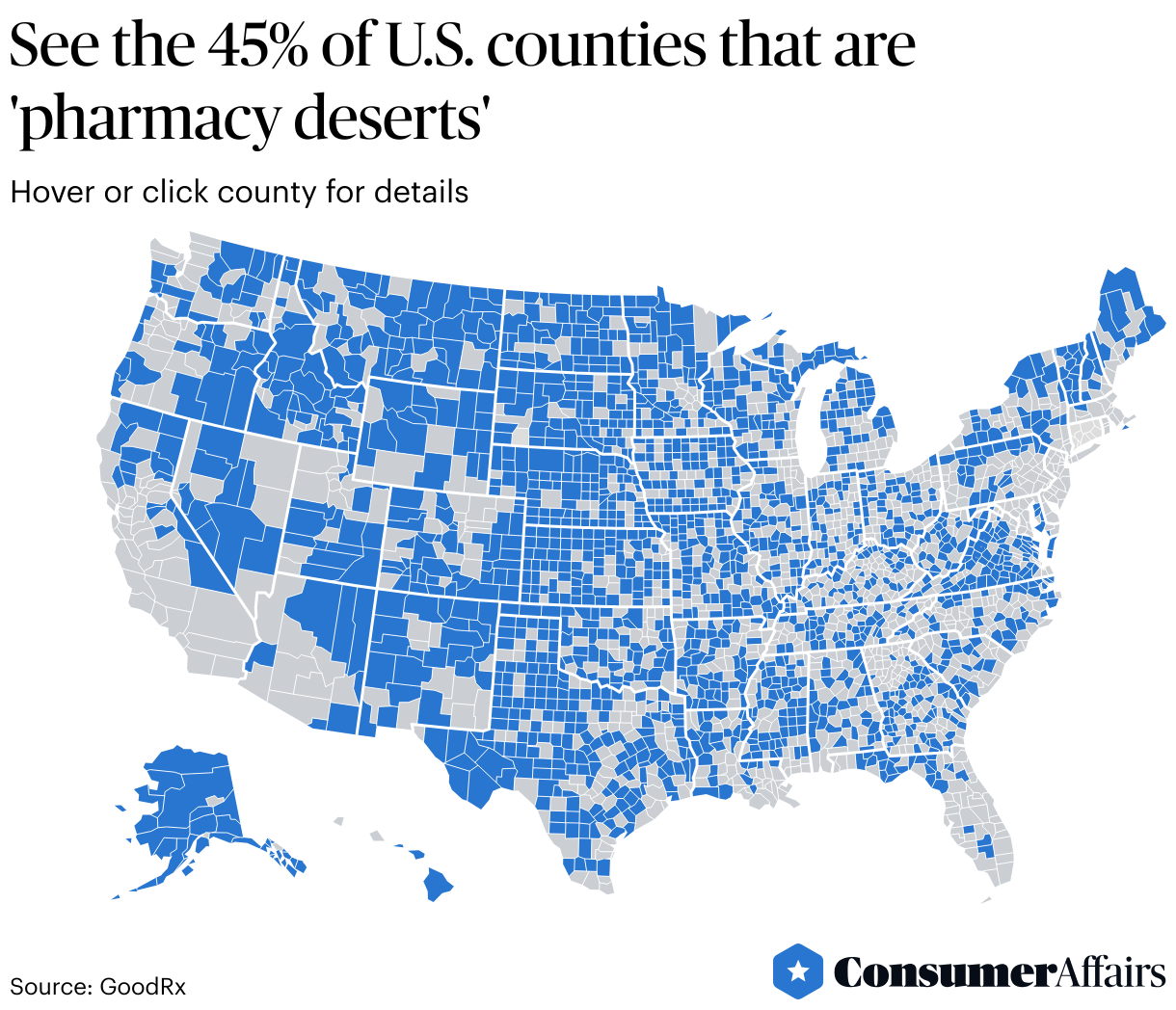
Over the past 5 years, more than 1,300 pharmacies have closed, leaving nearly 48.5 million people without close access to a retail pharmacy, an increase from from 41.2 million in 2021, GoodRx said.
"Unfortunately, the spread of pharmacy deserts is not slowing," GoodRx said.
GoodRx said that more than one in four metropolitan counties and more than half of nonmetropolitan counties are pharmacy deserts, with rural states such as Alaska, Montana, Nebraska and the Dakotas among the hardest hit.
"Fewer pharmacies mean longer drive times as well as longer wait times at the pharmacy counter," GoodRx said. "These additional barriers to medication access can negatively affect health outcomes as it becomes more challenging for people to fill and take their prescription medications."
GoodRx said policymakers, health care professionals and communities need to find new ways to address the shortage of pharmacies, including expanding mail-order options, allowing pharmacists to handle more health care services and investing in telehealth to bridge the gap.
"Without action, millions more Americans may soon find themselves living in a pharmacy desert," GoodRx said.