Best Flooring Companies

We compared 22 brands and chose the top flooring companies

    • Empire Today
      3.9(10,331)
    • LL Flooring
      4.2(4,566)
    • National Floors Direct
      4.7(2,300)
    +2 more
    Author picture
    Reviewed by: Stacey Freed

    Best Flooring Companies

    Flooring is an important functional and aesthetic part of your home. Our research team considered 17 companies and chose 3 Buyer’s Choice Award winners based on value for price, customer service, experience with staff, installation and speed of service.

    Why trust ConsumerAffairs?
    • Our recommendations are based on what reviewers say.
    • 4,822,560 reviews on ConsumerAffairs are verified.
    • We require contact information to ensure our reviewers are real.
    • We use intelligent software that helps us maintain the integrity of reviews.
    • Our moderators read all reviews to verify quality and helpfulness.

    More details about our flooring BCA winners

    Empire Today
    Flooring types
    Carpet, hardwood, laminate, vinyl, tile
    Warranty
    1-year limited installation warranty
    Availability
    29 states

    Empire Today is a flooring and window treatment provider that has served millions of companies since its founding in 1959. Each customer gets a personalized shopping experience where a sales consultant comes to your home with samples. While they’re there, they take measurements and give you an all-inclusive price estimate. In-stock styles can be installed as soon as the next day.

    Empire offers hardwood, tile, laminate and carpet flooring options. The company offers regular discounts, promotions and coupons on its site, and new customers can get up to $300 off by signing up for Empire Today’s email service. It also offers financing options through a credit card with 12 or 48-month payment plans.

    Pros
    • 1-year limited installation warranty
    • In-home consultation where product samples are brought to you
    • Professional measurements and installation
    Cons
    • Limited financing options
    • Consultation required for estimate
    • Not available in all states

    Happy reviewers on our site pointed out how impressed they were with Empire’s friendly sales reps, quick installation and quality products. One said:

    “I like the quality of the materials that we selected, the aesthetic, the look and the design,” Tom from California said. “The sales rep was amazing and the installers were all really good. We had a great, very positive overall experience. They were very efficient, worked very quickly, were extremely clean, very polite, and professional.”

    1x Award Winner
    Selected for having one of the highest satisfaction rates for Best Value
    LL Flooring
    Flooring types
    Vinyl, laminate, hardwood, bamboo
    Warranty
    1-year workmanship warranty
    Availability
    47 states

    LL Flooring, formerly known as Lumber Liquidators, offers vinyl, laminate, hardwood and bamboo flooring styles. You can visit a local showroom or shop using one of its many online tools. It offers shipping to your house, or you can pick up your flooring free of charge at one of their stores. LL Flooring provides its customers with transparent pricing and financing options based on the amount spent through a credit card. It also offers DIY flooring options if you’re handy and looking to save money.

    Pros
    • Large selection
    • Price-match guarantee
    • Workmanship warranty on installation
    Cons
    • No free shipping to home
    • No carpeting choices

    A high majority of reviewers on our site are happy with the floors they’ve purchased from LL Flooring. Many mention how appreciative they were of the knowledgeable and friendly staff that were quick to solve problems if any arose.

    “We purchased the rigid vinyl plank flooring in-store and it was very good dealing with the sales rep,” Paul from Minnesota said. “He seemed to be very knowledgeable about the different types of flooring that he had to offer and gave us some good sound advice about what to pick out. I like the quality of the product for the price that we paid. Good quality is what we're after.”

    3x Award Winner
    Selected for having one of the highest satisfaction rates for Best Customer Service, Best Value and Best Installation Experience
    National Floors Direct
    Flooring types
    Laminate, vinyl, carpet and hardwood
    Warranty
    Varies (10 years to lifetime, depending on material)
    Availability
    Most of East Coast and Texas

    National Floor Direct is a direct-to-consumer carpet and flooring company that prides itself on offering customers the leading brands in the industry. The company’s flooring professionals come to your home to go over all of your flooring options, help find one that fits your needs, take measurements and give you a personalized quote.

    Other perks from National Floors Direct include no-charge furniture moving and discounts if you shop around and find a better price from the company’s competitors. Additionally, it offers financing with no interest for one year (subject to credit approval).

    Pros
    • Brand-name flooring and carpeting
    • No-charge furniture moving and measuring
    • Financing available
    Cons
    • No custom flooring options
    • Not the best if you’re looking for a very specific flooring option

    Cathy from Connecticut said: “The staff is great from start to finish. The salesman helped me decide on what was best with no pressures.”

    Other customers pointed out how quick and easy it was to set up a consultation and expressed their appreciation for the company’s efficient install teams that kept things clean as they worked.

    3x Award Winner
    Selected for having one of the highest satisfaction rates for Best Customer Service, Best Value and Best Installation Experience

    Flooring Buyers Guide

    Jump into our guides and start learning

    Top Picks

    See who reviewers like

    Empire Today logo
    LL Flooring logo
    National Floors Direct logo
    See our top picks

    Get matched with a Flooring partner near you.

      What to consider when choosing a flooring company

      Flooring companies can simplify your remodel for you — typically, these companies can schedule an in-home consultation to discuss your options, and most also offer labor warranties and guarantees.

      Look for a flooring company with a history of happy customers and, ideally, several years of experience. Ask companies you’re considering about their workmanship warranties; some may offer cheaper services, but often the trade-off is a lack of warranty (a one-year installation warranty is fairly standard).

      » CALCULATE: Home remodeling ROI: Costs vs. value

      Types of flooring

      Flooring can make a huge difference in the atmosphere of your home, and a good floor can also improve your home’s overall value. To choose the right flooring for your space, start by evaluating each room — not every type of flooring is best for every type of room.

      Hardwood 

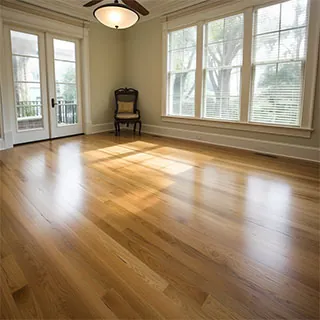
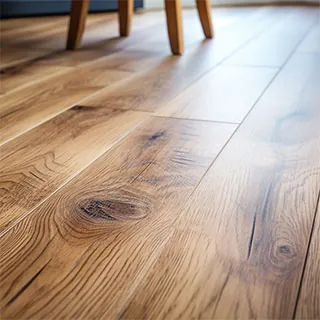
      hardwood flooring

      Hardwood is a classic. It brings warmth and natural beauty to a space, and it’s highly customizable. It comes in several different species and stains, with all kinds of features to choose from. It is a bit expensive, however, at $3 to $6 per square foot (before installation).

      Here are some hardwood customization options to consider:

      • Wood species: There’s a variety of tree species used to make hardwood flooring, including oak, walnut, ash and maple. Exotic woods like Brazilian cherry or teak, mahogany and tigerwood may be harder to find — and more expensive.
      • Plank size: Plank sizes used to be fairly straightforward, with most planks measuring either 2 to 3 inches wide, but current flooring trends lean toward wider planks of anywhere from 4 to 6 inches, depending on the style and size of the space.
      • Grain pattern: The grain is determined by the species of tree and the method used to saw it. There are four different sawing methods used to slice hardwood floor planks: plain sawn, quarter sawn, rift sawn and live sawn. Each method results in a different grain pattern, so compare the styles and confirm that your flooring company offers the method you want before committing.

      Engineered hardwood is a great option if you’re interested in hardwood but want a more affordable option. Engineered hardwood is created using layers of hardwood and plywood, while hardwood is solid wood with no layers.

      Engineered hardwood has the same look and finish as true hardwood floors, but its materials and installation typically cost a bit less. Engineered flooring does have a shorter life span than true hardwood flooring, however, so hardwood might be the way to go if you’re looking for longevity and can afford the investment.

      Types of hardwood flooring

      There are different grades of hardwood flooring, including:

      • Clear hardwood: This is the highest grade of hardwood flooring. It tends to be the most uniform in size and appearance.
      • Select and better hardwood: This hardwood has uniform color and few visible imperfections.
      • #1 common hardwood: This option has a higher chance of showing imperfections and varies in board color and length.
      • #2 common hardwood: This type of flooring has notable color variation and imperfections like knots and pinholes.
      • Cabin-style hardwood: Cabin-style hardwood has a rough-hewn appearance with checking and unfilled knots and wormholes.
      • Shorts: These have the highest concentration of color variation, imperfections and other visual characteristics.

      Best uses for hardwood

      Living rooms, entryways, bedrooms, dining rooms and offices are all great places to install hardwood floors. Although spills might deter you from installing hardwood floors in your kitchen, there are new sealants and finishes that can help repel water on wood.

      There’s also the risk of nicking your floor by dropping pots and pans or other heavy objects, but hardwood is still a popular option if you’re willing to handle the upkeep. Exotic hardwood flooring is popular among upscale buyers with large budgets who want a statement-style, enduring flooring option.

      Hardwood pros and cons

      Pros

      • Classic, long-lasting
      • Large variety
      • Easy to customize
      • Simple maintenance requirements

      Cons

      • True hardwood is pricey
      • Engineered hardwood has a shorter lifespan
      • Requires maintenance

      What’s the best flooring for the money?

      Though it’s expensive, hardwood flooring is a classic choice that can improve your home’s value. If you’re trying to sell your home or increase its overall worth, hardwood flooring is definitely worth considering.

      Laminate

      laminate floor

      Plastic laminate can be laid as a floating floor with no nails or glue required for quick, easy installation. Each tongue-and-groove plank has a dense fiberboard core topped with resilient, scratch-resistant plastic laminate. It comes in many different faux finishes and colors that resemble natural wood and stone. It typically costs $1 to $5 per square foot before installation.

      While laminate is definitely a more affordable alternative to hardwood or tile floors, it doesn’t have the long lifespan of other floor types because it’s prone to chipping. If you’re looking for a flooring option that can stand foot traffic from visitors, kids and pets for a solid 20 years, though, laminate flooring is definitely worth considering.

      12-mm vs. 8-mm laminate flooring

      Laminate flooring is typically 8 or 12 millimeters thick, and both options have advantages and disadvantages. Decide which is best for you based on the following:

      • Price: 8-millimeter laminate is more affordable.
      • Durability: 12-millimeter laminate tends to be more durable.
      • Feel: 12-millimeter laminate has a foot feel similar to hardwood floors.

      Best uses for laminate

      Laminate flooring is a great option for homes with pets or kids — it’s durable, easy to clean and inexpensive. It’s susceptible to moisture damage, though, so you may want to avoid installing it in moisture-prone areas, like laundry rooms and kitchens, unless you invest in a waterproof or water-resistant option.

      Laminate pros and cons

      Pros

      • Inexpensive
      • Works well in many spaces
      • Simple installation, a good DIY project

      Cons

      • Not as durable as natural flooring
      • Prone to chipping
      • Some varieties don’t handle moisture well

      Tile

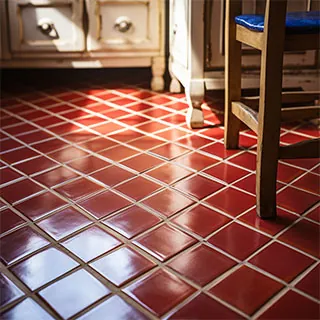
      tile flooring

      Tile comes in many forms and styles, from natural stone options like marble and limestone to decorative styles like cement or glass tiles. Each type has benefits and common uses, and some tiles are better suited for certain spaces.

      Depending on the tile you get, you might spend $3 to $6 per square foot (before installation). Some types of tile and their popular uses include:

      • Cement tile is a popular modern flooring choice due in part to its repeated appearances on home renovation shows like “Fixer Upper” and “Home Town.” Typically, ceramic tiles feature art or designs with Mission- or Moroccan-style influences. They’re long-lasting and durable, and as long as they’re properly installed and maintained, they won’t stain or scratch easily. They’re great for small spaces like laundry rooms or entryways.
      • Ceramic tile is an affordable alternative to porcelain tile. However, ceramic tile isn’t as durable as porcelain. It’s also more porous, so installing it in a moisture-prone area like a bathroom or an outdoor living area isn’t advisable.
      • Glass tile comes in an array of colors and patterns, including classic subway styles and intricate mosaic designs. It has a light-reflecting effect, which can make a small room seem larger. It’s impervious to water so it doesn’t stain, making it a good option for the bathroom. Glass tiles can be slippery, but using small tiles helps curb slipperiness.
      • Natural stone tiles are luxurious and fit a variety of spaces, from bathrooms to kitchens. Because they’re made of an all-natural material, they tend to be more expensive than other types of tile. Popular options include marble, limestone and slate.
      • Porcelain tile is dense and less porous, so it’s popular for bathroom floors. Many porcelain floor tiles are manufactured to mimic the look of natural stone and wood, so it’s a durable alternative to flooring types that may not be suitable for high-moisture areas.

      Porcelain vs. ceramic tile

      We consider both porcelain and tile affordable flooring solutions. Porcelain tiles are denser and heavier than ceramic tiles, however, so you can often tell which type of tile it is just by holding it.

      If you can’t tell and are unable to test the weight of the tile, take a look at its edges. Porcelain tiles will have the same consistency and finish throughout, while ceramic tiles tend to have a glazed finish.

      Best uses for tile

      With so many materials and styles to choose from, tile is a great flooring option for almost every room and space. For buyers who want to customize their flooring, tile offers variety and flexibility other flooring types can’t surpass.

      Tile pros and cons

      Pros

      • Hard and durable flooring
      • Withstands wear and tear well
      • Some varieties are less prone to stains

      Cons

      • Some varieties require regular resealing
      • Some tile types are prone to staining

      Carpeting

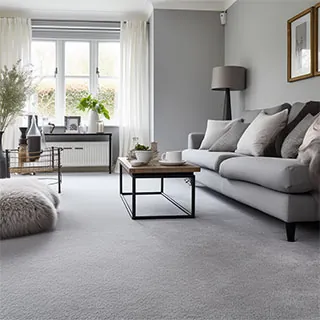
      carpeted floor

      Carpet is one of the most popular flooring materials. Fabric twist is a better indicator of carpeting quality than weight — uncut carpet piles are good for high-traffic areas and resist stains well. Some retailers also sell carpeting that can be used outdoors.

      You can also buy carpet tiles, which allow for lots of customization — you can mix colors and patterns to create a unique design. Carpet prices range widely — it may cost anywhere from $2 to $15 per square foot before installation.

      Carpet quality

      Use the following factors to determine carpet quality:

      • Face weight: The weight of the carpet pile per square yard, measured in ounces.
      • Density: How close the fibers are stitched into the carpet backing.
      • Type of fiber: The natural or synthetic fiber used in the carpet’s construction.
      • Fiber twist: The number of times the fiber strands are twisted together.
      • Style: Common styles include Berber, frieze, saxony and cut-and-loop.

      Nylon is the most durable indoor carpet material, which means it withstands general use and cleaning better than other options on the market. However, nylon is also susceptible to staining. Be sure to find out if your nylon carpet includes a stain-resistant treatment before buying.

      Best uses for carpet

      Carpet is a great flooring choice for bedrooms, closets and living rooms. Unlike hardwood, carpet absorbs sound. The installation is typically fast, and you might be able to get a good deal through a wholesale or discount carpet company because it’s such a popular flooring choice.

      Carpet pros and cons

      Pros

      • Brings warmth to a space
      • Absorbs noise
      • Simple and quick installation process

      Cons

      • Stains easily
      • Traps allergens and dirt

      Vinyl flooring

      vinyl flooring

      Vinyl flooring is waterproof and comes in a variety of looks and styles, including wood and tile lookalikes like LVT (luxury vinyl tile), LVP (luxury vinyl plank) and sheet vinyl. There are even scratch-resistant varieties, making vinyl a great flooring choice for heavy-traffic rooms. It has a long life span — up to 25 years if it’s properly cared for.

      Most vinyl flooring costs between $1 and $5 per square foot before installation. Vinyl flooring can be purchased in a variety of forms, including sheets, planks and tiles.

      How thick should my vinyl flooring be?

      Vinyl flooring comes in a wide variety of sizes, generally ranging from 2 to 8 millimeters. You should determine the thickness of your flooring based on how tall you want your floors to be and the amount of money you want to spend. In general, the thicker your vinyl floors are, the more expensive they’ll be.

      Best uses for vinyl flooring

      Because it’s waterproof and easy to clean, vinyl flooring is great for laundry rooms, kitchens, game rooms, living rooms and other areas with a lot of foot traffic. It’s also great in spaces where you might do a lot of standing — it’s softer and easier on the joints.

      Vinyl pros and cons

      Pros

      • Low-maintenance
      • Wood and tile lookalikes
      • Waterproof

      Cons

      • Sensitive to sunlight
      • Not environmentally friendly

      How to choose flooring

      Certain flooring may fit your aesthetic more than others, but choosing flooring isn’t just a matter of taste and style — you’ll also have to consider costs and financing options.

      1. Determine your budget

      While some flooring and carpet companies specialize in discount products, others position themselves in the upscale market. When determining your budget, be sure to understand all pricing considerations.

      • Seasonal sales: Smart shoppers can take advantage of seasonal sales to purchase materials for less.
      • Measurements: Be aware that carpet was traditionally priced by the square yard (there are nine square feet in one square yard), but in recent years many retailers have been advertising square-foot prices. When shopping, make sure all products are priced with the same square-area calculation.
      • Resale value: Solid hardwood floors, if maintained in good condition, typically add more to the resale value of a home than any other type of flooring. In fact, according to the National Association of Realtors’ 2022 Remodeling Impact Report, for interior projects, the highest percentage cost recovered was from refinishing hardwood floors (147%). The cost recovered from new wood flooring was 118%. Natural stone tiles are also highly desirable to homebuyers.
      • Energy bills: Most flooring has little insulation value, so it won’t dramatically affect your energy savings. Carpeting has an R-Value of about 1.0, but when installed over dense polyurethane-foam padding it can triple the insulating value to about 3.0. Stone and tile feel cool underfoot in summer and will hold and radiate heat in winter if installed over a radiant-heat system.

      2. Take home flooring samples

      Flooring samples let you see the color, thickness, construction and quality of the flooring before purchasing it. Samples are especially important for customers who shop for flooring online.

      • Price: Flooring samples are free from many companies, while others charge a nominal fee — usually less than $5. Of course, you can view and handle flooring samples at flooring stores and home improvement centers, and some retailers will let you take samples home if you promise to return them.
      • Analysis: You should consider texture, style and color when comparing samples; you can also test them to see how easily they scratch, dent and stain.
      • Availability: Most retailers have flooring samples on hand for you to take home, while manufacturers and online sellers will ship samples to you.

      3. Compare flooring material options

      Some manufacturers make just one or two types of flooring, while others offer a broader range of products. And although there are retailers who focus on one product category — tile, for example — most stores sell and install virtually every type of flooring.

      • Hardwoods: You can sand and refinish solid hardwood floors so they don't have to be replaced. Engineered hardwoods are easier to install and come in more wood species and colors.
      • Ceramic, porcelain and stone tile: These materials are extremely durable and, when properly installed, waterproof. Tile is most popular in bathrooms, kitchens and foyers.
      • Carpet: Carpeting offers soundproofing, insulation, affordability and a soft, cozy feel for bare feet. It also goes down quickly with a minimal amount of mess and disruption to your home.

      4. Consider custom flooring

      Homeowners increasingly have the option to design their own flooring, but expect to pay more for this privilege.

      • Design floors yourself: Online tools and in-store design help can assist in custom-designing the style, color and pattern of your new floor. Just be sure to check the flooring samples before ordering.
      • Have a company design your floors: Several dealers customize flooring using photos, sketches and artwork provided by homeowners.
      • Best materials for customizing: Carpet tiles and ceramic and porcelain tile are ideal for customization. This is done by placing the tile in unique designs, patterns and colors.

      5. Compare flooring installation options

      Several companies offer free flooring installation as part of a deal, while others subcontract the job to third parties. Never assume a seller will take care of the flooring installation; get it in writing and ask about the following:

      • Insurance: Installers should be insured and bonded to show homeowners they meet minimum standards and have coverage in the case of a faulty installation or worker injury. Being bonded offers protection if an installer fails to finish the job.
      • Fees: Be sure to ask about any additional charges for delivery, moving of furniture or removal and disposal of old flooring.
      • Warranty: Many installations come with warranties. As with all warranties, these provide varying levels of coverage for various lengths of time. For example, if a homeowner makes an alteration to the flooring after installation or improperly cleans it, they risk voiding their warranty.

      6. Decide if you should finance

      Dealers frequently offer financing through specialty credit cards. Others provide financing through loans — either their own or through local banks.

      • Interest-free offers: Interest-free offers are a good idea if you know you can pay off the bill before the term expires; otherwise, expect hefty interest charges.
      • Interest rates: Local flooring and carpet companies often charge higher interest rates than national companies, so read the terms of the loan carefully.
      • Requirements: A down payment from 1% to 10% and a minimum purchase amount are common prerequisites for financing through a loan; store credit cards tend to require minimum purchase amounts but no down payments.

      » MORE: How to choose a home remodeling contractor

      How do flooring customers rate the experience?

      We analyzed the past three years of consumer reviews of flooring companies on our site and discovered that the overall satisfaction rating was 4.5 stars.

      Other key takeaways from our review analysis of flooring companies on ConsumerAffairs:

      • A company’s punctuality makes the biggest positive difference to flooring customers. Reviewers who mention speedy service give companies better reviews than when they mention other aspects.
      • On average, reviewers who mention refunds and payouts leave less favorable star ratings.
      • Reviewers had the highest percentage of complaints about issues with reliability: 90% of reviews that mention reliability issues are negative.

      FAQ

      What is the most durable type of flooring?

      Most flooring types are designed to have a long life span while withstanding wear and tear. Depending on the look and style you want, certain flooring may fit your aesthetic more than others. If you’re looking for a durable floor that can handle moisture — like in the laundry room or kitchen — porcelain tile or vinyl flooring might be better than hardwood.

      What type of flooring adds the most value to a home?

      Overall, hardwood flooring adds the most value to a home. It’s a classic flooring choice that can easily be sanded, stained or altered to fit various styles.

      What’s the most low-maintenance type of flooring?

      Vinyl tile is a very low-maintenance flooring option. It’s waterproof and very resilient, making it easy to care for. Plus, it has a relatively long lifespan.

      Do engineered wood floors scratch easily?

      Engineered wood floors have a top layer of solid wood, so they are as susceptible to scratches, markings, dents, scrapes and everyday wear and tear as solid wood floors.

      How long do engineered wood floors last?

      On average, engineered wood floors last around 30 years. Thinner engineered wood floors with a top layer 1 to 2 millimeters thick last 20 to 30 years, while thicker floors with a top layer thicker than 6 millimeters can withstand use for up to 40 years.

      How much does it cost to install 1,000 square feet of hardwood?

      Your total flooring cost depends on what type you go with.

      The average cost of a hardwood floor installation is approximately $5 to $8 per square foot, so a 1,000-square-foot installation costs anywhere between $5,000 and $8,000. The cost can vary depending on the type of hardwood floor you’re installing.

      How much does it cost to install 1,000 square feet of tile?

      Installation costs for tile range from $5 to $15 a square foot. If you’re installing a tile that only costs $2 per square foot, you’ll likely spend more on labor and installation than the tile itself. Installation will take up a huge chunk of your budget, so make sure you factor it in when deciding how much to spend on other parts of your renovation.

      How often should you replace carpet?

      Carpet can last anywhere from five to 15 years, depending on how well you care for it and the overall quality.

      Do you have to glue vinyl flooring?

      Thin vinyl planks (around 2 millimeters) have to be glued, but thicker planks (4 millimeters) may have a click-lock system that doesn’t require gluing.

      Do you need underlay for vinyl flooring?

      Most of the time it’s a good idea to have an underlayment installed beneath your vinyl flooring; this helps prevent moisture from gathering over time.

      Not sure how to choose?

      Get buying tips about Flooring delivered to your inbox.

        By entering your email, you agree to sign up for consumer news, tips and giveaways from ConsumerAffairs. Unsubscribe at any time.

        Thanks for subscribing.

        You have successfully subscribed to our newsletter! Enjoy reading our tips and recommendations.

        Flooring company information

        Mohawk Flooring

        Mohawk Flooring unfurled its first carpet in 1878 and uses product innovation and design to shape its assembly practices. As the world’s largest flooring company, Mohawk offers products in over 30 different categories. Its family of brands include Pergo, Karastan, Daltile, American Olean, Quick-Step, Marazzi and Century Flooring.

        Read 1019 Reviews
        Empire Today

        The year 1959 saw the founding of Empire Today in Chicago. Since then, the business has grown into a true empire with locations in the majority of U.S. states.

        • Products: Empire Today offers carpet, hardwood, laminate, resilient vinyl, tile, even window blinds and shades. Free-in-home estimates are available.
        • Financing: Empire Today and Wells Fargo Bank offer financing, including an interest-free option, that charges no interest for 12 months. Another option gives you a 48-month payoff time frame at 9.99 percent interest rate.
        • Warranties: Empire Today warranties run a lifetime in some cases, with a still-respectable 30 years in several other cases.
        • Outdoor carpeting: Empire sells carpeting for porches, patios and decks. Their short pile height helps keep crushes and dents from forming.
        • Installation: Installations are performed by independent contractors who work with Empire Today. Options include next-day installation and half-price deals.
        Read 10331 Reviews
        LL Flooring

        Lumber Liquidators founder, Tom Sulivan, began reselling excess and unwanted wood in 1993, and the first Lumber Liquidator store opened in 1996. The company now has stores in almost every state and is headquartered in Virginia.

        Read 4566 Reviews
        HardwoodBargains.com

        In 2008, three friends developed Hardwoodbargains.com with the aim of offering consumers flooring at manufacturer prices. Consumers can stop by the two physical locations in Austin and San Antonio Texas, and Franklin, Tennessee.

        • Focus on hard surfaces: Hardwoodbargains.com specializes in solid hardwood, engineered hardwood, laminate and vinyl-plank flooring. The company also sells unique wood planking for interior walls.
        • Personal attention: Each consumer is assigned a specialist who helps them select the right flooring choice, and then walks them through every step of the process. The company will match any online advertised pricing of an identical product.
        • Samples: Samples are free and shipped through FedEx.
        • Environmental attention: The company plants two trees for every tree that goes into making its products.
        • Customization: Hardwoodbargains.com offers customized flooring that includes choice of wood species, sealing, finish, plank dimensions and stain color with a minimum order of 500 square feet.
        Luna Flooring

        Luna sells well-known flooring brands like Mohawk, Shaw, Stainmaster and Armstrong. With their 110 percent price guarantee and Love Your Floors Promise, Luna will work hard to make sure you love your new floors.

        • Flooring options: WIth carpet, hardwood, laminate, vinyl and tile flooring options to choose from, you’re sure to find the right flooring for your home.
        • Free in-home quote: It’s important to view flooring options in your own home, with your own lighting and décor. A Luna flooring professional will bring samples to your home, talk you through your options and answer questions, all at no cost to you. You can book your free quote on Luna’s website.
        • Financing: Getting the dream floors you’ve always wanted is easier than ever. Just visit the Luna website to see your options.
        • Love Your Floors Promise: Luna is so confident you’ll love your new floors, they’ll give you a free replacement, up to 30 days after your installation. Conditions apply.
        • 110 percent low price guarantee: Luna promises to beat their competitor’s prices, and if they can’t, they’ll refund you 110 percent of the difference. Just bring in a written estimate from a competitor selling the same product.
        Read 864 Reviews
        Pergo

        Pergo developed plastic-laminate flooring, with the first flooring produced in 1979. It is the largest laminate flooring manufacturer in the United States and also produces solid hardwood and engineered hardwood floors.

        Read more about Pergo
        Flooring America

        Flooring America is a nationwide chain of locally owned stores. It focuses on offering quality products at low prices, as indicated by their slogan: Flooring options for every style and every budget.

        Read more about Flooring America
        Armstrong Flooring

        Parent company Armstrong World Industries began operations in 1891 and is headquartered in Pennsylvania. Armstrong Flooring designs and makes flooring and ceilings products for worldwide distribution. The company manufacturers products for both the residential and commercial market.

        Read more about Armstrong Flooring
        Mirage Floors

        Trade magazines such as Floor Focus, Floor Covering weekly and Floor Covering News has recognized Mirage Floors29 times in the last decade for its outstanding quality. The company is based in Quebec, Canada, and its products are entirely made in North America.

        • Sustainable development: Among its environmental practices, Mirage Floors uses wood and waste recycling, and forest preservation.
        • Samples: Mirage Floors offer online ordering of six samples for $19.95, with delivery and shipping included.
        • Dealers: Specialized flooring dealers all across the United States sell Mirage products. Customers can find a dealer near them on the Mirage website.
        • Wood species: Mirage Floors offer more than 10 wood species, including African mahogany, sapele, mahogany, maple, walnut and hickory. The company has three flooring lines: Mirage Classic is solid hardwood; Mirage Engineered is engineered hardwood and Mirage Lock is click-lock plank that have a fiberboard core and solid-hardwood top layer.
        • Products: Consumers can order maintenance and repair products such as mop covers and touch-up kits directly from Mirage.
        Floors To Go

        Founded in 1976 in California, Floors to Go has grown into a nationwide chain of individually owned stores.

        • 60-day guarantee: The extremely generous 60-day guarantee gives customers more time than the industry standard to decide if their new flooring works long term. Dissatisfied customers can get replacement flooring for free, with labor charges included.
        • Products: Floors to Go offers an extensive line of flooring, including carpet, area rugs, solid hardwood, engineered hardwood, resilient vinyl, bamboo, laminate, stone and tile. It also sells window blinds, shades and interior shutters.
        • Estimates: Floors to Go sends staffers to customers' homes with samples and tools for measurements and estimation.
        • Warranty: Exclusive limited lifetime warranties for staining, soil and wear apply to many products, including carpet variations.
        • Online showroom: The online showroom saves time and allows you to select products and request for a quote from a retail partner.
        Bella Cera Flooring

        Based in San Francisco, Bella Cera is a brand of flooring owned by several large flooring distributors. Its mission is to "add beauty to the world, without compromising its health."

        • Eco-friendly: Bella Cera hardwood floors use eco-friendly stains that have met several certification standards, and California has some of the strictest environmental policy measures in the nation. Bella Cera also uses an ultraviolet drying process rather than a formaldehyde process.
        • Hardwood: The company's hardwood manufacturer focuses on individualistic floor production, using old-world processes such as artisans to carve the wood. Bella Cera offers several hardwood species of flooring, including acacia, cherry, walnut, maple and birch. The company sells both solid-hardwood and engineered-hardwood flooring.
        • Offerings: Some Bella Cera retailers also carry carpet, laminate, tile and bamboo. Contact information for these manufacturers is available at local retail stores.
        • Retail partners: Bella Cera flooring is found in retail locations across the United States. Each retailer sets pricing for flooring and installation, so smart shoppers can often find Bella Cera flooring at lower prices at some stores than others.
        • Finishes: Bella Cera partnered with Valspar to develop finishes that are super-clear and that allow nuances in color and texture to shine through.

        Compare top flooring companies

        Showing 10 of 22

        Want your company to be on this guide?

        Yes, continue
        Comparing

        ×