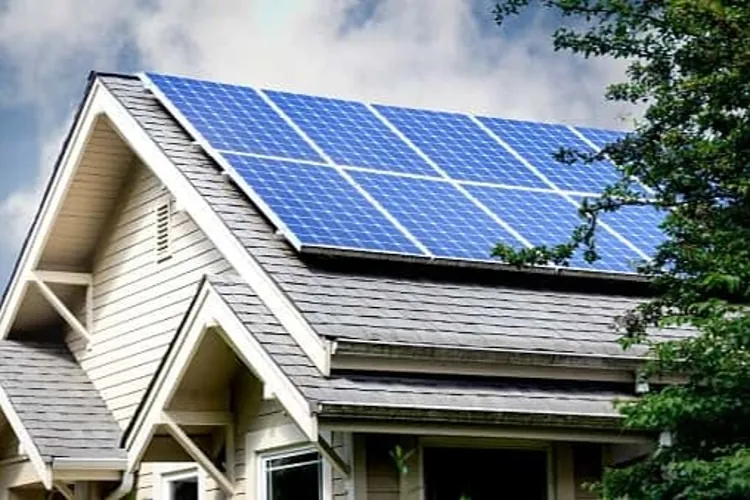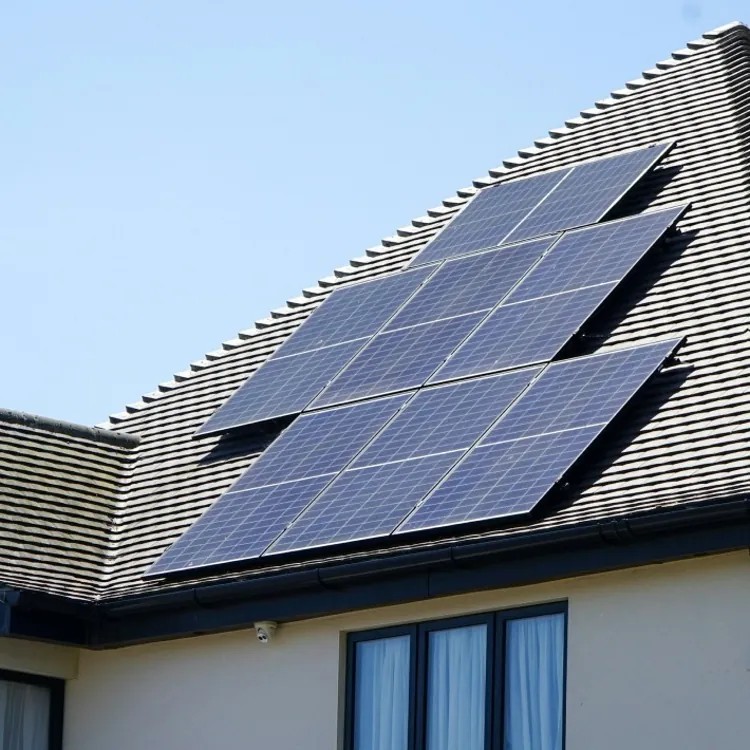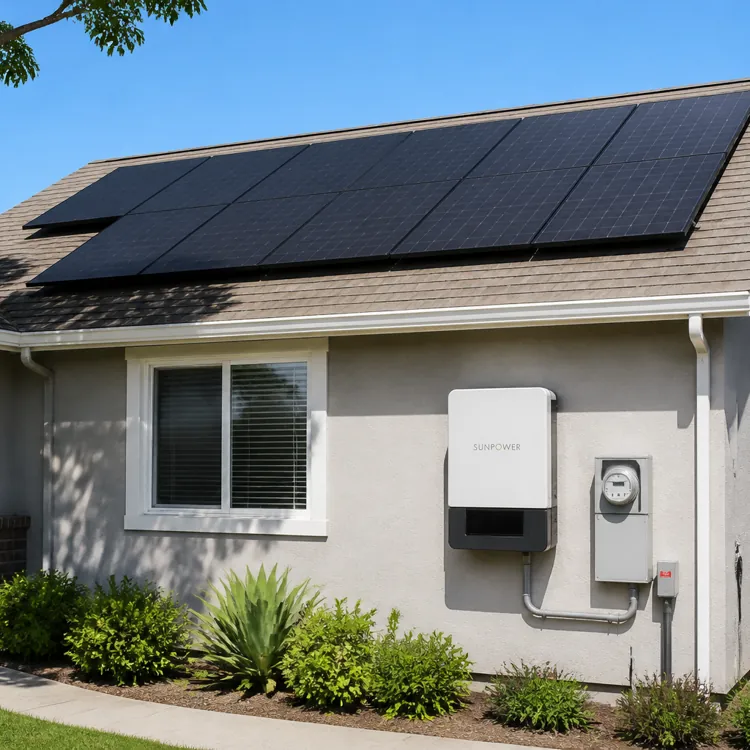

How much do solar panels cost in New Hampshire?
Average solar panel installation costs generally range from $15,984 to $31,968 in New Hampshire.
The table below does not include the cost of a solar battery. Adding battery storage to your system typically costs another $7,000 to $18,000.
Average solar panel costs by system size in New Hampshire
| 5 kW | 6 kW | 7 kW | 8 kW | 9 kW | 10 kW | |
|---|---|---|---|---|---|---|
| Statewide average | $15,984 | $19,181 | $22,378 | $25,575 | $28,771 | $31,968 |
Are solar panels worth it in New Hampshire?
Going solar is often worth it for New Hampshire homeowners because of long-term utility bill savings. Over 25 years, residents with solar panels avoid $48,186 in utility costs on average. Some homeowners say the environmental benefits make solar worthwhile.
Homeowners with solar panels can typically save $20,000 to $90,000 over 25 years.
Edward in Newmarket put it this way: “We continue to pour carbon into the atmosphere, and we're all gonna pay that price, so we felt going solar was the right thing to do.” Since going solar, Edward only pays about $13 each month, “and that amount is the utility charge to be connected to the grid. So we're not paying anything for electricity.”
Similarly, Robert in Litchfield says he now only pays a $12.95 monthly energy bill from Eversource.
Hidden costs of solar in New Hampshire
Some homeowners report paying more than expected due to unclear contract terms. For example, Douglas in Rochester said he was quoted about $20,000 for his solar system, but after signing (on his phone), the total cost ended up closer to $50,000.
Review contracts carefully before signing.
Douglas also reported higher-than-expected payments, ongoing electric bills and limits on making changes to his system.
Another resident, Denise in Barrington, was surprised to still have two monthly payments, one for solar and one for her utility. She said this was not clearly explained upfront.
Denise also expected her solar panels to provide backup power during outages, but found out her system shuts off when the grid goes down. That can be a major drawback if you don’t have battery backup or other outage-ready equipment.
Solar panel installation cost factors in New Hampshire
The equipment — panels, inverters, mounting hardware and other electrical accessories — is typically the largest portion of your overall solar costs (approximately 25% to 50%).
- Solar panels: Prices vary by efficiency rating. In general, monocrystalline panels are considered the best value. Cheaper solar panels are typically polycrystalline.
- Solar batteries: Solar batteries store energy for later use and can be especially helpful if you want backup power or greater energy independence. Prices often depend on the battery’s storage capacity, lifespan, brand and other factors. Expect to pay between $7,000 and $18,000, though some cost $30,000 or more.
- Solar inverters: Inverters convert solar power from direct current (DC) to alternating current (AC). Inverter costs typically range from $1,000 to $3,000.
- Monitoring system: Some companies include a solar monitoring system to track energy production and identify potential issues. If not, you can buy a standalone system for $80 to $400.
Size of your system
The cost difference between a 6-kilowatt system and a 7-kilowatt system is thousands of dollars. The average New Hampshire household needs a 6 kW system to offset most of its energy use. Your ideal system size may be larger or smaller depending on your electricity consumption.
First, look at your electric bill. It should say how many kilowatt-hours (kWh) you used last year. Then, divide that number by 1,200 to estimate your system size in kilowatts (kW).
For example, if you used 12,000 kWh of electricity last year, you would need a 10-kW system. If you used 10,800 kWh, you would need a 9-kW system.
Pro tip
Upgrade old appliances with more eco-friendly ones before you go solar. If you use less electricity, you need fewer solar panels, making the whole system more cost-effective.
» WATT’S THE DIFFERENCE? kW vs. kWh
Condition of your roof
Quality solar panels should last 25 to 30 years, so you need your roof to last just as long. Otherwise, you’ll have to pay to remove the panels, fix your roof and reinstall them again. This is a frustrating and expensive process you should avoid if you can. If you’ve been thinking about replacing your roof, it’s a good idea to do that before getting solar panels.
ConsumerAffairs often hears from disgruntled solar customers who felt blindsided by expensive roof repairs needed after their solar panel installation was complete. If you want to ensure a seamless and cost-effective solar journey, your roof must match the system's longevity. Get your roof inspected, fixed or replaced before you get a solar energy system.
Pro tip
If you have an electric car, ask about EV charger options. Homeowners in more rural parts of New Hampshire should also consider critter guards to protect the panels.
» RELATED: How many solar panels do you need for your house?
Regional solar considerations in New Hampshire
Whether solar is worth it also depends on where you live in New Hampshire. The state only gets 3 to 3.5 peak sun hours daily. Lots of shading — like tall trees above your roof — will make your solar system less efficient. Since solar panels generate more power with more sunlight, this can affect the financial returns on your investment.
Seasonal dips in energy production can be an issue, too. Robert in Concord said his system works great in the summer, “but with winter coming on, I didn't realize that it would be that significantly dropped as far as how many kilowatts I get per day.” However, he’s still happy with the system overall.
We suggest using the National Renewable Energy Laboratory's PVWatts Calculator to estimate how much electricity a solar panel can produce over a year on your house — just type in your address.
» STILL NOT SURE? Solar energy pros and cons
How to compare solar quotes
Get quotes from at least three to four different solar companies. Most installers set the price according to the system's wattage. Similar to “cost per square foot” when buying a house, “cost per watt” allows you to compare the relative value of a solar panel system. It shows you the per-dollar price of your system’s energy production potential.
Typical costs are $2.50 to $5 per watt. According to our latest research, the average cost per watt is $3.20 in New Hampshire.
How can I pay for solar panels in New Hampshire?
You have options when it comes to paying for your solar system. You can pay cash upfront, take out a solar loan, lease your system or get a power purchase agreement (PPA).
- Loan: A solar loan works like any other type of home improvement loan — there’s an application and approval process, and you pay it back over time (with interest) each month. Terms are typically eight to 20 years.
- Lease: Leasing solar panels is a great way to set up a system without the high upfront costs.
- Power purchase agreement: A power purchase agreement (PPA) is similar to leasing. You buy the power generated by the system on a per kilowatt-hour (kWh) basis. It’s a fixed price, and the cents/kWh is usually cheaper than the utility’s rate for the same amount of electricity.
» SOLAR PANELS: Lease vs. buy
Solar incentives in New Hampshire
Many residential solar incentives in New Hampshire have expired in recent years. Some towns still offer a property tax exemption, which won’t lower your upfront costs but can prevent your property taxes from increasing due to added home value.
The 30% federal solar tax credit ended for systems placed in service after Dec. 31, 2025.
Eversource also offers a home battery incentive of up to $3,000. To qualify, you must enroll in a demand response program, meaning the utility can use some of your stored energy during peak times.
What to know about net metering in New Hampshire
Customers of Eversource, Liberty, New Hampshire Electric Cooperative and Unitil may qualify for net metering. This program lets you send excess solar power to the grid in exchange for credits on your electric bill. A special meter tracks the electricity you use and the excess power your system sends to the grid, and those credits can offset part of your electric bill.
Compare solar companies in New Hampshire
We compared ratings and reviews, equipment options, warranties, availability and other factors to pick the top solar companies in New Hampshire.
| Company | Customer rating | Max. panel efficiency | Panel warranty | Year founded | |
|---|---|---|---|---|---|
 Sunrun | Learn More | 4.2 | 22% | 20 years | 2007 |
 NuWatt Energy | Learn More | 5.0 | Varies | 25 years | 2023 |
 Venture Solar | Learn More | 5.0 | Varies | 25 years | 2014 |
FAQ
How much does a 6 kW solar system cost in New Hampshire?
The average cost of a 6 kW solar system is $19,181 in New Hampshire.
How can I save money on solar panels in New Hampshire?
Here are some tips to maximize your savings on solar panels in New Hampshire:
- Compare quotes: Get quotes from at least three or four different solar installers in New Hampshire. This lets you compare different proposed equipment, pricing, financing terms and estimated energy production to find the best overall value. Don't just go with the cheapest option without vetting quality and services.
- Lower your electrical load: Before going solar, it’s smart to upgrade any old appliances. For example, replacing an old refrigerator with a more eco-friendly one reduces your electric load, which also helps lower your utility bill. If you use less electricity, you need fewer solar panels, making the whole system cheaper.
- Explore payment options: Affordable financing makes the upfront costs of solar more manageable. For instance, leases and power purchase agreements (PPAs) can let you start saving from day one with little or no money down.
» TIPS: Get the best solar quotes
Is it cheaper if I install solar panels myself?
DIY solar panels are cheaper. You might be tempted to install the system yourself, but there are potential issues: Incorrectly installed solar panels can cause roof leaks, electrical safety risks and other dangerous problems.
What is the difference between monocrystalline and polycrystalline solar panels?
The difference comes down to efficiency and materials: monocrystalline panels are made from pure, single silicon crystals, whereas polycrystalline panels are made from various silicon fragments melted together. Both are types of photovoltaic (PV) solar panels.
Are solar panels expensive to maintain?
No, solar panels have relatively low maintenance costs. If you clean the solar panels yourself, the only maintenance cost will be the water used to hose them down. Hiring a professional to clean your solar panels typically costs $100 to $350.
How do solar batteries work?
Solar panels only generate electricity when the sun is shining. A solar battery stores the extra energy your panels produce during the day so you can use it at night or during a power outage. Without a battery, that unused energy goes to the grid, and you’ll still depend on utility power at night.
Bottom line
Home solar system costs typically range from $10,000 to $30,000 or higher, depending on factors such as system size, local labor rates and available incentives.
The ConsumerAffairs Research Team has conducted extensive research to compare the costs of going solar in New Hampshire and other states.
Solar costs vs. savings: New Hampshire and nearby states
| 6-kW system cost (before incentives) | 10-kW system cost (before incentives) | Typical system size needed* | Average cost per watt | Total utility power cost savings** | |
|---|---|---|---|---|---|
| Maine | $17,297 | $28,828 | 7.7 kW | $2.88 | $30,419 |
| Massachusetts | $18,536 | $30,893 | 7.3 kW | $3.09 | $155,464 |
| New Hampshire | $19,181 | $31,968 | 6 kW | $3.20 | $48,186 |
| Vermont | $16,600 | $27,666 | 11.2 kW | $2.77 | $41,197 |
Article sources
ConsumerAffairs writers primarily rely on government data, industry experts and original research from other reputable publications to inform their work. Specific sources for this article include:
- DSIRE, “Programs.” Accessed March 19, 2026.
- Federal Trade Commission, “Solar Power for Your Home.” Accessed March 19, 2026.
- Solar Energy Industries Association, “Residential Consumer Guide to Solar Energy.” Accessed March 19, 2026.