

What to consider before going solar
For many homeowners, whether solar panels are worth it comes down to upfront costs versus long-term savings. Based on feedback from hundreds of local customers, solar often pays off over time, but it’s not the right financial move for everyone. Here are the questions to ask yourself.
1. How much will it cost upfront?
A typical residential solar panel installation costs $36,950 in New Hampshire. You could pay cash, but a lot of people finance or lease solar panels with minimal upfront costs.
The size of your system is one of the biggest solar cost factors in New Hampshire. A typical household needs about a 12.83 kW system. Depending on your energy needs, you might need a smaller or larger system.
New Hampshire's solar panel costs by system size
| 5 kW | 6 kW | 7 kW | 8 kW | 9 kW | 10 kW | |
|---|---|---|---|---|---|---|
| Statewide average | $14,400 | $17,280 | $20,160 | $23,040 | $25,920 | $28,800 |
Think about battery storage
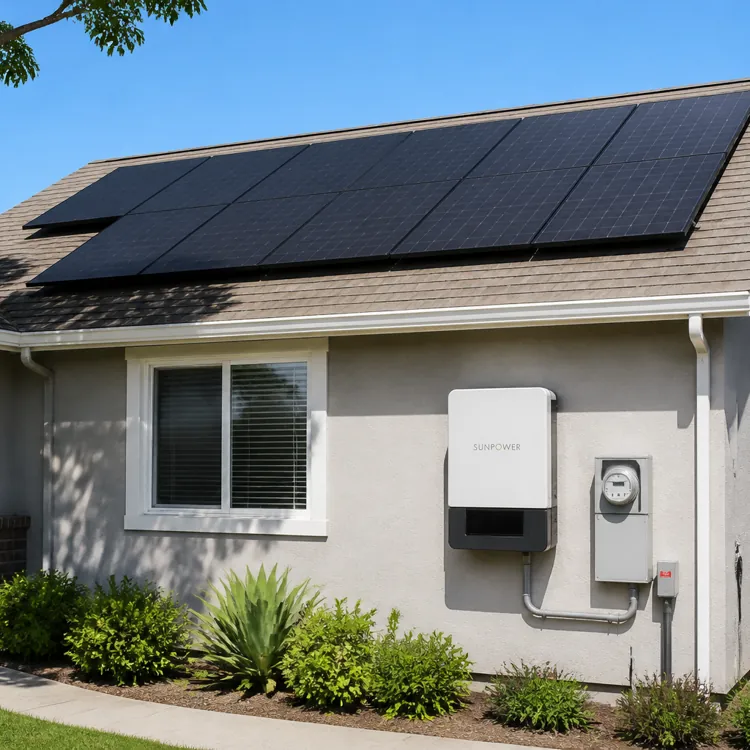
Solar panels only generate electricity while the sun is shining. A battery lets you store energy for later use, like at night or during a power outage. It’s worth considering if you expect your utility company to keep raising rates. It’s especially worth considering if backup power or using more of your own solar energy is a priority.
The biggest downside to a solar battery is the price. Adding one can increase your total solar costs by $7,000 to $18,000.
Anecdotally, Denise in Barrington regretted not getting a system that provides backup power during outages. “If I was to do the installation again, I would somehow try to make it so we can run the solar panels directly to the house or at least certain appliances,” she wrote in a review.
Did you know?
A 2026 state law allows qualifying plug-in solar devices up to 1,200 watts. You don’t need utility approval, an interconnection review or related fees, though your utility may ask you to notify it after installation.
2. How much will I save over time?
Over 25 years, the average New Hampshire homeowner with solar panels is estimated to avoid $35,806 in total utility costs. That projected amount can vary based on future utility rates, your electricity use and how much power your system produces.
“We've been saving money,” M. in Hooksett wrote in a review. “This became noticeable in the spring following our installation in September two years ago. But during the winter, snow accumulation on our slightly pitched roof reduced the system’s efficiency, which led us to lose some usable time.”
Robert in Concord also seems mostly happy with his decision to go solar. He liked the lease option because it avoided a big upfront cost. However, he didn’t realize solar production would drop significantly in winter.
3. Is my house a good candidate for solar panels?
This is really three questions:
How old are your appliances? The first step is to ensure that your electrical loads are as small as possible. For instance, if you have an older refrigerator or air conditioning unit, it’s smart to upgrade those before investing in solar panels.
What is the size and angle of your roof? Solar panels perform best on south-facing roofs. North-facing roofs generally produce less solar power, especially with a steep pitch, so you may need a larger system to meet the same energy needs.
What is the condition of your roof? If you have to replace your roof, do that before you install solar panels. Solar panels are designed to last 25 to 30 years, so you want your roof to last just as long. Otherwise, it could cost thousands to remove the panels, fix your roof and reinstall the panels again.
4. How long will I stay in my house?
It takes years for electric bill savings to offset the initial cost — about 8.8 years years on average in New Hampshire. If you sell your house and move before then, you might not fully realize the financial benefits of your solar investment.
Solar panels last 25 to 30 years.
It’s true that solar panels can increase the value of your home. But they can also complicate a sale. This is especially true if you lease your system, since the buyer may need to take over the contract.
If you think you’ll move in the next couple of years, you may want to consider a home improvement project with a better return on investment, like a kitchen or bathroom remodel.
5. Am I eligible for any financial incentives?
A lot of residential solar incentives in New Hampshire have expired over the last couple of years. But a few incentives can still help lower solar costs. Plus, some cities and towns offer property tax breaks for solar equipment.
The 30% federal solar tax credit expired in 2025.
Eversource currently offers $230 per eligible kWh, up to $3,000, for homeowners to put toward a home battery.
The battery incentive requires you to let Eversource use some stored power during certain high-demand periods.
What to know about net metering in New Hampshire
Net metering gives you bill credits for extra solar power you send to the grid. Eversource, Liberty, Unitil and New Hampshire Electric Cooperative all offer some form of net metering, but rates and rules vary.
Eversource, Liberty and Unitil customers can receive credits under New Hampshire’s current net metering tariff. Older systems may be grandfathered under previous rules, while newer systems are subject to the current tariff and its applicable legacy period.
It can be a good deal if you qualify. “We've had two months now with a power bill where Eversource owe us money,” Ray in Hooksett told us. “We're selling lots of electricity back to the grid.”
Did you know?
It’s a common misconception that solar panels will completely eliminate your monthly power bill — this is not always the case.
Pros and cons of solar panels in New Hampshire
Cheaper utility bills aren’t the biggest advantage for some. “We continue to pour carbon into the atmosphere and we're all gonna pay that price so we felt going solar was the right thing to do,” Edward in Newmarket told us. Overall, he is happy with his decision to go solar and feels fortunate to be able to afford it.
For others, it’s not worth it because their systems don’t live up to expectations. Richard in Londonderry said that what his solar company promised didn’t match reality. Now, he’s still paying about the same for electricity plus a monthly solar payment.
Pros
- Cheaper energy bills
- Better for the environment
- Could add value to your home
- Low maintenance costs
Cons
- Upfront costs
- Production variations
- Potential roof problems
- Could make your house harder to sell
Compare solar companies in New Hampshire
People have had mixed experiences with solar companies. In the best-case scenario, it’s easy to make the switch, and you’re happy with the system’s performance. In the worst-case scenario, you end up paying thousands for mid-tier solar equipment from a company with poor customer service and no follow-up or support. Read our guide to solar companies in New Hampshire for more.
| Company | Customer rating | Pro install | Max. panel efficiency | Panel warranty | Payment options | Year founded | |
|---|---|---|---|---|---|---|---|
 Sunrun | Get Started | 4.3 |  | 22% | 20 years | Cash, loan, lease, PPA | 2007 |
 NuWatt Energy | Learn More | 5.0 | | Varies | 25 years | Cash, loan, PPA | 2023 |
 Venture Solar | Learn More | 5.0 | | Varies | 25 years | Cash, loan, lease | 2014 |
FAQ
What are the benefits of going solar in New Hampshire?
Cheaper energy bills: New Hampshire’s electricity rates are relatively high, which adds up to a lot of savings when you switch to solar. Going solar now means that your monthly energy expenses will be more predictable (and often lower). It also protects you from future energy cost increases.
Better for the environment: Traditional energy sources like coal and natural gas release carbon dioxide and other pollutants into the air. Installing solar panels helps the environment by reducing greenhouse gas emissions.
Higher home resale value: Installing solar panels can increase a home’s value. The exact increase in value varies by location, with homes in active solar markets sometimes seeing even higher boosts.
More energy independence: Some homeowners pair solar with battery storage for more energy independence and backup power during outages.
What are the drawbacks of going solar in New Hampshire?
Solar equipment is expensive: Solar panel prices typically start between $10,000 and $30,000. It’s even more expensive if you want a solar battery for energy storage. Solar battery costs are generally between $7,000 and $18,000. Grid-tied systems need battery storage or another backup setup to keep powering a home during an outage.
Potential roof leaks: The installation process involves drilling holes into the roof to anchor the panel mounting systems. If not done correctly, this can lead to leaks or structural damage.
Could make your house harder to sell: Solar panels can make a home harder to sell if they’re leased or financed, since the buyer may have to take over the agreement. Some buyers may also worry about roof repairs, maintenance or whether the system will actually save them money.
Energy production varies: Solar panels still work on cloudy days, but less available sunlight does affect how efficiently they produce energy. Snow cover may also temporarily reduce efficiency until it's removed or melts off.
» MORE: Solar energy pros and cons
How do I know what system size I need?
First, look at your electric bill. It should say how many kilowatt-hours (kWh) you used last year. As a rough starting point, divide annual electricity use by about 1,200. Then use a site-specific calculator such as NREL’s PVWatts or get installer estimates to account for your roof and location.
For example, if you used 12,000 kWh of electricity last year, you would need a 10-kW system. If you used 10,800 kWh, you would need a 9-kW system.
How can I pay for solar panels?
Financing options and leasing programs make solar more affordable for New Hampshire homeowners. Ideally, your monthly electric-bill savings are enough to offset your solar payment
Solar loans work like any other type of home improvement loan. There’s an application and approval process. You pay it back over time (with interest) each month.
Leasing solar panels lets you set up a system without the high upfront costs. Monthly payments usually range $150 to $250. Agreements last 20 to 25 years.
» SOLAR PANELS: Lease vs. buy
Are solar panels expensive to maintain?
Routine maintenance is usually limited, but homeowners may still face occasional repair, equipment or professional service costs. If you clean the solar panels yourself, the only maintenance cost will be the water used to hose them down. Hiring a professional to clean your solar panels typically costs between $100 and $350.
What does cost per watt mean?
Most installers set the price according to the system’s wattage. Similar to “cost per square foot” when buying a house, “cost per watt” allows you to compare the relative value of a solar panel system. It shows you the per-dollar price of your system’s energy production potential. According to our research, the average cost per watt is $2.88 in New Hampshire.
Bottom line: Is going solar worth it for you?
Given rising energy costs in New Hampshire and elsewhere, financing solar panels can make sense if your monthly loan payment is lower than — or close to — what you would otherwise pay for your utility, especially if you plan to stay in the home long enough to benefit from the savings. Once the system has paid for itself, the electricity it produces can significantly reduce your ongoing energy costs.
Solar costs vs. savings: New Hampshire and nearby states
| 6-kW system cost (before incentives) | 10-kW system cost (before incentives) | Typical system size needed* | Average cost per watt | Total utility power cost savings** | |
|---|---|---|---|---|---|
| Maine | $17,640 | $29,400 | 11.5 kW | $2.94 | $65,297 |
| Massachusetts | $17,460 | $29,100 | 10.98 kW | $2.91 | $92,499 |
| New Hampshire | $17,280 | $28,800 | 12.83 kW | $2.88 | $35,806 |
| Vermont | $16,500 | $27,500 | 11.15 kW | $2.75 | $98,684 |
Article sources
ConsumerAffairs writers primarily rely on government data, industry experts and original research from other reputable publications to inform their work. Specific sources for this article include:
New Hampshire Municipal Association, “What Every New Hampshire Town & City Needs to Know About Solar Energy Today.” Accessed Sept. 30, 2026.
New Hampshire Department of Energy, “Thinking About Installing Solar at Your Home.” Accessed July 28, 2026.
Eversource, “New Hampshire Home Battery Storage System Incentives.” Accessed Sept. 30, 2026.
New Hampshire Department of Energy, "Net Metering." Accessed Sept. 30, 2026.
Federal Trade Commission, "Solar Power for Your Home." Accessed Sept. 30, 2026.
Solar Energy Industries Association, "Residential Consumer Guide to Solar Energy." Accessed Sept. 30, 2026.