

- Harsh reality sets in as funding for SNAP food program runs out this weekend
- Political parties blame each other, MTG warns that voters are "pissed"
- Policy group says it's not true there are no contingency funds available
It’s day 28 of the federal shutdown and funding for the Supplemental Nutrition Assistance Program (SNAP) runs out this weekend, cutting off food aid to 42 million Americans. Politicians from both parties are using the prospect of human suffering to further their goals, seeking to shift blame for the shutdown onto the opposite party.
There are scattered efforts to keep the program running:
- A coalition of 23 state attorneys general filed suit to block the blockage;
- Scattered legislative attempts have so far produced nothing. Sen. Josh Hawley (R-MO) picked up ten new sponsors for his bill that would keep SNAP alive. Needy families in Missouri should not be going hungry because a bunch of politicians in DC can’t figure out how to open the government,” said Hawley;
- The Center for Budget and Policy Priorities said that reserve funds to keep SNAP operating are available and should be used, as they recently were to keep the WIC (Women, Infants and Children) program in operation.
Congress has no plans
The House of Representatives is in recess and House Speaker Mike Johnson told House GOP members that party leaders have no plans for legislation that would put expiring food benefits up for a vote. "Things are getting real" this week, Johnson said as he urged members to brace for mounting pressure from their constituents, Politico reported.
Johnson said the "pain register is about to hit level 10," saying that would put maximum pressure on Democrats to cave in to GOP demands that any resolution includes cuts in Affordable Care Act funding. Some Republicans, including Missouri's Hawley, have said the stand-off has gone on long enough and 42 million poor and disabled Americans must not be left without food.
"Congress must not let that happen," Hawley said in an op-ed. "America is a great and wealthy nation, and our most important wealth is our generosity of spirit. We help those in need. We provide for the widow and the orphan. Love of neighbor is part of who we are. The Scripture’s injunction to “remember the poor” is a principle Americans have lived by. It’s time Congress does the same."
States file suit against the "unlawful" shutdown
A coalition of 23 state of attorneys general and governors have filed a lawsuit against the U.S. Department of Agriculture and Secretary Brooke Rollins for their role in the aid cut-off.
“It is clear President Trump and his USDA are making a deliberate, illegal, and inhumane choice to not fund the SNAP program during the federal government shutdown despite the availability of contingency funds. The government is legally required to make payments to those who meet the program requirements,” said Colorado Attorney General Phil Weiser. “We are asking the court to resume essential food assistance for the more than 600,000 Coloradans who use SNAP benefits to feed themselves or their families.”
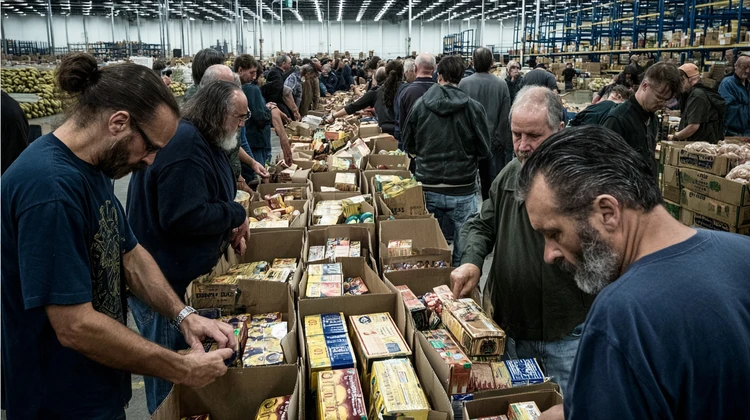
The lapse in benefits will have dire consequences for the health and well-being of Americans who rely on the program to feed themselves and their families and will also put unnecessary strain on state and local governments and community organizations, as families increasingly rely on emergency services and local food pantries that are already struggling to fill a growing nutrition gap. It will affect school systems and college and university communities, where food insecurity will stand in the way of educating our students.
Suspending SNAP benefits will also harm the hundreds of thousands of grocers and merchants that accept SNAP payment for food purchases. USDA has estimated that in a slowing economy, every $1 in SNAP benefits generates $1.54 in economic activity.
Joining in the lawsuit are the attorneys general of Arizona, California, Connecticut, Delaware, the District of Columbia, Hawaii, Illinois, Maine, Maryland, Massachusetts, Michigan, Minnesota, Nevada, New Jersey, New Mexico, New York, North Carolina, Oregon, Rhode Island, Vermont, Washington, and Wisconsin. The Governors of Kansas, Kentucky, and Pennsylvania have also joined.
Money is available: CBPP
The Trump Administration's claim that no contingency funds are available to keep SNAP benefits coming is not accurate, according to the Center for Budget and Policy Priorities. "This stands in opposition to the law and prior practice, including by the Trump Administration itself, the CBPP said in a published statement.
"The Administration could use its legal transfer authority — the same authority it already used to provide additional funds to WIC — to supplement the contingency reserves, which alone are not enough to fund families’ full benefits for November. The Administration must use all available options to fund November benefits for the 1 in 8 people in the U.S. who need SNAP to afford their grocery bill.
- The plain language of the law;
- Prior Trump Administration practice ― including as recently as a few weeks ago in the Agriculture Department (USDA) Lapse of Funding Plan, which the agency has since removed from its website;
- The first Trump Administration’s understanding, as communicated repeatedly in multiple USDA documents and confirmed by the Government Accountability Office (GAO), that contingency funds could be used for SNAP benefits during the 2018-2019 shutdown.
- Previous administrations’ understanding that contingency funds could be used for SNAP benefits during a shutdown.
Under past shutdowns, during both Republican and Democratic administrations, SNAP benefits have always been provided using available funding sources to prevent a break in benefits. While it is not clear whether past administrations used the contingency reserve or instead used other available funding sources, making use of the contingency reserve unnecessary, the guidance documents from past shutdowns or near-shutdowns make it clear that the SNAP contingency reserve was available to cover regular SNAP benefits, CBPP said.
By law, it said, individuals and families who meet SNAP’s eligibility requirements are entitled to benefits. Despite this requirement, historically Congress has treated SNAP as what is known as an “appropriated entitlement,” funding SNAP through the annual appropriations process with the following language (using the fiscal year 2024 language as an example.
"People are pissed"
Putting it all a bit more plainly, Rep. Marjorie Taylor Greene (R-Ga.) railed against the White House political team in a conference call yesterday and said people are “pissed” about Republicans failing to deliver on “America First” principles, Politico said.