Car Recalls and Safety Alerts

The topic of automotive safety and recalls is centered on the rising number of traffic deaths, the dangers posed by larger vehicles like SUVs and trucks, and the specific issues related to electric vehicles (EVs). It covers a wide range of concerns including vehicle design flaws, safety features like automatic emergency braking and helmet laws for motorcyclists, and the increasing trend of unrepaired recalled vehicles being sold to consumers. Recent reports highlight the need for better vehicle design and road safety measures, especially for vulnerable road users like pedestrians and cyclists. The content also addresses specific vehicle recalls, such as those affecting Tesla and other EVs, and the role of legislation in either protecting or potentially endangering consumers.

Latest

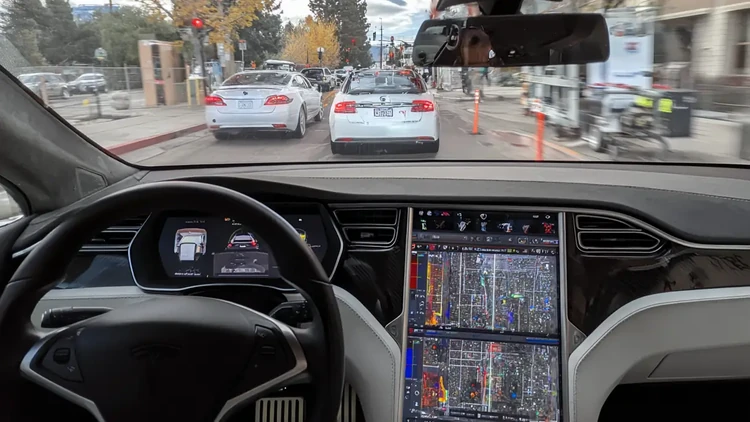
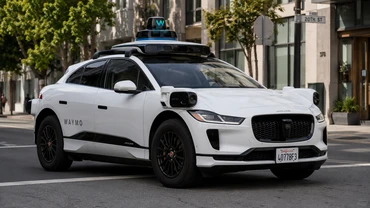
Waymo recalls its fleet of robotaxis

One unoccupied vehicle drove into flood waters and was swept away

Featured Automotive News photo

Waymo is recalling nearly 3,800 robotaxis after one autonomous vehicle drove into floodwaters in San Antonio, Texas.

Federal regulators said the software could slow for flooded roads but not always stop, creating a potential crash risk.

The recall adds to growing scrutiny of autonomous vehicle safety, as Waymo expands service across major U.S. cities.

Waymo, Alphabet’s self-driving vehicle subsidiary, has issued one of the largest recalls in the history of the autonomous ve...

Read Article
Featured Automotive News photo
2025
Article Image

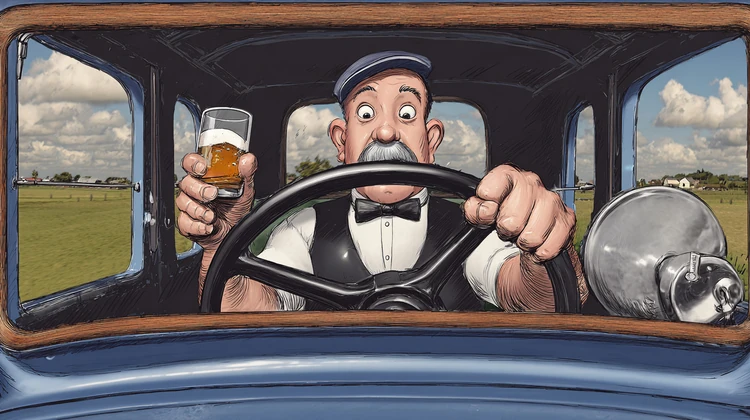
Car culture and the DUI divide: What your vehicle says about risk

• A new analysis links car brand ownership to DUI citation rates in America’s 50 largest cities.
• BMW, RAM, and Acura drivers top the list for DUI involvement, but regional culture shapes who gets caught.
• The findings suggest that drunk driving behavior is as much about identity and geography as it is about alcohol.


A new dataset from Suzuki Law Offices connects DUI citation rates across the 50 largest U.S. cities with vehicle brand ownership, revealing deep cultural and regional patterns that reflect not just road safety, but lifestyle, identity, and enforcement gaps.

The study found that car brand choice can serve as a proxy for risk behavior — one that varies dramatically across regions, and even within the same state.

The brands most linked to DUIs

Across all major metros, BMW, RAM, and Acura drivers lead DUI citation rates, with 3.09, 3.00, and 2.69 citations per 1,000 licensed drivers, respectively. But regional breakdowns reveal sharp contrasts:

RegionTop brand for DUIsCitations per 1,000 driversNotable cities
WestBMW3.42San Jose, Fresno, Sacramento
SouthRAM3.31Dallas, Houston, Jacksonville
MidwestGMC2.98Omaha, Minneapolis, Kansas City
NortheastAcura2.72Boston, New York, Philadelphia

At the other end of the scale, Mercury, Lincoln, and Land Rover drivers rank among the least likely to receive DUI citations—each under 0.8 per 1,000.

The implication: cultural and economic differences in how Americans use their vehicles play a major role in shaping DUI risk. Pickup-heavy states such as Texas, Oklahoma, and Florida show strong correlations between RAM or Ford ownership and DUI incidence, while luxury import-heavy metros like California and New York see risk concentrated around leisure driving and nightlife districts.

Regional identity and risk

The data aligns with broader national research:

  • Southern states report 37% higher binge drinking prevalence among male drivers than the national median (CDC, 2024).

  • Western states show higher DUI arrest rates despite lower self-reported heavy drinking, suggesting stronger enforcement but riskier weekend behavior.

  • The Midwest—especially Nebraska, Wisconsin, and Minnesota—leads in alcohol-involved crash fatalities (6.3 per 100,000 residents), even with widespread sobriety checkpoints.

Together, the numbers paint a picture of a drunk driving problem deeply intertwined with car culture, geography, and uneven enforcement.

When the vehicle reflects the driver

Certain car brands appear to mirror their owners’ psychology and usage patterns. Performance models such as BMW, Dodge Charger, and Infiniti show 42% higher DUI involvement relative to their registration share, while pickup trucks and SUVs dominate rural and suburban DUI crashes tied to longer travel distances and fewer rideshare options.

Luxury sedans and sports coupes, meanwhile, account for the bulk of urban nighttime arrests near entertainment zones.

Studies from the Insurance Institute for Highway Safety (IIHS) and AAA Foundation for Traffic Safety back this up: vehicle type strongly correlates with speeding, night driving, and seatbelt neglect—behaviors that often accompany impaired driving.

Car brands and enforcement disparity

According to NHTSA’s 2024 Enforcement Trends Report, DUI patrol allocation varies sharply across regions—up to 40% fewer saturation patrols in suburban areas compared to urban cores.

That matters because vehicle types aren’t evenly distributed. RAM and GMC trucks make up 28% of suburban registrations, where patrol coverage lags, while BMW and Acura owners dominate metro centers where patrols are frequent but predictable.

As one highway safety researcher put it:

“We see DUIs cluster where enforcement can find them, not always where they’re happening.”

A cultural divide on four wheels

Cultural norms and local economies shape how and where DUI risks manifest:

  • In oil and agricultural states, 53% of alcohol-related crashes occur on rural two-lane roads.

  • In tech and entertainment hubs, 68% of DUI citations occur within five miles of nightlife zones.

  • In college towns, compact car ownership correlates with underage DUI arrests, especially in Arizona, Colorado, and Ohio.

As Suzuki Law researchers summarize:

“Car brands can tell us as much about driving risk as income or age. They’re cultural signifiers of how, when, and why people drink—and how often they think they’ll get caught.”

Policy and liability implications

The legal and financial ripple effects are mounting:

  • Insurers are incorporating vehicle-type DUI risk into pricing, adding up to 15% premium hikes for some brands.

  • Fleet operators face growing exposure if company vehicles fall into high-risk categories.

  • Courts in states such as Texas and Florida are factoring vehicle use patterns into civil negligence cases involving DUI injuries.

These trends suggest DUI liability is expanding beyond the driver—implicating corporations, insurers, and even community infrastructure.

The economic and social cost

Alcohol-impaired driving costs the U.S. about $44 billion a year, according to the CDC. But crash costs vary by vehicle type:

  • Luxury car DUIs carry 32% higher repair costs than average.

  • Pickup DUIs result in 15% higher property loss claims due to vehicle mass and impact force.

  • In 2024, urban alcohol-involved crashes caused $6.7 billion in damages, concentrated in metros with heavy BMW and RAM ownership.


The takeaway

The kind of car Americans drive, the regions they live in, and the roads they use all combine to form a predictable geography of impairment.

Suzuki Law’s findings hint at the next frontier in DUI prevention—not just tougher laws or more patrols, but a deeper look at how car culture itself shapes risk.


How to protect yourself from impaired drivers

1. Spot the signs early.
Weaving between lanes, inconsistent speed, delayed reaction at lights, or drifting onto shoulders are classic indicators of impaired driving. Keep distance—at least five seconds of following time.

2. Avoid “closing the gap.”
If a driver appears erratic, do not try to pass or “teach them a lesson.” Pull back and let them move ahead. Many DUI-related crashes occur when sober drivers react aggressively or unpredictably.

3. Use route awareness.
Weekend nights, holidays, and early-morning commute hours after major events see spikes in DUI activity. Plan alternate routes that bypass nightlife zones, bar corridors, or major stadium exits.

4. Report dangerous behavior.
If you suspect an impaired driver, note the vehicle’s make, color, and direction. Pull over safely before calling 911. Law enforcement relies heavily on civilian reports for DUI interventions.

5. Reassess your own risks.
Fatigue, medications, and small amounts of alcohol all degrade reaction time. If you’re unsure, wait, hydrate, or use a rideshare. Even a low BAC can mean impaired judgment behind the wheel.

Bottom line:
DUI risk isn’t confined to one region or vehicle type—it’s everywhere. The best defense is distance, awareness, and restraint.
Article Image

Minivans and pickups lag in rear seat safety, IIHS finds

  • Updated crash tests show back seat passengers face higher risks than those up front

  • Stricter standards cut the number of Top Safety Pick award winners to 48, down from 71 last year

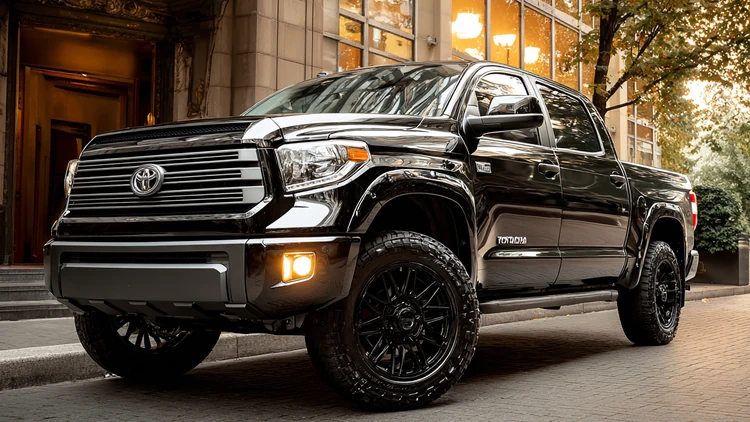
  • Only two large pickups — the Rivian R1T and Toyota Tundra — made the 2025 list


Back seat protection falls behind

Minivans and pickups are falling short when it comes to protecting rear seat passengers, according to new safety testing by the Insurance Institute for Highway Safety (IIHS).

The group’s 2025 Top Safety Pick awards reveal that belted adults riding in the back seat of newer vehicles face a higher risk of fatal injury compared with those in the front. The shortfall reflects how much faster automakers have improved front-seat safety features, leaving the back seat lagging behind.

IIHS now requires that second-row occupants have protection equal to what’s offered in the front. As a result, only 48 vehicles earned safety awards this year — down from 71 at this point in 2024.

SUVs dominate, minivans and pickups falter

Small and midsize SUVs claimed the majority of honors, with 12 vehicles earning the “Top Safety Pick” rating and the rest achieving the higher “Top Safety Pick Plus.”

But the picture was bleak for other categories. Not a single minivan, large car, small pickup, or minicar made the list. Only two large pickups — the Rivian R1T and Toyota Tundra — qualified under the tougher rules.

Detroit automakers struggled as well. Ford landed two models — the Mustang Mach-E and Lincoln Nautilus — in the Top Safety Pick Plus category, while Chevrolet’s Traverse managed a Top Safety Pick. Stellantis failed to place any vehicles.


What to know

  • Back seat safety lags: IIHS finds rear passengers in new vehicles face higher risks than those in the front.

  • Tougher standards shrink the list: Only 48 vehicles won Top Safety Pick awards this year, down from 71 in 2024.

  • SUVs shine, minivans flop: Small and midsize SUVs dominated, while no minivans or small pickups qualified.

  • Few pickups make the cut: Only the Rivian R1T and Toyota Tundra passed the new tests.

  • Detroit 3 struggle: Ford placed two models, Chevrolet one, and Stellantis none.

  • Key tech missing in back seats: Features like pre-tensioners and load limiters, common up front, are rare in the rear.


Automakers urged to step up

IIHS President David Harkey said he was disappointed with the lack of strong performers from U.S. brands, particularly in family-oriented vehicles such as minivans.

“Some of the automakers behind vehicles advertised as family-friendly need to step up and make improvements quickly,” he said.

Harkey pointed to two key safety technologies that are now common in the front seat but rare in the back: pre-tensioner belts, which tighten before a collision to position passengers properly, and load limiters, which loosen slightly during impact to reduce chest injuries.

How the tests worked

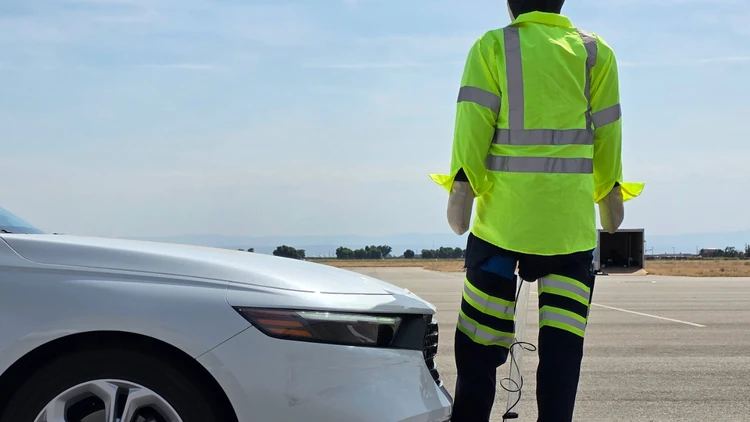
IIHS researchers simulated head-on collisions at 40 mph with 40% overlap, measuring how well seat belts protected rear passengers. A new, smaller crash-test dummy — representing either a petite woman or a 12-year-old child — was placed behind the driver to highlight risks to smaller occupants.

The tests tracked chest injuries, abdominal trauma from “submarining” under the lap belt, and how far forward a passenger’s head traveled on impact.

“It wasn’t that the back seat has become less safe — it’s just that we’ve continued to make all these advancements in the front seat, and we’ve left the back seat behind,” Harkey said.

Bottom line for families

Despite the weaker scores, IIHS continues to recommend the back seat as the safest place for children under 13. Still, the findings highlight how far automakers must go to bring rear passenger protection in line with the front.

Article Image

Consumer group opposes heavier trucks on federal highways

  • Truckers and shippers are pushing for heavier weight limits for trucks on federal highways.
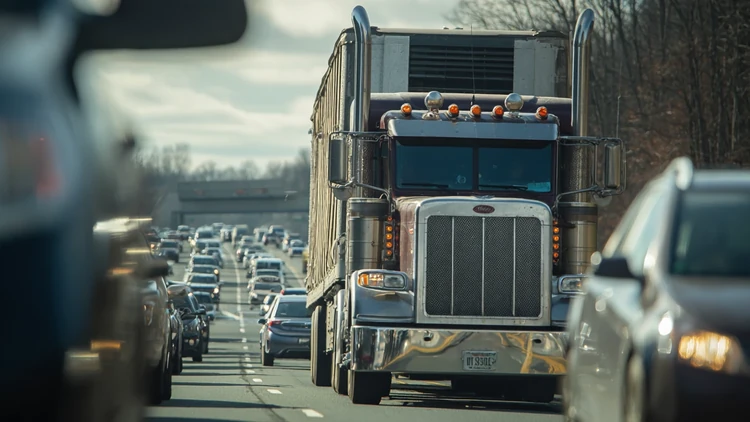
  • Congress is considering a measure that would allow trucks up to 91,000 pounds.
  • The National Consumers League opposes the measure, saying it would be a "significant threat" to public safety and infrastructure.

Congress is considering a measure that would allow heavier trucks on federal highways — something the National Consumers League (NCL) thinks is a bad idea.

The organization says the move would be "a significant threat to public safety, infrastructure, and taxpayers."

The proposal under consideration is H.R. 3372, introduced by Rep. Dusty Johnson (R-SD), which seeks to establish a 10-year pilot program allowing six-axle trucks to operate at weights up to 91,000 pounds — an increase from the current federal limit of 80,000 pounds. Participation would be voluntary for states.

In an opinion piece published today in The Hill, NCL’s Senior Director of Consumer Protection & Product Safety, Daniel Greene, joined David Williams, the President of the Taxpayers Protection Alliance, to warn lawmakers and the public about the dangers of weakening truck size and weight limits.  

“Increasing size and weight limits would exacerbate the nation’s traffic safety crisis,” write Greene and Williams. “The heavier the truck, the greater the crash forces, increasing the lethality accidents.”  

400% more likely to crash

Data cited in the article show that trucks weighing 91,000 pounds or more are up to 400 percent more likely to be involved in major crashes and cause significantly more damage to roads and bridges. Replacing weakened infrastructure to accommodate these trucks could cost taxpayers $80 billion, according to a 2023 analysis.  

“Politicians and advocacy groups across the political spectrum may not always agree on the best way to fix America’s roads, but they should agree that introducing larger and heavier vehicles is a recipe for disaster,” Greene and Williams continued. “ Lawmakers should swerve away from these policy potholes and commit to real bipartisan protections.”  

Supporters say the heavier weight limits would enhance supply chain efficiency, address the truck driver shortage by maximizing freight per trip and lower fuel consumption per unit of freight. 

Proponents, including the Shippers Coalition and the American Farm Bureau Federation, contend that the additional axle required for these heavier trucks would maintain or even improve safety by distributing weight more effectively and reducing stopping distances.

But NCL is calling on Congress to uphold current truck size and weight limits and reject efforts to allow heavier trucks or longer multi-trailer rigs on U.S. highways. 

Article Image

Pedestrian deaths rising faster than overall U.S. population growth

Article Image

Virginia to require speed-limiting tech for reckless drivers

In brief ...

  • đźš— New law mandates speed-limiting technology for drivers convicted of reckless speeding—specifically those caught going over 100 mph.

  • ⚖️ Starting July 2026, judges will order enrollment in “intelligent speed assistance” (ISA) programs; repeat offenders may be offered the program in lieu of license suspension or jail.

  • 📉 Advocates say the tech could help reduce speeding-related fatalities, which accounted for over 12,500 U.S. deaths in 2022.

Details

A new Virginia law aimed at cracking down on reckless driving will require some convicted speeders to install intelligent speed assistance (ISA) technology in their vehicles—a move hailed by road safety advocates as a potential life-saver.

Signed into law as HB2096, the policy applies to drivers convicted of reckless driving at speeds exceeding 100 miles per hour. Starting in July 2026, courts will be required to enroll those individuals in an ISA program, which uses GPS and speed-limit databases—or cameras that detect road signs—to either alert drivers when they're speeding or actively limit the vehicle’s speed.

“This will make our streets safer,” said Del. Patrick A. Hope (D-Arlington), a lead sponsor of the bill.

Better than jail ...

The law also offers ISA as an alternative to license suspension or jail time for repeat traffic offenders who have accumulated enough demerit points. Under the program, drivers will be barred from operating any vehicle not equipped with ISA and will be required to pay for installation themselves.

An emotional push for the bill came from Tammy McGee, whose teenage son, Conner Guido, was killed by a reckless driver. “I hope that by installing speed-limiting technology on the vehicles of those who choose to repeatedly speed, we can save lives,” she said.

A proposed amendment by Gov. Glenn Youngkin would give judges discretion over how long a driver remains in the program—pending approval from the state legislature.

The law applies only to private passenger vehicles, not commercial ones, but it reflects growing national momentum for ISA. New York City, for example, has reported a 64% drop in high-speed driving in areas where ISA-equipped fleet vehicles are in use. Other cities, including Ventura County (CA), Somerville (MA), and Washington, D.C., have already launched pilot programs.

With speeding involved in nearly 30% of U.S. traffic fatalities, according to the National Highway Traffic Safety Administration, safety groups like the Insurance Institute for Highway Safety and Families for Safe Streets are calling for broader adoption of the tech—including federal mandates.

In January, the National Transportation Safety Board (NTSB) recommended ISA be required in all new vehicles—either as a passive alert system or one that actively limits speed.

Article Image

More than 7,000 Jaguar Land Rovers recalled

Jaguar Land Rover is recalling 7,276 2025 Range Rover and Range Rover Sport vehicles. The second-row center seat belt buckle may not latch correctly due to a manufacturing error.

An unlatched seat belt will not properly restrain an occupant, increasing the risk of injury.

What to do

Dealers will replace the center seat belt buckle and buckle retaining bolt, free of charge. Owner notification letters are expected to be mailed by May 2, 2025. Owners may contact Land Rover's customer service at 800-637-6837. Land Rover's number for this recall is N989.

Owners may also contact the National Highway Traffic Safety Administration Vehicle Safety Hotline at 888-327-4236 (TTY 888-275-9171) or go to nhtsa.gov.

To determine if your vehicle is included in the recall, visit the NHTSA recall page and enter the license plate number or 17-digit VIN.

Article Image

How to stay safe on the road during daylight saving time

With daylight saving time just days away, many consumers may not think about some of the unintended risks associated with this bi-yearly event. 

One such risk: an increase in traffic accidents. Several recent studies have highlighted the association between daylight savings time and more traffic accidents. 

To help keep consumers safe this weekend – and beyond – ConsumerAffairs interviewed Katie Ekstrom, the assistant vice president of Auto Product Development for Personal Insurance at Travelers. She shared the biggest risks to consumers on the road, how to stay safe behind the wheel, and the importance of being proactive. 

What are the biggest risks to drivers? 

Though the clocks only shift forward one hour, Ekstrom explained that we’re likely to feel the effects of that one hour. Drowsiness behind the wheel in the wake of daylight savings can be a major factor for drivers. 

“It can take several days to adjust to the time change fully,” Ekstrom told ConsumerAffairs. “Disruptions to sleep schedules can impact reaction times, alertness, and awareness of hazards, increasing the risk of accidents.” 

On top of that, while many consumers won’t complain about having the extra sunlight, it can be a hazard to drivers. 

“Morning sun glare, which is more common after the clocks move forward, can make it difficult to see other vehicles, contributing to crashes. In fact, sun glare is responsible for approximately 9,000 accidents each year, according to the National Highway Traffic Safety Administration,” Ekstrom said. 

How can drivers stay safe? 

With this information, consumers can still stay safe on the roads. Ekstrom’s biggest piece of advice is for consumers to be proactive and prepared when they’re driving this weekend. 

“To protect yourself, plan ahead by adjusting your sleep schedule and going to bed a little earlier each night. If you’re on the road and start to feel drowsy – do not push through, pull over and rest,” Ekstrom advised. 

When it comes to cutting down glare, the solution is simple: sunglasses. 

“Keep a pair of sunglasses in your car and use your sun visor to help cut down on glare,” she said. “Be extra cautious at intersections, as bright sunlight can make it difficult to see traffic lights and harder to spot pedestrians crossing the street.” 

Another way to stay safe on the road: eliminate potential distractions. 

“With focus already impacted by sleep loss, it’s best to keep distractions to a minimum by programming your navigation before you leave, saving meals for your destination, and staying off your phone,” Ekstrom said. 

It takes time to adjust to the time change

Ekstrom explained that it takes time for our bodies to fully adjust to the time change from daylight savings. This means that these impacts are not just immediately present, but can also have lingering effects in the following days.

“Make sure you’re giving yourself time to adjust to the changes,” Ekstrom said. “Drivers around you may also be impacted by the time change, so ensuring that you are following safe driving practices can contribute to improved driving safety overall.” 

Her final piece of advice: patience goes a long way. 

“Since all drivers are in the same boat, practicing patience can go a long way,” Ekstrom said. “Defensive driving, staying alert, and planning ahead can make all the difference.” 

2024
2023
2022