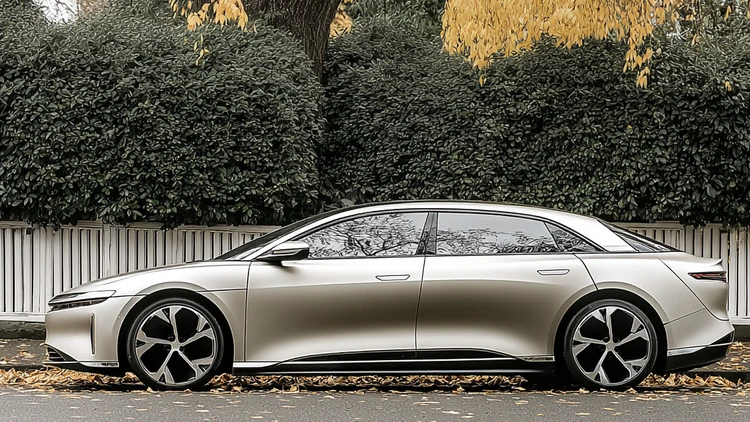
A new round of auto safety recalls is underway this week, affecting nearly every corner of the industry — from luxury EVs and off-road SUVs to motorcycles and heavy trucks. The National Highway Traffic Safety Administration (NHTSA) logged 15 major recalls, led by Toyota, Lexus, Jeep, and Lucid, all involving critical safety systems such as cameras, batteries, and suspension bolts.
Highlights of the Week
Lucid Air: Rearview Camera Failures
Lucid Motors recalled 2022–2025 Air sedans after discovering that the rearview camera image may fail to display properly — a violation of FMVSS 111, the federal visibility standard. Loss of the rear camera image could increase crash risk when backing up.
Fix: Dealers will install an updated software patch.
Mazda CX-50: Loose Suspension Bolts
Mazda recalled its 2025 CX-50 and CX-50 Hybrid models due to improperly tightened front suspension bolts. Loose bolts could lead to loss of steering control.
Fix: Dealers will inspect and tighten bolts to specification.
KTM & Husqvarna Motorcycles: Fuel Leaks
KTM North America reported possible fuel leaks in its 2024 Husqvarna Svartpilen 401 and Vitpilen 401, along with KTM 250, 390, and 990 Duke bikes.
Risk: Fuel leakage near ignition sources could cause a fire.
Fix: Dealers will replace the filler cap seal.
Jeep Wrangler & Grand Cherokee: Battery Fire Hazard
Fiat Chrysler (FCA US) issued a high-profile recall for 2020–2025 Jeep Wrangler and 2022–2026 Grand Cherokee models due to potential high-voltage battery failure.
Risk: Defective batteries may overheat and cause fires.
Fix: Dealers will inspect and replace battery components, with updated monitoring software.
Toyota, Lexus & Subaru EVs: Camera Woes Spread
Toyota Motor Engineering & Manufacturing recalled a massive list of vehicles — including nearly every 2022–2026 Toyota, Lexus, and Subaru Solterra EV/hybrid model — for the same rearview camera failure that hit Lucid.
This widespread issue hints at a possible supplier-level defect affecting multiple automakers.
Fix: Dealers will update vehicle software at no cost.
Kia Sorento & Telluride: Incorrect Spare Tire
Kia recalled 2025–2026 Sorento and Telluride SUVs for having an incorrect spare tire that violates FMVSS 110 requirements.
Fix: Dealers will replace the tire free of charge.
BMW X5 (2000–2001): Exploding Airbags Still Surface
BMW is recalling older X5 SUVs because the driver-side airbag inflator may explode, continuing fallout from the long-running Takata airbag crisis.
Fix: Owners should contact BMW dealers immediately for a free replacement.
Commercial & Specialty Vehicles
Volvo Trucks (2019–2026): Seat belt anchor and marker light failures.
Mack Granite (2024–2025): Headlight system failures.
Autocar XPEDITOR (2025–2026): Automatic emergency braking may shut off unexpectedly.
Smeal & Marion Fire Apparatus: Hydraulic hose and door latch defects.
Braun & Endera Mobility Vans: Wheelchair restraint retractors may fail to lock, creating hazards for wheelchair users.
Fixes: Dealers will inspect and replace defective components.
What to Do if Your Vehicle Is Affected
Step-by-Step:
Check your VIN: Visit NHTSA.gov/recalls and enter your Vehicle Identification Number (VIN).
Watch your mail: Automakers must send official recall notices within 60 days.
Schedule repairs early: Dealers perform recall fixes free of charge.
Never ignore dashboard warnings related to safety systems like airbags, brakes, or cameras.
Document the service: Keep your recall paperwork — it may protect resale value.
⚡ Quick Recall Stats
15 NHTSA recalls logged this week
Most affected brand: Toyota/Lexus (25 models)
Most serious risks: Fire hazards and safety system failures
Emerging pattern: Multiple recalls tied to electronic rearview camera systems
How to Stay Ahead of Vehicle Recalls
Even careful owners can miss critical recall alerts. Here’s how to make sure that doesn’t happen:
1. Sign up for alerts: Subscribe to NHTSA’s free recall notifications.
2. Register your vehicle: Ensure the automaker has your current mailing address.
3. Visit your dealer annually: Ask about outstanding service bulletins.
4. Use your phone: Many automakers now include recall lookup tools in their mobile apps.
5. Don’t delay repairs: Some recalls involve parts that may take weeks to arrive — early scheduling helps.