2023 Car Recalls and Safety Alerts

Article Image

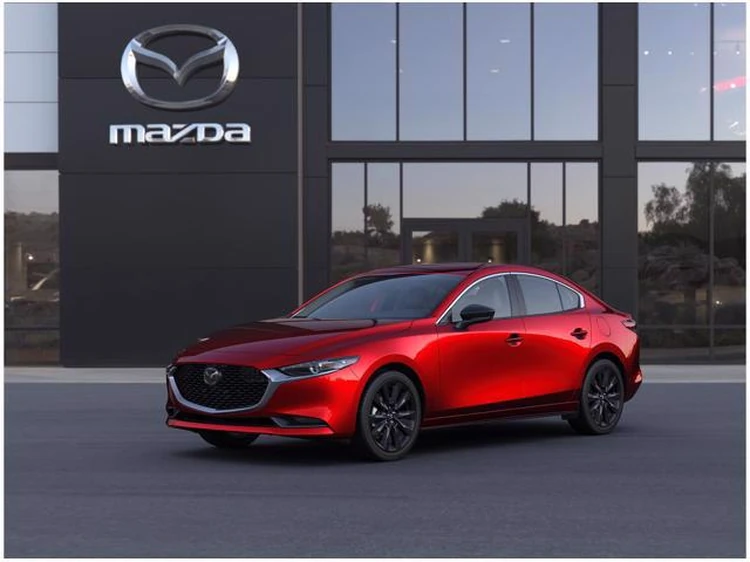
Mazda drives off with three IIHS TOP SAFETY PICK+ awards

Three Mazda models have earned the Insurance Institute for Highway Safety’s (IIHS) TOP SAFETY PICK+ award, the group's highest measure of safety on the road.

The three models are the 2024 Mazda 3 sedan, Mazda 3 hatchback and Mazda CX-30. The first two are small cars while the CX-30 is a small SUV.

What, exactly, sets them apart? All three were judged to have a “good” rating in the driver-side small overlap front, passenger-side small overlap front, original moderate overlap front and updated side tests.

All three have “acceptable” or “good” headlights across all trim levels and have a front crash prevention system that earns advanced or superior ratings in both the daytime and nighttime vehicle-to-pedestrian evaluations.

On the other hand, the next-highest tier of IIHS ratings –  TOP SAFETY PICK award – only requires an acceptable rating in the updated side test and only an advanced or superior rating in the daytime vehicle-to-pedestrian test.

According to IIHS, the Mazda 3 sedan and hatchback both meet the requirements for the higher-tier award with all standard equipment. The standard front crash prevention system earns superior ratings in both the daytime and nighttime vehicle-to-pedestrian evaluations. 

Two separate headlight variations are offered with different trims, one rated good and the other rated acceptable.

‘Constant pursuit of advanced safety’

"Mazda is proud to add to our list of top award winners," said Tom Donnelly, president and CEO of Mazda North America Operations. "We do so out of our constant pursuit of advanced safety, always aiming to provide our customers with the highest level of support and protection."

Previously, all three models earned IIHS's lower-tier TOP SAFETY PICK award. For the 2024 model year, Mazda said it made  system enhancements that improved safety and allowed the vehicles to earn the top, superior ratings in IIHS's pedestrian crash avoidance ratings, including their new nighttime tests.

IIHS says the CX-30 also qualifies for the “plus” with standard equipment. All models come with a front crash prevention system that earns superior ratings in the daytime and nighttime tests, and the two available headlight variations both earn good ratings.
Article Image

Pre-recall Alert: Brake and engine complaints increase

Brakes are among the most important equipment on a car or truck but it seems lots of car owners are reporting brake problems in recent weeks.

A ConsumerAffairs analysis of car owner complaints filed with the National Highway Traffic Safety Administration (NHTSA) indicates the problem is showing up among various makes and models.

It’s especially a problem for various Toyota models, including the 2018 Toyota Corolla, 2010 and 2012 Toyota Prius and the 2020 Toyota Highlander. The reported defects appear to be related to the ABS brake booster and brake booster pump assemblies, which can cause accidents due to difficulty operating the brakes.

While those cars are not yet subject to recalls, other recalled vehicles are still unrepaired because of a shortage of needed parts, especially for airbags and fuel systems. Among the recalled vehicles that still have no remedy are the GMC Acadia models, Chevrolet Traverse models, 2016 and 2017 Buick Enclave, and 2022 Ram 1500. 

Safety experts say the unavailability of parts poses a potential safety risk and has led to complaints about the manufacturer exceeding a reasonable amount of time for the recall repair.

Owners of 2018 Chevrolet Malibus. 2019 Honda Odysseys, 2017 Ford Expeditions and various Jeep Compass models have reported instances of stalling and unexpected shutdown – an obvious safety risk.

Chevy had the most complaints

Chevrolet led all brands with the most complaints in late September with 19. The most common safety defect reported is related to the 2018 Chevrolet Malibu, with the “Shift to Park” message frequently appearing.

This issue has been reported in multiple complaints and poses a significant safety concern as it can potentially lead to the vehicle shutting down unexpectedly.

Jeep and RAM both collected 18 complaints. Various Jeep models have reported stalling and shutdown complaints. The most common RAM complaint is related to the 2018 RAM 2500 model. 

Owners have reported the failure of the ABS and traction control systems, which intermittently stop working, causing the corresponding warning lights to flash. This defect has been reported to occur at various speeds and times, and can sometimes be temporarily resolved by restarting the vehicle. 

While these vehicles have yet to be called, NHTSA collects months of owner complaints before asking a manufacturer to issue a recall. Owners who are experiencing repeated problems with their vehicles can report the problem to NHTSA here.

Article Image

Two Honda models recognized for improved safety

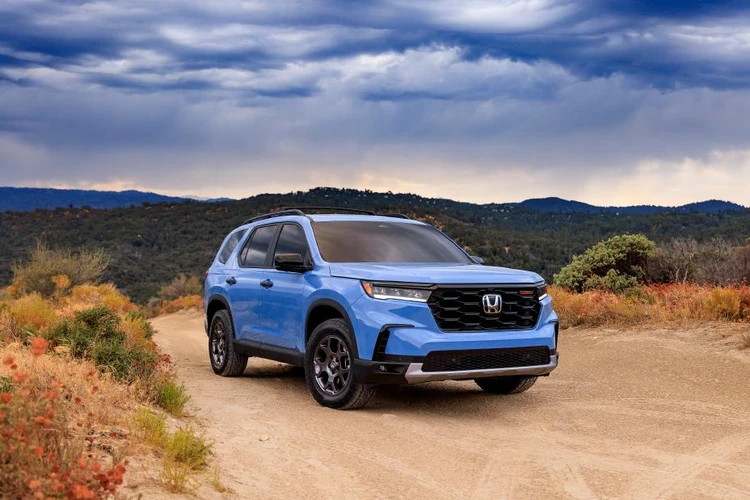
The Honda Pilot has driven off with the Insurance Institute for Highway Safety’s (IIHS) Top Safety Pick+, the organization’s highest safety award. The SUV earned the title thanks to improved performance in the passenger-side small overlap front crash test.

That test counts for a lot in IIHS ratings. To be a Top Safety Pick+, a vehicle has to achieve a “good” rating in the driver-side small overlap front, passenger-side small overlap front, updated side and original moderate overlap front tests. 

Headlights also count for a lot. A vehicle must have headlights rated “good” or “acceptable across all trim levels.

Redesigned for the 2023 model year, IIHS said the Pilot meets all the requirements for the “plus,” with a standard front crash prevention system that earns superior ratings in both the daytime and nighttime evaluations and good-rated headlights supplied on all trims.

The Accord also showed improvement

Another Honda model, the Accord, also won praise from IIHS for its performance in the updated moderate overlap front crash test. The midsize sedan earned a rare “good” rating in the new, challenging evaluation focused on rear-seat protection.

The other six midsize cars in the test didn’t perform as well as the Accord. However, the Subaru Outback earned an “acceptable” rating. The Nissan Altima and Toyota Camry were rated marginal. The Hyundai Sonata, Kia K5 and Volkswagen Jetta were rated as “poor.”

“In most of the midsize cars we tested, the rear dummy slid forward, or ‘submarined,’ beneath the lap belt, causing it to ride up from the pelvis onto the abdomen and increasing the risk of internal injuries,” IIHS President David Harkey said. “In the three poor-rated vehicles, measurements taken from the rear dummy also indicated likely injuries to the head or neck as well as to the chest.”

For a vehicle to earn a good rating, there must be reduced injury risk to the head, neck, chest or thigh, using a second-row dummy to measure impact. The dummy should remain correctly positioned during the crash without submarining. 

In a crash, the head should also remain a safe distance from the front seatback and the rest of the vehicle interior and the shoulder belt must remain on the shoulder. A pressure sensor on the rear dummy’s torso is used to check the shoulder belt position during the crash.

Article Image

Pre-recall: These car owners are reporting problems

Vehicle owners reporting problems to federal regulators last month singled out airbags, stalling, steering and acceleration problems, according to a ConsumerAffairs analysis of complaints filed with the National Highway Traffic Safety Administration (NHTSA).

The agency studies consumer complaints as part of its process of asking an automaker to issue a recall. It can be a lengthy process. Here are some of the issues consumers reported:

There were reports that airbags deployed without collision. There were also reported problems with faulty airbag sensors. 

Owners of several models across different brands including GMC, Toyota, Infiniti, Volvo, BMW, and Nissan have reported issues related to airbags, suggesting this is a widespread problem across multiple brands and models, posing safety issues.

 Owners of models from Genesis, Jeep, Chrysler, and Acura reported their vehicles lost power sometimes and would stall. These issues often occur while the vehicle is in motion, leading to a sudden loss of power, steering, and braking capabilities, posing a significant safety risk.

Some Ford, Chevrolet, Volkswagen and Honda owners reported issues related to power steering failure, erratic acceleration, and steering wheel sticking. These issues can also lead to loss of vehicle control, posing a significant safety risk.

Specific complaints

Some brands had more complaints than others. The five brands with the most NHTSA complaints are:

  1. Hyundai    43

  2. Chrysler    32

  3. GMC        15

  4. Subaru      11

  5. Ram          11

Among Hyundai complaints, the most common safety defect reported is related to the 2017 Sonata, with owners reporting that the vehicle burns oil at a high rate. This issue has led to instances of the vehicle running out of oil before reaching the recommended oil change mileage, posing a significant safety risk. 

In some cases, owners said the vehicle stalled and abruptly stopped in the middle of traffic, nearly causing accidents. The defect has been reported in at least five complaints, indicating a common issue among this specific make, model, and year. The defect may draw NHTSA attention due to the potential for sudden vehicle failure and accidents.

Cracked windshields

The most common complaint among Chrysler owners was stalling while GMC owners reported various airbag issues. Five Subaru owners reported their windshields cracked for no reason.

The most common safety defect reported by Ram owners is the failure of the ABS module and HCU in the 2018 Ram 2500. This issue results in the loss of stability control, antilock braking, cruise control, and trailer braking, making the vehicle unsafe to drive, owners said.

If you have an issue with one of these vehicles or any other one, NHTSA would like to hear from you. Report the problem here.

Article Image

Automatic emergency braking is now nearly universal in light vehicles, increasing safety

There's good news for car shoppers who consider safety a prime factor in choosing a vehicle. Buyers now have more to choices if they're looking for light vehicles -- those weighing 8,500 pounds or less -- with automatic emergency braking (AEB).

Three more automakers -- Mitsubishi, Nissan/Infiniti and Stellantis -- installed AEB on nearly all vehicles they produced between September 1, 2021, and August 31, 2022, according to the Insurance Institute for Highway Safety (IIHS).

That makes a total of 15 of the 20 car companies that pledged to equip at least 95% of their light-duty cars and trucks with the crash avoidance technology by the production year that began on September 1, 2022.

Substantial progress noted

Stellantis, with only 43% of its vehicles with AEB in 2021, made the most progress.

That company's dramatic increase means, according to IIHS President David Harkey, “there’s been another big jump in the number of affordable cars and SUVs with this important safety feature."

General Motors, Jaguar Land Rover, and Porsche also made substantial progress, with around three-quarters of their light-duty vehicles equipped with AEB, compared with around 60% last year.

Maserati’s numbers were essentially flat, with 71% equipped in the latest reporting period.

Automakers that have included AEB on at least 95% of the vehicles they produce include Audi, BMW, Ford/Lincoln, Honda/Acura, Hyundai/Genesis, Mazda, Mercedes-Benz, Mitsubishi, Nissan/Infiniti, Stellantis, Subaru, Tesla, Toyota/Lexus, Volkswagen and Volvo.

Supply chain issues

Not all of the news is good, though.

Honda/Acura dipped below the 95% threshold due to supply chain issues, installing AEB on 93% of the vehicles it produced for the U.S. market during this reporting period.

Once an automaker reaches the 95% mark, they aren’t required to continue filing reports, and neither BMW nor Tesla submitted data this time around.

Kia narrowly missed the cut this reporting period, increasing the percentage of its vehicles with AEB to 94% this reporting period from 89% last year.

Still, the news is good overall.

“The overwhelming number of vehicles produced with this critical safety technology means that consumers will receive safety benefits even if they aren’t actively shopping for them,” said Jennifer Stockburger, director of operations at Consumer Reports' Auto Test Center.

She notes that additional capabilities that many of these systems also provide – things like pedestrian detection and the ability to function at highway speeds -- “have the potential to save even more lives."