2022 Car Recalls and Safety Alerts

Article Image

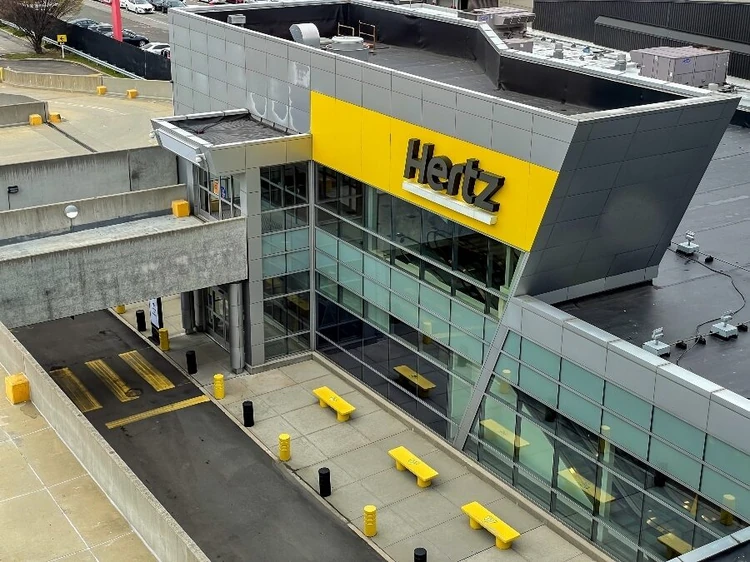
Feds look into claims that Hertz rented vehicles that were under recall

Is the car you're renting safe for you to drive? Maybe...maybe not.

The National Highway Traffic Safety Administration (NHTSA) says it's received information indicating that Hertz rented vehicles to customers from 2018-2020 without required recall repairs performed on some vehicles.

NHTSA says it will investigate to determine whether Hertz complied with the requirements of the National Traffic and Motor Vehicle Safety Act.

The act requires -- among other things -- that a rental company not rent a vehicle subject to a safety recall unless the recall remedy has been performed.

Of particular interest: Nissan and Ford

Nissan had 31 recalls during that period affecting some 5 million vehicles.

Among them was one in September 2019 for 1.2 million vehicles in which the rearview camera might not display an image.

Ford, meanwhile, had 31 recalls from 2018-2020 involving more than 5 million vehicles.

One of the largest was in March 2018 for 1.3 million vehicles in which the steering wheel could detach while the vehicle was being driven.

It's not clear if any of the vehicles listed above were rented by Hertz customers.

Cooperation from Hertz

Hertz says it's aware of the government inquiry and that its policies require removal of vehicles that are under a safety recall from its rentable fleet.

“We look forward to working with NHTSA on their review,” said Hertz spokeswoman Lauren Luster.

Article Image

These cars haven’t been recalled, but maybe they should be

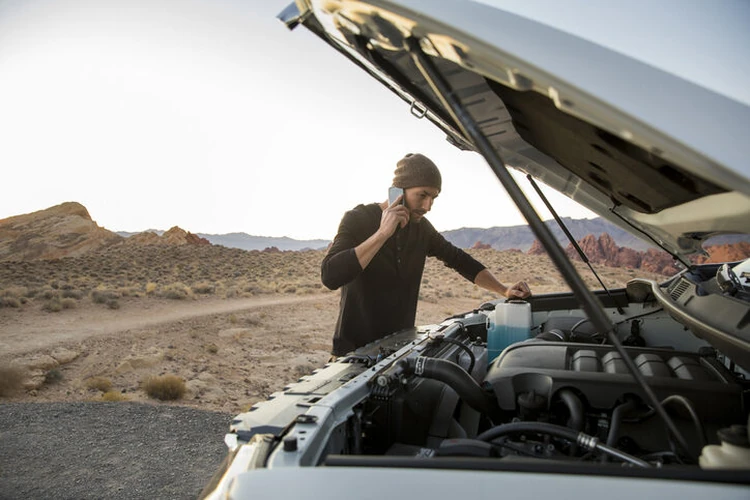
It seems with each passing day there’s an automotive recall. Recalls only occur after consumers in large enough numbers report the problems to the National Highway Transportation Safety Administration (NHTSA), which then must pressure the automaker to "voluntarily" recall the vehicles.

Many times people drive vehicles with performance or safety issues for months before there is a recall to address the problem. Here are three models that are currently accumulating some complaints.

Mazda CX-5

NHTSA is receiving reports from owners of Mazda CX-5s saying their car’s auxiliary power stays on after turning the engine off, which drains power from the vehicle and can result in a dead battery. The problem appears to be with the shift switch/sensor, which can cost several hundred dollars to replace. 

“The SUV requires you to power it back on and shut it off several times before it actually shuts down,” an owner from Houston reported to NHTSA. “The radio and other accessories will not shut off when the car is powered down. Resulting in serious issues possibly happening if the car is not shut down properly. Anyone could get in and start the vehicle back up if they wanted to.” 

The 2014 model appears to be especially problematic. Over one-third of all complaints made to NHTSA regarding 2014 Mazda CX-5 s pertain to this issue. 

Land Rover Discovery

Several Land Rover Discovery owners report their vehicles’ roof rail cover has detached from the top of the vehicle while they were driving it, posing a serious safety risk to other drivers. The issue appears to affect Land Rover Discovery vehicles with model years 2015-2019 and has produced numerous complaints.

“Unbelievable. I'm driving on the highway (approximately 75mph) and I start hearing a little slapping noise on the roof,” one owner recounted on a Range Rovers forum. “As I glance out the rearview mirror to start moving towards the shoulder, I see the trim piece go flying off into the oncoming traffic behind me! THANKFULLY it didn't hit any cars behind me. Although I think a couple cars had to dodge it.”

Land Rover issued a technical bulletin about this issue occurring among Discovery models from 2015-2019 in April 2019 but did not recall any affected vehicles.

GMC Acadia

Many cars now have a blind spot detection system, an important safety upgrade. However, if the system doesn’t always work, it could be a hazard. Some GMC Acadia owners have posted complaints on Acadia forums saying their vehicles’ blind spot detection system is failing.

GM appears to be addressing the problem short of issuing a recall. It issued a “special coverage adjustment” through NHTSA in April 2019, extending the warranty on the vehicles to six years/80,000 miles.

One owner posting on an Acadia forum advised other owners to contact their dealer because GM will repair the problem at no charge “if the vehicle meets certain criteria.” The source of the problem is said to be water intrusion.
Article Image

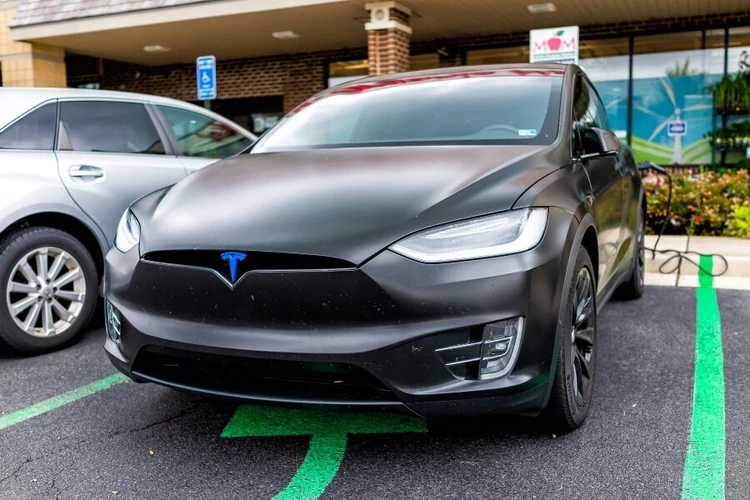
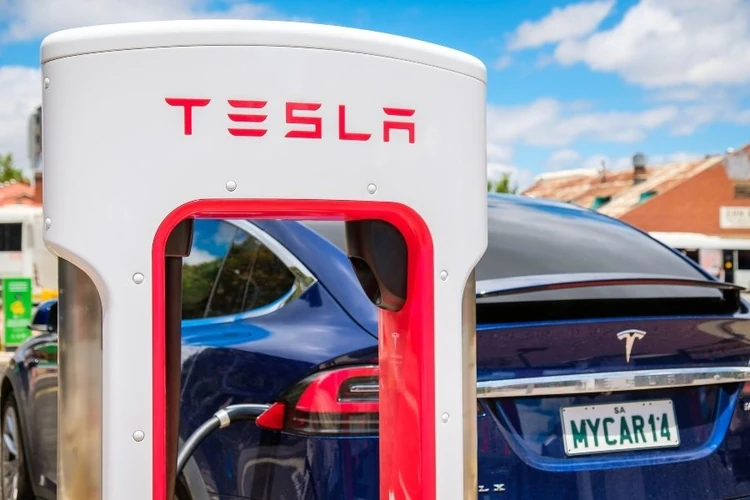
Tesla recalls over 50,000 vehicles over issue with Autopilot feature

More than 50,000 Tesla owners woke up on Wednesday to find that their vehicle is being recalled over concerns about its self-driving feature.

It took nearly a year for the proverbial shoe to drop for the automaker after federal regulators began a probe into the feature’s safety. Only months ago, the National Highway Traffic Safety Administration (NHTSA) asked why the company failed to initiate a recall in response to its vehicles' tendency to hit vehicles that have flashing lights or are near scenes with flares, road cones, and illuminated arrow boards.

The recall affects four Tesla models – the S (2016-2022), X (2016-2022), 3 (2017-2022), and Y (2020-2022) – that have the beta version of the "full self-driving" software turned on. The specific feature pinpointed in the recall is the "rolling stop," which permits a vehicle that is in Full Self-Driving Beta mode to drive through a four-way-stop at up to 5.6 mph. The NHTSA stated that "entering an all-way-stop intersection without coming to a complete stop may increase the risk of collision."

In a perfect world, Tesla’s Autopilot is supposed to perform operations like changing lanes, assisting with parking, preventing crashes, and recognizing street signs and emergency warning lights. Tesla has tried to warn owners that Autopilot and Full Self-Driving Capability are intended for use only with a fully attentive driver – one who has their hands on the wheel and is ready to take over at any moment – but that warning has not always been heeded.

What Tesla owners can expect from the recall

The 53,822 Tesla owners who take part in the recall won’t need to go to an actual dealer. Rather, the automaker will facilitate the recall electronically via software released over the internet.

Owner notification letters are expected to be mailed on March 28, 2022. Owners may contact Tesla customer service at 1-877-798-3752. Tesla's number for this recall is SB-22-00-001.

Owners may also contact the National Highway Traffic Safety Administration Vehicle Safety Hotline at 1-888-327-4236 (TTY 1-800-424-9153), or go to www.nhtsa.gov for more information.