





2025 Mental and Physical Health

Article Image

Researchers find how women's heart health during menopause shapes their future

  • Among midlife women, only about 21% reached ideal cardiovascular health scores at baseline, per the American Heart Association’s Life’s Essential 8 (LE8) tool.

  • Glucose levels, blood pressure, nicotine exposure, and sleep quality emerged as key drivers of risk for future heart disease or mortality.

  • Improvements in LE8 scores over time corresponded with more favorable vascular markers and lower rates of cardiovascular events and death.


As women move through the menopause transition — typically in their late 40s and early 50s — they face important shifts in heart health that often go unnoticed. 

A recent study published in Menopause dives into how lifestyle and biological metrics grouped under the American Heart Association’s “Life’s Essential 8” (LE8) checklist during this phase can predict long‑term cardiovascular outcomes. 

"Previously we've shown that the menopause transition is a time of accelerating cardiovascular risk," senior author Samar R. El Khoudary, Ph.D., M.P.H., professor of epidemiology at Pitt's School of Public Health said in a news release. "This study underscores that it's also an opportunity for women to take the reins on their heart health."

The study

The team analyzed data from nearly 2,924 women, average age 46, who were part of the Study of Women’s Health Across the Nation. 

At baseline and follow-up visits, women received scores on the LE8 components: diet, physical activity, nicotine exposure (smoking), sleep, body mass index, cholesterol, blood sugar (glucose), and blood pressure.

They tracked how each woman’s total LE8 score — and changes in that score over time — related to:

  • Subclinical vascular health markers, such as carotid artery thickness, plaque presence, and arterial stiffness.

  • Actual cardiovascular events, including heart attack, stroke, heart failure, or procedures like revascularization (n=213 events).

  • All‑cause mortality, with 161 deaths recorded.

Statistical models adjusted for age and other potential influences to isolate the effect of LE8 scores and changes in scores.

The results

Ultimately, the researchers identified a link between women who had better LE8 scores and overall better health outcomes. 

  • Only about 21% of these midlife women maintained ideal LE8 scores (a total score ≥ 80) across visits.

  • Women with higher baseline LE8 scores, and those whose scores improved over time, showed healthier arteries, reduced plaque, and less arterial stiffness. They also had lower rates of cardiovascular events and death.

  • Of the eight LE8 components, blood glucose, blood pressure, and nicotine exposure were most strongly linked with risks across vascular and event outcomes.

  • Crucially, sleep quality stood out: better baseline sleep and improvements in sleep score were associated with lower cardiovascular events and mortality, suggesting sleep uniquely contributes to heart health during menopause.

"With heart disease being the leading cause of death in women, these findings point to the need for lifestyle and medical interventions to improve heart health during and after menopause among midlife women," Dr. El Khoudary said.

Article Image

New Study Shows Exercise May Rewire the Parkinson’s Brain

  • Long-term cycling programs appear to reshape brain signals in Parkinson’s patients
  • Deep brain stimulation recordings reveal neural changes after 12 sessions
  • Findings suggest dynamic exercise may activate broader brain networks

A groundbreaking pilot study from University Hospitals and the VA Northeast Ohio Healthcare System suggests that dynamic cycling programs may do more than ease the tremors of Parkinson’s Disease—they may actually help rewire damaged brain circuits.

The research, published in the June 2025 issue of Clinical Neurophysiology, taps into deep brain recordings to explore what’s happening neurologically in patients who participate in exercise regimens. The study builds on earlier work that confirmed the physical benefits of activity for Parkinson’s patients but goes further by offering a glimpse into how the brain itself may be adapting.

“We’ve already established over years of study that dynamic cycling regimens are beneficial for treating Parkinson’s tremor,” said Dr. Aasef Shaikh, the study’s principal investigator. “The latest study adds deep brain stimulation (DBS) recordings to show how long-term exercise might be rewiring neural connections in the brain.”

Deep dive Into the Parkinson’s brain

Led by Dr. Shaikh and PhD candidate Prajakta Joshi, the study focused on participants who had previously received DBS implants—a common treatment for motor symptoms in Parkinson’s Disease. These implants not only provide symptom relief but also allow researchers to monitor brain activity in real time.

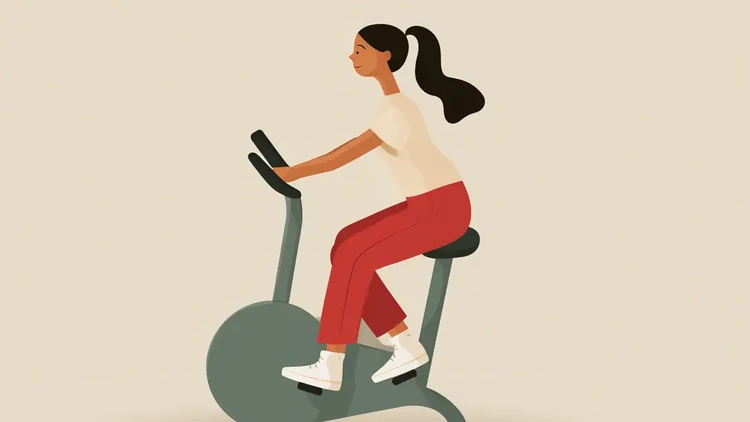
The study included 12 cycling sessions over four weeks, using a specially designed adaptive bike that adjusts resistance based on each rider’s pedaling effort. A connected game screen challenged participants to maintain 80 RPM, with visual feedback encouraging continuous effort. The bike’s push-and-pull assistance, researchers believe, may be key to stimulating motor improvements.

“It’s not about how fast you can go, but how your body adapts to the variability,” said co-author Lara Shigo, a Kent State PhD candidate. “That unpredictability may actually train the brain more effectively.”

While immediate brain signal changes were not observed, the team saw significant alterations after 12 sessions. These changes were measured in the same brain region where Parkinson’s disease disrupts normal function, offering strong evidence that neural plasticity may be at play.

How exercise helps

Although DBS systems provide a window into a specific brain region, Joshi and the team believe that much larger networks may be affected by exercise.

“There may be a broader circuit involved,” Joshi said. “Upstream and downstream pathways could be influenced, meaning we might be seeing a network-level change that drives motor improvement.”

This insight challenges the conventional view that exercise benefits Parkinson’s patients solely through muscular or cardiovascular gains. Instead, it hints at long-lasting neurological effects that may guide future treatment strategies.

“The good news,” Joshi added, “is that our next investigations could bring us closer to revolutionary and personalized treatments for PD.”

The road ahead

Dr. Shaikh credited the partnership between University Hospitals and the VA Northeast Ohio Healthcare System for making the study possible. The collaboration expanded access to patients, including military veterans, and combined research and clinical care in a powerful way.

Funded in part by a VA Merit Award and philanthropic support, the study’s next phase will aim to deepen understanding of which brain circuits are involved—and how they might be targeted for non-invasive, personalized therapy.

“We’re still in the early stages,” Shaikh said. “But this gives us a real roadmap.”

Article Image

New study finds the shingles vaccine may lower the risk of heart disease for nearly a decade

  • A new study from the European Society of Cardiology found that receiving the shingles vaccine can lower the risk of heart disease by nearly 25%. 

  • The study found that the protective benefits can last for up to eight years, with the greatest protection coming in the first two to three years after vaccination. 

  • The type of vaccine participants in the study received isn’t currently available in all countries; therefore, the team plans to do more research to understand if different types of shingles vaccines have the same heart health benefits. 


A new study from the European Society of Cardiology explored how the shingles vaccine can benefit consumers’ heart health. 

According to their findings, the vaccine was associated with a nearly 25% lower risk of heart disease; this protective effect was seen in study participants for up to eight years. 

“Shingles causes a painful rash and can lead to serious complications, especially in older adults and those with weak immune systems,” lead researcher Professor Dong Keon Yon said in a news release. “Previous research shows that, without vaccination, about 30% of people may develop shingles in their lifetime.

“In addition to the rash, shingles has been linked to a higher risk of heart problems, so we wanted to find out if getting vaccinated could lower this risk.This is one of the largest and most comprehensive studies following a healthy general population over a period of up to 12 years.”

The study

For the study, the researchers analyzed data from over 1.2 million people living in South Korea from 2004 through 2021. The team evaluated records from the Korea Health Insurance Review and Assessment Service, the Korean National Health Insurance Service, and the Korea Disease Control and Prevention Agency. 

This allowed the team to determine who did and did not receive the vaccine, as well as their long-term health outcomes. They also took into consideration other factors that can influence heart health, including age, lifestyle, socio-economic factors, and more. 

Heart health benefits 

Ultimately, the researchers determined that the shingles vaccine was associated with better heart health outcomes. 

The study showed that those who received the shingles vaccine were: 

  • 23% less likely to experience any kind of cardiovascular event

  • 26% less likely to experience a major cardiovascular event – a stroke, heart attack, or heart disease-related death 

  • 26% less likely to develop heart disease 

  • 22% less likely to develop coronary heart disease 

“There are several reasons why the shingles vaccine may help reduce heart disease,” Professor Yon said. “A shingles infection can cause blood vessel damage, inflammation and clot formation that can lead to heart disease. By preventing shingles, vaccination may lower these risks.”

Breaking down the benefits 

The study also found that participants experienced these protective heart health benefits for up to eight years after vaccination. However, the strongest benefits were felt in the first two to three years after vaccination. 

The researchers learned that certain groups of participants were more likely than others to receive these protective health benefits: men, people under 60, people with unhealthy lifestyles, people from low-income households, and people living in rural areas. 

It’s also important to note that the participants received a live zoster vaccine, which isn’t currently available in every country. This type of vaccine contains a weakened form of the varicella virus that causes shingles; however, updated singles vaccines are more likely to contain a protein from the varicella virus. 

“Since the live zoster vaccine is not suitable for everyone, more research on the recombinant vaccine is needed,” Professor Yon said. “While we conducted rigorous analysis, this study does not establish a direct causal relationship, so potential bias from other underlying factors should be considered.”

Article Image

Cerebral pays settlement to resolve subscription complaints

More than 40,000 people will receive a refund as a result of the Federal Trade Commission’s settlement with Cerebral, Inc, an online mental health service provider that allegedly billed consumers despite their requests to cancel their subscriptions.

The refunds stem from a settlement of FTC allegations that Cerebral:

  • required its clients to navigate a complex, multi-step, and often multi-day process to cancel their subscriptions;
  • continued to charge consumers while slow-walking their cancellation requests, despite promising consumers they could “cancel anytime;”
  • disclosed consumers’ sensitive personal health information and other sensitive data to third parties for advertising purposes; and
  • violated the Restore Online Shoppers’ Confidence Act by failing to clearly disclose all material terms of their cancellation policies before charging consumers.
An independent refund administrator, Epiq Systems, is sending payments totaling more than $5 million to 40,249 affected consumers. Most of these consumers will receive a check in the mail, which they should cash within 90 days, as indicated on the check.
Eligible consumers who did not have an address on file will receive a PayPal payment, which should be redeemed within 30 days.

Payments will go to consumers who submitted a request to cancel their subscription on or before May 2022, but who Cerebral continued to charge.

Consumers who have questions about a payment or their eligibility for a payment should contact the independent refund administrator at 1-888-884-6036 or via email at info@CerebralRefund.co. The Commission never requires people to pay money or provide account information to get a refund.

Article Image

Here are the worst cities for allergies in 2025

The arrival of spring brings flowers and flowering bushes, but unfortunately, those benefits also bring allergies, and allergies are worse in some parts of the country than others.

For the third consecutive year, Wichita, Kansas, has been named the most challenging city in the United States for people with pollen allergies, according to the Asthma and Allergy Foundation of America’s 2025 Allergy Capitals report. 

The report shows the growing impact of climate change on allergy seasons nationwide, with a significant concentration of the worst cities located in the southern and eastern regions of the U.S.

The AAFA’s annual ranking assesses the 100 most populated metropolitan areas based on pollen counts, over-the-counter allergy medication usage, and the availability of allergy specialists. Wichita’s persistent top ranking is attributed to its high levels of tree and grass pollen, increased medication use, and limited access to allergists.

Worst cities

The top 10 worst cities for allergies in 2025 are:

  1. Wichita, KS

  2. New Orleans, LA

  3. Oklahoma City, OK

  4. Tulsa, OK

  5. Memphis, TN

  6. Little Rock, AR

  7. Raleigh, NC

  8. Richmond, VA

  9. Greenville, SC

  10. Greensboro, NC

"New Orleans is a stark example of the impact of climate change on pollen allergies," Kenneth Mendez, CEO of AAFA said in a press release accompanying the report. 

"This year, it surged 32 places in our rankings due to increased weed pollen counts. The unusually warm November in Louisiana, coupled with moisture from Hurricane Francine, extended the weed pollen season. Nationally, we’re seeing growing seasons start earlier and last longer, resulting in more prolonged and intense allergy seasons."

Best cities to live in if you have allergies

Boston is the least affected city by allergies, followed by Salt Lake City, Akron, Ohio, San Diego and Cleveland.

The report identified a concerning trend of worsening allergy seasons, particularly in the southern and eastern U.S., where ragweed pollen can trigger symptoms almost year-round in some areas. The increased pollen exposure is leading to more missed work and school days, emergency room visits, and hospital stays, impacting the quality of life and health outcomes for millions, the report found.

While the majority of the worst cities are concentrated in the South and East, the report also noted significant changes in the West. California experienced increased grass and weed pollen counts in 2024, attributed to increased storms and moisture, leading to drastic jumps in the rankings for several cities.

Article Image

Want to be happier? A break from your smartphone might be the answer

While there have been several studies that have looked at the mental health impact of social media, a new study conducted by researchers from the University of Texas at Austin explored the effects of general smartphone use on mental health. 

According to their findings, a two-week break from the internet on your phone could improve mental health, subjective well-being, and attention span. 

“Smartphones have drastically changed our lives and behaviors over the past 15 years, but our basic human psychology remains the same,” researcher Adrian Ward said in a news release. 

“Our big question was, are we adapted to deal with constant connection to everything all the time? The data suggest that we are not.”

The study

The researchers had nearly 500 participants involved in the four-week study. They were instructed to download an app on their phones that blocked everything except text messages and calls. That meant no social media, no internet browsers, and no internet access. However, outside of the study, they were able to access the internet as they pleased. 

For the study, one group had the internet blocked on their phones for the first two weeks of the study, while a second group had the app installed on their phones for the second two weeks. 

The participants completed psychological assessments at several points throughout the month-long study, and they also completed their own self-assessments to report on their mental health outcomes. 

Improving mental health outcomes

Overall, the study showed that taking breaks from constant internet access is likely to yield better mental health outcomes. 

At the end of the study, over 70% of the participants reported better mental health overall compared to the beginning of the study. When looking at the three primary measures of the study – mental health, attention span, and well-being, over 90% of the participants reported an improvement in at least one area. 

It’s also important to note that many of the participants reported feeling better with each day of the study. This means that the longer they went without constant internet access, the better they believed their mental health was. 

“[Participants] increased time spent in the offline world,” Ward said. “That’s doing hobbies, talking to people face-to-face, or going out in nature. They got more sleep, felt more socially connected, and felt more in control of their own decisions.”

Moving forward, the researchers want to see more work done in this area, and they also hope that these findings encourage more consumers to take regular breaks from their smartphones. 

“Technology often progresses much faster than our ability to understand its consequences,” the researchers wrote in the study. 

“Balancing the practical benefits that smartphones offer against these significant negative consequences is an important task for smartphone users. Our results suggest that, for many people, spending less time with their device can help achieve this balance.” 

Article Image

Amid catastrophic fire damage in Los Angeles, there’s emotional trauma

Much-needed rain is helping Southern California firefighters bring the remaining wildfires under control but mental health experts say the region may be a long way from getting back to normal emotionally.

Rabbi Jason Weiner, PhD, senior rabbi at Cedars-Sinai and director of the Spiritual Care Department, says psychic trauma may not just affect people who lost their homes but also those following the news on a daily basis.

Dr. Itai Danovitch, chair of the medical center’s Department of Psychiatry and Behavioral Neurosciences, said feeling distress and anxiety right now is normal. So is feeling numb or disconnected from emotions. Those aren’t normal feelings.

“There is no one-size-fits-all response to the challenges we’re facing, and adapting to stress can take time, but it helps to pinpoint specific sources of worry,” Danovitch said in a press release. 

“Is there nervousness about the safety of loved ones or a home? Is it the long-term impact on the community or uncertainty about air quality? Knowing this can help manage anxiety in a constructive way.”

Danovitch says the way to manage these anxieties is to maintain daily routines as much as possible. Stay connected to supportive people, get adequate rest and exercise, and practice relaxation or meditation exercises.  

“It also can help to make sure you’re getting information from trustworthy sources to help avoid unnecessary fear,” Danovitch said. “Plan ahead for potential future evacuations and manage exposure to news and social media.”

Possible PTSD

Mental health experts some fire survivors could development post-traumatic stress disorder. Sighs of that condition include:

  • Negative thoughts

  • Problems sleeping or concentrating

  • Social withdrawal

  • Intensified and persistent symptoms of despair that interfere with daily functioning 

“A therapist who specializes in trauma treatment, along with medications and participating in support groups and psychotherapy, can be beneficial,” Danovitch said. “Some people may develop PTSD and others won't, but all emotional responses deserve care and attention.”

“Survivor’s guilt” may also affect some Los Angeles residents whose homes were in the path of the fires but somehow did not burn. Cedars-Sinai Cancer Center Chaplain Carrie Kohler this is often manifested by feelings of helplessness. She said many people deal with these feelings by volunteering for relief efforts.

Those who live miles away may also feel distraught. Danovitch said that’s human nature—and it may be especially true for people who once lived in Los Angeles, because the fires conjure nostalgia as well as loss.

“Former Angelenos often have deep relationships, memories and connections to the area,” he said. “Seeing those threatened can heighten feelings of longing and attachment.”

Article Image

On-the-job burnout is growing and even your doctor may be feeling it

If you go to your doctor complaining of “burnout” at work, your physician might reply, “Join the club.” According to medical authorities, doctors are increasingly stressed out on the job.

The American Medical Association estimates nearly 63% of physicians experience symptoms of burnout at least once a week. It’s not just the patient load, which is increasing, but also the paperwork. Some physicians report spending three hours at home each evening filling out forms.

A study by the National Institutes of Health recently determined that nearly one in three physicians is experiencing burnout at any given time. The authors warned that this may not only interfere with their own well-being but also with the quality of delivered care.

“Healthcare workers, and especially perioperative clinicians seem to be at particular risk for burnout,” the authors wrote. 

“This may have significant negative personal (substance abuse, broken relationships and even suicide), but also important professional consequences such as lower patient satisfaction, impaired quality of care, even up to medical errors, potentially ending up in malpractice suits with substantial costs for caregivers and hospitals.”

Symptoms of burnout range from exhaustion and sleep problems to depression and physical pain. Depression may often stem from family stresses, such as disappointment over missing important family events.

Digital mindfulness

Burnout can occur in just about any profession or occupation that makes heavy demands, includes long hours and is filled with stress. Some clinicians believe mindfulness meditation may reduce work-related stress, as it seeks to encourage awareness of the present moment and promote self-regulation.

Researchers from the University of California San Francisco Department of Psychiatry and Behavioral Sciences recently launched a large mindfulness trial for over 1,400 UCSF employees. 

They found that those who received digital mindfulness meditation felt greater satisfaction and engagement with their jobs months later. They also felt happier, less anxious and more mindful of their daily life.

“Our team found significant, sustained improvements in well-being, job enjoyment and mindfulness, particularly for those who meditated more,” said study first author Rachel Radin, PhD, a psychologist and UCSF assistant professor of psychiatry. “This study confirms prior findings indicating psychological benefits of mindfulness practice for employees and extends them to a digital platform.” 

What is it?

What exactly is digital mindfulness? It’s often defined as being aware of how digital devices and technology add stress to life that can lead to burnout.

Digital mindfulness actions include:

  • Monitoring screen time

  • Turning off unnecessary notifications

  • Carefully choosing what digital content you consume

  • Taking breaks from technology to promote relaxation