Car Industry Trends and Insights

This living topic delves into the current state of the auto industry, covering key trends such as declining sales due to limited supply, the rise in electric and hybrid vehicle popularity, and the impact of vehicle design on pedestrian safety. It also highlights issues related to car theft and the measures automakers are taking to prevent it, the durability of various car models, and the challenges and opportunities posed by direct-to-consumer sales models, including car subscription services. The content provides a comprehensive overview of market dynamics, consumer behavior, and industry responses to current challenges.

Latest

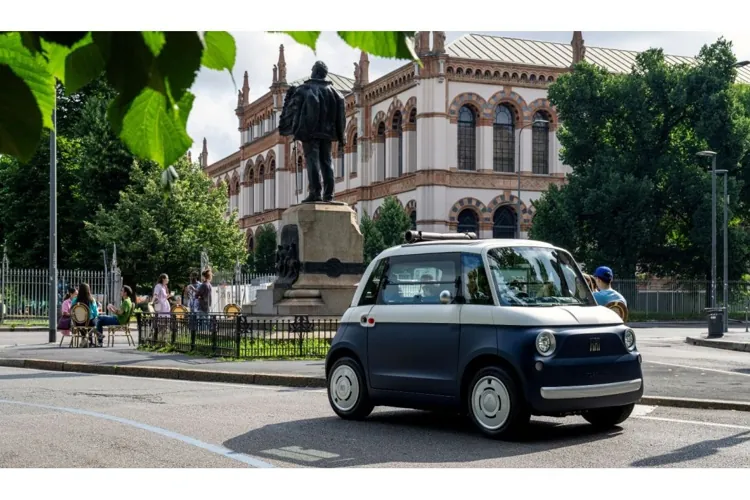
Stellantis offers a sub-$14,000 Fiat EV in the US

But the early model may be little more than a golf cart

Featured Automotive News photo

Stellantis has begun selling the Fiat Topolino in the U.S. with a starting price of $13,995, making it one of the least expensive electric vehicles available in the country.

The tiny two-seat EV is aimed at neighborhoods, resorts, beach towns and other low-speed environments rather than traditional highway driving.

The launch marks Fiat's latest effort to expand its U.S. electric lineup with an ultra-affordable urban mobility vehicle.

A new car for $14,000? That must be a t...

Read Article
Featured Automotive News photo
2025
Article Image

NVIDIA and Uber link up in robotaxi deal

  • NVIDIA and Uber are teaming up to build the world’s largest Level 4-ready autonomous mobility network, beginning in 2027.

  • Up to 100,000 self-driving vehicles will join Uber’s global fleet, powered by NVIDIA’s next-gen DRIVE AGX Hyperion 10 platform.

  • AI and generative technology will help vehicles navigate complex, real-world environments with humanlike reasoning.


NVIDIA and Uber have announced a major new partnership designed to fast-track the era of autonomous transportation. How it will impact Uber drivers is not exactly clear, though in the beginning, it may make their jobs easier.

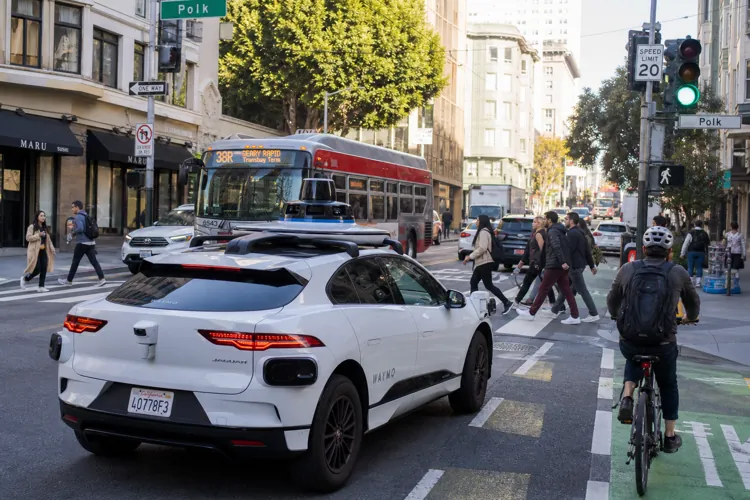
The two tech leaders plan to deploy the world’s largest Level 4-ready robotaxi and autonomous delivery network. Level 4 refers to vehicles capable of operating safely without human intervention in most environments – starting as soon as 2027.

At the heart of this collaboration is NVIDIA’s DRIVE AGX Hyperion 10, a new autonomous vehicle development platform that provides the computing power and sensors needed to make vehicles “Level 4-ready.” The system combines AI, radar, lidar and camera data to enable safe, real-time decision-making on the road.

From rides to robotaxis

Uber’s vision is to create a single mobility network that connects human drivers and autonomous vehicles. In the near future, riders may not notice whether their trip is handled by a person or an AI-powered robotaxi – both will operate on one unified Uber platform.

“Robotaxis mark the beginning of a global transformation in mobility — making transportation safer, cleaner and more efficient,” said Jensen Huang, founder and CEO of NVIDIA. “Together with Uber, we’re creating a framework for the entire industry to deploy autonomous fleets at scale.”

Uber CEO Dara Khosrowshahi called NVIDIA “the backbone of the AI era,” adding that the collaboration will help autonomous vehicles reach consumers faster while transforming city transportation.

Building a scalable autonomous future

To support Uber’s massive rollout goal of 100,000 autonomous vehicles, the companies are developing a global “data factory” powered by NVIDIA Cosmos, a platform that curates and processes real-world and simulated data for AI model training.

Other major automakers and mobility partners—including Stellantis, Lucid, Mercedes-Benz, Volvo, and Aurora—are also joining the broader NVIDIA ecosystem to integrate Level 4 capabilities into their fleets. 

This collaboration means consumers could soon see NVIDIA-powered automation not only in robotaxis but also in delivery vans, trucks and even luxury sedans.

Article Image

Ford promises a 'Model-T Moment' next week

  • CEO Jim Farley says the company is poised to unveil a "breakthrough" EV and U.S.-built platform, calling it a pivotal moment in Ford’s history.

  • The strategy aims to leapfrog Chinese EV rivals by focusing on affordability, efficient design, and domestic battery production.

  • Ford’s Louisville Assembly Plant and BlueOval Battery Park in Michigan will anchor the automaker’s future in EV manufacturing.


Ford CEO Jim Farley says the company will reveal a new strategy next week that will be a “Model-T moment” for the 120-year-old automaker. Scheduled to be unveiled on August 11 in Kentucky, Ford’s new EV roadmap will be a major shift toward profitability and global competitiveness, with a spotlight on American engineering and production, he said.

Farley revealed that Ford will debut a “new family of vehicles” that he says will offer “incredible technology, efficiency, space and features.” Central to this strategy is the launch of a new EV platform designed and built in the U.S., marking a clear effort to distance Ford from its first-generation EVs and signal a more competitive approach against global, especially Chinese, EV manufacturers.

“This is a Model-T moment for us at Ford,” Farley told investors during the company's earnings call. “A chance to bring a new family of vehicles to the world,” the Detroit News reported. He emphasized that the vehicles would be more than just new designs — they represent a wholesale reinvention of Ford’s EV engineering and manufacturing playbook.

Louisville becomes Ground Zero

The Aug. 11 announcement will take place at Ford’s Louisville Assembly Plant, a site already transitioning toward EV production. The plant, which had been home to the Ford Escape and Lincoln Corsair, was earmarked in Ford’s 2023 UAW contract for a $1.2 billion investment and an “all-new EV product.” Recent filings also show that Ford is retooling the plant to support EV production, including the addition of charging infrastructure.

Its proximity to the BlueOval SK Battery Park in Kentucky and Ford’s lithium iron phosphate (LFP) battery plant in Marshall, Michigan, reinforces the company’s U.S.-centric production model — key to leveraging domestic tax incentives and reducing costs.

Lessons from China

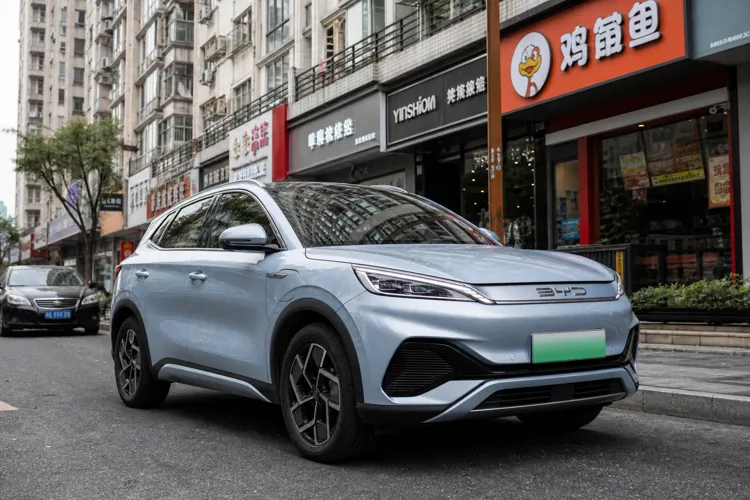
Farley acknowledged that Ford’s chief EV competition isn’t the traditional global automakers but rather Chinese companies like BYD and Geely, which are known for building low-cost, high-quality electric cars. He cited a recent executive trip to China, where Ford’s leadership studied Chinese automakers to learn from their vertically integrated supply chains and cost-efficient platforms.

“Our strategy is very simple,” Farley said. “We believe the only way to really compete effectively with the Chinese… is to radically reengineer and transform our engineering, supply chain and manufacturing process.”

Ford’s refreshed EV approach will focus on a limited number of body styles — known in the industry as “top hats” — on flexible vehicle platforms. The idea is to concentrate resources where Ford can turn a profit. Despite increasing EV sales, the automaker reported a $1.3 billion loss in its Model e division in Q2, up from $1.1 billion a year earlier.

To hedge against EV market fluctuations, Ford will continue offering a range of powertrains, including hybrids and extended-range electric vehicles. “We think that’s a much better move than a $60,000 to $70,000 all-electric crossover,” Farley said.

2024
2023
2022