2025 Consumer Legal Protections and Settlements

Article Image

Supreme Court backs Trump in firing Consumer Product Safety Commissioners

  • High court permits removal of three Democratic commissioners from Consumer Product Safety Commission

  • Order follows previous rulings expanding presidential control over executive agencies

  • Dissent warns of erosion of bipartisan agency protections established by Congress


The U.S. Supreme Court on Wednesday allowed President Trump to remove three Democratic members of the Consumer Product Safety Commission (CPSC), a five-member panel responsible for ensuring the safety of everyday products such as toys, cribs, and electronics. 

The court issued a brief, unsigned order granting Trump’s emergency application to oust the commissioners, citing a May precedent that upheld his ability to fire leaders of other independent agencies. The decision came over the objections of the court’s three liberal justices, who dissented strongly, warning of long-term consequences for agency independence and congressional intent.

Consumer advocates condemned the decision. 

"Despite clear statutory protections against such removal, the Supreme Court's decision allows the President to fire our nation's product safety watchdogs without cause," said Courtney Griffin, Director of Consumer Product Safety at Consumer Federation of America.

"Speak with any parent who has lost a child — or any American who has been maimed — by a dangerous product, and they will tell you there is nothing political about product safety. This decision threatens to replace evidence-based safety with partisan loyalty. American families, especially American children deserve a strong, independent CPSC," Griffin said. 

In May, President Trump notified commissioners Mary T. Boyle, Richard L. Trumka Jr., and Alexander Hoehn-Saric of their dismissal without citing cause, despite a federal law permitting removal only for “neglect of duty or malfeasance.” The commissioners argued they were targeted for policy disagreements, including efforts to block unsafe lithium-ion batteries and opposition to staffing cuts.

Trumka took to Elon Musk’s platform X to denounce what he called an attempted takeover of the agency by political operatives.

“I said no to DOGE political operatives trying to take over the agency from within. That’s when they came for me,” Trumka posted after his dismissal on May 9.

Trumka’s X account was soon deleted, leading him to accuse Musk and the administration of politically motivated censorship. He has since launched a new account to continue speaking out. “They are trying to silence me,” Trumka wrote. “This isn’t just censorship. This is un-American.”

Legal battle still rages

The Supreme Court’s order does not conclude the case. The legality of the firings remains under review in the U.S. Court of Appeals for the Fourth Circuit and may ultimately return to the high court for a full decision. Following their removal, the officials were barred from using agency resources or entering offices unescorted. But in June, U.S. District Judge Matthew J. Maddox, a Biden appointee, reinstated the commissioners, ruling that their was illegal.  

The Fourth Circuit declined to pause that ruling in early July. In a concurring opinion, Judge James A. Wynn Jr. emphasized that Humphrey’s Executor remains binding precedent.

Eroding safeguards

The firings triggered a rollback of recent safety initiatives. One of the first actions by the remaining commissioners was to cancel a proposed rule aimed at reducing fires caused by lithium-ion battery failures—a rising concern in consumer electronics.

“We had 333 recalls last year covering over 150 million products,” Trumka told reporters. “You’re going to start seeing fewer of those. People can get hurt in the interim.”

The Biden-appointed commissioners had built bipartisan—or, as Trumka emphasized, nonpartisan—support for consumer safety rules protecting children and vulnerable populations. Their removal, critics argue, is another signal that the administration aims to reshape independent agencies into extensions of executive power.

A pattern of executive empowerment

This latest ruling continues a trend by the Supreme Court during Trump’s second term of granting the president broad authority over the executive branch. Recent decisions have weakened the long-standing precedent set by Humphrey’s Executor v. United States (1935), which limited presidential power to fire officials at independent agencies unless they engaged in specific misconduct.

The justices previously allowed Trump to remove leaders from the Merit Systems Protection Board and the National Labor Relations Board on similar grounds, asserting that the Constitution’s vesting of executive power in the president includes authority over these officials. Wednesday’s order echoed that reasoning, declaring that officials who exercise such power must be accountable to the president.

Justice Elena Kagan, joined by Justices Sonia Sotomayor and Ketanji Brown Jackson, dissented in writing, criticizing the majority for disregarding Congress’s explicit decision to structure the CPSC as a bipartisan, independent body. She warned that allowing removals based solely on party affiliation undermines the commission’s intended function.

“By allowing the president to remove commissioners for no reason other than their party affiliation, the majority has negated Congress’s choice of agency bipartisanship and independence,” Kagan wrote.

Kavanaugh urges faster resolution

Justice Brett M. Kavanaugh concurred with the majority but stressed the need for expedited resolution in such precedent-testing cases. He noted that the current approach leaves agencies and courts in a “cloud of uncertainty.”

While the ruling represents another expansion of executive control, its full implications may hinge on the final outcome of the pending appeals. In the meantime, the status of agency independence—and the balance of power between the presidency and Congress—remains in flux.

Trump "dismantling" the CPSC

 U.S. Sen. Richard Blumenthal (D-CT) yesterday accused the Trump White House of attempting to "dismantle" the agency by merging it into the Department of Health and Human Services (HHS), as Trump's One Big Bill proposes. 

“There is no agency that saves more lives or more money,” he said, according to WSHU Radio. “And right now the administration is about to waste both lives and money by essentially dismantling this agency and strangling it with a lack of funding.” 

Article Image

Los Angeles sues Airbnb alleging price-gouging after fires

  • Lawsuit accuses Airbnb of violating California’s anti-gouging law by raising rental prices after January wildfires

  • Company also allegedly misled users with false claims about verifying host identities and property locations

  • City seeks restitution for renters, a permanent injunction, and civil penalties up to $2,500 per violation


Los Angeles City Attorney Hydee Feldstein Soto's office has filed a civil enforcement action against Airbnb, accusing the short-term rental giant of price gouging and deceptive business practices in the wake of the devastating January wildfires in the Pacific Palisades and Altadena.

The lawsuit alleges that Airbnb illegally inflated rental prices on at least 2,000 — and possibly over 3,000 — properties across Los Angeles after Governor Gavin Newsom declared a state of emergency on January 7, 2025. Under California’s Anti-Gouging Law (Penal Code section 396), it is unlawful to raise prices on essential goods and services, including rental housing, by more than 10% during a declared emergency.

Despite repeated extensions of the emergency order by Governor Newsom, Mayor Karen Bass, and the LA County Board of Supervisors — most recently on June 24 — the lawsuit contends that Airbnb continued to allow unlawful price hikes on its platform.

“It’s unconscionable that Airbnb permitted prices to be jacked up on thousands of rental properties at a time when so many people lost so much and needed a place to sleep,” said Feldstein Soto. “Although Airbnb subsequently took steps to curtail price gouging, evidence indicates that illegal gouging on the site continues and may be ongoing.”

Deceptive advertising also alleged

In addition to price gouging, the City Attorney’s lawsuit charges Airbnb with deceptive advertising, claiming the company misrepresents that it has “verified” both the identities of its hosts and the locations of listed properties. The complaint asserts that some so-called “verified hosts” use false or non-existent identities, and that some properties are inaccurately or fraudulently located.

The lawsuit, filed under California’s Unfair Competition Law, seeks several remedies, including:

  • A permanent injunction barring Airbnb from charging unlawful rental rates during the state of emergency

  • A ban on false or misleading claims about host verification and property locations

  • Restitution to consumers who were charged inflated prices

  • Civil penalties of up to $2,500 for each violation

The January wildfires created a surge in demand for short-term rentals as hundreds, possibly thousands, of displaced residents sought emergency housing. Airbnb, with an estimated 80% market share in Los Angeles and $11.1 billion in revenue in 2024, became a critical player in that market.

According to the lawsuit, Airbnb has long been aware that its verification processes are inadequate. Yet the company allegedly continues to advertise a false sense of security to prospective renters. The complaint notes that Airbnb tenants have reported falling victim to serious crimes including identity theft, robbery, sexual assault, voyeurism, and other security breaches linked to misleading host or location information.

City officials say the case sends a message to all businesses operating in disaster-affected regions: profiteering and deception will be met with swift legal action.

Article Image

Court overturns FTC’s "Click to Cancel" Rule

  • Federal appeals court strikes down FTC’s “click to cancel” rule, citing regulatory overreach
  • Consumer advocates warn the decision could make canceling subscriptions harder for millions
  • Legal uncertainty looms for subscription-based businesses as industry braces for next steps

Companies that provide services long ago learned that if they could persuade customers to subscribe and pay a monthly fee, they would be assured of a constant revenue flow. Many that took that step did not make it easy to unsubscribe.

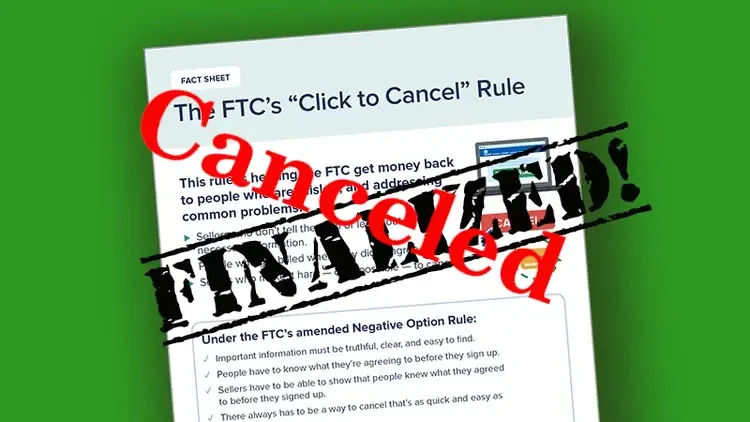
Enter the Federal Trade Commission, which last year finalized the “click to cancel” rule, requiring companies that sold subscriptions to make it easy for customers to cancel. But what seemed like a victory for consumers has now been overturned by the courts.


The U.S. Court of Appeals for the D.C. Circuit on Tuesday struck down the FTC’s “click to cancel” rule, finding the FTC had exceeded its authority under Section 18 of the FTC Act.

The rule and the ruling

The now-defunct rule, finalized in March 2024, required businesses to provide a straightforward online mechanism—often a single click or clearly labeled button—for customers to cancel subscriptions and recurring charges. It also prohibited companies from obstructing the cancellation process with unwanted prompts, retention offers, or long call center wait times.

But in a 2-1 decision, the court ruled that the rule constituted “a significant expansion of the Commission’s rulemaking powers without explicit congressional authorization.”

“The Commission cannot create sweeping mandates that transform how businesses operate without a clear legislative directive,” the justices wrote.

Industry cheers, advocates warn

Business groups and subscription-based platforms welcomed the ruling as a check on what they characterized as “heavy-handed regulation.” The National Retail Federation and Chamber of Digital Commerce, which had both filed amicus briefs in support of the challenge, praised the decision as a victory for regulatory balance and innovation.

However, consumer protection groups reacted with alarm, pointing out that companies have deployed a well-documented practice of using “dark patterns and deceptive practices” to keep consumers paying for a service they no longer want or need.

Article Image

Amazon sues to avoid responsibility for more than 400,000 recalled products

Amazon is suing the Consumer Product Safety Commission (CPSC) to challenge the commission's order that Amazon is obligated to recall hundreds of thousands of dangerous products.

The lawsuit, filed March 14 in Maryland, where the CPSC is located, argues that Amazon doesn't have a legal obligation to issue recalls or provide refunds for products sold on its marketplace by third-party sellers because it only provides the logistics.

While Amazon sells some of its own products, most items on its marketplace are offered for sale by third parties who pay Amazon to "fulfill" orders by listing them on its site and also by storing and shipping them when they are purchased. 

"The [CPSC] may issue recall orders to the manufacturers, distributors, and retailers of a product, but not to third-party logistics providers who store the product in their warehouses and transport it to customers," Amazon said in the lawsuit.

In January, after an administrative hearing, the CPSC ordered that Amazon was responsible for the recall of more than 400,000 recalled products it distributed, including faulty carbon monoxide detectors, hairdryers without electrocution protection and children’s sleepwear that violated federal flammability standards.

"It is the U.S. Consumer Product Safety Commission’s job to hold companies like Amazon accountable for distributing hazardous products.  No company is above the law," said commissioner Richard Trumka after the order was issued in January. "The resolution of this case brings protection to consumers exposed to hazardous products. This is an essential step toward ensuring every consumer, regardless of where or how they shop, can trust the safety of the products they bring into their homes." 

The CPSC has been at odds with Amazon over the recalls since 2021.

The commission's order, effective Jan. 26, required Amazon to provide full refunds to buyers who submit proof of destruction or disposal of the products and to notify buyers of the recalled products because it was a "distributor" under the law.
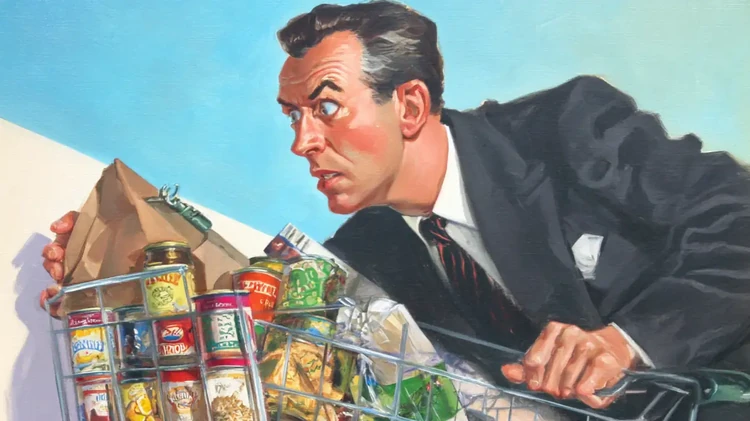
But Amazon said it isn't required to do so under the law although it said it voluntarily "took prompt and decisive action," including blocking further sales of the products, destroying products in warehouses and contacting each of the 376,009 purchasers.

An 'absurd' argument

Not everyone is buying Amazon's argument.

The court should reject Amazon's lawsuit, which relies primarily on procedural arguments in its attempt to skirt responsibility under product safety law, said William Wallace, director of safety advocacy for the nonprofit publication Consumer Reports, in a statement.

"It’s absurd to suggest that because a company hosts a marketplace online it should be exempt from sensible requirements that help get hazardous products out of people’s homes and prevent them from being sold," Wallace said. The three other commissioners issued similar statements. 

Amazon didn't immediately respond to ConsumerAffairs's request for comment.

Although the CPSC's decision only covers previously recalled products that were identified, it puts pressure on e-commerce platforms to take more responsibility for future recalls, said Courtney Griffin, director of consumer product safety at the nonprofit Consumer Federation of America, to ConsumerAffairs.

“Online marketplaces need more robust systems to vet products before the products make their way into American homes,” Griffin said. “E-commerce giants must ensure consumers are safeguarded adequately in the rapidly expanding online marketplace."

Article Image

Federal court halts alleged Growth Cave scam following FTC lawsuit

A federal court has temporarily shut down the operations of Growth Cave, a business opportunity and credit repair scheme accused of defrauding consumers out of $50 million. The decision comes after the Federal Trade Commission (FTC) filed a lawsuit against the company and its executives, alleging deceptive practices and false income promises.

The lawsuit, filed in the U.S. District Court for the Central District of California, names Growth Cave’s founder Lucas Lee-Tyson, along with Osmany Batte, also known as “Ozzie Blessed,” and Jordan Marksberry, as key figures in the scheme. The FTC claims they misled consumers into purchasing expensive programs with guarantees of earning thousands of dollars, only to leave them with empty promises and mounting debt.

​“The FTC has its eye on business opportunity schemes like this one and will take decisive action to stop them,” said Chris Mufarrige, Director of the FTC’s Bureau of Consumer Protection.

False promises, lavish lifestyles

Growth Cave’s primary business model revolved around selling a program called Knowledge Business Accelerator (KBA), which was promoted through YouTube ads. The program falsely claimed that consumers could earn between $20,000 and $50,000 in passive income by developing and selling digital education courses, the FTC said.

In promotional videos, Lee-Tyson portrayed himself as a marketing expert and self-made millionaire, while Batte claimed to have expertise in mindset coaching and hypnosis.

According to the FTC’s complaint, Lee-Tyson and Batte used videos showcasing luxury lifestyles to convince potential buyers of their programs’ success. However, the agency alleges that these lavish displays were funded by the money they took from unsuspecting consumers.

A costly investment with no returns

Consumers who expressed interest in KBA were subjected to aggressive email marketing and sales tactics, culminating in a “strategy call” where they were pressured to invest thousands of dollars in the program. Growth Cave even offered a $10,000 profit guarantee, leading many to believe their investment was safe.

However, once consumers purchased KBA, they struggled to receive the promised support and were left with generic advertising scripts requiring substantial revision. Many also faced undisclosed requirements before launching their courses, only to find that they could not generate any income.

The company also sold an “upgraded” version of KBA, called Digital Freedom Mastermind (DFM), for an additional $30,000 to $50,000, claiming it would provide a fully automated business solution. Consumers who purchased the upgrade reported that the promised services were never delivered.

The complaint also highlights another Growth Cave venture, Cashflow Consultant Academy (CCA), which falsely promised to connect participants with wealthy business owners for high-paying sales jobs. Instead, many found themselves working for other Growth Cave customers or were never placed with a client at all.

In 2023, Growth Cave launched Buffalo Bridge, a bogus credit repair service charging consumers $6,800 upfront for supposed credit repair and business loan services. Instead, the company simply signed consumers up for multiple business credit cards.

Rebranding and new schemes

Despite facing private lawsuits from defrauded consumers, the FTC alleges that Lee-Tyson and Batte continued to launch new scams under different names. In March 2024, Lee-Tyson introduced PassiveApps, an AI-powered business opportunity that followed the same deceptive blueprint as KBA—even using recycled testimonials from past schemes.Meanwhile, Batte launched ApexMind, mirroring the CCA scheme.

Consumers who have fallen victim to similar scams are encouraged to report fraud at ReportFraud.ftc.gov.

Article Image

Court issues injunction against Seek Capital after FTC complaint

The Federal Trade Commission (FTC) has secured an early victory in its legal battle against Seek Capital and its CEO, Roy Ferman, after the U.S. Court for the Central District of California granted a preliminary injunction against the company.

The ruling prohibits Seek Capital from making false claims regarding small business loans or lines of credit and prevents the company from contacting any consumers whose information was obtained before February 20, 2025. The injunction is intended to prevent further harm to small business owners as the case proceeds to trial.

The FTC originally filed its complaint in November 2024, alleging that Seek Capital targeted new and aspiring small business owners with deceptive promises of securing business loans or lines of credit.

Instead of delivering on these promises, the company charged clients thousands of dollars to open personal credit cards in their names. According to the FTC, these fraudulent practices have cost small business owners over $37 million.

The district court found that the FTC was likely to succeed on all its claims and deemed the injunction necessary to prevent Seek Capital from continuing to collect payments from affected consumers. The court also noted that the company's deceptive practices warranted immediate intervention to mitigate further financial harm.

Article Image

As consumer watchdog CFPB winds down, Solo Funds flies free

The Consumer Financial Protection Bureau is winding down its operations under the Trump Administration, and last week dismissed the first of 38 pending cases that are all expected to be thrown out.

The case involved Solo Funds, Inc., an online provider that lent money in small amounts. The complaint filed by the CFPB under its previous management accused Solo of misrepresenting the true cost of is product.

But what the Biden-era CFPB called misrepresentation, the Trump Administration's Russ Vought calls "innovation."

Vought, the architect of the 2025 Playbook, said CFPB was "wrong" to file the action against Colo. 

The Consumer Federation of America (CFA) criticized the dismissal.

“Solo Funds lied to its customers, plain and simple, and California, Connecticut and Washington D.C., have all also pursued Solo for its clearly fraudulent scheme," saidErin Witte, CFA’s Director of Consumer Protection. 

“The 2008 financial crisis was caused by lenders touting ‘innovative’ financial products, and our country is headed for another economic meltdown if we continue to cripple the CFPB,” Witte said. 

Vought has signaled that he intends to walk away from all 38 pending enforcement actions. The agency's headquarters has been shuttered for weeks and most of its employees fired.

After the 2008 financial crisis, Congress gave the explicit directives to establish offices and programming dedicated to protecting vulnerable consumers, issue regulations to govern particular industries, and ensure transparent access to information about consumer financial products.

Since opening its doors, the CFPB has directly obtained over $21 billion in relief for over 205 million people from companies that illegally cheated consumers.

Article Image

Trump nominates new CFPB director

President Trump has nominated Jonathan McKernan to be the director of the Consumer Financial Protection Bureau (CFPB).

If confirmed by the Senate, McKernan would replace Office of Management and Budget Director Russell Vought, who is serving as acting bureau director.

The vacancy was created when Trump fired Rohit Chopra on Feb. 1. He had headed the consumer watchdog agency since October 2021.

Earlier this week, McKernan stepped down as a member of the FDIC board after Trump nominated Rodney Hood as a member. He said on a post on X that if Hood is confirmed, the number of Republicans on the Board would exceed the maximum allowed under federal law. No more than three members of the FDIC board may be members of the same party. Shortly after that, Trump nominated McKernan as CFPB Director.


McKernan joined the FDIC board in January, 2023. Before that, he served as counsel to then-Sen. Pat Toomey, R-Pa., on the staff of the Senate Banking Committee. He also was Senior Counsel at the Federal Housing Finance Agency and a Senior Policy Advisor at the Treasury Department. McKernan also was a Senior Financial Policy Advisor to then-Sen. Bob Corker, R-Tn.

From November 2023 to May 2024, McKernan was co–chairman of a special committee of the FDIC Board that oversaw an independent third-party review of allegations of sexual harassment and professional misconduct at the FDIC, as well as issues relating to the FDIC’s workplace culture.