

Compare our top walk-in tub picks
| Company | Customer rating | Best for | Water heater size needed | Financing offered | Wheelchair accessibility | |
|---|---|---|---|---|---|---|
 Independent Home | Get Started | 4.6 | Best overall | 50 gallons |  | |
 Boca Walk-In Tubs | Learn More | 4.3 | Best warranty coverage | 40 to 80 gallons | | |
 Hydro Dimensions | Learn More | 3.9 | Best for deep soaking | 45 to 90 gallons | | |
 Kohler Walk-In Bath | Get Started | 4.5 | Best for customer satisfaction | 50 gallons | | |
Independent Home

- Soaking depth
- -
- Drain time
- 60 to 90 seconds
- Fast drain
- Yes
- Warranty
- Lifetime
Boca Walk-In Tubs

- Soaking depth
- -
- Drain time
- 18 gallons per minute
- Fast drain
- Yes
- Warranty
- Lifetime
Hydro Dimensions

- Soaking depth
- -
- Drain time
- 85 seconds
- Fast drain
- Yes
- Warranty
- Lifetime
Kohler Walk-In Bath

- Soaking depth
- -
- Drain time
- Varies
- Fast drain
- Yes
- Warranty
- Limited lifetime
Methodology: How we chose the best deep walk-in tubs
The ConsumerAffairs Research Team compared deep walk-in tub companies using verified customer reviews, product details and company policies. To qualify, companies needed verified reviews submitted between Sept. 1, 2019, and Aug. 31, 2026. We scored each brand in three areas:
- Customer experience: Satisfaction with installation and setup, customer service and price
- Tub performance: Satisfaction with features and fill or drain time
- Depth and warranty: Maximum tub depth and warranty coverage
Each company received a score from zero to 10 for every metric. The top performer earned a 10, and the other companies were scored relative to it. We used different weightings for each award. For example, the customer satisfaction award focused more on customer service and installation ratings, while the deep soaking award emphasized maximum tub depth.
Deep walk-in tubs buyers guide
Many first-time walk-in tub shoppers assume that the depth of the tub is significantly deeper than traditional bathtubs, but the built-in seat typically leaves users with only around 14 inches from seat to the top of the water level. Deep walk-in tubs add a few inches to that number to allow better torso coverage.
Beyond water depth, you should consider overall tub size, seat dimensions, features such as hydrotherapy jets and whether home modifications will be needed to accommodate a heavy walk-in tub.
Key insights
When choosing a deep walk-in tub, compare soak depth, fill time, drain time and features that keep the water warm.
Jump to insightExtra deep walk-in tubs typically don’t cost much more than standard tubs up front, but installation requirements may cost more than the actual tub.
Jump to insightWalk-in tubs reduce fall risks and provide health benefits, but costs sometimes outweigh those pros for consumers.
Jump to insightHow to choose a deep walk-in tub
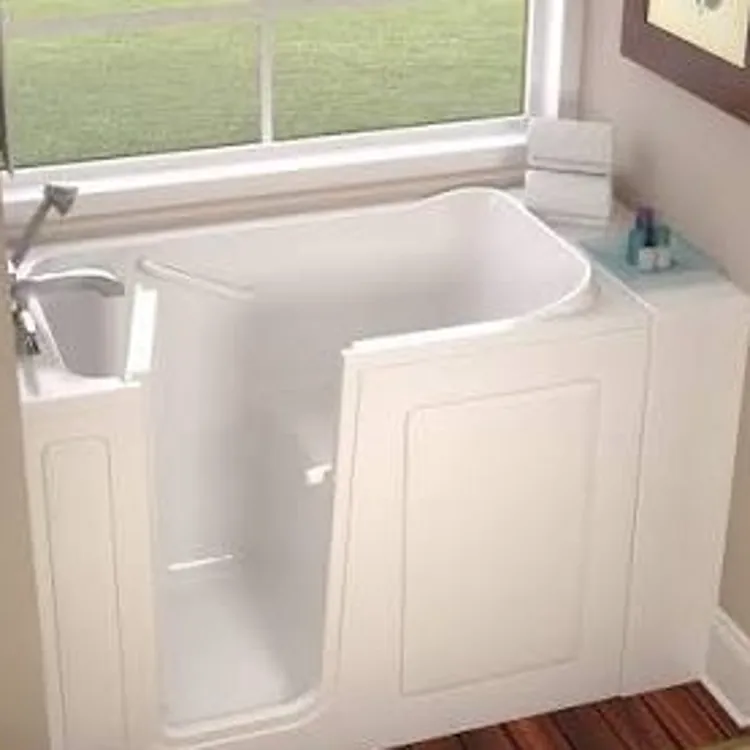
There is no standard depth that qualifies as a deep walk-in tub, and various manufacturers label models as they see fit. However, most people think of deep tubs as those where water rises to nearly shoulder height when seated in the tub.
Manufacturers of deep walk-in tubs typically list soak depths varying from 31.5 inches to 40 inches. Because of that non-standard terminology, checking seat heights and soak depths is important to ensure you choose a walk-in tub that fits your needs.
Features
Important features for deep walk-in tubs tend to vary from other sizes of walk-in tubs. For example, while door openings are typically more of a concern with extra-wide tubs due to floor space, tall (deep) tubs focus more on fill time and comfort during soaking. Here are the most common features to look for:
Remember that you need to sit in the tub while it fills and drains, so you may want to invest in fast fill and drain features or a heated seat.
- Soak depth: Soak depth is the depth of the water without taking the seat into account. This means that some tubs with larger soak depths may actually have less usable water depth once the seat is considered.
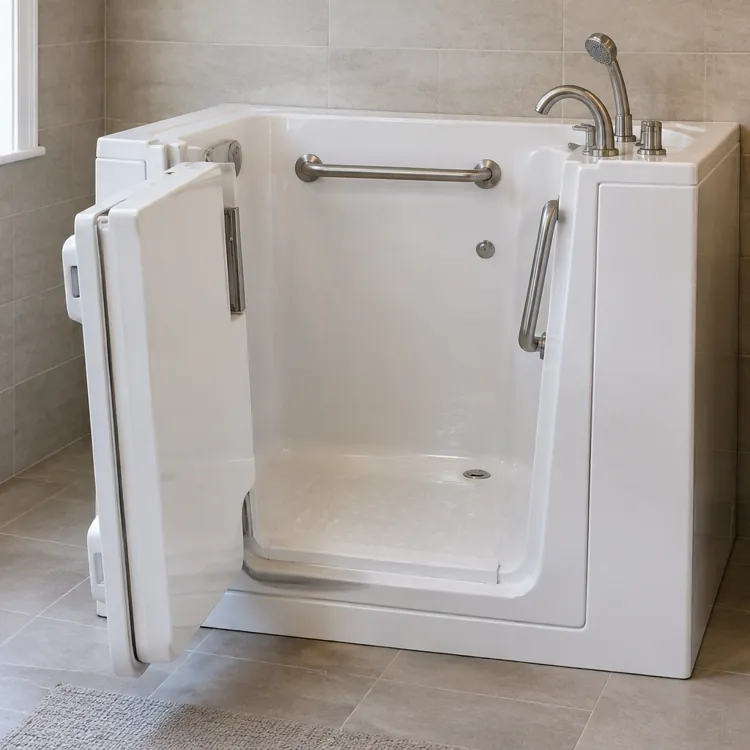
- Seat configuration: Government accessibility rules set standard seat heights at 17 inches to 19 inches tall to better match wheelchair heights. However, traditional-style walk-in tubs with no raised seat are also available. This style of walk-in tub is usually shorter than tubs with built-in chairs.
- Fast fill: Unlike traditional baths, you sit in the empty walk-in tub and wait for it to fill. Fast fill systems deliver more water into the tub for a faster fill. Your water heater size and home’s plumbing may hinder the effectiveness of this system, though.
- Fast drain: Deeper tubs naturally require more water. Fast drain systems help move more water out of the tub more quickly so you don’t get cold (or bored) waiting on the water to drain. However, like fast fill systems, fast-drain systems are limited by your home’s plumbing, and you may need upgrades for a truly quick drain.
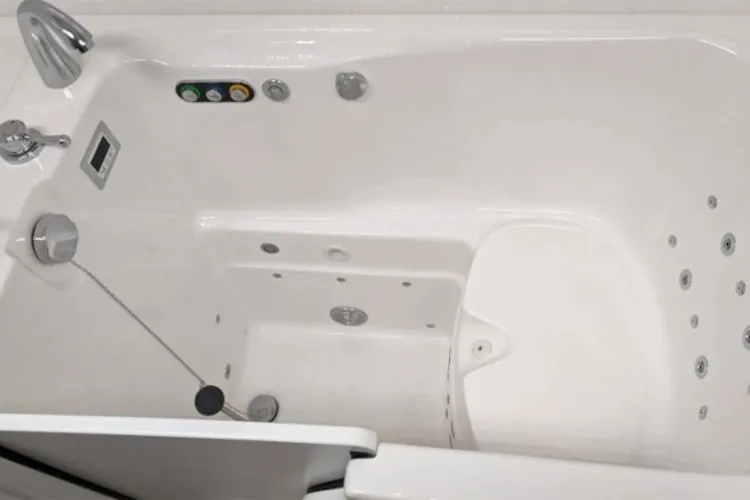
- Heated seats: Because deep walk-in tubs take longer to fill and drain, heated seats and backrests provide extra comfort and prevent chills as water levels change.
- Anti-scald technology: Many manufacturers offer thermostatic faucets — also called Thermostatic Control Valves (TCV) — that monitor temperature, while others use mechanical shut-offs on the faucet that trigger if a dangerous temperature is detected.
- Low entry: Even though tub soak depths are deeper, step-through heights still average around three inches tall. However, some manufacturers do use step-throughs around six inches tall.
- Surface treatments: Most walk-in tubs include no-slip floor coatings as well as surfaces that reduce bacteria buildup. Some manufacturers also offer UV sanitation lighting options that work with these surface treatments.
- Therapy options: Hydrotherapy jets, air jets, bubblers, aromatherapy and light therapy options are common for walk-in tubs, with hydrotherapy and air therapy being the most common.
» LEARN: Walk-in tub capacity
Accessibility
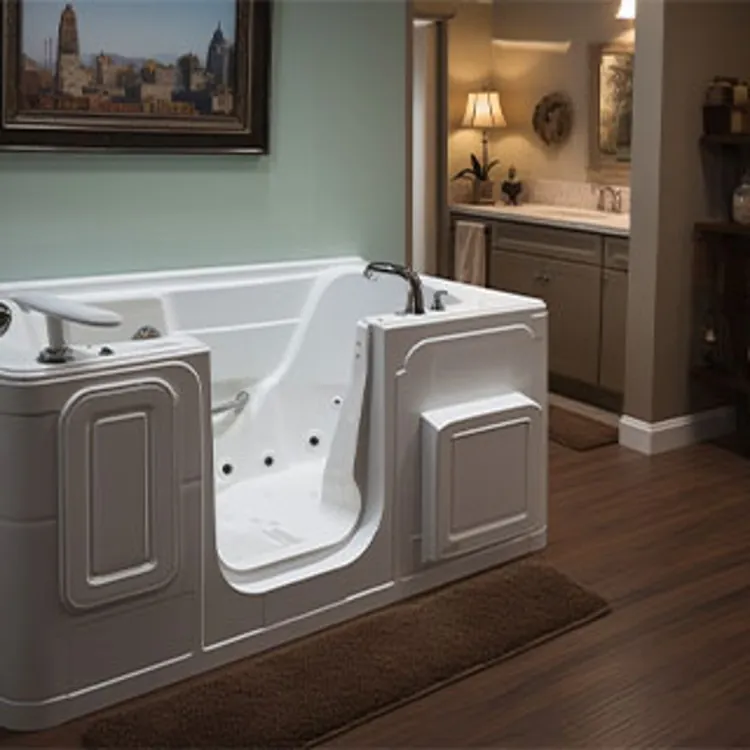
Extra-deep tubs tend to have fewer door options than some other walk-in tub styles. Non-slip floors, ADA grab bars and standard-height seats are the most common accessibility features.
Wheelchair-accessible T-doors for easy transfers or extra-low step-in clearances are less common. For those features, you may need to look at a specialty accessible walk-in bathtub or a roll-in shower, which many walk-in tub manufacturers also offer.
Deep walk-in tub costs
The cost of walk-in tubs typically ranges from $3,000 to $30,000, depending on size, features and installation needs. Because of the extra time to fill and drain deep walk-in bathtubs, many manufacturers include features such as heated seating, quick-fill and rapid-drain systems that add extra costs over other walk-in bath types.
However, one of the biggest factors for deep walk-in tubs is ensuring your home’s plumbing, electrical and structural systems can support the tub.
Homeowners who do not check their tank capacity ahead of time end up either bathing in lukewarm water or paying for a water heater upgrade they never budgeted for.
Installation requirements
Walk-in tubs must be wired into your home electrical system and often require new pipes and high-capacity water heaters. They may also need structural support added and typically require work permits from your local municipality. Additional drywall repair may be needed after plumbing and electrical work are completed.
“Water heaters are overlooked most often. People forget that a walk-in tub fills after you get in and have to drain before you can get out, so it uses a lot more hot water per bath than a standard tub. Homeowners who do not check their tank capacity ahead of time end up either bathing in lukwarm water or paying for a water heater upgrade they never budgeted for,” said Brian Keeler, director of sales at West Shore Homes.
While most walk-in tubs are manufactured to fit through standard home doorways, if your home is older and not up to current code, you may need doorways enlarged before a walk-in tub can be delivered and installed. Depending on the amount of work needed, walk-in bathtub installation can cost more than the tub itself.
Pros and cons of deep walk-in tubs
Pros for deep walk-in tubs focus on comfort and safety, while cons tend to revolve around costs. Because Medicare doesn’t cover walk-in tubs, weighing the trade-offs of costs versus independence and aging in place is necessary when considering the best walk-in bathtub options.
Pros
- Can reduce fall risks for seniors and mobility-limited individuals
- Hydrotherapy jets and air therapy may improve circulation and reduce muscle aches
- Deeper soak depth adds comfort
- May help seniors age in place longer
- Access to spa features in privacy of own home
Cons
- Not covered by Medicare
- Large water usage
- Extra weight of filled tub may require structural work
- Must wait in tub while it fills and drains
» MORE: Best laydown walk-in tubs
FAQ
Is a deep walk-in tub worth the extra cost?
Whether an extra-deep walk-in tub is worth the cost is a personal preference. Many find extra-deep tubs provide a much more comfortable experience. Just remember that the installation costs aren’t covered by Medicare, and you may need to pay for plumbing and electrical upgrades in addition to the cost of the tub itself.
How much do deep walk-in tubs cost?
Deep walk-in tubs cost anywhere from $3,000 to over $30,000 depending on installation needs and tub features.
Are walk-in tubs covered by insurance or Medicare?
Medicare typically does not cover walk-in tubs and does not consider them durable medical equipment (DME). Most private health insurance companies don’t cover the cost either. Speak to both your doctor and insurance provider to see if it qualifies as medically necessary, or look into financial assistance for walk-in tubs.
What is the standard soaking depth of a walk-in tub?
While there is no official standard for walk-in bathtub soak depths, most are at least 31 inches deep. However, soak depth is the full depth of the tub, so if you are actually looking for how high water will reach on your upper torso, you’ll need to subtract the built-in seat height from the soak depth.
How long does it take to fill and drain a deep walk-in tub?
The time to fill and drain walk-in tubs varies widely. Some may only take 4 minutes to fill and 85 seconds to drain, while others without quick fill or quick drain options may take 10 minutes or more.
Article sources
ConsumerAffairs writers primarily rely on government data, industry experts and original research from other reputable publications to inform their work. Specific sources for this guide include:
- U.S. Access Board, “Guide to ADA accessibility standards.” Accessed Nov. 21, 2026.
- National Library of Medicine, “A Systematic Review of Home Modifications for Aging in Place in Older Adults.” Accessed Nov. 21, 2026.
- Cleveland Clinic, “Hydrotherapy.” Accessed Nov. 21, 2026.
- National Library of Medicine, “Unmet Need for Equipment to Help With Bathing and Toileting Among Older US Adults.” Accessed Nov. 21, 2026.
- Centers for Medicare & Medicaid Services, “National Coverage Determination (NCD) Durable Medical Equipment Reference List.” Accessed Nov. 21, 2026.