

Comparison: walk-in showers vs. walk-in tubs
Walk-in showers can be accessible to people with mobility issues, including wheelchair users. However, they might present more of a fall risk than walk-in tubs.
| Factor | Walk-in showers | Walk-in tubs |
|---|---|---|
| Average price range | $800 to $20,000 | $2,000 to $20,000 |
| Accessibility | Sit or stand, depending on the model | Must be seated |
| Space requirements | About 10 to 20 square feet | About 12 to 15 square feet |
| Customization | Many options | Few options |
| Compare companies | Walk-in shower buyers guide | Walk-in tub buyers guide |
Space requirements
Walk-in showers usually take up less room than walk-in tubs, so they can fit more easily in your existing space. Walk-in showers can take up as little as 10 square feet. In comparison, the standard bathtub takes up about 12 square feet, with walk-in tubs measuring slightly larger.
If you have a small bathroom, a walk-in shower is probably a better option. If you have a larger space or an existing tub, you have more freedom to choose between the two, though.
Comfort level
Both walk-in tubs and walk-in showers are designed with the comfort of senior citizens and people with limited mobility in mind. Still, different people have different comfort needs. Those who aren’t comfortable standing or have trouble keeping their balance may be more at ease in a walk-in tub. People who are used to showering and can stand for extended periods may feel more comfortable with a walk-in shower, especially if they have stiffness in their hips or knees.
Safety considerations
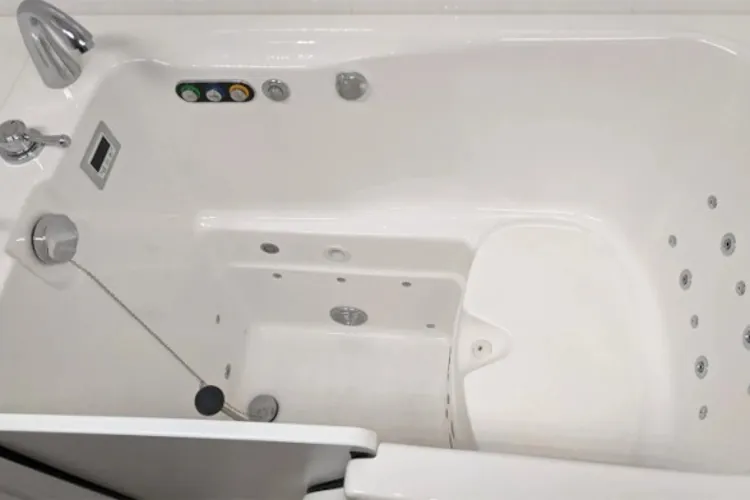
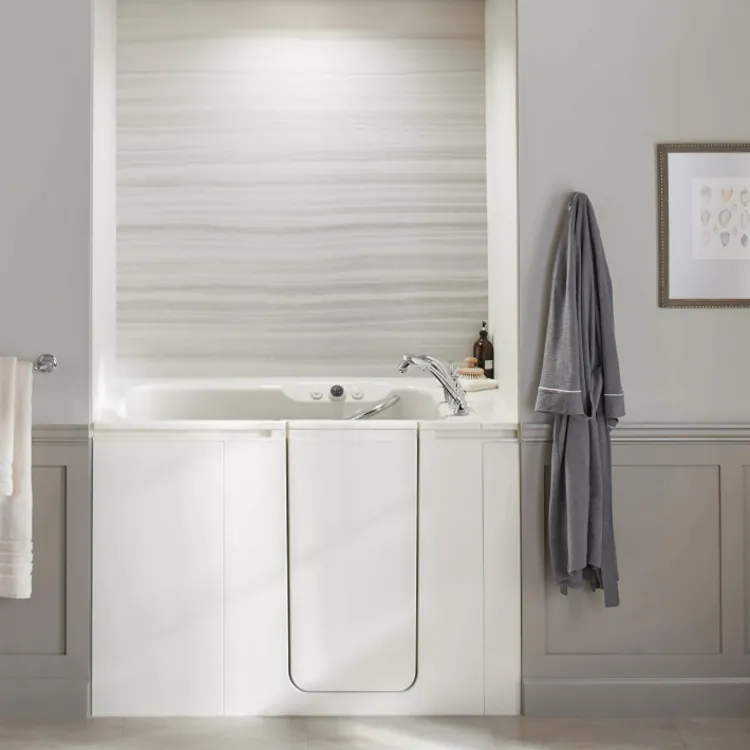
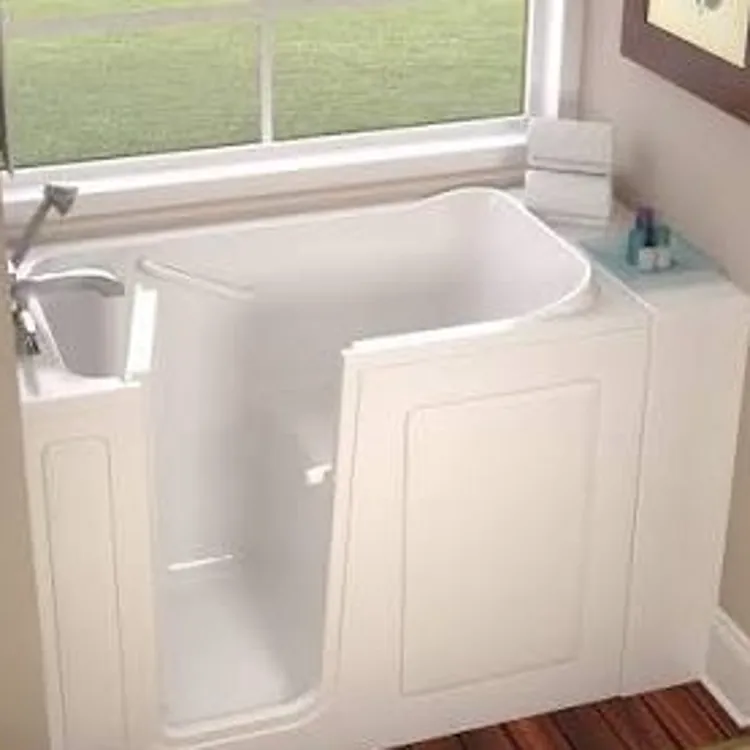
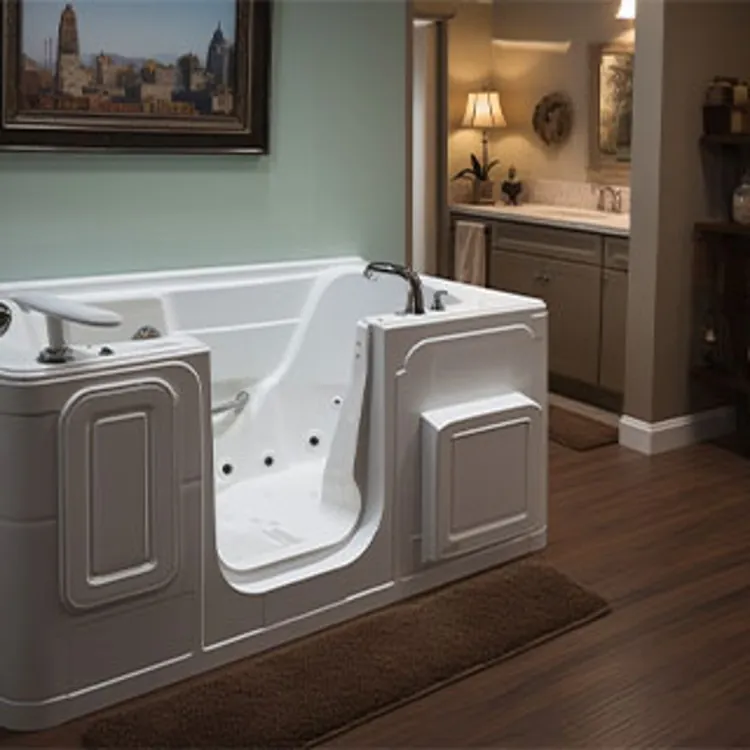
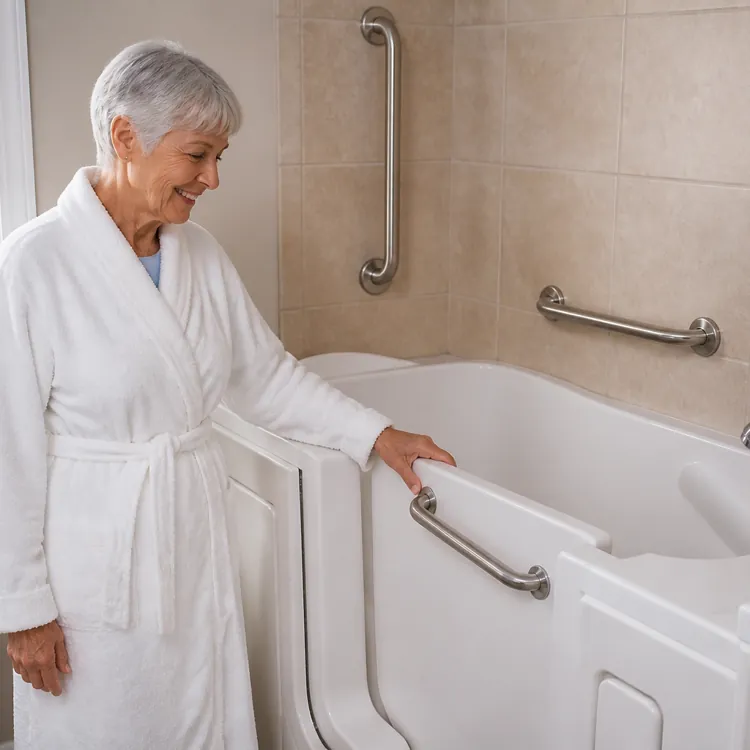
Walk-in tubs are often designed with Americans with Disabilities Act (ADA) guidelines in mind and provide added safety for people with balance or mobility issues. They have doors and let you walk right in over a low threshold, meaning you avoid having to step over a high bathtub wall. They also commonly include nonslip floors, grab bars, one or more seats and anti-scald valves. Some models offer features such as jets, chromotherapy (light therapy), aromatherapy and quick-draining technology.
Walk-in tubs are safer for people with mobility or balance issues.
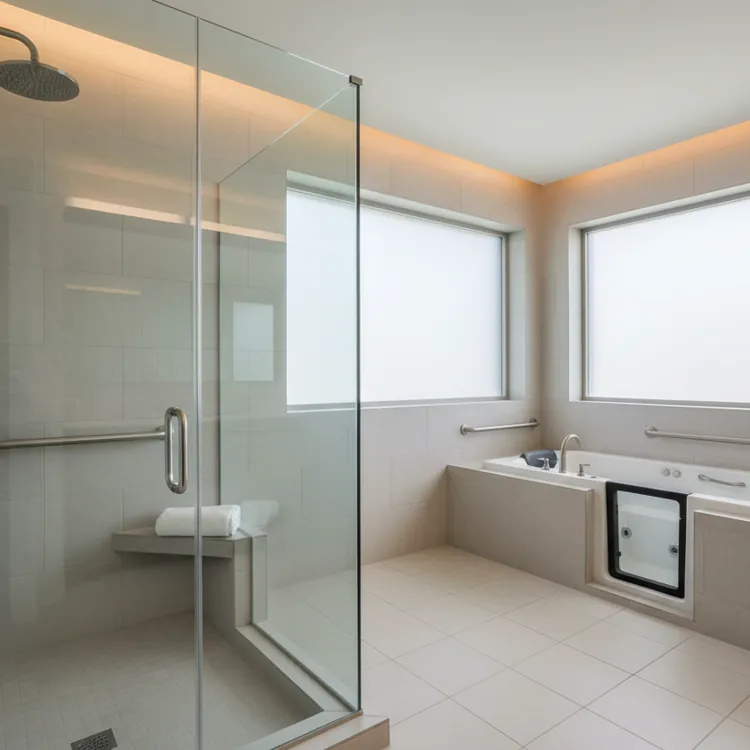
Walk-in showers are showers with a low or no threshold. This allows easy entry without stepping over a high ledge, making them safer and more accessible. Walk-in showers also often include slip-resistant flooring, grab bars, built-in seating and handheld showerheads. The open design reduces tripping hazards and makes it easier for caregivers to assist if needed.
Walk-in showers vs. walk-in tub costs
When comparing walk-in showers and tubs, you’ll want to factor in both initial costs and installation costs. You should also consider how much other work needs to be done in your bathroom and elsewhere in your home, such as if you need a new hot water heater to accommodate your tub's volume.
Check if installation is included in the price of your tub or shower.
Walk-in shower costs
For walk-in showers, prefab kits typically cost between $800 and $2,500, depending on the size and quality of the shower. Custom-built walk-in showers are considerably more expensive, typically costing $5,000 to $20,000 or more. Installation will also add to the overall cost.
If you’re not using a prefab kit, installation costs are highly variable, with some people spending over $20,000 total.”
"With a prefab walk-in shower kit, installation can range from $1,500 to $2,500,” said Dominic Telymonde, vice president of sales at Boca. “If you’re not using a prefab kit, installation costs are highly variable, with some people spending over $20,000 total.”
Walk-in tub costs
Walk-in bathtub costs range from $2,000 for basic models to $20,000 for luxury models. While there are affordable and expensive options for both, costs vary significantly depending on the brand, size, type, features and personalization options you choose.
You’ll also need to consider installation, which typically costs anywhere from $2,500 to $8,000, depending on the complexity of the job.
Benefits of walk-in showers
Walk-in showers have many benefits that make them appealing, especially if you or a loved one finds sitting down difficult.
- Space-efficient: Walk-in showers generally require less square footage than walk-in tubs, making them ideal for smaller bathrooms.
- Easy maintenance: There are fewer surfaces where water, dirt and soap scum can collect. This can make a significant difference in convenience for older adults and people who have trouble kneeling or bending over.
- Design variety: Walk-in showers are available in a wide variety of styles. With walk-in tubs, you're usually limited to only a handful of designs.
- Customizable safety features: If you're willing to pay extra, your walk-in shower provider might let you add accessibility features like nonslip flooring, grab bars and anti-scald valves.
- Modern appeal: If you decide to sell your home, a walk-in shower may be a selling point.
Drawbacks of walk-in showers
People who aren’t comfortable standing or have trouble keeping their balance may not like a walk-in shower.
- No soaking option: You can’t take baths, which some people prefer for relaxation or therapy.
- Water splashing: Without proper design or a good door, water may leak onto the floor.
- Cold feel: The open style can feel draftier than a bathtub or enclosed shower.
- Higher cost for upgrades: Custom features like benches, tile walls or special showerheads can raise the price.
- Potential resale concerns: Many homebuyers prefer having both a shower and a tub, so only having a walk-in shower could be a potential drawback.
» EXPLORE: Best walk-in shower-tub combos
Benefits of walk-in tubs
Like walk-in showers, walk-in tubs have many benefits worth considering, such as:
- Seated bathing: Walk-in tubs are ideal for people who have difficulty standing for long periods or have a greater risk of falling in the bath.
- Superior accessibility: A walk-in tub has a built-in door and low step-in entry, making it much more accessible than a standard bathtub and often more accessible than a walk-in shower.
- Greater depth: Compared to a standard bathtub or shower, walk-in tubs have higher walls, which can make it easier to wash yourself.
Drawbacks of walk-in tubs
Some potential drawbacks of walk-in tubs include:
- Higher costs: Walk-in tubs are much more expensive than standard bathtubs.
- May need more work: Installation may require electrical and plumbing work, plus a water heater upgrade.
- Slower fill and drain times: Walk-in tubs have longer fill and drain times unless you upgrade to a quick-drain feature, and you can’t exit until it’s fully drained or you risk flooding.
» MORE: Pros and cons of walk-in tubs
What reviewers say about walk-in tubs vs. showers
ConsumerAffairs reviewers have highlighted both the benefits and challenges of walk-in showers and tubs.
Walk-in shower review analysis
Customer feedback on walk-in showers is mixed. Some praised the installation process and final product, while others reported delays, installation mistakes and poor customer service.
Mary, a reviewer from California, said: “We had a walk-in shower installed and it's perfectly what we wanted. We like the wall texture, which is a flat finish that is shiny and very easy to clean. There's no lift on the shower floor so we don't stub our toes and it's doing exactly what we wanted it to do.”
But not all experiences were positive. James, a reviewer from Colorado described design flaws and poor follow-up.
“When you close the sliding glass doors on the shower totally, there's a one-inch gap in the center where they don't connect,” James said. “I called and told them about it. It's been going on [for] over two weeks now. [...] I have called the service department numerous times. [...] They never showed up to fix the slider on the shower. Now when I turn it on, water goes on the floor.”
Walk-in tub review analysis
Reviews of walk-in tubs are also mixed. Many customers said they appreciated the safety features and therapeutic benefits. Others reported problems with installation, customer support and functionality.
For example, Marie, a reviewer from Florida, wasn’t entirely satisfied with their walk-in tub installation.
“They did a good job except that when they said they were done, I asked about the extra 2 feet to the wall. At first, they said, "That's not what we do." ... They did find another box of matching tile and put it up there. But it's still about 4 or 5 inches from the ceiling, and there's a hole in the ceiling. To this day, it isn't finished.”
Kathleen, a reviewer from Arizona, was also unhappy with their walk-in tub.
“I paid $25,000 for the tub, so I would think it would come with a headrest.”
Should you choose a walk-in tub or shower?
When choosing between a walk-in tub and a walk-in shower, consider your budget, your space, your bathing needs and how big of a renovation you’re willing to take on. While a walk-in bathtub may be a better option for those who have more limited mobility, walk-in showers may be better for those who are concerned about style and resale value.
FAQ
Is a walk-in tub better than a walk-in shower for seniors?
Walk-in tubs are usually better than walk-in showers for seniors since they are better for people with limited mobility. They also can help reduce slips and falls more than a walk-in shower, and put less pressure on hips or knees.
Will Medicare pay for a walk-in shower for the elderly?
No, Medicare won’t pay for walk-in showers or walk-in tubs for the elderly as they aren’t considered to be durable medical equipment (DME).
» EXPLORE: Alternatives to walk-in tubs
Will a walk-in tub or shower add value to my home?
Walk-in showers may be a better fit for those who are concerned about style and resale value. In some markets, a walk-in tub adds value to your home if you also have another standard bathtub or shower in your house. In others, it could be a deterrent.
Article sources
ConsumerAffairs writers primarily rely on government data, industry experts and original research from other reputable publications to inform their work. Specific sources for this article include:
- Medicare, “Durable Medical Equipment (DME) Coverage.” Accessed March 26, 2026.