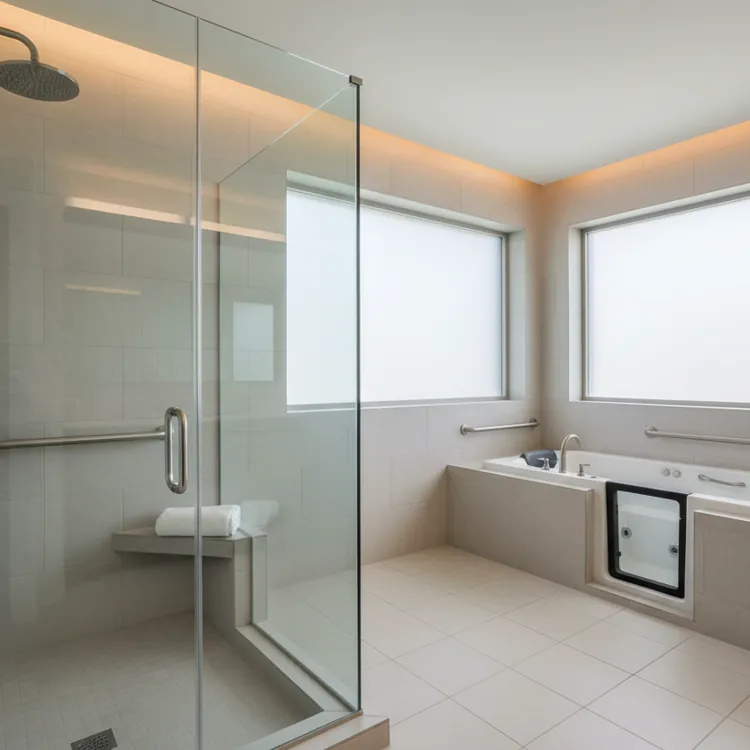


Average cost ranges for walk-in tub installation
Overall, you can expect to pay anywhere from $5,500 to $33,000 for a complete walk-in tub project, including the unit purchase and installation costs.
The cost of a walk-in tub project has three main components: the tub itself, any accessories you add and the labor to install everything. You might receive quotes for these costs separately, or the manufacturer could bundle them together. It’s important that you understand exactly what’s included in the quote before you sign anything.
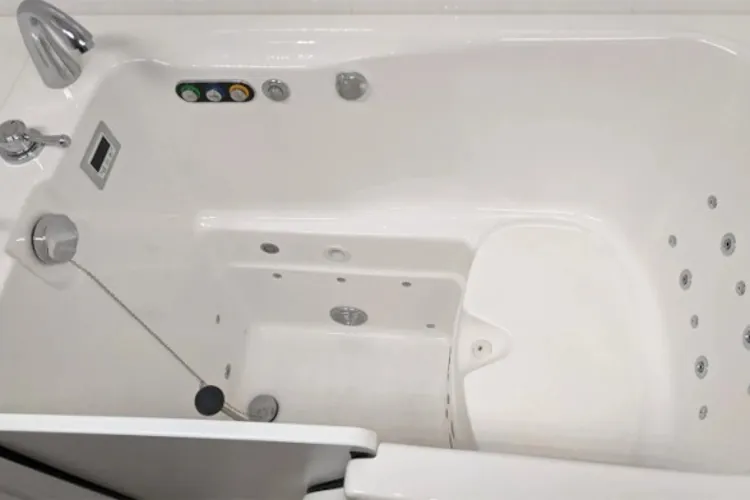
Basic soaker models that don’t have jets or special features are priced on the lower side, while premium tubs can increase the cost significantly. These tubs may include hydrotherapy jets, heated seats and fast-drain systems.
| Cost component | Typical range | What it includes |
|---|---|---|
| Tub unit | $2,000 to $15,000 | The tub itself, varies by size and features |
| Accessories | $50 to $8,000+ | Grab bars, seat upgrades, hand-held shower wand |
| Labor and installation | $2,500 to $8,000 | Professional installation work |
| Old tub removal | $250 to $700 | Demolition and removal of the existing tub |
| Plumbing upgrades | $500 to $2,000 | Plumbing rerouting, drain modifications |
| Electrical upgrades | $200 to $1,200 | Wiring for heaters and jets, GFCI outlets |
| Water heater upgrade | Up to $3,000 | Larger capacity unit if needed |
Walk-in tub installation cost factors
No two walk-in tub projects are identical. Your final price will depend on a variety of factors, including the tub you choose and the condition of your current bathroom space. Here’s a breakdown of some cost factors that go into walk-in tub installation.
Tub size and type
Larger or premium tubs cost more, both for the unit itself and for installation. A wider or heavier tub than the one you had before may require structural changes to support the additional space and weight. Tubs with therapeutic features such as hydrotherapy jets or chromotherapy lighting also add to the base price and may require additional electrical work.
Bathroom layout changes
If your new tub fits the dimensions of your old tub, you can save a significant amount of money. But if the new tub is wider, longer, or positioned differently, you may need to modify the room by knocking down walls or relocating drains. These changes can drive up the cost.
Plumbing and drain modifications
Walk-in tubs drain differently from standard tubs. If your home has older plumbing, you may need pipes replaced, resized or moved. You might need upgraded drain lines that can handle quicker draining.
Electrical and GFCI requirements
Some walk-in tubs need their own electrical circuit, especially if they have jets or heaters. Local building codes may require you to have ground fault circuit interrupter (GFCI) outlets that are near water sources for safety.
Water heater capacity needs
Most walk-in tubs require a water heater that accommodates at least 50 gallons of water so you can properly heat the water in your tub. Upgrading to a larger tank or a tankless water heater is sometimes necessary, and it's worth factoring into your budget from the beginning just in case.
Walk-in tub installation labor cost breakdown
Labor costs for walk-in tubs can run from $2,500 to $8,000. A standard installation takes one or two days, assuming no major modifications are needed. More complex projects, like those that involve rerouting plumbing or electrical upgrades, can extend to three days or more.
You’ll likely need to hire more than one type of professional for a walk-in tub project. A general contractor or installer can handle the actual tub placement and surrounding work, while a licensed plumber manages all water connections, and licensed electricians take care of any wiring. Some manufacturers may have installation teams of professionals that can simplify the process.
Factors that can go into a labor quote include:
- Demolition and old tub removal: Taking apart the existing tub and removing it
- Plumbing reconfiguration and connections: Rerouting pipes, and hooking up new drain and water lines
- Electrical work and GFCI outlet installation: Wiring for jets, heaters and outlets
- Structural reinforcement for grab bars and seating: Adding support for grab bars, built-in seating or the additional weight of the tub
- Tub unit positioning and securing: Ensuring the tub is set and leveled correctly
- Shower wall system installation: Placing panels or tiles around the tub
- Fixture and accessory installation: Adding faucets, hand-held shower wands or grab bars
- Waterproofing and final sealing: Calking and sealing to prevent water leaks that can lead to damage
If your quote doesn’t list these items separately, ask for an itemized version. This can make it easier to compare bids from different contractors.
How to lower walk-in tub costs
Walk-in tubs can be a good investment if you have mobility concerns or need a safe way to bathe independently. There are ways to keep costs manageable without sacrificing safety or quality.
Here’s where to look for savings:
- Choose a basic soaker model without jets or advanced therapeutic features. These are less expensive, and still offer a safe bathing environment.
- Keep the existing tub footprint, if possible, to avoid costly plumbing relocation and structural changes.
- Select a standard-size tub that fits your current space rather than requiring bathroom modifications.
- Limit custom accessories and upgrades; add only what you need.
- Get multiple detailed quotes from at least three licensed contractors before committing to one.
- Ask if old tub removal is included in the quote or charged separately; this is often a hidden cost.
- Explore financing options or payment plans offered directly by manufacturers.
- Check your eligibility for Medicare Advantage, Medicaid or VA benefits. Some plans cover bathroom modifications if they’re medically necessary and you meet certain qualifications.
- Schedule installation during the contractor offseason, when you may be able to negotiate better pricing; this is usually in the late fall or winter.
It might seem easier and cheaper to do the installation yourself, and technically, you can if you have the skills. But safe and proper walk-in tub installation may need the expertise of different trades. In addition, DIY installation may void any warranty you may otherwise be eligible for.
Financing options, payment plans and assistance programs
Many manufacturers offer payment plans and financing options to make the total cost of the tub more manageable.
You can also check with local charities and nonprofits to see if they offer home modification grants that are local to your area. If you’re a military veteran, you may receive financial assistance from the Department of Veterans Affairs to help pay for your walk-in tub.
Alternatively, you may decide to install a walk-in shower instead of a walk-in tub, which can be more cost-effective.
FAQ
What are the downsides of a walk-in tub?
The biggest downside of a walk-in tub is that you need to enter the tub before filling it and wait inside for it to drain before exiting. Walk-in tubs also require a larger upfront investment than other bathroom modifications.
Is a walk-in tub worth the $20,000 cost?
For older adults or people with mobility challenges, a walk-in tub can be worth the cost for increased independence and added safety. If budget is a concern, a more basic model in the $5,000 to $10,000 range can provide many of the desired safety advantages.
How long does a walk-in tub installation take?
A standard walk-in tub installation can be completed in one or two days. Projects that require plumbing rerouting, electrical upgrades or structural changes can take three days or longer.
Are walk-in tubs covered by insurance?
Most private insurance and original Medicare typically don’t cover walk-in tubs. Some Medicare Advantage plans, Medicaid programs and VA benefits may help cover the cost if a healthcare provider deems the tub medically necessary.
Article sources
ConsumerAffairs writers primarily rely on government data, industry experts and original research from other reputable publications to inform their work. Specific sources for this article include:
- BMC Geriatrics. “Challenges and opportunity in mobility among older adults – key determinant identification.” Accessed March 26, 2026.