

Key insights
Different types of walk-in tubs can suit various needs, from basic soakers to hydrotherapy models.
Jump to insightSafety features like low step-in heights and grab bars help prevent accidents.
Jump to insightBudget considerations include the cost of the tub, installation and potential discounts.
Jump to insight3 steps to choosing a walk-in tub
When deciding on a walk-in tub, read reviews of companies and gather any personal recommendations from family and friends. You might also talk with your healthcare provider about what type of tub would be ideal for your health needs.
Callen explained some important personal factors that may influence your decision, including:
- The structure and layout of your bathroom
- Your ability to independently enter and exit the tub and be able to remain in the tub as it fills and drains
- Your ability to move around safely inside the tub
Before shopping, create a wishlist of the features you want in a walk-in tub. Then, if you’ve gone over your budget, cross off the features you can live without, and keep only the ones necessary for your safety and lifestyle.
1. Consider safety features
Jerilyn Callen, an associate professor of occupational therapy at the University of Oklahoma Health Sciences, said there are some essential safety features to look out for when choosing a walk-in tub, including:
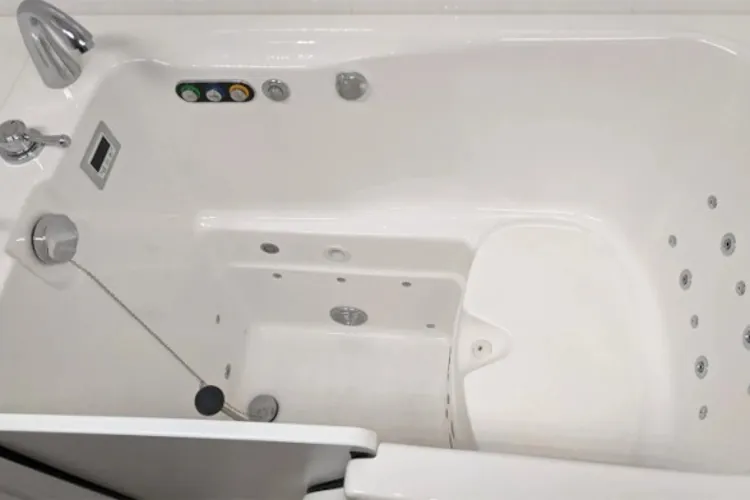
- Low entry threshold: Walk-in tubs have lower thresholds, making it easier to step into the tub. This makes it easier to get in and out, especially if you have balance or mobility concerns.
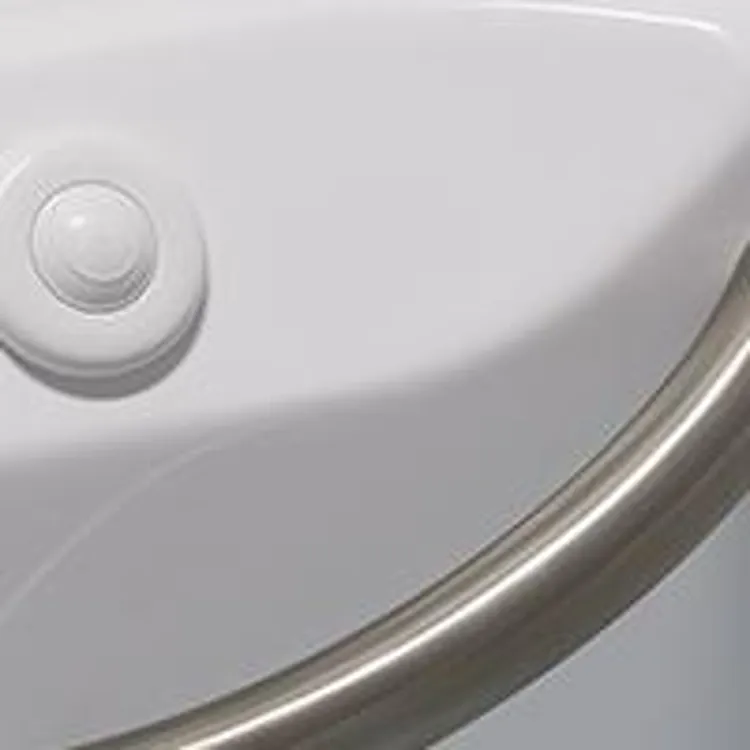
- Grab bars: These help you steady yourself so you can get in and out of the tub safely.
- Nonslip seating: Having a nonslip surface reduces the risk of falls in a wet tub.
- Control panels in easy reach: The control panel should be easy to reach while sitting in the tub. This is important for those who could lose their balance.
- Anti-scald valves: These regulate the water temperature to prevent sudden bursts of hot water and protect users who may not feel heat changes due to numbness or limited sensation.
Most walk-in tubs are equipped with these standard safety features to meet the accessibility standards indicated by the Americans with Disabilities Act (ADA).
2. Think about cost and budgeting
Walk-in tubs usually cost $5,000 to $15,000, depending on the type of tub and any customizations, like heated seats or fast-fill and quick-drain technology. You can expect to pay between $2,000 and $5,000 for cheaper walk-in tubs, and luxury tubs can go up to $20,000 or more. Traditional soaker tubs will be more affordable than hydrotherapy or combination walk-in tubs.
When budgeting for a walk-in tub purchase, consider the following:
- Write down the features you want in a walk-in tub, including any customizations that are an extra cost.
- Keep in mind installation fees, and leave room in the budget for unexpected expenses like plumbing issues. Installation costs can range from $700 to $3,000.
- Make sure your water heater can handle the increased water a walk-in tub requires. It’s possible you need a larger water heater.
Insurance coverage
Cost is a big factor that often influences walk-in tub choices. It’s a fairly big renovation for many people. “A walk-in tub isn’t covered by insurance, even if it's needed, so many people are limited by the cost,” explained Callen.
A walk-in tub isn’t covered by insurance, even if it's needed, so many people are limited by the cost.”
— Jerilyn Callen, associate professor, University of Oklahoma Health Sciences
Unfortunately, insurance rarely covers the cost of a walk-in tub, including Medicaid and Medicare. If you have a Medicare Advantage plan, you can ask if you qualify for any coverage. However, you can deduct a walk-in tub from your taxes if you qualify. Some veterans may receive assistance with home modifications, including walk-in tub installation, through VA housing grants.
Cheaper walk-in tub alternatives
There are alternatives to walk-in tubs that can still provide you with safety and comfort while bathing. If you find a walk-in tub is financially not feasible, consider adding grab bars to your existing tub or shower or using a shower bench or rolling shower chair.
3. Pick out comfort and convenience features
While safety is the main priority, many walk-in tubs also offer comfort and convenience upgrades. These features can include:
- Heated backrests: These offer additional comfort, especially to keep warm when you’re waiting for the tub to fill or drain.
- Aromatherapy or chromatherapy: Aromatherapy uses essential oils for relaxation, while chromatherapy uses colored lights to create a calming atmosphere.
- Fast-fill and quick-drain systems: Some tubs can take up to 15 minutes to fill. Fast-fill faucets speed up this time. Similarly, it can take time to empty a tub while you have to sit and wait. Quick-drain systems can empty your bath in about two minutes.
- Hand-held showerhead: Removable showerheads allow for better reach so that you don’t have to stand. It also lets caregivers assist with bathing.
- Bath trays: Bath trays can hold personal objects like a book or a glass of water.
Types of walk-in tubs
There are many types of walk-in bathtubs, all of which provide different benefits. They range from basic soaker tubs to more extravagant hydrotherapy tubs with aromatherapy.
Traditional soaker walk-in tubs
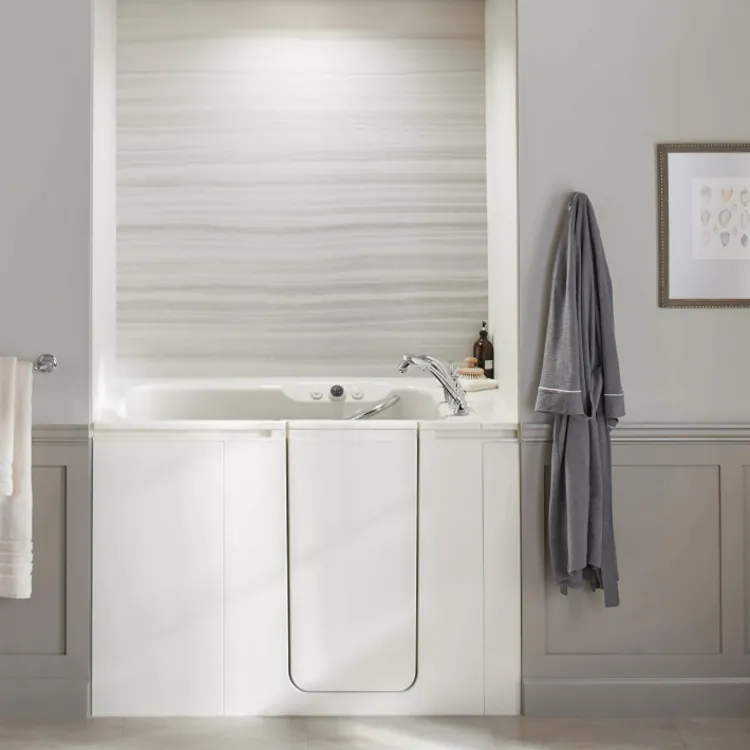
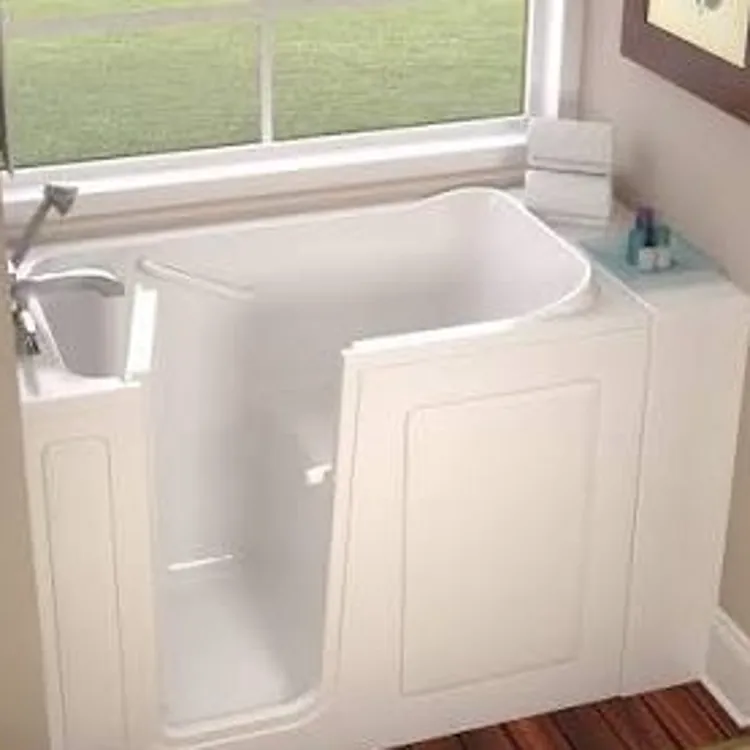
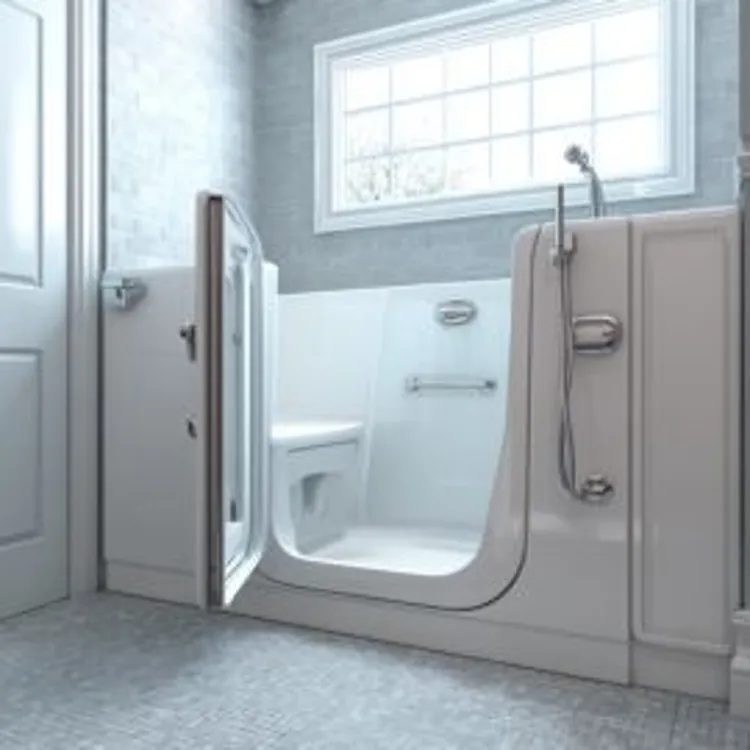
A traditional soaker walk-in tub is likely what you think of when you think about a walk-in tub. A traditional walk-in tub includes a door so you can step inside instead of climbing over a ledge like a regular bathtub. Its added height lets you sit and soak more comfortably while still staying safe.
Standard features include grab bars, nonslip flooring and low steps — between two and seven inches depending on the model. Soaker tubs can come in different sizes and are often customizable.
Traditional soaker tubs are ideal for those looking for simplicity and a safe bathing experience
Hydrotherapy and air walk-in tubs
Hydrotherapy walk-in tubs use jets of forced water to circulate water in targeted areas of the tub. Relaxing in a hydrotherapy tub can ease muscle tension and bring blood flow to sore muscles. Some walk-in tubs use air in the jets to create lots of tiny air bubbles that can give you a sense of weightlessness. These are known as air walk-in tubs.
Different models of walk-in tubs can also use a combination of both air and water to provide a soothing experience and relief from aches and pains.
Combination walk-in tubs
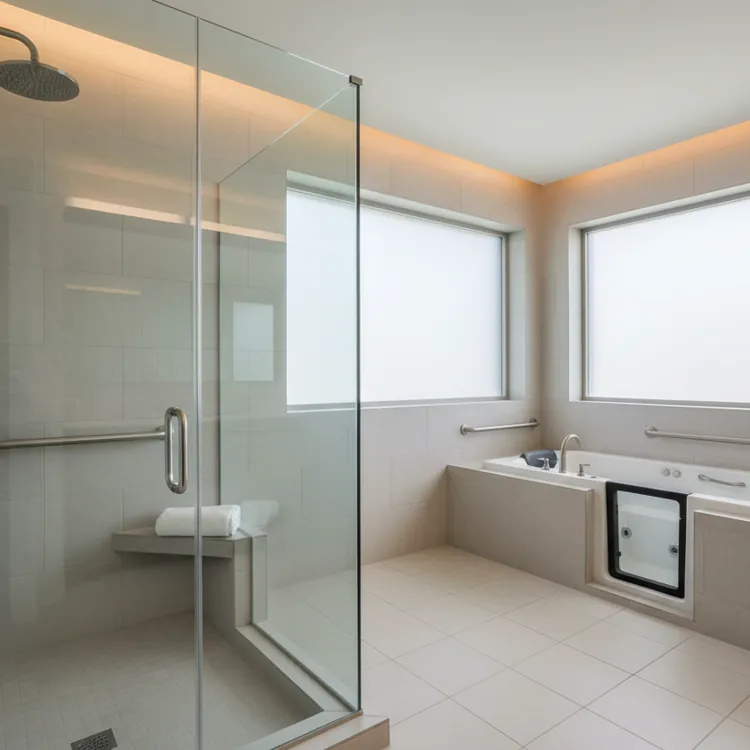
These tubs combine a walk-in tub with a shower so they can accommodate people with different needs who live in the same home. Combination walk-in tubs let you decide if you want to shower standing up or soak in a tub while seated.
Bariatric walk-in tubs
For users with a larger body size, it can be challenging to bathe in a traditional walk-in tub. By providing a larger seat and wider doors, bariatric walk-in tubs have more space while still including a safe entry and comfortable seating.
Wheelchair-accessible walk-in tubs
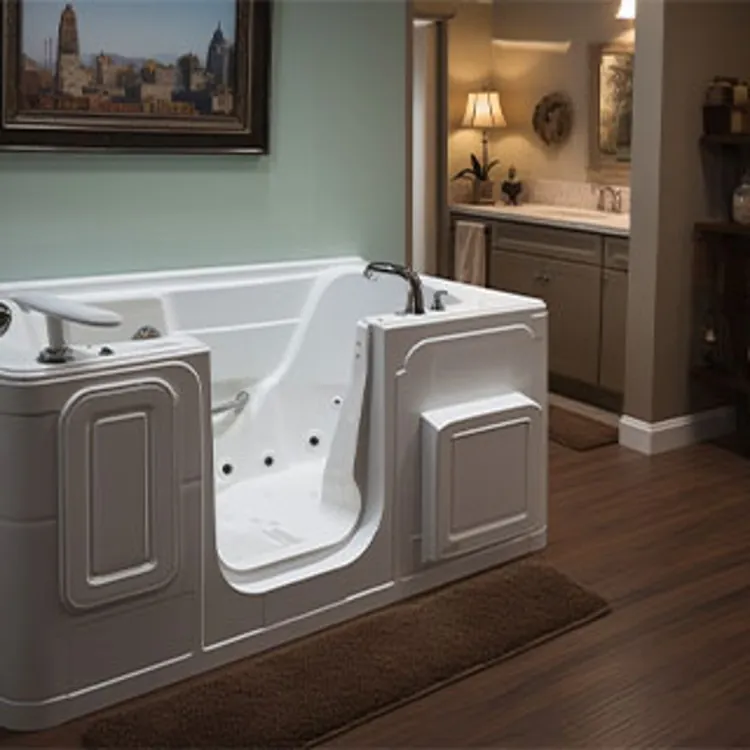
Wheelchair-accessible walk-in tubs are designed to make transfers from a wheelchair into the tub safer and easier.
These tubs include key features to support safety for wheelchair users, including:
- Low entry thresholds and wide outward-swinging doors, often more than 30 inches wide, so a wheelchair can pull right up to the tub
- A built-in seat at chair height that allows users to transfer easily and stay seated while bathing
- Grab bars within easy reach and nonslip flooring for stability and fall prevention
- Spacious interiors and layouts designed to follow ADA guidelines for accessibility
» COMPARE: Top-rated walk-in tub brands
FAQ
What are the negatives of a walk-in tub?
Likely the biggest drawback is the high upfront cost. Walk-in tubs can range in price from a few thousand to over $15,000. You may also uncover other issues that add up in cost during installation.
What safety features should I look for in a walk-in tub?
Safety features to look for in a walk-in tub include a low-entry threshold, grab bars, nonslip surfaces and anti-scald valves.
Are walk-in tubs suitable for people with mobility issues?
Walk-in tubs can be a great choice for the safety and comfort of those with mobility or balance issues. They make it easier to enter and exit, allow the use of hand-held showerheads and provide stable surfaces to stand with grab bars or sit securely.
What are the benefits of a walk-in tub over a traditional tub?
Walk-in tubs provide a low threshold for entering and exiting without needing to lift a leg over the side. Users can sit comfortably while bathing, and some models include hydrotherapy or air jets for added relaxation.
Article sources
ConsumerAffairs writers primarily rely on government data, industry experts and original research from other reputable publications to inform their work. Specific sources for this article include:
- National Poll on Healthy Aging, “Poll shows wide variation in older adults’ preparations to age in place.” Accessed Aug. 22, 2025.
- Centers for Disease Control and Prevention, “Older Adult Falls Data.” Accessed Aug. 22, 2025.
- American Journal of Lifestyle Medicine, “A Descriptive Analysis of Location of Older Adult Falls That Resulted in Emergency Department Visits in the United States, 2015.” Accessed Aug. 22, 2025.
- Americans with Disabilities Act, “ADA Standards for Accessible Design.” Accessed Aug. 22, 2025.
- U.S. Department of Veterans Affairs, “Disability housing grants for Veterans.” Accessed Aug. 22, 2025.