

Soaker walk-in tubs
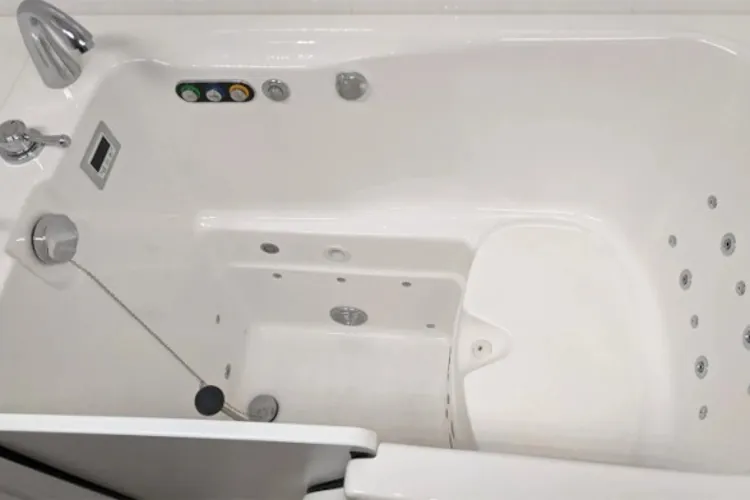
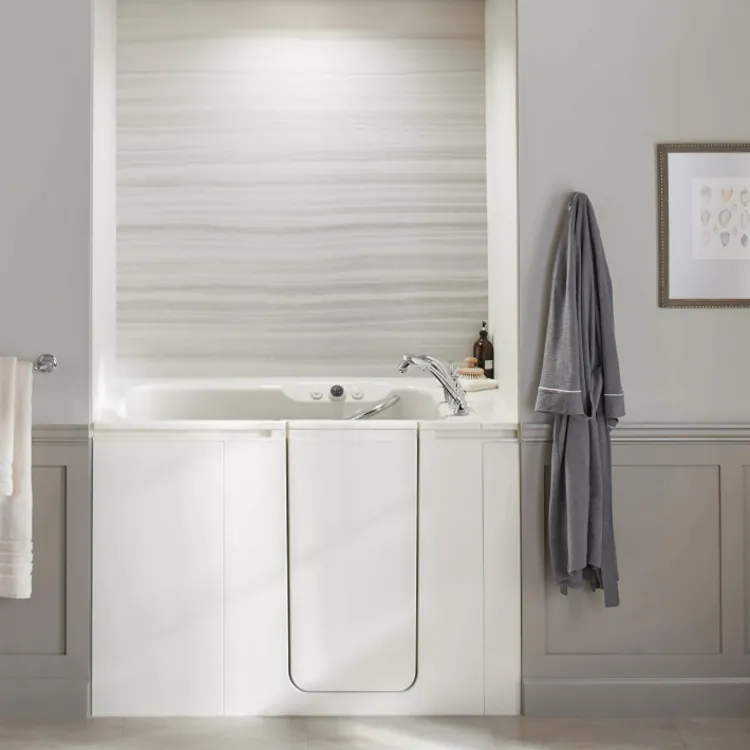
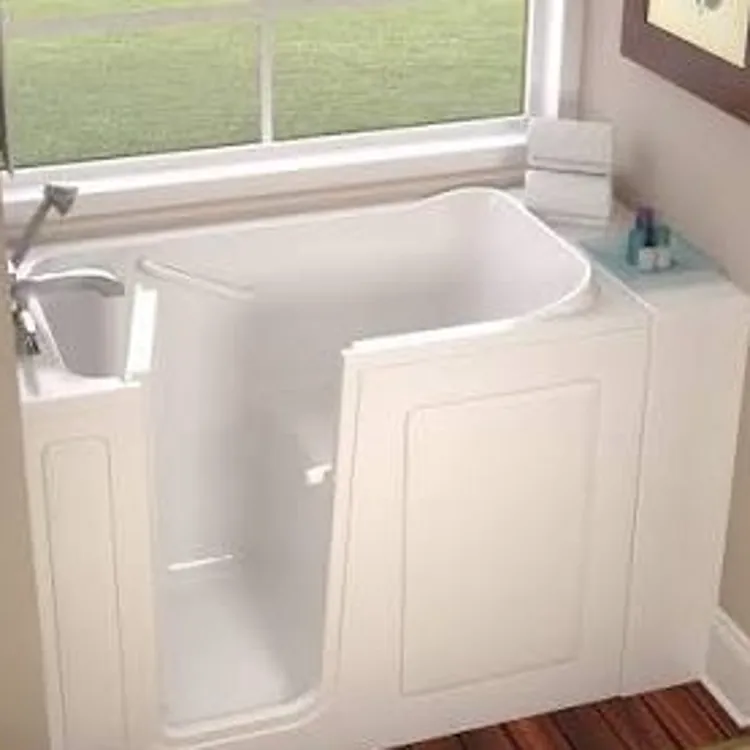
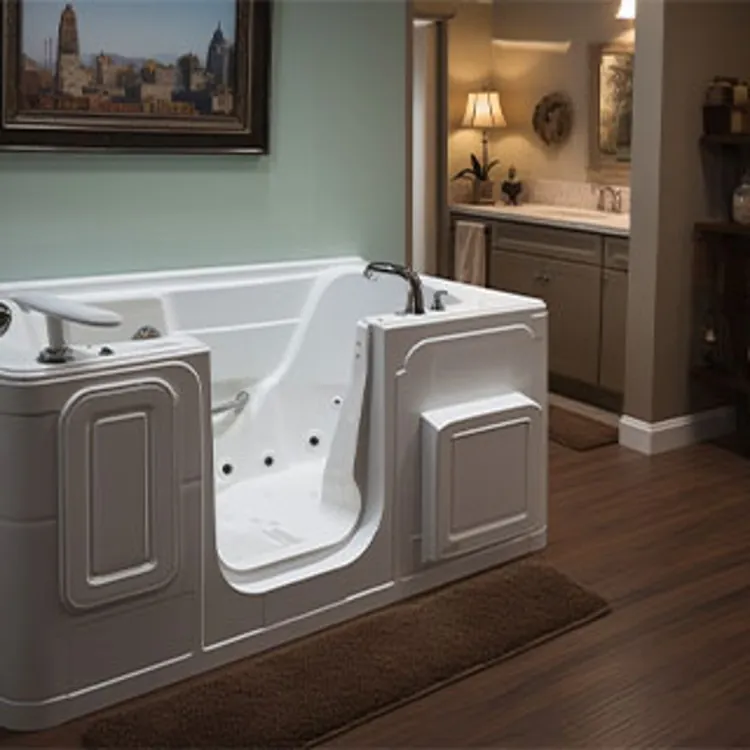
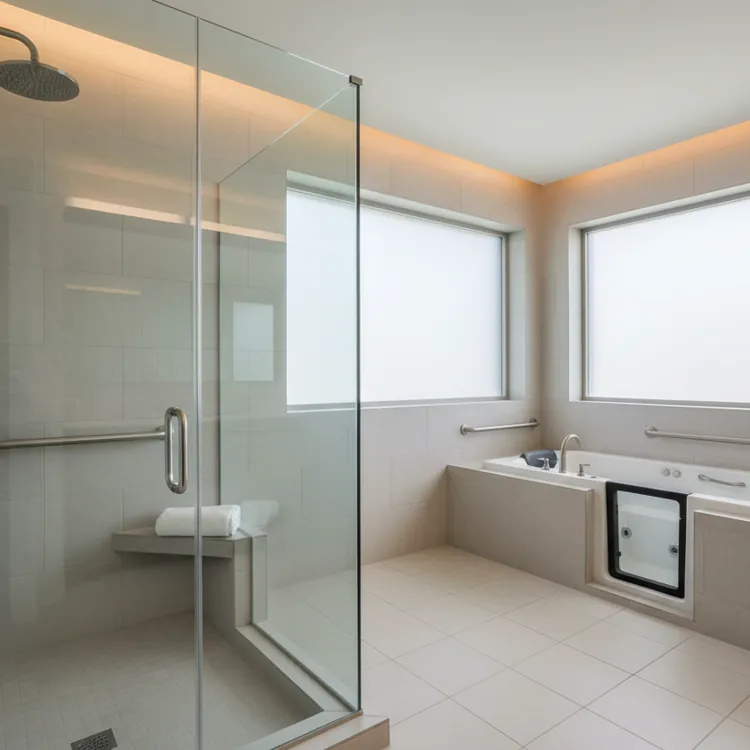
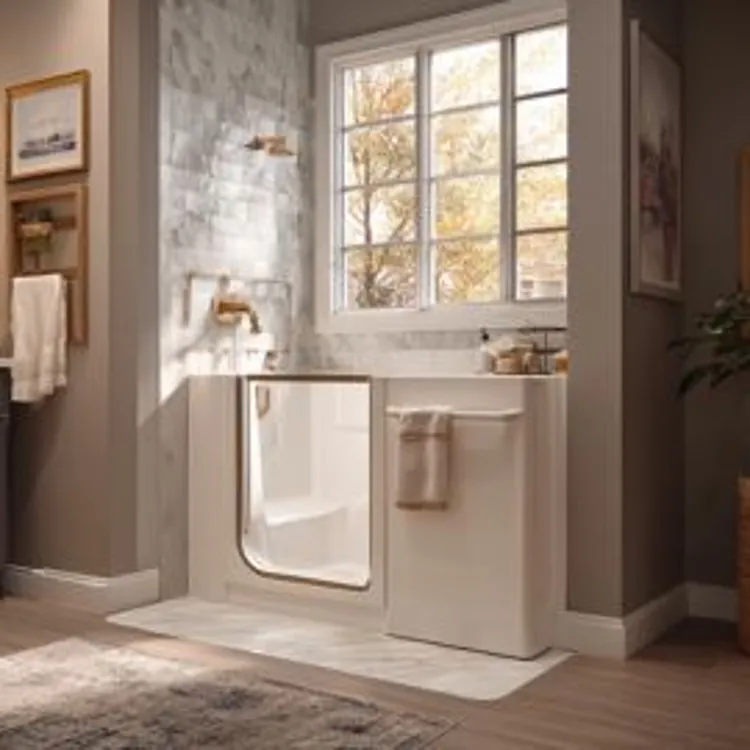
Soaker walk-in tubs are the simplest and most common type of walk-in bathtub. Designed for deep soaking, these tubs include a built-in seat and a watertight door that lowers the entry threshold to just a few inches, much lower than a standard bathtub’s typical fifteen-inch wall. By removing the need to step over a tall tub edge, soaker walk-in tubs reduce the risk of bathroom falls, which remain a leading cause of injury among older adults.
Most soaker tubs come standard with:
- Low step-in threshold (usually three to seven inches)
- Built-in, chair-height seat for safer transfer and comfort
- Watertight, inward- or outward-swinging door
- Textured, anti-slip floor and seat
- Built-in grab bars for stability
- Hand-held showerhead for seated bathing
According to the National Council on Aging, walk-in tubs lower fall risk by combining a low entry step with built-in seating and grab bars. These safety features make soaker tubs especially suitable for people with limited mobility, arthritis or balance challenges who don’t need therapeutic jets or spa functions.
How much do soaker walk-in tubs cost?
Soaker tubs are usually the most affordable type of walk-in bathtub because they don’t include hydrotherapy or air jet systems.
- Tub cost: Typically $2,000 to $5,000
- Installation: Another $1,000 to $10,000 or more, depending on bathroom layout and plumbing updates
Prices vary widely by brand, customization and regional labor rates. Because they skip luxury features, soaker walk-in tubs are easier to clean and cheaper to maintain. They’re also easier to install since they fit into most standard bathtub spaces without major remodeling.
Bariatric walk-in tubs
Bariatric walk-in tubs are specially designed for larger individuals who require extra space, weight capacity and support while bathing. This type of walk-in tub typically includes beneficial features like wider doors, reinforced construction and higher weight limits to safely accommodate users with mobility challenges related to size and weight.
Some of the features that make bariatric tubs unique are:
- Wider and taller door openings
- Increased weight capacity, often supporting 500 pounds or more
- Extra-wide, deeper tubs
- Reinforced frames
- Slip-resistant surfaces
How much do bariatric tubs cost?
Bariatric tubs generally cost more than standard walk-in tubs because of their larger size and added installation needs.
- Tub cost: Usually ranges from $15,000 to $20,000 or more, depending on size, ADA-compliant features and optional add-ons
- Installation: $2,500 to $15,000 or more, depending on labor costs, customization and bathroom modifications such as reinforcement, plumbing or electrical work
Wheelchair-accessible walk-in tubs
Wheelchair-accessible walk-in tubs are designed to help people with mobility limitations bathe more safely and independently. These tubs differ from standard soaker or bariatric tubs by featuring an extra-wide, outward-swinging door and a low, nearly level threshold that allows for easier lateral transfer from a wheelchair to the tub seat.
Most wheelchair-accessible walk-in tubs include these accessibility features:
- Outward-swinging door wide enough for wheelchair entry
- Low step-in threshold
- Built-in seat at chair height for safer transfers
- Slip-resistant floor and seat surfaces
- Grab bars for stability
- Hand-held shower wand
How much do wheelchair-accessible tubs cost?
Wheelchair-accessible tubs typically cost more than standard soaker tubs because of specialized construction and ADA-compliant features.
- Tub cost: Usually ranges from about $5,000 to $12,000 or more, depending on brand, materials and optional features
- Installation: Can significantly increase total costs, especially if upgrades or bathroom modifications are needed
Walk-in shower-tub combos
Walk-in shower-tub combos (or hybrid walk-in tubs) combine the safety of a walk-in tub with the flexibility of a shower, making them a good choice for multiuser households, caregivers or anyone with limited bathroom space. Homeowners with tighter layouts may also want to consider corner walk-in tubs.
Walk-in shower-tub combos typically include a built-in seat, a low threshold and both hand-held and overhead showerheads. Customization options may include:
- Shower screens or enclosures to prevent water spray
- Adjustable shower heads for seated or standing use
- Built-in grab bars and slip-resistant floors
- Upgrades like hydrotherapy jets, heated seating or fast-drain systems
How much do walk-in shower-tub combos cost?
- Tub cost: Typically ranges from $4,500 to $10,000 or more, depending on size, brand and features
- Installation: Can add $2,500 to $10,000 or more if new plumbing lines, tiling or a custom enclosure is needed
» MORE: Laydown walk-in tubs
Hydrotherapy and air therapy walk-in tubs
Hydrotherapy and air therapy walk-in tubs are designed to provide therapeutic benefits. These tubs include built-in massaging jets to help relieve pain, improve circulation and support relaxation.
Hydrotherapy tubs use water jets to create a more forceful massage for muscle and joint pain, while air therapy tubs use small jets of warm air for a gentler, soothing effect.
Both options can help relieve pain and improve circulation, and some tubs combine the two for customizable therapy.
How much do hydrotherapy and air therapy walk-in tubs cost?
Hydrotherapy and air therapy tubs are typically more expensive than basic soaker models due to their mechanical components and added features.
- Tub cost: $6,000 to $12,000 or more, especially for dual therapy models or brands with luxury upgrades
- Installation: Often higher than standard tubs due to added plumbing, electrical and jet system requirements
Plan ahead for installation costs
Ask for a detailed installation quote that includes plumbing and electrical work to avoid surprise expenses later.
» MORE: Small walk-in tubs
FAQ
What type of tub is best for seniors?
Soaker walk-in tubs are often best for seniors because they offer essential safety features like low step-in thresholds, built-in seating and grab bars without the higher costs or complex maintenance associated with therapeutic jets. These tubs reduce fall risk and physical strain, helping many older adults bathe more independently.
Are walk-in tubs covered by insurance?
Walk-in tubs are generally not covered by Medicare because they’re not considered durable medical equipment, except in rare cases such as spinal cord injuries. Medicaid coverage varies by state and may cover walk-in tubs if they’re deemed medically necessary, which requires documentation and approval.
What are the negatives of a walk-in tub?
The negatives of a walk-in tub include higher upfront costs compared to standard tubs, longer filling and draining times, and potential bathroom remodeling expenses.
Some users find walk-in tubs less spacious or slower to use than traditional tubs or showers, and maintenance costs can increase with added features like jets or heated surfaces.
What is the average price to have a walk-in tub installed?
Walk-in tub installation typically ranges from $1,000 to $10,000 or more, depending on bathroom layout, plumbing and electrical upgrades and labor costs. Larger or specialty tubs like bariatric or hydrotherapy models often require more extensive modifications, raising installation expenses.
How long does it take to fill and drain a walk-in tub?
Filling a walk-in tub usually takes between 10 and 20 minutes. Draining can take a similar amount of time or longer, depending on the tub's size and drain system. Features like quick-drain technology can reduce wait times but may add to the cost.
What maintenance is required for walk-in tubs?
Maintenance includes regular cleaning of the tub surfaces to prevent buildup and ensure proper function, especially jets and plumbing components in hydrotherapy or air therapy tubs.
Electronic controls and heating elements may require occasional servicing, increasing upkeep compared to simpler soaker tubs.
Article Sources
ConsumerAffairs writers primarily rely on government data, industry experts and original research from other reputable publications to inform their work. Specific sources for this article include:
- Aquinas College, “How to Choose a Walk-In Bathtub.” Accessed July 16, 2025.
- U.S. Access Board, “Guide to the ADA Accessibility Standards.” Accessed July 16, 2025.